10
Loading video...

By Jack Royston
Chief Royal Correspondent
0
Share
Newsweek is a Trust Project member
See more of our trusted coverage when you search.Prefer Newsweek on Googleto see more of our trusted coverage when you search.
Andrew Mountbatten-Windsor is the second royal in just four years to sue the British state, creating PR complications for his brother, King Charles III, who provides him funding.
Thames Valley police arrested Mountbatten-Windsor in February on suspicion of misconduct in public office and searched two properties—his current home at Marsh Farm, in Sandringham, and his former home, Royal Lodge, in Windsor. The investigation related to allegations he had leaked confidential information to Jeffrey Epstein and was triggered by emails in the Epstein files, released by the U.S. Department of Justice earlier this year.
Now Mountbatten-Windsor has filed a judicial review at the High Court, in London, seeking to challenge those search warrants, issued by the Central Criminal Court, often referred to in Britain as the Old Bailey. It comes after Prince Harry sued the British government in 2022 over a decision to remove his police protection team. The Duke of Sussex lost in May 2025 after an unsuccessful appeal.
Read More on Analysis
Ingrid Seward, author of My Mother and I, told Newsweek: "I think there is a risk that Charles winds up looking a bit weak but with everything going on at the moment I don't think it's at the top of his agenda to worry about whether he's looking weak. Andrew is his brother."
To sign up to Newsweek's The Royal Report newsletter, click here.

...
Why It Matters
Mountbatten-Windsor's move raised questions about where Andrew will get the money from to pay his legal team. Charles last year forced Mountbatten-Windsor to leave his former mansion Royal Lodge and move to Sandringham, the royals' private estate in the east of England. At the time, it was also disclosed that the king was providing his brother with some financial support.
Newsweek has been told it has been made clear to Mountbatten-Windsor that he is not to spend that money on the judicial review. There has been no confirmation one way or the other about whether he complied with the instruction.
Related Story
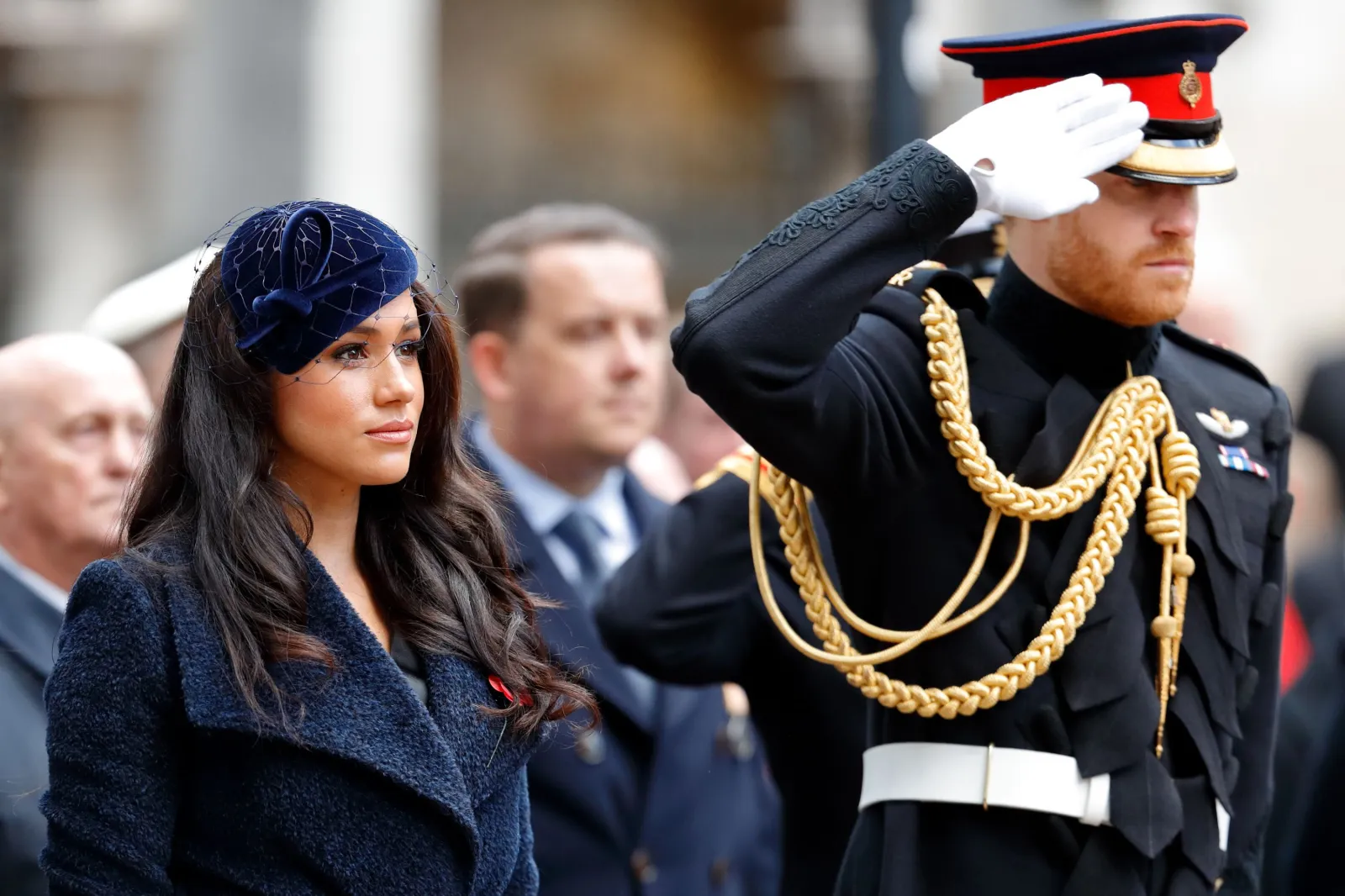
Prince Harry’s Six Impending Moments of Conflict With the Royals
The Impact on King Charles III
Seward suggested Charles might be willing to tolerate some bad PR due to the bonds of family in relation to Andrew, his brother, just as he had previously in relation to the case brought by Prince Harry, his son.
"He looked weak over Harry as well, but that's his son," Seward said. "I think the king has enormous sympathy from most people in the U.K. because most people do have awkward children and awkward brothers."
Harry filed the lawsuit in the hope of overturning the Home Office decision to strip him of his round-the-clock police protection team. However, the Court of Appeal ruled the Government's decision was lawfully made.
Questions Over Lawsuit Funding
Mountbatten-Windsor's finances have long been a mystery. Sarah Ferguson, his ex-wife, was notorious for money problems that led her to ask Epstein to pay off some of her debt.
It was during this period that Mountbatten-Windsor sent emails to Epstein containing allegedly confidential trade reports and investment opportunities.
Yet previously, King Charles cut off Mountbatten-Windsor's funding in an effort to force him out of his former mansion, Royal Lodge, in Windsor. For months, Mountbatten-Windsor paid the costs himself while no information was ever disclosed publicly about where he was getting the money. His funding from Charles was only resumed when he did eventually move out of Windsor.
"The ins and outs of royal finance have always been a mystery," Seward said. "We don't know how the king pays the money or what the money is. It could be an absolute minefield."
The first hearing in the case will be on Thursday when the judge will rule on an application by Thames Valley police to keep certain aspects private.

...
Andrew Mountbatten-Windsor's Lawsuit Could Cost $265,000
Mark Stephens, of U.K. law firm Howard Kennedy, told Newsweek that Mountbatten-Windsor could face a bill of around £200,000 (roughly $265,000) if he loses and is required to pay costs. Even if he wins, he may not get back all the money spent on his own case, leaving him with costs estimated by Stephens to be less than £100,000.
"His chances of winning are very, very low," Stephens said. "This isn't about guilt or innocence but whether the police lawfully obtained the warrants to search Andrew's homes. Did the police provide a lawful and adequate basis for the searches or were they just fishing around for evidence?"
The Old Bailey is Britain's most high-profile criminal court, which tries murders and complex cases, while its judges also sit at the High Court, which will hear Mountbatten-Windsor's legal challenge. The court confirmed the judge presiding over the case, Nicholas Hilliard, was not the one who approved the warrants.
Stephens said it was "unusual" for Thames Valley police to seek warrants from the Old Bailey: "The significance of it is that the judge at the Old Bailey is a High Court judge. The judge at the local crown court is a crown court judge. They went to a higher form of judicial life in order to have a proper scrutiny and assessment of it.
"Andrew's lawyers will have to say the police didn't have the evidential basis or were in some way misleading the court about the process and secondly that the judge who scrutinized it missed all of that or got it wrong. Given that it's a High Court judge, that's unlikely."
Andrew Mountbatten-Windsor's Strategy
Stephens said the strategy may be to try to influence any decision taken on whether to charge Mountbatten-Windsor, subjecting him to a trial in a U.K. court.
"What it says to me is that his lawyers are taking this very seriously," Stephens said, "because what they're trying to do is to demonstrate that the warrant was unlawfully obtained, that there's some problems with the warrant. In truth that's not likely to make any difference to whether the charges are preferred.
"I think the reason they've timed it now may be because they know or suspect that a file is going from the police to the CPS and the CPS will have to be thinking about what evidence they will be able to introduce and whether there's evidence they will not be able to get in and that plays into the charging decision."
That may be a complex task, however, due to the nature of British law. In the U.S., evidence that has been obtained unlawfully based on a failure in police procedure can be ruled inadmissible, but Stephens said U.K. courts do not necessarily take the same stance. If the police simply made a good-faith error, then the court may accept the evidence anyway.
Andrew Mountbatten-Windsor and Jeffrey Epstein
Virginia Giuffre accused Mountbatten-Windsor of sexually assaulting her in 2000 when she was 17 and said she had been trafficked by Epstein to London, New York and the U.S. Virgin Islands for sex with the royal, who has always denied the allegations.
In 2021, she sued him at civil court in New York and he settled in 2022, paying her an undisclosed sum while denying liability. Giuffre died in 2025 after what her family described as a suicide.
The Thames Valley police investigation is not examining Giuffre's allegations but was triggered by emails Mountbatten-Windsor sent to Epstein seemingly containing confidential trade reports. The emails were in the Epstein files and have been seen by Newsweek.
Police have also looked at allegations of sex trafficking related to a second woman, who was in her 20s at the time, and told the BBC through her lawyer that she was taken to Mountbatten-Windsor's previous home, Royal Lodge, for sexual purposes in 2010.
No decision has yet been made on whether to charge Mountbatten-Windsor with any offense. He has denied any Epstein-related wrongdoing.
Contact Newsweek editors on this story: Daniel Orton and Dave Siminoff.
View 0 Comments
Submit Correction
View Editorial & AI Guidelines