...


By Jasmine Laws, Shane Croucher, and John Feng
0
Share
Newsweek is a Trust Project member
See more of our trusted coverage when you search.Prefer Newsweek on Googleto see more of our trusted coverage when you search.
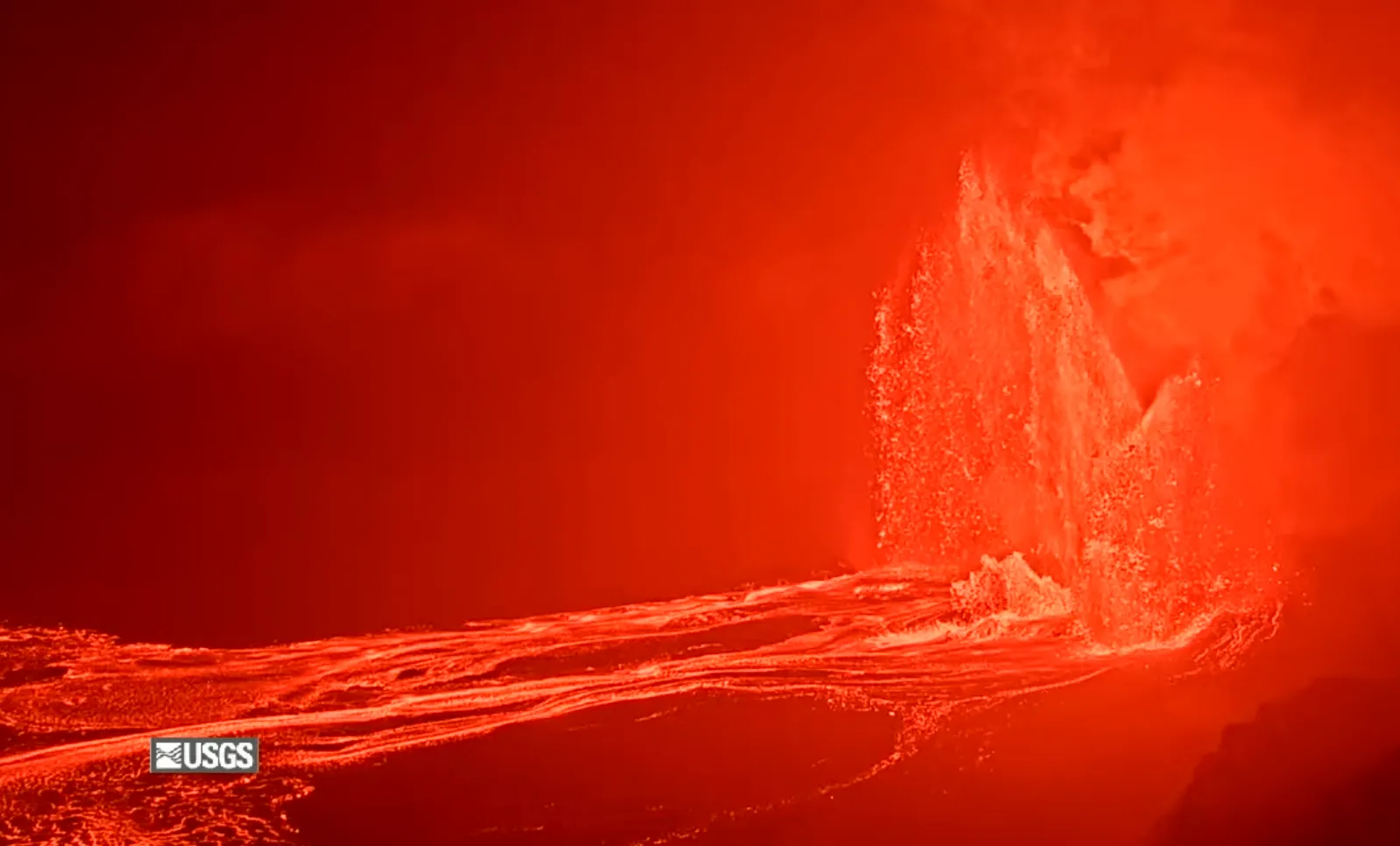
The U.S. Geological Survey (USGS) said the erupting fountains at Hawaii's Kilauea volcano were spewing lava as high as 1,250 feet.
The glowing fountains created a visual spectacle at the west Halemaʻumaʻu crater, captured live on USGS webcams.
Why It Matters
Kilauea, in the Volcanoes National Park on the Big Island of Hawaii, is one of the world's most active volcanoes. Since 2020, there have been six summit eruptions within the caldera, with durations ranging from one week to over a year.
Read More on News
This is the 39th episode this year—the 38th episode happened earlier this month, and lasted for 12 hours. However, it was around this time last year, on December 23, that the first of these episodes began, meaning this activity at the volcano has hit the year-mark.
Before the latest episode, the USGS created a short video looking back on all 38 episodes that have taken place in the last year. "Each episode has been unique and provided an opportunity to learn more about one of Earth’s most active volcanoes," USGS said.
Kilauea is also one of six active volcanoes located in the Hawaiian Islands, including Mauna Loa, which is the world's largest volcano.
What To Know
The volcanic activity began at 8:24 a.m. local time on December 23, and has been ongoing since. The USGS issued a "Watch" alert for the volcano, meaning it was "exhibiting heightened or escalating unrest with increased potential of eruption."
The Kilauea volcano eruption then started at 8:20 p.m. local time, and livestreams show the lava spewing out from the crater.
According to the USGS, the south fountains were 1,250 feet high, while north fountains were 920 feet high earlier this morning. However, in a more recent update, they were reported to have hit a maximum of 1,400 feet and 900 feet respectively, but the south and north vents have since lost this height, dropping to 1,000 feet and 600 feet.
A USGS update detailed that there was a lower level plume moving southwest, which is the cloud of hot volcanic particles, gases and ash that is released into the atmosphere during an eruption, and a plume of around 20,000 feet moving southeast.
The USGS said the plumes are visible from space, and that "high-level winds are carrying that material to the southeast."
The rates of effusion, when a volcano erupts with magma that has a lower viscosity so it forms lava flows, remain high, the USGS said, and that lava flows covered around 10 to 20 percent of the floor of Halemaʻumaʻu crater.
...
What Happens Next
The USGS is continuing to monitor the volcano's activity. All of the activity currently remains safely confined in Hawaiʻi Volcanoes National Park, and the commercial airports nearby are not affected at present, according to local news reports.
View 0 Comments
Submit Correction
View Editorial & AI Guidelines