...

By Brendan Cole
Senior Reporter
0
Share
Newsweek is a Trust Project member
See more of our trusted coverage when you search.Prefer Newsweek on Googleto see more of our trusted coverage when you search.
Iran’s new supreme leader, Ayatollah Mojtaba Khamenei, has yet to make a public appearance as of Monday, days into funeral ceremonies that started for his father, the late Ayatollah Ali Khamenei, who was killed in a U.S. airstrike on February 28.
On Monday, mourners carried signs that called for the killing of both Trump and Israeli Prime Minister Benjamin Netanyahu as people reached out to touch the truck carrying the coffin of the late supreme leader.
The previous day, tens of thousands of people attended a funeral, footage from Iranian state media showing three of his sons—Mostafa, Meysam, and Masoud crying as the coffins of their father and other family members were carried out into Tehran’s Grand Mosalla.
Read More
Khamenei Mourners Chant ‘Death to America’ as Trump Gives Iran ‘Week Off’6 min read

Notably absent was his successor, Mojtaba Khamenei, who was appointed after his father’s death.
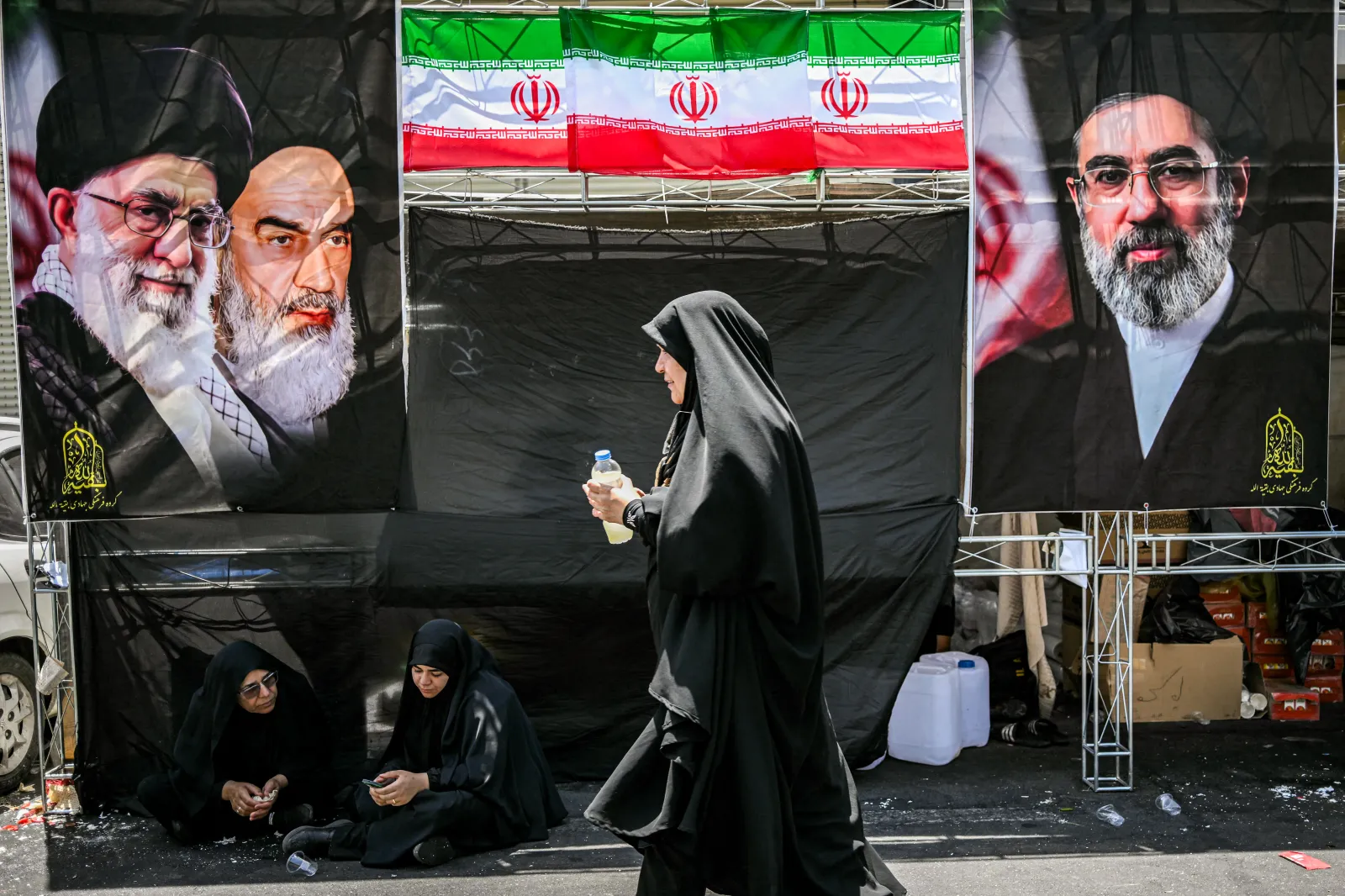
His image has appeared on posters across the Iranian capital, but he has not been seen or heard publicly in person since he took over, not even attending the funeral on July 1 of his wife, Zahra Haddad-Adel, who was also killed in the strikes.
Mojtaba Khamenei is believed to have been injured in those strikes and to be in hiding after being wounded in the airstrike that killed his father, although no state media reports have confirmed this.
“We have no clue about his physical or mental state, besides hearsay,” said Nazenin Ansari, managing editor of Kayhan London, a Persian-language digital newspaper based in London, and Kayhan Life, a daily English-language digital publication.
“His voice has not been heard nor his photo seen,” she told Newsweek, although she added, “there are rumors that Mojtaba Khamenei will appear on Thursday when his father is being buried in Mashad.”

...

...
What Has Been Said About Mojtaba Khamenei?
The timing of the funeral ceremonies is significant, overlapping with the 250th anniversary of U.S. independence as well as during the Islamic month of Muharram, associated in Shiite Islam with mourning, betrayal, and martyrdom.
The events over several days stretching across five cities in both Iran and Iraq are also being used as a propaganda tool and a rallying call for the ruling regime, making the absence so far of the supreme leader a conspicuous one.
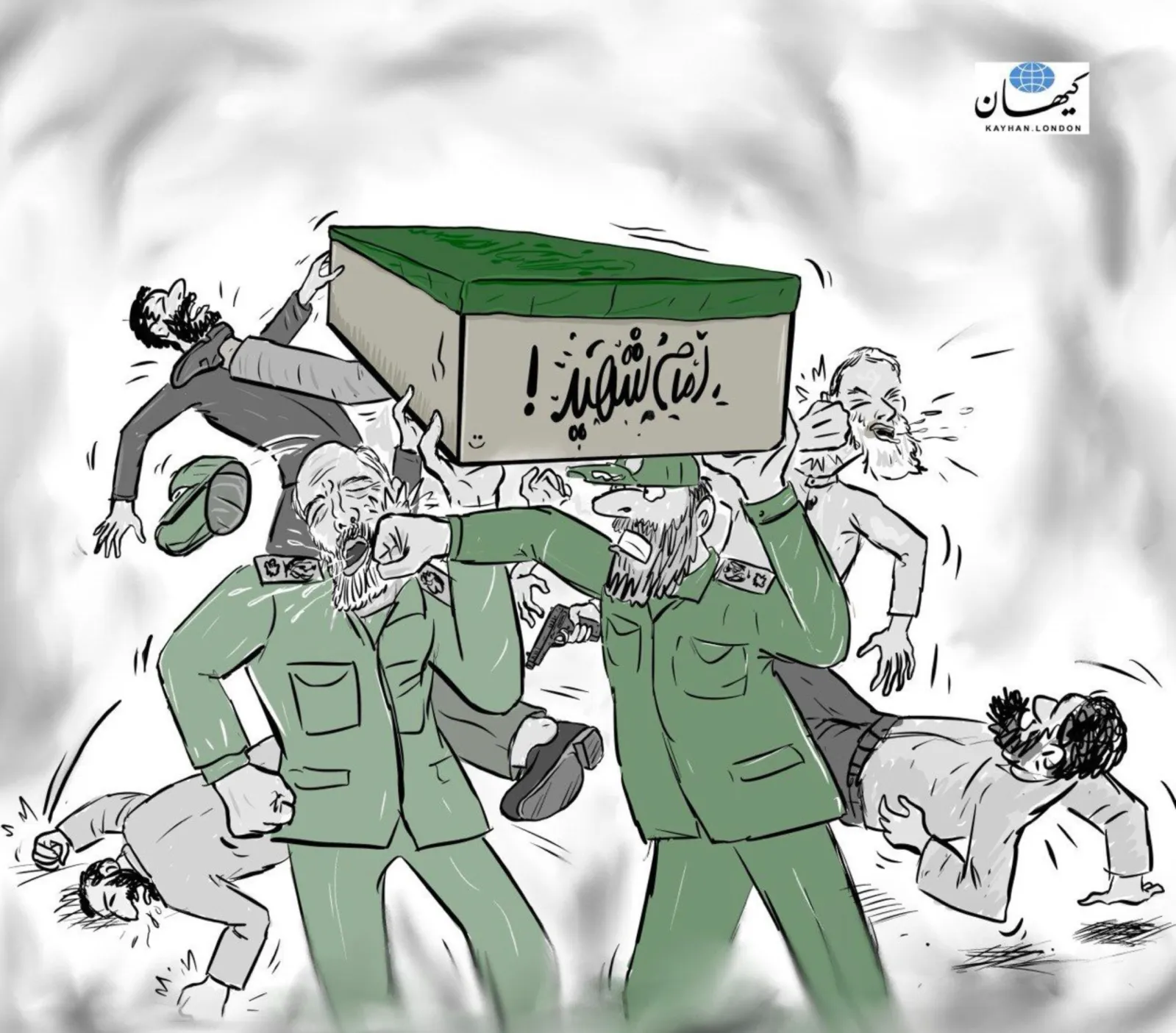
Ali Akbar Pourjamshidian, head of Iran's national funeral and farewell committee for the leader of the Islamic Revolution, said the supreme leader’s attendance was outside the authority of the organizing committee.
...
Iran has dismissed claims that Mojtaba has suffered serious injuries, with one aide saying that security concerns formed the main reason for his absence, and officials having earlier expressed concern about the risk of assassination.
U.S. Defense Secretary Pete Hegseth said in March that Mojtaba had been "wounded and likely disfigured" by the attack. A Reuters report in April said he was recovering from severe facial and leg injuries and may have even lost a leg in the strikes, although these claims have not been independently confirmed.
While he has not been seen in public for more than four months, written statements attributed to him have been issued, including that he had authorized the memorandum of understanding signed by Iran and the U.S. to end the Iran war.
He said he authorized the MOU after receiving assurances from President Masoud Pezeshkian and other senior officials that Iran's interests and those of the "Resistance Front" of regional allies would be safeguarded.
The funeral ceremonies, which started on Saturday, will culminate in Khamenei’s burial on July 9 in the city of Mashhad, his birthplace, with a procession expected to pass through Iraq a day earlier, including the holy cities of Najaf and Karbala.
Ansari, from Kayhan London, said that after nearly four months of uncertainty over the body of Ali Khamenei, none of the senior Shi'ite marja-e taqlid (the highest religious authority, known as the source of emulation) approved by the state performed the funeral prayer over his body as is customary, nor were they even present at the ceremony.
The funeral prayer was instead led by Ayatollah Jafar Sobhani, who is not considered a state-approved marja-e-taqlid according to the Society of Seminary Teachers of Qom, Ansari said.
This is significant because the late supreme leader had claimed to be a marja-e taqlid, the “leader of the world’s Muslims,” and head of an Islamic state.
“The absence of leaders from various countries and the fact that some countries sent second- or third-tier representatives were significant and further signs of Ali Khamenei’s isolation,” Ansari told Newsweek. “The regime cannot conceal the truth of Khamenei’s isolation, and the international disgrace caused by his policies — from assassinations in Europe to bombings in the Middle East, from terrorist groups across the region to activities as far as the Horn of Africa,” Ansari added.

...
Contact Newsweek editors on this story: Trevor Davies and Gray R. Thomas
View 0 Comments
Submit Correction
View Editorial & AI Guidelines