10
Loading video...

By Hollie Silverman
News Editor
0
Share
Newsweek is a Trust Project member
See more of our trusted coverage when you search.Prefer Newsweek on Googleto see more of our trusted coverage when you search.
The Supreme Court on Monday cleared the way for the Trump administration to resume construction on a major border barrier project in Texas' remote Big Bend region, with liberal Justice Ketanji Brown Jackson dissenting.
The high court granted the administration’s request to stay a lower-court preliminary injunction that had blocked Department of Homeland Security (DHS) Secretary Markwayne Mullin from using federal waiver authority to advance the project.
Jackson was the sole justice identified in the order as opposing the action. The decision stated simply: “JUSTICE JACKSON would deny the application for stay.” Jackson did not provide a written explanation.
Read More on News
The majority found that the administration was “exceedingly likely to prevail” on its argument that the lower court lacked jurisdiction to consider the challengers' claims.
The ruling provides an immediate legal boost to the administration’s plans to expand barriers across the U.S.-Mexico border, a project that has drawn opposition from conservationists and local groups over potential landscape and ecological damage.
President Donald Trump has made reducing illegal crossings of the southern border one of the main policy priorities of his presidency. His "One Big Beautiful Bill," which was signed into law last year, earmarked $46.5 billion for the construction of fencing and other obstacles to deter illegal immigration across the 1,954-mile-long border.
Planned barriers include hundreds of miles of 30-foot border wall along with surveillance systems and river barriers. This will require building on private as well as federally owned land, where initial construction of the border wall was concentrated.
In August, bulldozers were seen at the Big Bend National Park clearing land ahead of construction, sparking cross-party anger. In response, Customs and Border Protection (CBP) halted the work, but the pause ended on September 30.
The Legal Battle
The lawsuit was brought by an individual river guide, the environmental nonprofit Center for Biological Diversity, and Friends of the Ruidosa Church, an organization dedicated to preserving a historic church in Ruidosa, Texas.
The challengers argued that Mullin exceeded congressional authority by using a federal waiver provision to set aside environmental and conservation laws. They invoked the “major-questions doctrine,” arguing that such a consequential exercise of executive power required clear authorization from Congress.
The administration countered that Congress explicitly gave the DHS secretary broad authority to waive legal requirements to expedite border barriers. In its filing, the government called the lower court order a “baseless injunction that halts a major portion of the construction of the border wall.”

...
Related Story
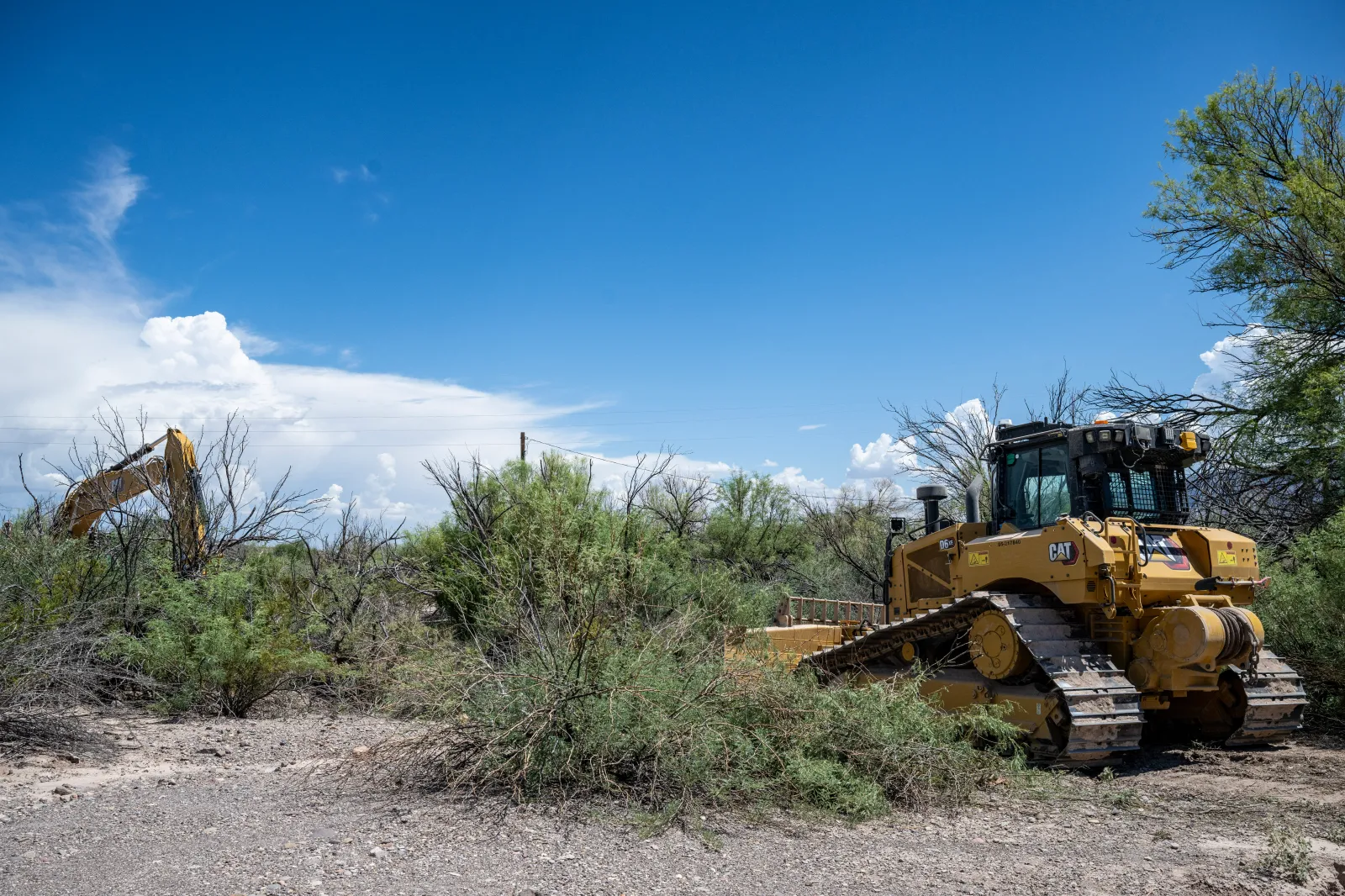
Big Bend Border Construction To Resume, Texas Conservationists Vow To Fight
What the Supreme Court Decided
At the center of the dispute is Section 102 of the Illegal Immigration Reform and Immigrant Responsibility Act (IIRIRA) of 1996, which grants the DHS secretary broad authority to construct barriers and roads and “to waive all legal requirements” considered “necessary to ensure expeditious construction.”
On October 2, the U.S. District Court for the Western District of Texas issued a preliminary injunction blocking the waivers, concluding that Mullin lacked “clear congressional authorization.”
After the injuction, a spokesperson for U.S. Customs and Border Protection told Newsweek: "We stand by our assessment and remain confident in our legal authorities to secure the border while preserving the unique landscape of the Big Bend region. We are working with the Department of Justice on next steps."
The Supreme Court focused on whether the lower court had jurisdiction to review the matter. Under the statute, courts can review challenges alleging violations of the U.S. Constitution, but they lack jurisdiction over nonconstitutional claims. The majority wrote that "there is no such thing as a ‘constitutional’ major-questions claim."
The court's majority also found that continuing to block construction would cause irreparable harm to the government. According to a CBP declaration, the injunction was costing nearly $500,000 per day—money that “cannot be recouped”—while preventing the government from advancing its “compelling interests” in “border security and integrity.”
While acknowledging concerns regarding aesthetic, recreational, and environmental damage, the court concluded that Congress had already struck a balance in favor of expedited border construction.
What Happens Next
The order removes the injunction while the government petitions the court to formally hear the case. If the court denies the petition, the stay will automatically end; if the justices agree to hear the case, the stay will remain in place until a final judgment is issued.
For now, the ruling gives the administration the legal opening it sought to continue its Big Bend border construction efforts as the broader legal battle proceeds.
Newsweek’s reporters and editors used Martyn, our AI assistant, to produce this story. Learn more about Martyn here. Contact Newsweek editors for this story: Samantha Beech and Anthony Murray.
Related Story
Newsweek Webinar: How the Politics of AI Could Shape Midterms
View 0 Comments
Submit Correction
View Editorial & AI Guidelines