10
Loading video...

By Steve Mollman
News Editor
0
Share
Newsweek is a Trust Project member
See more of our trusted coverage when you search.Prefer Newsweek on Googleto see more of our trusted coverage when you search.
Republican Senator John Kennedy voiced skepticism Sunday regarding the Trump administration's newly announced civilian nuclear agreement with Saudi Arabia, breaking with his party as lawmakers prepare to evaluate the deal.
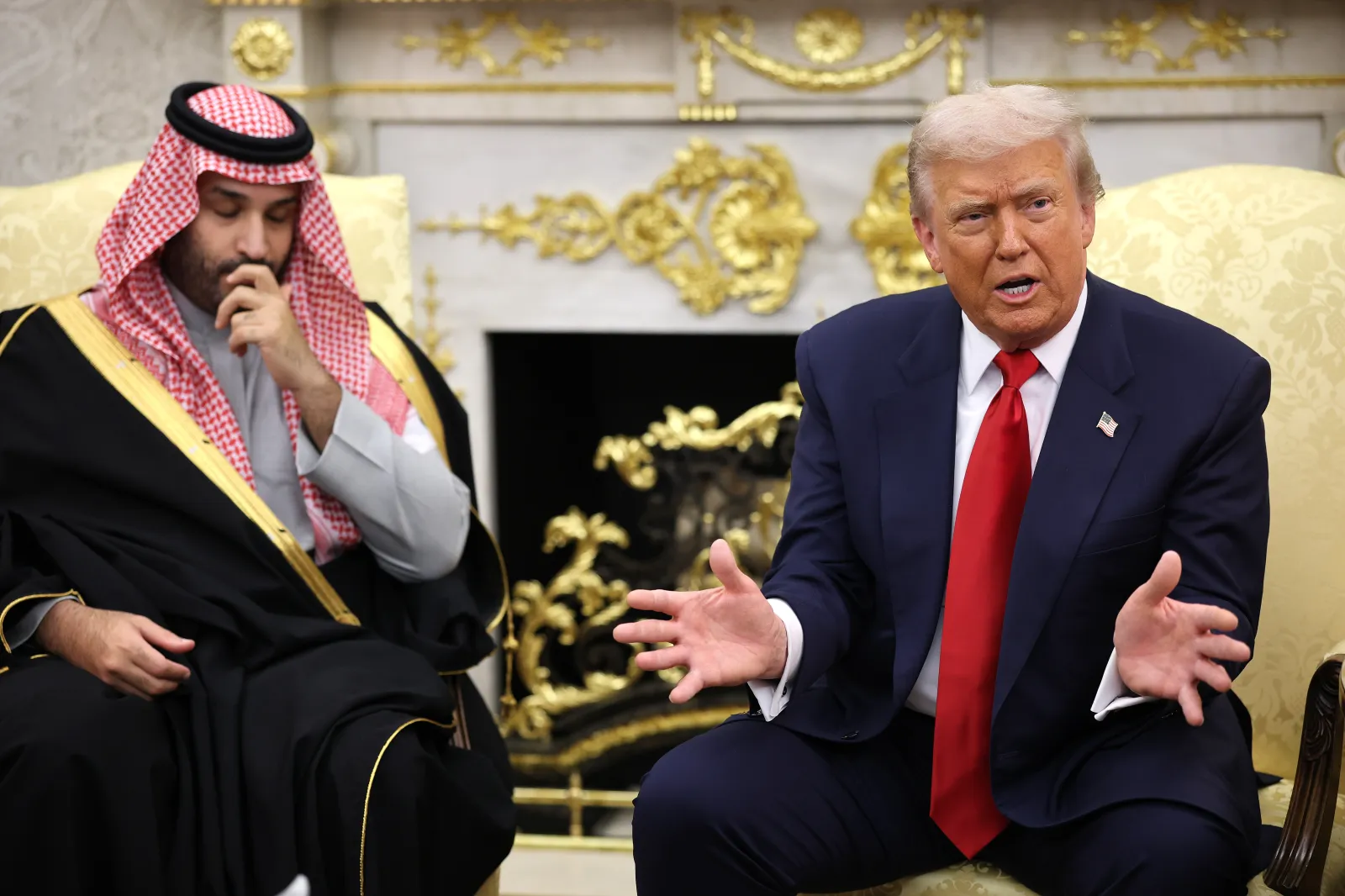
Kennedy's remarks follow President Donald Trump's announcement of the agreement and his subsequent addition of a condition requiring Saudi Arabia to normalize relations with Israel before it can advance—a provision that has drawn criticism from both parties and cast doubt on its viability in Congress.
Newsweek reached out to the Trump administration for comment on Sunday.
Read More on News
Related Story

Trump’s Saudi Nuclear Deal Fiasco May Finally Push Ally to China and Russia
Why Kennedy Has Concerns About the Deal
Asked on CBS News' Face the Nation whether he was comfortable with the agreement, Kennedy responded: "No. Maybe someday, but not right now."
The Louisiana Republican argued that pursuing a Saudi nuclear agreement while the United States remains at war with Iran sends a contradictory message.
"We're bombing a country to keep them from getting a nuclear weapon, but we're signing a deal with another country,” he said. “I know it's a commercial agreement, but that the world perceives as possibly someday leading to a nuclear weapon.”
Kennedy repeatedly emphasized that his concern was not necessarily the concept of civilian nuclear cooperation itself but the timing.
"The world's on a hair trigger," he said, arguing that countries around the world are increasingly focused on nuclear deterrence amid instability in the Middle East, Europe and elsewhere.
The comments come despite Kennedy's consistent alignment with Trump's foreign policy. During the same interview, he defended the administration's overall posture toward Iran, rejecting calls to end U.S. involvement entirely and advocating for continued economic and military pressure short of a ground war.
What the Deal Would Do
The proposed agreement establishes a framework for civilian nuclear cooperation between Washington and Riyadh, pending congressional review.
The Trump administration contends the pact would solidify strategic ties with a key Middle East ally while securing commercial opportunities for U.S. firms in Saudi Arabia's nuclear energy sector. Proponents argue that American participation ensures greater oversight of the kingdom's nuclear development.
Critics have long warned that civilian nuclear cooperation with Saudi Arabia could increase proliferation risks and accelerate a regional arms race if Tehran were ever to obtain a nuclear weapon. Saudi Crown Prince Mohammed bin Salman has previously said the kingdom would pursue nuclear weapons if Iran acquired them.
Related Story

How Saudi Arabia Getting a Nuclear Bomb Would Spark a Middle East Arms Race
...
Trump's New Israel Requirement
Political friction escalated after Trump conditioned the deal on Saudi Arabia joining the Abraham Accords and normalizing ties with Riyadh's neighbors—a demand introduced less than 24 hours after the initial announcement.
Despite Riyadh engaging in discussions over closer ties with Israel in recent years as well, Saudi Arabia has maintained that formal recognition of Israel is contingent on substantive progress toward a Palestinian state. Israeli Prime Minister Benjamin Netanyahu has rejected the idea of Palestinian statehood as being untenable for his country's security.
Kennedy expressed doubt that the requirement can be satisfied.
"I don't think it's going to happen anyway because the president's conditioned it on Saudi Arabia recognizing Israel, and they're not going to do that," he said.
Netanyahu's office in a statement applauded the prospect of Saudi Arabia joining the Abraham Accords as a "historic leap forward for peace in the Middle East." The statement, however, made no mention of the deal to bolster Saudi's civil nuclear program.
Related Story

Israel, the Only Middle East Nuclear Weapons Power, Fears US-Saudi Deal
Van Hollen's Criticism Takes Different Approach
While Kennedy questioned the timing, Democrat Senator Chris Van Hollen targeted the administration's negotiation tactics.
Appearing Sunday on ABC News' This Week, the Maryland senator criticized the retroactive addition of new conditions.
"The Trump administration, after getting the Saudis to sign it, turned around and said, 'Well, we're not going to follow through unless you normalize relations with Israel, unless you join the Abraham Accords," Van Hollen said.
He characterized the maneuver as a "bait-and-switch scheme" that created "complete whiplash" for Saudi leadership.
What Happens Next
The agreement remains subject to a formal congressional review period under the Atomic Energy Act which gives Congress 90 days to consider it, where lawmakers are expected to scrutinize nonproliferation safeguards and regional stability implications.
With Democrats challenging the negotiation process and at least one prominent Republican questioning the timing, the administration faces an uphill battle on Capitol Hill.
Contact Newsweek editor for this story: Anthony Murray.
View 0 Comments
Submit Correction
View Editorial & AI Guidelines