...


By Steve Mollman and Alia Shoaib
0
Share
Newsweek is a Trust Project member
See more of our trusted coverage when you search.Prefer Newsweek on Googleto see more of our trusted coverage when you search.
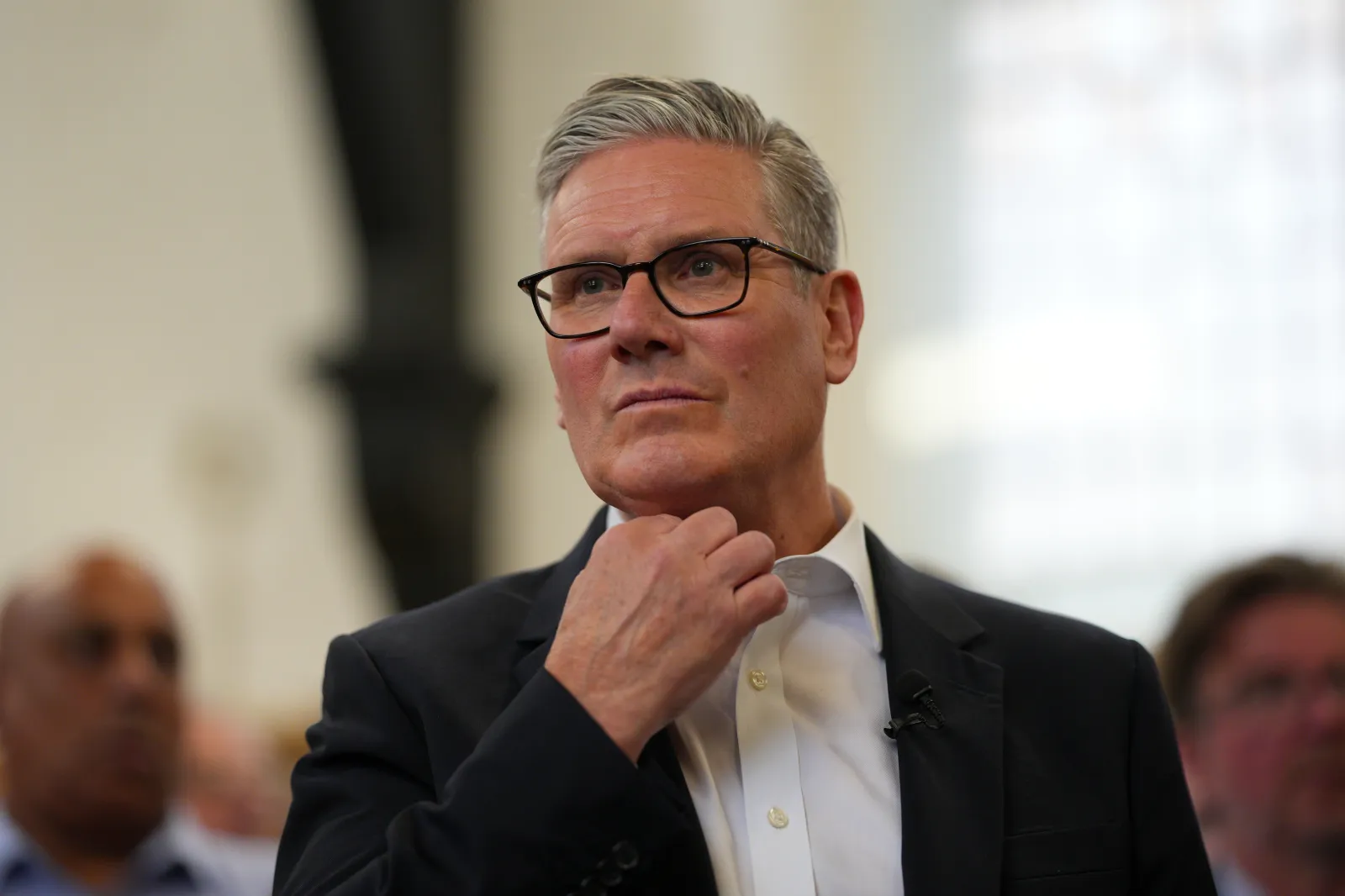
President Donald Trump said U.K. Prime Minister Keir Starmer would resign a day before the British leader announced he would do so, in an unusual move that raised questions about diplomatic norms and political etiquette.
Trump wrote in a Truth Social post on Sunday: "Keir Starmer will resign as Prime Minister of The United Kingdom. He failed badly on two very important subjects—IMMIGRATION AND ENERGY (OPEN NORTH SEA OIL!). I wish him well!"
Robert Peston, political editor at British broadcaster ITV, wrote on X: "I know we’re mostly inured to Donald Trump’s disregard for institutional norms and proprieties, but pre-announcing the resignation of the prime minister of America’s supposedly most important ally is pretty extreme, even by his standards. UK ministers are genuinely and understandably shocked."
Read More on News
He added, "There is literally no boundary this American president will not bulldoze through."
British media personality Piers Morgan, posting on X, called Trump’s comments "the final humiliation."
Trump has previously praised Nigel Farage, whose Reform UK party has surged in polls, raising the prospect that Washington may look more favorably on a government aligned with his anti-immigration stance.
Trump and Starmer began their relationship on a relatively strong footing before it soured over disagreements, including over North Sea oil production and Starmer’s perceived lack of support for the U.S. during the Iran war. Trump's comments come days after Starmer was forced to deny reports he had been snubbed by the U.S. president at the G7 summit in France, after the pair did not hold a bilateral meeting.
...
Trump wasn't the only one hinting at Starmer's exit. On Saturday, The Observer reported that Starmer was expected to resign Monday, raising the prospect of a rapid leadership transition that would make him the sixth prime minister to leave office in the past decade. The British paper reported Starmer had concluded his position was no longer tenable after consultations with Cabinet ministers, party donors, and trade union leaders. Those conversations appear to have reinforced concerns about his ability to maintain authority within the party and government.
Labour Pressure
The decision to resign follows a period of growing unease within Labour ranks, with some senior figures questioning whether Starmer could hold together the coalition of support that brought the party to power.
That pressure has been building for weeks. Last month, more than 80 of Starmer’s Labour colleagues called on him to leave after disastrous local election results that saw Labour lose more than 1,100 council seats across England, while Reform UK, the Farage-led anti-immigration party that consistently leads in nationwide opinion polls, won more than 1,450.
Trump considers Farage a key political ally, which has fueled speculation about how a shift in U.K. leadership could reshape relations with Washington.
For Starmer, the political pressure has unfolded against a backdrop of economic stagnation and declining public confidence in Britain, where persistent low growth, crumbling infrastructure, and a perceived loss of global influence have fueled a wider narrative of national decline. That dynamic has increasingly entered the political mainstream, with leaders across the spectrum warning the country is struggling to compete and that living standards remain under strain.
Anand Menon, a professor at King’s College London and director of the U.K. in a Changing Europe initiative, told Newsweek in May: "Our economy has not really grown since about 2008. The impact of the financial crisis was greater here than elsewhere. We made that worse with the impact of austerity. We then had the economic impact of Brexit. We then had COVID. We then had the cost-of-living crisis. So, there’s been a series of body blows to the economy. We’re in a difficult situation—there’s no doubt about that."
Starmer was blamed for the party’s slump in popularity amid economic problems and policy missteps, including the appointment of a close friend of convicted sex offender Jeffrey Epstein as the United Kingdom's ambassador to the United States. Starmer, who fired Peter Mandelson in September, never met Epstein and is not accused of any wrongdoing.
Andy Burnham Rises
Labour’s leadership rules typically require a formal contest, though the timeline can vary depending on internal decisions and political urgency. In the short term, a senior Cabinet member could be asked to serve in an acting capacity. The process will also carry broader implications for the government’s legislative agenda and its ability to maintain stability during a period of transition.
As for who might succeed Starmer, one figure drawing attention is 56-year-old Andy Burnham, the Greater Manchester mayor who recently returned to Parliament. His by-election victory on Friday cleared a key hurdle to seeking the party’s top job.

...
It remains unclear how Trump would respond to a Burnham leadership bid, though the mayor has previously criticized Trump-era politics as destabilizing, setting up a potential contrast with the president’s more favorable ties to Farage and similar figures.
"Everyone knows that politics isn’t working," Burnham said during his victory speech. "Everyone can feel that the country isn’t where it should be. Tonight could, just could, be the turning point."
Starmer, who had insisted he would fight any attempt to oust him, congratulated him, writing on X that voters "chose Labour’s campaign of hope and optimism over division and hate."
Burnham has warned against the "poisonous" and increasingly polarized nature of U.S.-style politics and said Trump’s approach has brought "instability" internationally. Those past remarks could complicate relations with Washington, particularly given Trump’s early and unusually public criticism of Starmer ahead of his resignation announcement.
View 0 Comments
Submit Correction
View Editorial & AI Guidelines