...

By Gabe Whisnant
News Editor
0
Share
Newsweek is a Trust Project member
See more of our trusted coverage when you search.Prefer Newsweek on Googleto see more of our trusted coverage when you search.
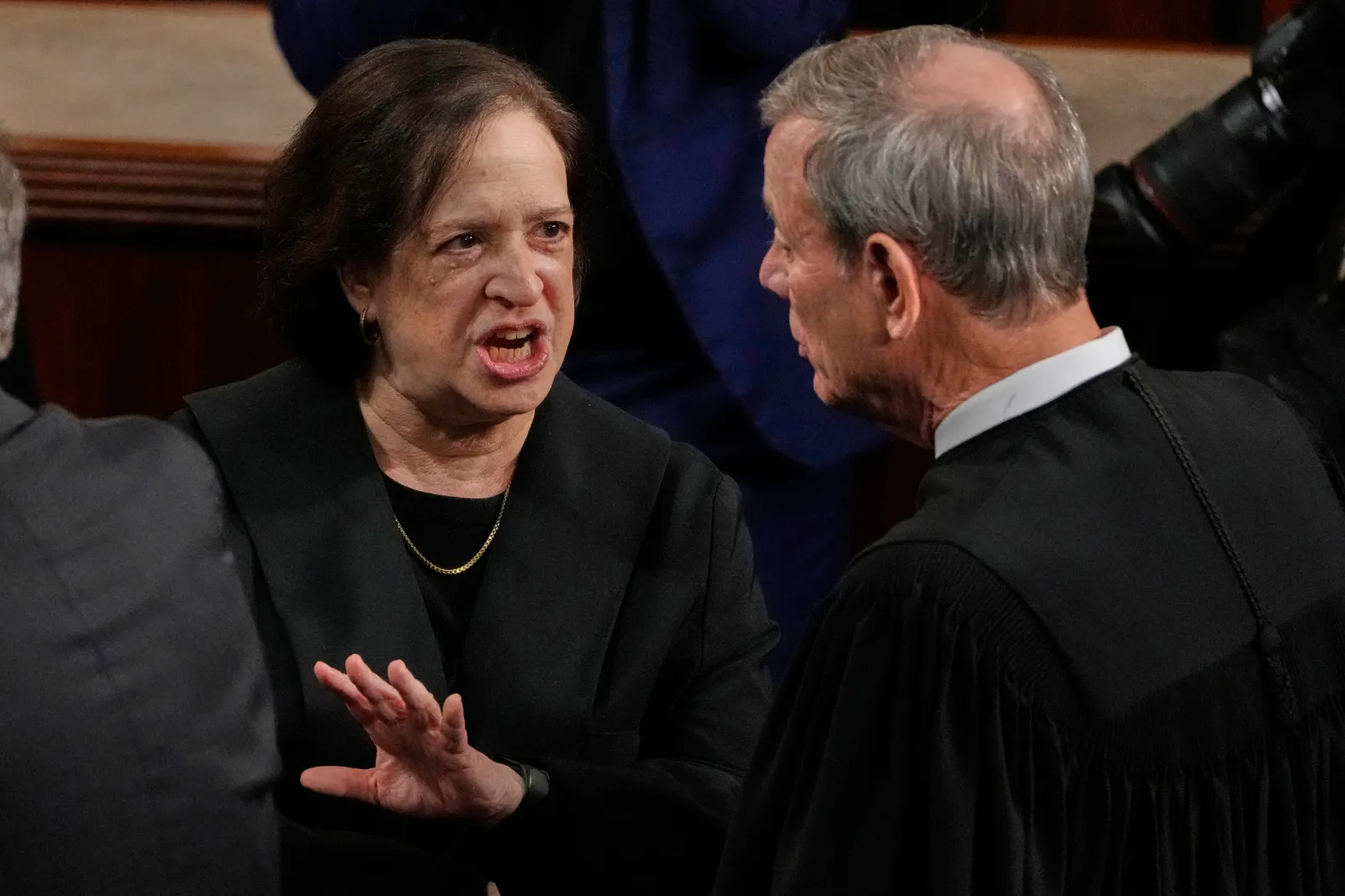
Justice Elena Kagan emerged as an unexpected critic of New Jersey’s position Tuesday as the Supreme Court weighed whether a faith-based crisis pregnancy center may challenge a state subpoena in federal court.
Her pointed questioning suggested she may join the court’s conservatives in siding with First Choice Women’s Resource Centers, which argues that New Jersey’s investigation threatens its First Amendment rights.
Why It Matters
The case stems from a subpoena issued by Democratic Attorney General Matthew Platkin’s consumer-protection division, seeking information from First Choice—including a list of its donors—as part of a probe into whether the center misled women about the services it offers. Crisis pregnancy centers, which encourage women to carry pregnancies to term and often present themselves as offering comprehensive reproductive health counseling, have been under heightened scrutiny in Democratic-led states since the Supreme Court overturned the nationwide right to abortion in 2022.
Read More on News
...
What To Know
First Choice pushed back against the subpoena, saying the investigation lacked merit and that revealing donor information could chill support for the organization. After lower courts ruled the challenge premature because the subpoena had not yet been enforced, the center appealed to the Supreme Court.
A majority of the justices appeared receptive to First Choice’s argument that the threat of disclosure alone could burden its supporters. Chief Justice John Roberts questioned why donors should feel secure knowing their personal information could end up in government hands. “You don't think it might have an effect on potential future donors to the organization, to know that their name, phone number, address, et cetera, could be disclosed?” he asked New Jersey’s attorney, Sundeep Iyer.
Iyer responded that the information would have been used merely to ask donors whether they had been misled, and that no constitutional harm could occur before any court-ordered enforcement. But Kagan pushed back, offering one of the day’s most striking remarks.
“An ordinary person, one of the funders for this organization or any similar organization, presented with this subpoena, which asks for name, address, telephone number, email, contributions, and all kinds of other information, is not going to take that as very reassuring, that ‘you’re not going to use this information in ways that might compromise my privacy.’”
Her comments closely echoed concerns raised by conservative justices, suggesting rare cross-ideological agreement over the potential chilling effect of state demands for donor information.
New Jersey warned that a ruling for First Choice could trigger a wave of premature federal lawsuits from the thousands of businesses that receive similar subpoenas. But supporters of the center—including the Trump administration and the American Civil Liberties Union—argued that only organizations asserting comparable First Amendment harms could bring such challenges.
Alliance Defending Freedom attorney Erin Hawley, representing First Choice, called the issue “non-ideological,” saying groups with unpopular viewpoints could be especially vulnerable.
First Choice executive director Aimee Huber said she hopes a favorable ruling will deter future investigations of similar centers.
What People Are Saying
Carol Tobias, president of National Right to Life, said in a statement shared with Newsweek via email, “No government official needs to know which charitable organizations Americans support, and no attorney general should be allowed to misuse state power to intimidate or harass pro-life groups. Forcing disclosure of donor information has been used throughout history as a political weapon. This kind of government overreach chills free speech, threatens the safety and privacy of donors, and diverts vital resources away from helping women and saving lives.”
Jeanne LoCicero, an attorney with the ACLU of New Jersey, told Politico in a statement that while her organization supports “different policy outcomes than” the crisis pregnancy centers involved in the case, it backs their position: “We are on the same page that investigatory subpoenas seeking sensitive information put all advocacy at risk. Federal court should remain open to anyone who believes their First Amendment rights are being violated, regardless of viewpoint.”
What Happens Next
The Supreme Court is expected to rule in the coming months.
This article includes reporting by the Associated Press.
Updates: 12/2/25, 3:40 p.m. ET: This article was updated with new information and remarks.
View 0 Comments
Submit Correction
View Editorial & AI Guidelines