
10
Loading video...


By Dan Gooding and Hugh Cameron
0
Share
Newsweek is a Trust Project member
See more of our trusted coverage when you search.Prefer Newsweek on Googleto see more of our trusted coverage when you search.
Missouri is grappling with apparently competing judicial directives over which congressional map will govern its midterm races, leaving races in flux and the issue headed back to the U.S. Supreme Court a day after it denied an appeal.
The Show-Me State's congressional redistricting battle descended further into turmoil Tuesday after the state's highest court threatened Secretary of State Denny Hoskins with contempt for following a federal judge's order keeping the GOP-backed map in place.
The Missouri Supreme Court ordered Hoskins, a Republican, to appear on Thursday and explain why he directed officials to abide by the districts approved by Republican lawmakers in 2025. The court has given Hoskins until midday on Wednesday to respond to the motion for contempt, filed by People Not Politicians, the group that spearheaded the original referendum on the GOP-backed map.
Read More on Politics
The confrontation came hours after Supreme Court Justice Brett Kavanaugh declined Missouri's emergency appeal, leaving election officials caught between conflicting state and federal rulings over which districts to use in November. Minutes later, Chief U.S. District Judge Stephen R. Clark ordered that Missouri continue using the 2025 Republican-backed map while the case moves forward.
People Not Politicians promptly appealed Clark’s decision and has asked the court for a temporary stay**.**

...
Posting to X late on Tuesday, Hoskins said, "Missouri is and always will be the place I call home. I will always fight to protect our common-sense Missouri values from a liberal Democrat Socialist and his out-of-state NYC sugar daddies. The Show Me State will not be run into the ground like the communists running NYC on my watch. I will continue to abide by Judge Clark’s federal temporary restraining order on a federal congressional election."
Edward Foley, an election-law scholar and professor at Ohio State University's Moritz College of Law, told Newsweek that Missouri’s Eighth Circuit or the U.S. Supreme Court would need to block the ruling favoring the newer map “in order to maintain consistency" with Kavanaugh’s ruling on Tuesday.
“That should happen today,” he said Wednesday, “in order to avoid an untenable situation.”
The Eighth Circuit denied that appeal, saying it did not have jurisdiction over the matter. Hours later, People Not Politicians sent an appeal to the Supreme Court.
"The federal court order has been in place for mere hours, but the chaos it guarantees has already taken root," a motion filed Wednesday afternoon read. "Absent a stay, that chaos will deepen—and the harm will become irreversible."
In a statement shared with Newsweek, Richard von Glahn with People Not Politicians added, "Missouri’s election officials have no legal map to use. This confusion is the direct result of the delay orchestrated by Secretary Denny Hoskins... People Not Politicians Missouri and our attorneys have filed an appeal with Justice Kavanaugh to end this."
Newsweek reached out to Hoskins' office for comment Wednesday afternoon.
Related Story

RNC Dallas Puts the GOP’s Trump Paradox on Full Display
Election 'Disaster' Unfolding in Missouri
The dispute has become one of the most closely watched election-law cases of the cycle because it raises broader questions about how late courts can alter congressional maps before an election and whether voters who participated in primaries can be shifted into different districts before the general election.
"A federal-election-administration disaster is unfolding in Missouri," Missouri State Attorney General Catherine L. Hanaway wrote in her appeal to the Supreme Court, arguing it was too late to switch maps ahead of the midterms.
On Tuesday afternoon, U.S. Supreme Court Justice Brett Kavanaugh denied the state's bid to keep the new map in place, leaving the state's Supreme Court decision in place ordering the use of a 2022 map instead.
"The Missouri Supreme Court made the right call in this case and Justice Kavanaugh was right to deny Missouri’s attempt to avoid the ruling of its highest court," Abha Khanna, an Elias Law Group Partner and counsel on the case, told Newsweek. "The state constitution is clear that Missourians should get the final word on whether their congressional map can undergo an extreme mid-decade gerrymander at President Donald Trump’s request, and now they will.
"This is a win for democracy and for the hundreds of thousands of Missourians who signed a petition to make sure they would have a chance to weigh in on the gerrymandered HB 1 map."
How Missouri Got Here
The Missouri legislature approved House Bill 1 in September 2025, replacing the congressional map the state had enacted in 2022. The measure passed comfortably in both chambers before being signed into law by Republican Governor Michael Kehoe. Missouri then used the new map during its August 2026 primary elections, in which approximately 1.2 million voters cast ballots.
After lawmakers adopted the map, activist group People Not Politicians and its leader, Richard von Glahn, launched its referendum campaign. The legal battle quickly expanded into a series of lawsuits challenging whether Missouri's referendum process could be used against congressional redistricting legislation.
Before last week's ruling, Missouri courts had repeatedly left the new map in place while litigation continued, meaning it was used for the state's August primary.
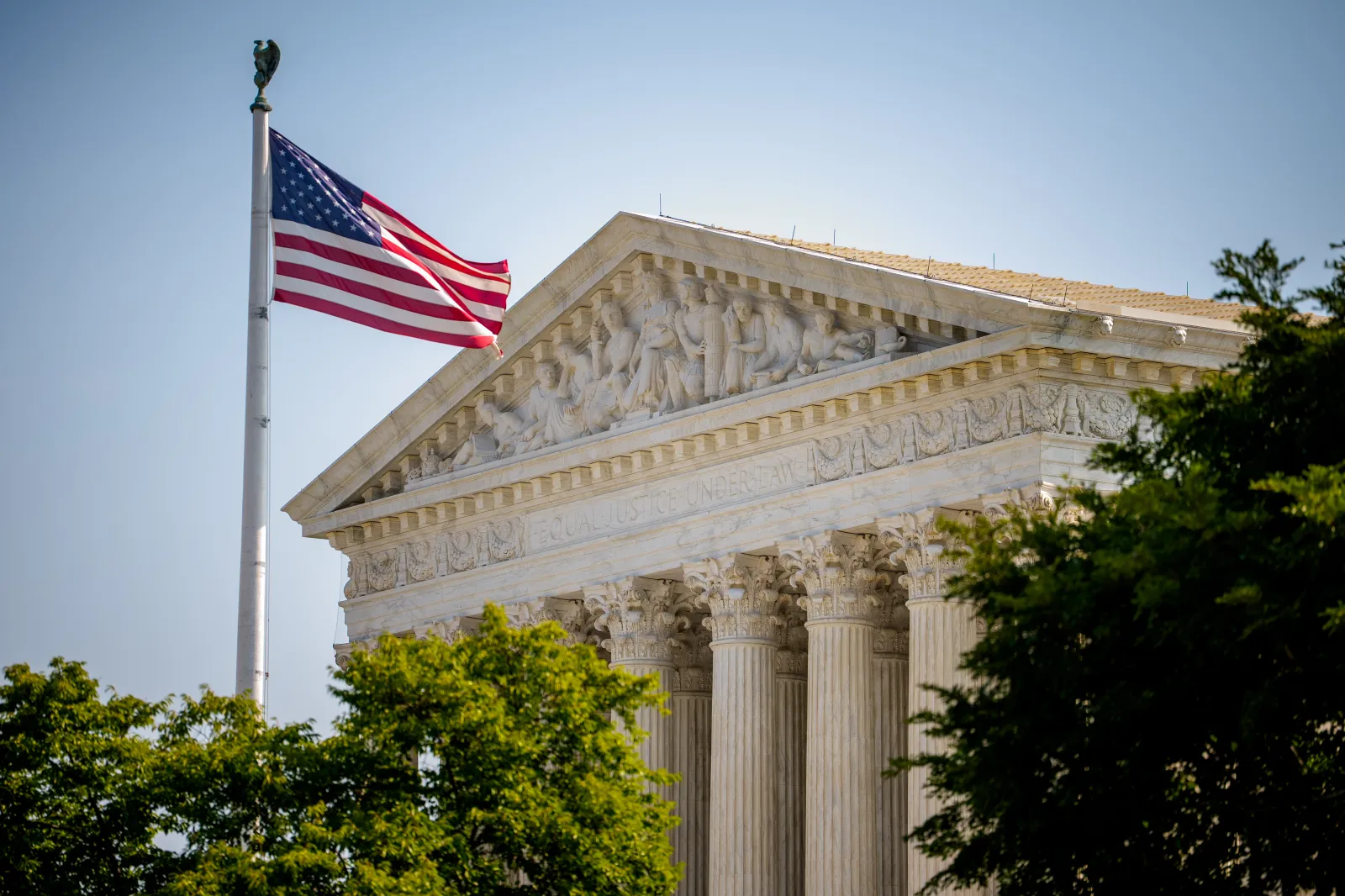
On September 3, the Missouri Supreme Court reversed a lower-court ruling and issued an injunction prohibiting Missouri officials from implementing or using House Bill 1. The court indicated the state should instead use the congressional map enacted in 2022.
...
Why Missouri Asked the Supreme Court to Intervene
According to the state's Supreme Court filing, voters in some parts of the state could be shifted into different congressional districts and forced to vote for candidates they had no role in nominating during the primary process.
The application repeatedly emphasized that a trial court had concluded changing district boundaries at this stage was "not just 'impractical,' it is impossible," a finding Missouri argued the state supreme court failed to adequately consider.
In denying emergency relief, Kavanaugh left those arguments unresolved while allowing the Missouri Supreme Court's order to remain in effect.
Richard von Glahn, executive director of People Not Politicians Missouri, the group which challenged the new map, said in a statement shared with Newsweek that the law had won.
"The Missouri constitution is clear as was the Missouri Supreme Court," von Glahn said. "Over 305,000 Missouri voters, Republicans, Democrats and Independents took action to block this political power grab last fall. Today’s victory belongs to them. People, not politicians, will have the final say when they vote NO on Proposition A this November."
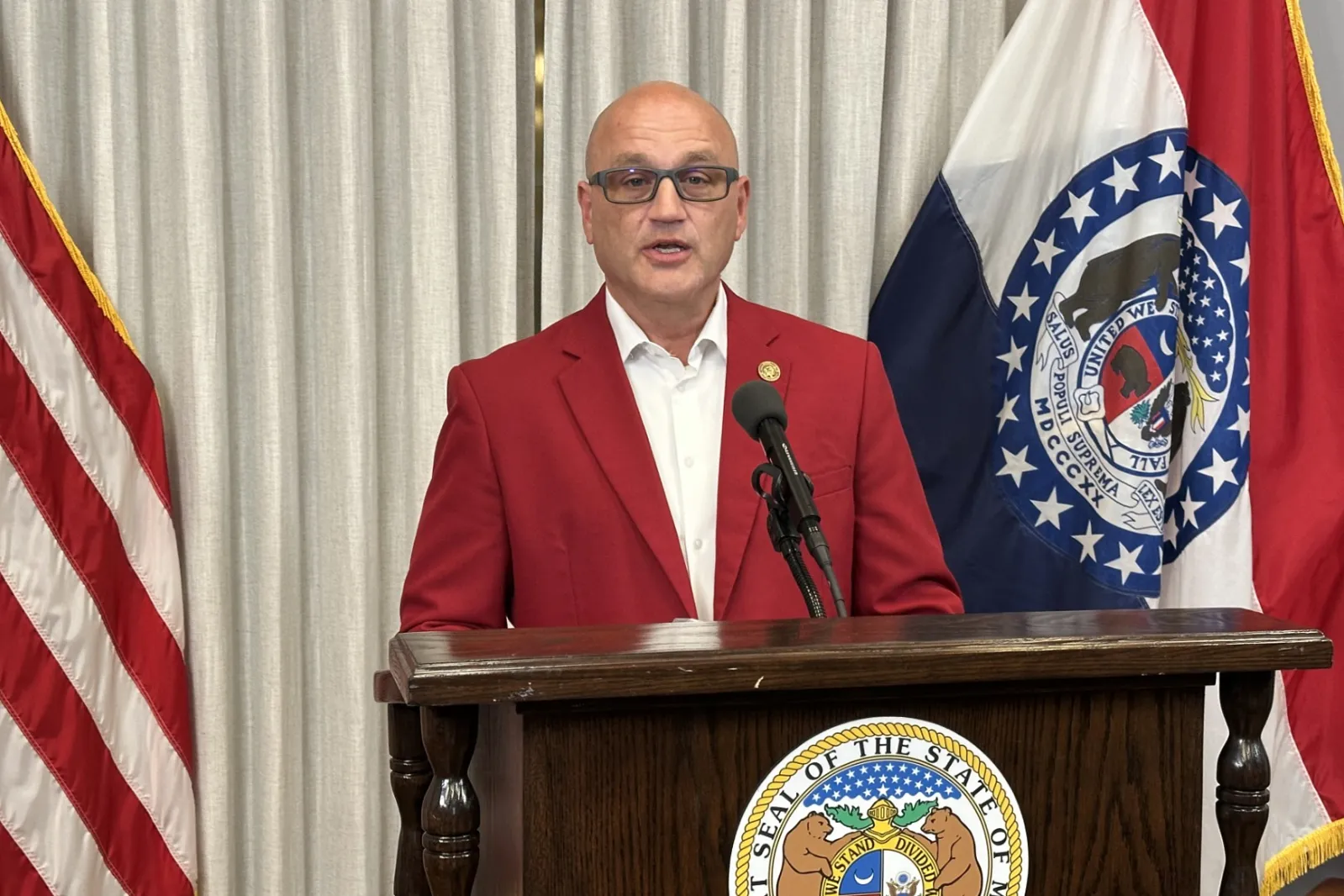
Shortly after the Supreme Court decision, however, Judge Clark for the U.S. District Court for the Eastern District of Missouri ruled that the state must use the map passed in 2025, even if it was not legal.
...
Clark, a Trump appointee, wrote that using the 2022 map could amount to disenfranchising certain voters, as the 2025 map was already used in August's primary, and issued a temporary restraining order barring the state from using anything but the Republican-supported version.
"Using a different map for the general election would wreak havoc on the fairness and orderliness of Missouri’s congressional elections, calling into question the candidacy of those nominated in the primaries and the votes of those who voted in the primaries," Clark wrote in his ruling. "Widespread voter confusion would inevitably follow."
Missouri Attorney General Catherine Hanaway said in a statement shared with Newsweek, "Missouri is prepared to follow and comply with Chief Judge Clark's order that binds the state to using the Missouri First map for the November General Election. We appreciate Judge Clark's support of the rights of Missouri voters, and intend to comply with this federal ruling. We maintain that changing the congressional map in between the primary and general elections is simply not feasible and profoundly unjust to Missouri voters."
Related Story
Trump Asks Supreme Court to Revive Mail-Ballot Restrictions Before Midterms
The Broader Constitutional Dispute
The appeal centered on several constitutional arguments that Republicans hoped would attract Supreme Court review.
Among them was an Elections Clause claim asserting that Missouri's redistricting process should not be suspended by a referendum petition signed by a small fraction of the state's electorate before a statewide vote takes place. Missouri argued the state supreme court effectively allowed about 3.3 percent of registered voters to halt a map approved by the legislature and governor.
The state also argued that altering congressional districts between primary and general elections violated both Article I of the Constitution and equal-protection principles by treating voters differently depending on whether they were moved into new districts.
Republican groups supporting the appeal, including the Republican National Committee, described the Missouri Supreme Court's ruling as one that was "throwing Missouri into electoral chaos at the whim of approximately 3.3% of the State's voters."
Supporters of the Missouri Supreme Court's ruling, however, argued that state law and Missouri's referendum process required suspension of the map while citizens sought a statewide vote on the legislation.
Motion to Block Judge Clark's Order: Read the Appeal in Full
morediststaymotca8090926pdf.pdf.PDF
What It Could Mean Beyond Missouri
The national significance of the case stems from the question at its center: how late in the election process courts can alter congressional maps.
In their Supreme Court filings, Missouri and national Republican organizations argued that if state courts can require map changes after a primary election has already been completed, similar disputes could arise in other states whenever litigation remains active close to Election Day. They warned that absent federal limits, courts could potentially intervene at increasingly late stages of the election calendar.
Election-law experts have long pointed to the Supreme Court's so-called Purcell principle, which generally cautions courts against making major election-rule changes close to an election because of the risk of voter confusion and administrative disruption. Missouri repeatedly invoked those concerns in arguing for emergency intervention.
With the case headed back to the Supreme Court, it remains to be seen whether Justices will be willing to hear the case, let alone rule on these concerns as Election Day draws closer.
Contact Newsweek editors on this story: Daniel Orton, Gray R. Thomas and Robert Greenall
Update 9/9/26 4:44 a.m. ET: This article was updated with additional information.
Update 9/9/26, 7:02 a.m. ET: This article was updated with additional information.
Update 9/9/26, 9:01 a.m. ET: This article was updated with additional information.
View 0 Comments
Submit Correction
View Editorial & AI Guidelines