...

By Robert Alexander
Senior Crime & Court Reporter
0
Share
Newsweek is a Trust Project member
See more of our trusted coverage when you search.Prefer Newsweek on Googleto see more of our trusted coverage when you search.
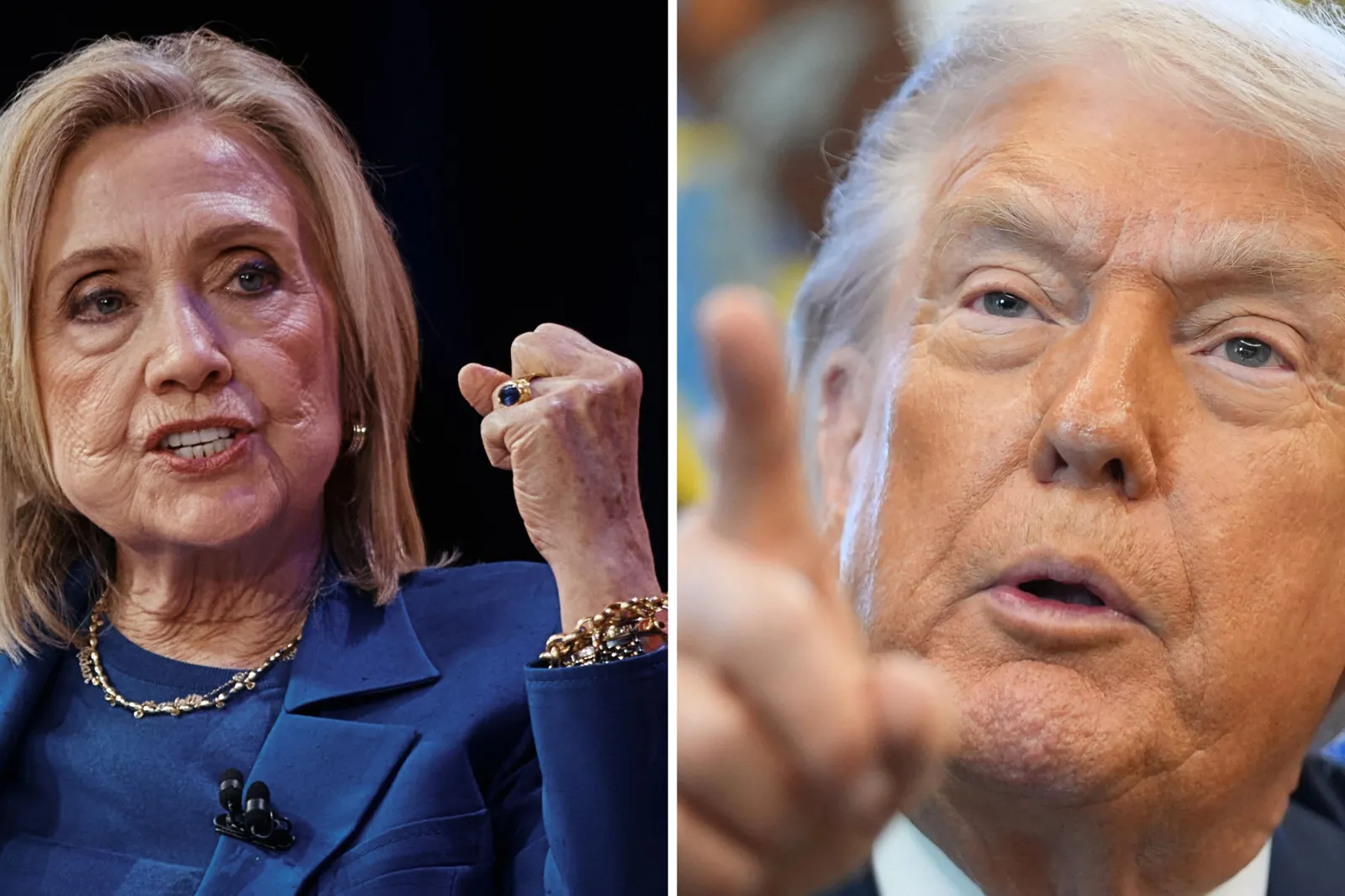
A federal appeals court on Tuesday appeared doubtful of President Donald Trump’s attempt to reinstate an anti-racketeering lawsuit that alleged a broad conspiracy by Hillary Rodham Clinton, former FBI Director James Comey, and others to link his 2016 presidential campaign to Russia.
The three-judge panel of the U.S. Court of Appeals for the Eleventh Circuit also heard arguments on whether nearly $1 million in sanctions imposed against Trump and his former attorney Alina Habba should stand.
Newsweek contacted Trump's legal team for comment via email outside of normal office hours on Wednesday.
Read More on U.S.
Why It Matters
A federal appeals court’s skeptical reception of Donald Trump’s effort to revive his dismissed racketeering lawsuit—and its review of nearly $1 million in sanctions against him and former attorney Alina Habba—underscores a broader fight over the limits of using the judiciary to advance political grievances.
The ruling will decide whether Trump owes substantial penalties and clarify how far public figures can advance political claims in federal court, a question with wider consequences for the judiciary and for Trump’s other legal fights.
...
What To Know
Origins Of The Lawsuit
Trump filed the Racketeer Influenced and Corrupt Organization Act (RICO) lawsuit in 2022, accusing more than two dozen political figures, lawyers, researchers, and former government officials of orchestrating what he described as an "unthinkable plot" to spread false allegations of collusion between his 2016 presidential campaign and Russia.
His complaint alleged that the defendants acted "in concert" to "weave a false narrative" of wrongdoing, prompting investigations that Trump said damaged his reputation and business interests.
The RICO is a federal law enacted in 1970 that targets organized schemes involving repeated criminal acts by allowing prosecution or civil suits against the entire enterprise.
Sanctions And Judicial Rebuke
U.S. District Judge Donald Middlebrooks dismissed the case in 2023, characterizing the 193-page amended complaint as a "shotgun pleading" whose allegations were "foreclosed by existing law."
Judge Middlebrooks said the lawsuit failed to meet the law’s basic requirements:
- It did not plausibly identify a coordinated "enterprise";
- It did not allege valid criminal predicate acts;
- It did not show specific and quantifiable financial harm;
- It was filed outside the four-year statute of limitations.
The judge found that Trump’s claims amounted to political grievances rather than racketeering activity, concluding the complaint was legally insufficient and "foreclosed by existing precedent."
In a subsequent sanctions order, he wrote: "This case should never have been brought. Its inadequacy as a legal claim was evident from the start. No reasonable lawyer would have filed it."
He added that the suit appeared "intended for a political purpose," and that "31 individuals and entities were needlessly harmed in order to dishonestly advance a political narrative."
The sanctions—totaling $938,000—were awarded to multiple defendants after the court found Trump and Habba had persisted with claims that lacked factual or legal grounding despite repeated warnings.
The court noted that the amended complaint "failed to cure any of the defects" identified in early rounds of briefing.
Appeals Court Skepticism
At Tuesday’s appellate hearing in Birmingham, Alabama, Trump’s lawyer Richard Klugh argued that the district court erred in dismissing the case and imposing sanctions.
According to hearing notes, Klugh asserted that Trump had alleged substantial reputational and business harm resulting from what he described as false accusations of a "secret back-channel between the president and the Kremlin."
He maintained that these allegations, if proven, constituted actionable injurious falsehood.
But Chief Judge William Pryor pressed Klugh on the sufficiency of the pleadings. Pryor noted that when a district court dismisses on multiple grounds, "you’ve got to knock down every one of those grounds."
He emphasized that one of the key deficiencies identified was the failure to plead special damages, stating: "I don’t see where you’ve really attacked that."
When Klugh suggested the district court misunderstood the complaint’s structure, Pryor was blunt. "Mr Klugh, I can read this complaint, it’s a shotgun pleading," he said. "There’s no question about that, is there?"
Judge Andrew Brasher also challenged Trump’s legal theory, raising questions about whether the claims were barred by statutes of limitation.
Klugh responded that the defendants could have sought a "more definite statement," which he said would have allowed Trump’s team to specify damages in greater detail.
The lawsuit drew on many of the same events examined in Special Counsel John Durham’s investigation, though Durham himself brought no conspiracy charges related to the origins of the Russia inquiry.
While Trump’s complaint contended that various actors "fabricated" evidence and coordinated to harm him politically, several defendants—including Charles Dolan—successfully sought sanctions on the grounds that the allegations against them were "false" and "cavalierly presented."
The Eleventh Circuit did not indicate when it would rule. If the panel upholds the sanctions, Trump and Habba will remain jointly responsible for the financial penalties imposed by the district court.
If the dismissal is affirmed, it would leave intact Judge Middlebrooks’ assessment that the lawsuit served primarily as "a political narrative" rather than a viable legal action.
What People Are Saying
Donald Trump’s 2022 complaint characterized the alleged actions of Clinton and others as: "The full extent of the Defendants’ wrongdoing has been steadily and gradually exposed […] these ‘speaking’ indictments not only implicate many of the Defendants named herein but also provide a great deal of insight into the inner-workings of the Defendants’ conspiratorial enterprise."
Judge Middlebrooks’ sanctions order stated: "This case should have never been brought. Its inadequacy as a legal claim was evident from the start. No reasonable lawyer would have filed it."
Hillary Rodham Clinton said in a June 16, 2021, interview with MSNBC, quoted in Trump’s complaint: "We don’t have Trump as spokesperson for Putin, anymore," Clinton said, adding: "After [a] disastrous Trump presidency, in which he gave Putin a green light to do whatever he wanted to do, once Trump was elected, of course."
What Happens Next
The Eleventh Circuit panel will issue a written ruling on whether Trump’s dismissed racketeering lawsuit should be revived or whether nearly $1 million in sanctions against him and former attorney Alina Habba will stand—a decision that could come in the next several weeks or months.
The judges can uphold the dismissal and sanctions, uphold the dismissal but reduce or eliminate the penalties, or revive some portion of the case.
If Trump loses, he can seek rehearing by the full court or appeal to the Supreme Court. An affirmation of the sanctions would move the case into enforcement and final fee calculations.
View 0 Comments
Submit Correction
View Editorial & AI Guidelines