...

By Robert Alexander
Senior Crime & Court Reporter
0
Share
Newsweek is a Trust Project member
See more of our trusted coverage when you search.Prefer Newsweek on Googleto see more of our trusted coverage when you search.
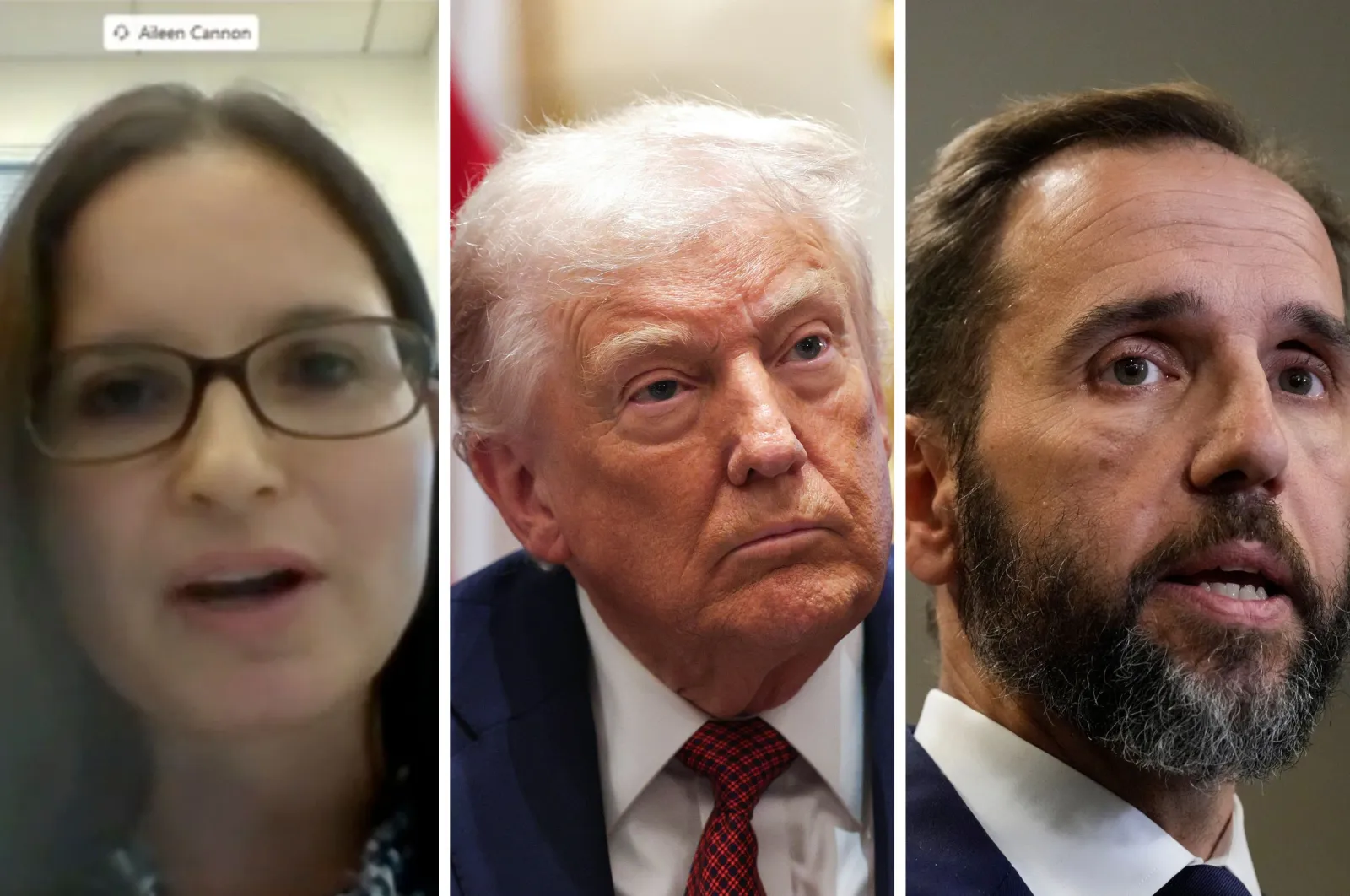
U.S. District Judge Aileen M. Cannon has approved a request from Donald J. Trump to reenter proceedings connected to the long-running dispute over the release of former Special Counsel Jack Smith’s final report on the alleged mishandling of classified documents, allowing him a final opportunity to restate arguments he has already made.
In a brief, paperless order signed on December 14, 2025, Cannon granted Trump’s motion for leave to participate as amicus curiae, or friend of the court.
The order states that Trump may participate "for the limited purpose of reaffirming and incorporating by reference his prior legal arguments," and adds that "no additional filings are permitted by this Order."
Read More on U.S.
Newsweek contacted the DOJ for comment via email outside of normal office hours on Monday.
Why It Matters
Judge Aileen M. Cannon’s decision to allow Donald J. Trump to reassert his prior arguments as the court nears a deadline matters because it effectively closes the record ahead of a ruling that will determine whether Volume II of former Special Counsel Jack Smith’s final report becomes public.
By permitting Trump a final, limited role while barring further filings under that order, Cannon signaled that the court views the dispute as fully briefed, setting the stage for a decision with implications for transparency, presidential accountability, and how courts handle the release of special counsel findings after criminal charges are dismissed.
...
What To Know
Why the Report Is Still Secret
Jack Smith is the former special counsel who investigated Donald Trump for allegedly mishandling classified documents, and Volume II is the part of his final report that explains everything his team found in that classified-documents investigation.
Judge Aileen Cannon has withheld releasing the report because she says making it public could harm the fair-trial rights of Trump’s former co-defendants if the case is ever revived, and Trump doesn’t want it released because he argues it would legitimize what he calls an unlawful investigation into his conduct.
Procedural Context As the Deadline Nears
The ruling comes with roughly two weeks remaining before a court-imposed deadline for resolving motions seeking access to Volume II of Smith’s final report.
That timing makes Trump’s amicus participation likely the last submission the court will consider before issuing a decision.
Trump is not a defendant in the current posture of the case, which now centers on whether Volume II of Smith’s report—addressing the classified documents investigation—should be released publicly.
Cannon previously dismissed the underlying criminal charges against Trump, citing what she described as constitutional defects in Smith’s appointment.
The Justice Department later abandoned its appeal as it related to Trump after the 2024 election, while appeals concerning co-defendants were also eventually dropped.
The immediate dispute stems from motions filed earlier this year by transparency and press freedom groups, including American Oversight and the Knight First Amendment Institute, seeking to intervene and have the court’s January 21, 2025, order blocking the report’s release rescinded.
That order temporarily barred publication of Volume II while related issues were litigated.
Trump initially sought to intervene directly in those proceedings.
Cannon denied that request but allowed him to participate as amicus curiae, a status that permits a non-party to present legal arguments without assuming the rights or obligations of a litigant.
Trump previously submitted amicus briefs opposing the release of the report, arguing that public disclosure would be improper given the dismissal of the case and the nature of the materials involved.
In his most recent filing, Trump asked for leave to participate again, but in a narrower role.
He told the court he was not seeking to introduce new arguments or evidence, but instead to "reaffirm" positions already laid out in earlier filings by his legal team and by his former co-defendants.
Cannon’s order grants that request.
What The Order Does—And Does Not Do
The language stating that "no additional filings are permitted by this Order" has drawn attention, but it appears limited in scope.
Rather than imposing a blanket prohibition on all future submissions in the case, the phrasing indicates that Cannon is not authorizing any further briefing from Trump beyond this reaffirmation.
Other parties’ ability to file, if permitted under existing schedules or separate orders, would not be governed by this single directive.
The timing is notable.
Earlier this fall, the U.S. Court of Appeals for the Eleventh Circuit held petitions for writs of mandamus—or compulsory orders by a higher court—filed by the intervenors in abeyance for 60 days, giving the district court time to resolve the pending motions.
That period is now nearing its end, increasing pressure on Cannon to issue a ruling.
If the court decides to maintain the block on releasing Volume II, the report could remain sealed indefinitely absent further appellate action.
If Cannon orders its release, the decision could set off another round of legal challenges.
For now, Trump’s reaffirmed arguments stand as the final word from his side of the dispute.
With the deadline approaching and no further briefing authorized under the December 14 order, the next move belongs to the court.
What People Are Saying
Donald Trump on June 14, 2023, during his first public remarks after being arraigned, claiming that the classified-documents prosecution was illegitimate—the same argument he is now invoking to keep Jack Smith’s final report sealed, said: "Today we witnessed the most evil and heinous abuse of power in the history of our country. Very sad thing to watch."
Judge Aileen Cannon, in her constitutional rationale for striking down Jack Smith’s appointment—the foundation of her order blocking release of the Smith report and the central legal argument now at issue, said: "The Framers gave Congress a pivotal role in the appointment of principal and inferior officers. That role cannot be usurped by the Executive Branch or diffused elsewhere—whether in this case or in another case, whether in times of heightened national need or not."
Late on Monday, Newsweek received the following statement from Chioma Chukwu, executive director of the nonpartisan watchdog, American Oversight: "Judge Cannon’s decision to grant President Trump’s eleventh-hour attempt to block the release of Special Counsel Jack Smith’s report reflects a troubling and increasingly familiar pattern of extraordinary deference. By entertaining an untimely request designed to delay disclosure, the court is once again attempting to insulate the president from public scrutiny."
She added, "This is not a good-faith legal dispute. It is the president’s desperate attempt to run out the clock and keep damaging information from the public, and the court chose to oblige. At a moment when the Trump administration is aggressively targeting perceived political enemies over alleged mishandling of classified documents, transparency and accountability for the president’s own conduct are not optional. They are essential to the rule of law. The American people are entitled to see this report without further delay or gamesmanship."
What Happens Next
With the record now effectively closed after Judge Aileen M. Cannon allowed Donald J. Trump to reaffirm his prior arguments, the court is expected to issue a decision before a looming appellate deadline on whether Volume II of former Special Counsel Jack Smith’s final report will be released.
Cannon’s ruling will either keep the report sealed or allow it to become public, and either outcome is likely to prompt swift action by the losing side at the U.S. Court of Appeals for the Eleventh Circuit, making the judge’s forthcoming order the next—and most consequential—step in the dispute.
Update 12/15/2025, 16:24 p.m. ET: This article has been updated with comment from Chioma Chukwu, executive director of the nonpartisan watchdog, American Oversight.
View 0 Comments
Submit Correction
View Editorial & AI Guidelines