- U.S.
- World
- Science
- Health
- Life
- Rankings
- Opinion
- Entertainment
- Fact Check
- My Turn
- Education
- EventsSportsPodcastsBetter PlanetBetter WorkplacesMightierAutosNewslettersUnconventionalVantageExpertsLeadershipDev Pragad
- Subscribe

- Login
×
Subscribe Login
- U.S.
- World
- Science
- Health
- Life
- Rankings
- Opinion
- Entertainment
- Fact Check
- My Turn
- Education
- Events
- Sports
- Podcasts
- Better Planet
- Better Workplaces
- Mightier
- Autos
- Newsletters
- Unconventional
- Vantage
- Experts
- Leadership
- Dev Pragad
Johnese Spisso
Home > Rankings List > Rankings Profile

Share
Share on Facebook Share on Twitter Share on LinkedInShare on RedditShare on Flipboard Share via Email Comments
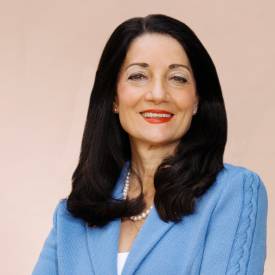
Johnese Spisso
UCLA Ronald Reagan
President, UCLA Health

Company Info
UCLA Ronald Reagan
Los Angeles
California
About
Johnese Spisso is the President of UCLA Health and CEO of UCLA Hospital System, as well as the associate vice chancellor of UCLA Health Sciences. She began her career as a critical-care nurse at the University of Pittsburgh Medical Center Presbyterian. From there, she moved up the ladder over 12 years at the University of California, Davis Medical Center and directed the critical care, trauma and burn center, emergency services and the Life Flight Air-Medical Program. Spisso also spent 22 years at the University of Washington Medicine in Seattle, where she served as the Chief Nursing Officer, Chief Operating Officer, Chief Health System Officer and Vice President of Medical Affairs for the University of Washington.Spisso is also involved in the greater Los Angeles community, serving as the Los Angeles Community Chair for the Leukemia and Lymphoma Society Light the Night Walk, as well as the Los Angeles Community Chair for the American Heart Association’s Go Red for Women Luncheon.
Education
- Master’s degree
Health care administration and public administration, University of San Francisco - Bachelor’s degree
Health sciences, Chapman University (Orange, CA) - School Of Nursing
RN, St. Francis School of Nursing (New Castle, PA)
Awards & Certifications
- Los Angeles Business Journal, CEO of the Year, 2023
- Modern Healthcare, 50 Most Influential Clinical Executives, 2023
- Partners in Care Foundation, Vision & Excellence in Healthcare Leadership Award, 2023
- Modern Healthcare, Top 25 Women Leaders in Healthcare, 2023
- Los Angeles Business Journal, Women of Influence: Health Care, 2023
Links to Rankings during tenure
- Newsweek’s Best In-State Hospitals, California 2024
- Newsweek’s World’s Best Specialized Hospitals 2024
- Newsweek’s World’s Best Smart Hospitals 2024
- Newsweek’s World’s Best Hospitals 2023
- Newsweek’s America’s Best Cancer Hospitals 2023
Past Rankings Appearances
- Newsweek's America's Best-In-State Hospitals 2024
- Newsweek's World's Best Smart Hospitals 2024
- Newsweek's World's Best Specialized Hospitals 2024
- Newsweek's World's Best Hospitals 2023
- Newsweek's World's Best Specialized Hospitals 2023
- Newsweek's America's Best Children's Hospitals 2023
- Newsweek's America's Best Cancer Hospitals 2023
- Newsweek's World's Best Hospitals 2022
CLOSE X
What does a successful hospital look like to you and how does UCLA Health achieve that goal?
A successful hospital is really the way our patients and families view us. Many times, we can all think we're doing everything right, but unless we really see and hear that from the lens of the patient and the families, I think it's easy to miss the mark. So, for me, the most important thing is are our patients happy with their care? Are they satisfied? Do they feel they're getting the best quality and the best outcomes and, most importantly, [is] our staff caring for them with kindness and empathy? I think that's what we're most known for at UCLA Health—patients expect us to know what we're doing, but they really want to know that we're giving them that individualized care, listening to them and making them a participant in their outcomes.
You have a background as a registered nurse. How has that hands-on experience informed your work as CEO running the UCLA Hospital System?
Starting my career as a registered nurse, working in critical care and a variety of other areas, really helped me understand the needs and what patients expect from their health care team. And it's really not only about the patient, it's the family and how do we have an environment where our staff are being inclusive [by] not only listening to the patient, but the family. Additionally, many times, nurses are coordinating the care on the team with the physicians, the therapists, the social workers. So [nursing experience] does allow you the visibility of what everyone else's job [is] and how that team comes together to deliver their best care for patients and families.
How do you navigate a work-life balance and what advice would you give to other people in similar positions of senior leadership in the health care industry, to help them navigate their priorities?
This is a 24/7 job and you're always thinking about what is happening, what the potential risks are, what you need to do to mitigate those [risks]. Health care is a business that is oftentimes very high risk. We're dealing with patients' lives. You really have to make sure that you have the systems and infrastructure in place. For me, having such a seasoned and expert team that I work with, having open and excellent communication, making sure we're available for advice when needed, I think has been the key to our success. For work-life balance, I do try to walk every day. Walking, particularly here on this beautiful UCLA campus, allows me to clear my head and think about problems with a little bit more time rather than being in the hectic health care environment and in the office. I try to, after work, take that space to reflect.
What are your hospital's strategies for retaining some of the top medical professionals or specialists, in order to maintain such a high level of expertise across several different departments?
And that really is the secret to success, right? Because our staff that works here are used to caring for very complex, ill and injured patients, and that level of expertise is very hard to get. So, retaining their talent and having their ability to train that next generation of health care professionals is really important to us, so we do have a variety of things to really make us the employer of choice. We definitely participate in the Newsweek survey for that and I'm thrilled to say we are always recognized as a top performer there. We also do a lot of training for our managers to really help them understand their roles as Chief Retention Officers for the staff. We do staff surveys, we do a lot of pulse surveys on a quarterly basis with five quick questions, and they change throughout the year to really see what is most important for our staff, and then we work very hard to stay competitive on salaries and benefits as well. I'm really thrilled to say we have very low turnover here at UCLA and really still [have] a very strong attraction to our brand as we're recruiting.
What are some of the accomplishments that you're most proud of—in your career overall or specifically during your tenure at UCLA?
One of the things I'm most excited about is our work in mental health and behavior. That's really something that's been abandoned by many, even in the health care community. We're in a community where a lot of our competitors have closed their beds to mental health to pursue more lucrative services. We operate one of the busiest mental health hospitals, The Linda and Stuart Resnick Neuropsychiatric Hospital. It's overflowing every day and we've embarked on a $450 million investment to purchase a hospital that closed and we're doing a huge renovation.
In 2026, we will be opening a dedicated behavior health campus with 139 in-patient beds, a dedicated psychiatric, urgent and emergent and treatment center for adults, pediatrics and geriatric, and then an expanded outpatient mental health and behavior health center that will allow us to greatly expand out partial hospitalization programs that we offer for autism, borderline [personality disorder], schizophrenia and other things. I'm really thrilled about that.
I'm still trying to figure out how we're going to pay for everything because it is a service that loses money, but when you look at the need in Los Angeles County and how under-vetted we are for that patient population, it really is an investment in the most vulnerable population in our community.
Additionally, another big effort that I'm really proud of is two years ago now, we started a homeless health care collaborative. We put a primary care clinic inside a specially equipped van, and we go to all of the areas where people are experiencing homelessness throughout L.A., and we provide a primary care visit. We take care of their health care needs, we get them plugged into specialists when they need to be seen and that program now has been up and running for two years.
One of the other great outcomes we saw is we've reduced emergency department visits for that population. Many times, they would come into the ED when they needed something that could be taken care of in a clinic, but there were barriers to those accesses. We started with two vans and now we're going to six vans [throughout] Los Angeles. We have almost 100,000 people at night who are experiencing homelessness. A lot of those are also not only men, but women and children, so it's really important for us to really remove barriers to access in that patient population.
What is one piece of advice that you would give to your younger self?
That question always comes up when I'm mentoring people—and I love to mentor young leaders. I think in the environment that we live in today, I would tell people to really stop putting so much pressure on themselves to get to that top level position. Getting great experience in whatever position you're in will end up preparing you for those jobs in the future. I find many times that some of our most talented young people come in and within two years, they're not promoted or having a different title, they're feeling like a failure. And it doesn't work like that, it isn't always linear.
I always tell people something that really served me in my career: I just focused on doing the best job in every job I was in. I was never actively looking for that next promotion, and people were finding me and asking me to apply because they saw that dedication, that commitment, the hard work and wanting to be doing the best at all times. As I think about how I look at leaders in the organization, those are the people that I'm watching—those up-and-comers that are doing things and those are the people that really are top of mind when you're thinking about new roles.
So, I would say to relax, you can learn something in every job you're in and not to put so much pressure [on] that title, the promotion. I still feel health care is one of the best careers there is out there. There is always going to be work, there's always going to be opportunities, so our ability to continue to recruit and retain our best leaders is really the key to our future.
This interview has been edited and condensed from two conversations for the sake of length and clarity.
 Visit our rankings portal


U.S.WorldScienceHealthRankingsOpinionEntertainmentFact CheckMy TurnEducationEventsSportsPodcastsBetter PlanetBetter WorkplacesMightierAutosNewslettersUnconventionalVantageExpertsLeadershipDev Pragad
Trending
Israel at War Vladimir Putin Russia-Ukraine War Donald Trump
Subscriptions
Membership Monthly $4.99 Membership Yearly $49.00 Membership+Print Monthly $9.99 Membership+Print Yearly $99
Newsletters in your inbox See all
The Bulletin (Daily)See Sample
The Gist of It (Daily)
Geoscape (Twice a Week)
The 1600 (Daily)
Inside Trump Policy (Weekly)
Newsweek AI (Weekly)
Sports Daily (Daily)
The Josh Hammer Report (Weekly)See Sample
For The Culture (Three Times a Week)See Sample
Discoveries (3 Times a Week)
Like & Subscribe (Daily)
Breaking News (As it Breaks)
The Debate (Twice a Week)
Pawsitively (Daily)
Better Planet (Weekly)
The Good Life (Weekly)
Newsweek Pulse (2x3 Times a Month)
Sign up now
You can unsubscribe at any time. By signing up you are agreeing to our Terms of Service and Privacy Policy
In The Magazine  September 19
2025 Issue
Company
About UsMastheadDiversityAnnouncementsArchivePolicies and StandardsMission StatementLeadershipNewslettersPress Center
Editions:
Contact
AdvertiseCareersContact UsCorrections
Terms of Use
Cookie PolicyCopyrightPrivacy PolicyTerms & ConditionsTerms of Sale Privacy Settings
© 2026 NEWSWEEK DIGITAL LLC