10
Loading video...


By Hollie Silverman and Anna Commander
0
Share
Newsweek is a Trust Project member
See more of our trusted coverage when you search.Prefer Newsweek on Googleto see more of our trusted coverage when you search.
Missouri U.S. Senator Eric Schmitt seemingly attempted to catch former special counsel Jack Smith in a lie during a tense Senate Judiciary Committee hearing Tuesday, accusing him of attending an Atlanta Hawks NBA game in 2024.
Schmitt said, "I'll give you a second to process it, so you don't perjure yourself."
"I think you've already perjured yourself," he added later, after asking Smith about alleged text messages from the former special counsel's team saying he was in Atlanta attending a Golden State Warriors game versus the Hawks.
Read More on Politics
One of the hearing's sharpest confrontations then came after Schmitt concluded his blistering round of questioning by accusing Smith of politicizing the justice system. He also personally attacked the former special counsel.
"You may think you're a hero in the story, but let me tell you something. You're the villain," Schmitt said. "You have weaponized the Department of Justice against political enemies to an extent that has never happened in the history of this country. You will go down as a total dirtbag."
Smith addressed the question regarding the basketball game, later saying that he attended an Iowa Hawkeyes NCAA hoops matchup in Maryland in 2024, prompting Democratic Senator Amy Klobuchar of Minnesota to point out the potential name confusion over "Hawks" versus "Hawkeyes."
“Could it then be that University of Iowa is the Hawkeyes, could that be it? ... That might be the confusion over the names of the team, but perhaps you should have looked at it more carefully,” Klobuchar told Schmitt.
The moment took social media by storm as lawmakers, journalists and political analysts pounced on the remarks.
House Minority Leader Hakeem Jeffries called Schmitt a "sycophantic conspiracy-peddling hack" who "doesn’t know the difference between the Iowa Hawkeyes and the Atlanta Hawks."
David Axelrod, former adviser to President Barack Obama, also said on X, "This is a parable about how the false conspiracy racket works."
ABC News' Jonathan Karl called the moment "bizarre," adding in part, "I have never seen 'evidence' introduced so quickly and then hidden."
After the hearing, Schmitt addressed the moment on X, saying, "Who knew Jack Smith was a Caitlin Clark fan?" The post was seen over 2 million times.
Schmitt Calls Smith a 'Dirtbag,' Sparking Clash with Klobuchar
Schmitt's "dirtbag" remark immediately drew pushback from Klobuchar, who challenged Schmitt's characterization of Smith and evidence he had presented earlier in the hearing regarding Smith's whereabouts during a basketball game involving Caitlin Clark and the University of Iowa.
The exchange quickly devolved into a back-and-forth between the senators, with Schmitt asking, "So whose questioning is this, by the way?" and accusing Klobuchar of trying to "rehabilitate the witness."
Klobuchar fired back that senators should "have their facts straight" before making such allegations, adding that "for a U.S. senator to have false information and imply...that you were somehow involved that day in what was happening in Georgia, and then call you a dirtbag is something that deserves an apology."
The dispute underscored the deep partisan divide that defined much of the hearing, with Republicans accusing Smith of politically motivated investigations and Democrats defending his work while criticizing personal attacks.
Republicans Press Jack Smith on Tooth Fairy, Denny’s and ‘Les Miserables’
Republican Senator John Kennedy of Louisiana repeatedly also clashed with Smith during the hearing, pressing him over the federal prosecutions of President Donald Trump. The senator punctuated his questioning with references to the Tooth Fairy, the Easter Bunny, Jimmy Hoffa and even former first lady Michelle Obama's Netflix documentary.
The exchange became one of the hearing's most heated moments as Kennedy accused Smith of political bias, while Smith repeatedly defended the independence of his investigations and said charging decisions were based on what he described as "incredibly strong evidence."
Other Republicans echoed Kennedy's sentiment, including Schmitt and Texas Senator Ted Cruz, throughout their lines of questioning.
"The hearing seemed largely performative and showed how partisan and politicized the U.S. Senate generally, and the Judiciary Committee specifically, have become in the last two years," Carl Tobias, Williams Chair in Law at the University of Richmond School of Law, told Newsweek in an emailed statement.

...
The hearing provided Republicans with a high-profile opportunity to scrutinize Smith's handling of the federal cases against Trump, which centered on classified documents and alleged efforts to overturn the results of the 2020 election.
Kennedy's questioning reflected a broader Republican argument that the investigations were politically motivated and influenced by the Biden administration. Smith rejected those suggestions throughout his testimony, maintaining that he made his decisions independently under special counsel regulations.
The confrontation also underscored the partisan divide that continues to surround the prosecutions years after Smith first brought charges against Trump.
Related Story
Jack Smith Faces DOJ Criminal Referral, Accused of Lying in Testimony
Why Jack Smith Is Testifying
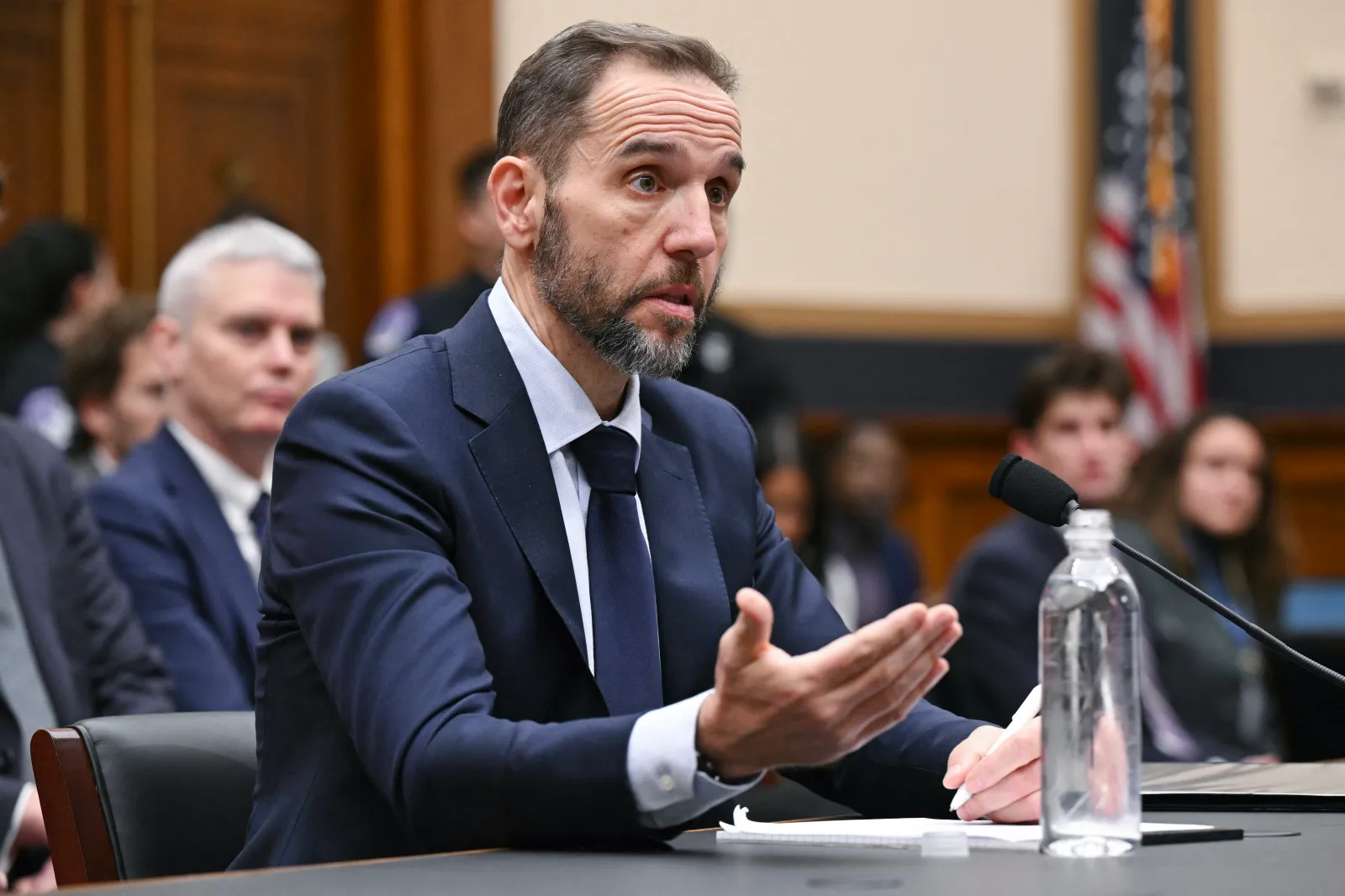
Smith appeared before the Senate Judiciary Committee to answer questions about his work as special counsel and the investigations that resulted in criminal cases against Trump.
Kennedy focused much of his questioning on whether former Attorney General Merrick Garland or former President Joe Biden played any role in the decision to prosecute Trump. Smith testified that he informed Garland of his charging decisions but repeatedly said he had no knowledge of any discussions Garland may have had with Biden or White House officials.
"There were two separate decisions: one in the classified documents case and one in the elections case," Smith said. "In both instances," he decided to move forward after determining the evidence supported prosecution.
Asked whether Garland consulted Biden before filing the cases, Smith replied: "I have absolutely no idea."
Smith also stressed that, under the special counsel regulations, the charging decisions were his own.
"My job as a prosecutor on the special counsel regulations was to make an independent decision," Smith said. "I made that decision on my own, consulting with my staff and reviewing the incredibly strong evidence that we had accumulated."
What Kennedy Said
The Louisiana Republican's questioning began with a series of inquiries about Smith's appointment as special counsel and whether he had sought the role.
Kennedy then questioned Smith about Garland, asking whether the attorney general was "a smart guy," "an experienced guy," and ultimately, "a dummy."
Smith responded diplomatically, saying Garland had struck him as "experienced and intelligent."
The exchange grew more colorful when Kennedy challenged Smith's claim that he had no knowledge of any involvement by Biden.
"Do you believe in the Tooth Fairy?" Kennedy asked.
"I do not," Smith replied.
"How about the Easter Bunny?"
"I no longer believe in the Easter Bunny," Smith answered.
Kennedy followed up with another unusual question: "Do you think Jimmy Hoffa died of natural causes?"
"I do not," Smith replied.
The senator later accused Smith of improperly obtaining phone records connected to Republican lawmakers during the January 6 investigation and argued the actions violated the U.S. Constitution's Speech or Debate Clause.
As Smith attempted to respond, Kennedy repeatedly accused him of filibustering and mocked his legal credentials.
"Were you in the quad playing Frisbee during constitutional law at Harvard Law School?" Kennedy asked.
The confrontation escalated near the end of Kennedy's allotted time, when he accused Smith of bias and declared: "You make me want to throw up in my mouth."
Kennedy also entered into the Congressional Record material related to Smith's wife, filmmaker Katy Chevigny, including references to the Michelle Obama documentary Becoming, which Chevigny helped produce.
In an interview with Fox News following the testimony, Kennedy continued to slam Smith, saying: "I'm sure Jesus loves him, but everyone else who believes in the rule of law thinks he's an idiot.
"He's well known around Washington. He's been hanging around this place since God was a baby. He's a bottom feeder in the Washington swamp. He's a political operative masquerading as a prosecutor. He's the kind of Washingtonian who would unplug your life support to charge his cellphone.
"I believe he was following orders given to him by Attorney General Garland. I believe Attorney General Garland hired him to prosecute Donald Trump because they were worried that Donald Trump would run against Joe Biden, and I think Joe Biden told Merrick Garland to do that."

...
Cruz Compares Smith to 'Les Misérables' Villain
The hearing grew particularly heated during Cruz's exchange with Smith, which centered on the Justice Department's efforts to obtain communications records from lawmakers during investigations related to Trump.
Cruz, a Texas Republican, accused Smith of securing nondisclosure orders that judges signed "like he was signing Denny's menus one at a time, over and over and over again," and argued that the orders conflicted with federal protections for congressional communications. Smith rejected those allegations, maintaining that prosecutors acted "consistent with the law" and Justice Department policy.
After pressing Smith on whether he had any regrets about his work as special counsel, Cruz accused him of politicizing the Justice Department and helping fuel Trump's political comeback.
"Javert from Les Mis would look at you with astonishment," Cruz said, invoking the obsessive law-enforcement antagonist from Victor Hugo's 1862 novel. Cruz further alleged that Smith had been "conscripted as a foot soldier for the DNC" and called his conduct "the most egregious abuse of power in the history of the Department of Justice."
Smith declined to engage with the characterization, saying only that he regretted that people he worked with had been "unfairly fired and vilified."
Democrats Defend Smith, Rebuke GOP Attacks
Democrats on the committee sharply pushed back against Republican criticism of Smith, accusing their colleagues of attacking investigators rather than confronting the events of January 6 and the evidence gathered during the special counsel's probes.
Senator Chris Coons of Delaware objected to Kennedy's interruptions and argued that Smith should be allowed to fully answer questions.
"This hearing is of constitutional and historic importance," Coons said as Kennedy's time expired. "This witness should be allowed to answer the questions, complete a sentence."
Coons later defended Smith's work, arguing that the special counsel and his team uncovered evidence of an unprecedented effort to overturn the results of the 2020 election and that federal grand juries ultimately approved the charges brought against Trump.
Klobuchar defended the prosecutors and agents who worked on the January 6 and Trump-related investigations, highlighting threats and attacks they have faced. Smith called them "good and decent people" who devoted their careers to public service and said many had served in the military, law enforcement and other government roles. She warned that firing experienced prosecutors and investigators weakens public safety and undermines confidence in the justice system.
New Jersey Senator Cory Booker delivered one of the hearing's most passionate defenses of Smith, accusing Republicans of "gaslighting the American people" by revisiting false claims about the 2020 election. Booker argued that Trump "called Republicans in Georgia and said, find me over 11,000 votes," pressured members of Congress and then "incited people to attack this Capitol." Recalling his own experience during the January 6 attack, Booker said lawmakers from both parties fled for safety while rioters threatened then-Vice President Mike Pence.
He argued that Republicans were "more concerned with Trump than the truth, more concerned with Trump's crimes than the Constitution" and were putting investigators "on trial" instead of scrutinizing Trump's actions. When Booker asked whether the investigation found Trump had incited and sought to exploit the violence, Smith replied: "We found that he caused that violence, that it was foreseeable to him and that he sought to exploit it."
"I think that Senator Klobuchar showed that Senator Schmitt had his facts wrong about Smith’s attendance at a basketball game in Atlanta," Tobias told Newsweek, adding, *"*Senator Klobuchar, Senator Coons, and Senator Durbin effectively defended Smith against the Kennedy and Cruz accusations, especially that Smith purportedly had engaged in illegal actions when investigating Trump."
What Happens Next
Tuesday's hearing marked the end of Smith's public testimony before the Senate Judiciary Committee, capping hours of contentious exchanges that highlighted the deep partisan divide over the Trump investigations and the January 6 probe. Lawmakers used the session to revisit the special counsel's decisions, the handling of subpoenas and search warrants, and the evidence underlying the criminal cases against Trump.
With the hearing adjourned, the committee is expected to review the testimony, documentary evidence entered into the record and statements submitted by lawmakers who did not participate in person. Republicans have signaled they will continue scrutinizing the origins and conduct of the investigations, while Democrats used the hearing to defend prosecutors and investigators involved in the cases and to emphasize the findings related to the 2020 election and January 6.
No additional testimony from Smith was announced before Tuesday's adjournment, and the criminal cases he led as special counsel have already been closed following Trump's return to office. However, the political and legal debates surrounding those investigations are likely to continue on Capitol Hill as lawmakers pursue competing narratives about the Justice Department's actions and Trump's efforts to overturn the 2020 election.
The hearing leaves a sharply divided record: Republicans argued Smith's investigations represented an unprecedented abuse of prosecutorial power, while Democrats maintained the evidence justified the charges and warned against efforts to undermine public confidence in the rule of law. Those disputes are expected to remain a flashpoint heading into the final weeks before the November midterm elections.
Contact Newsweek editors on this story: Samantha Beech, Sam Wilson, Dave Siminoff.
View 0 Comments
Submit Correction
View Editorial & AI Guidelines