10
Loading video...

By Gabe Whisnant
News Editor
0
Share
Newsweek is a Trust Project member
See more of our trusted coverage when you search.Prefer Newsweek on Googleto see more of our trusted coverage when you search.
President Donald Trump responded after Joe Kent, the director of the National Counterterrorism Center, announced his resignation on Tuesday, citing his concerns about the justification for military strikes in Iran.
Kent said he “cannot in good conscience” back the Trump administration’s war.
The president said, in part, in response to a question about Kent's resignation at the White House, "I always thought he was weak on security. Very weak on security. It's a good thing that he's out."
Read More on Politics
Trump added that if someone in his administration did not believe Iran was a threat, “we don’t want those people.”
“They’re not smart people, or they’re not savvy people,” the president said. “Iran was a tremendous threat.”
Who is Joe Kent?
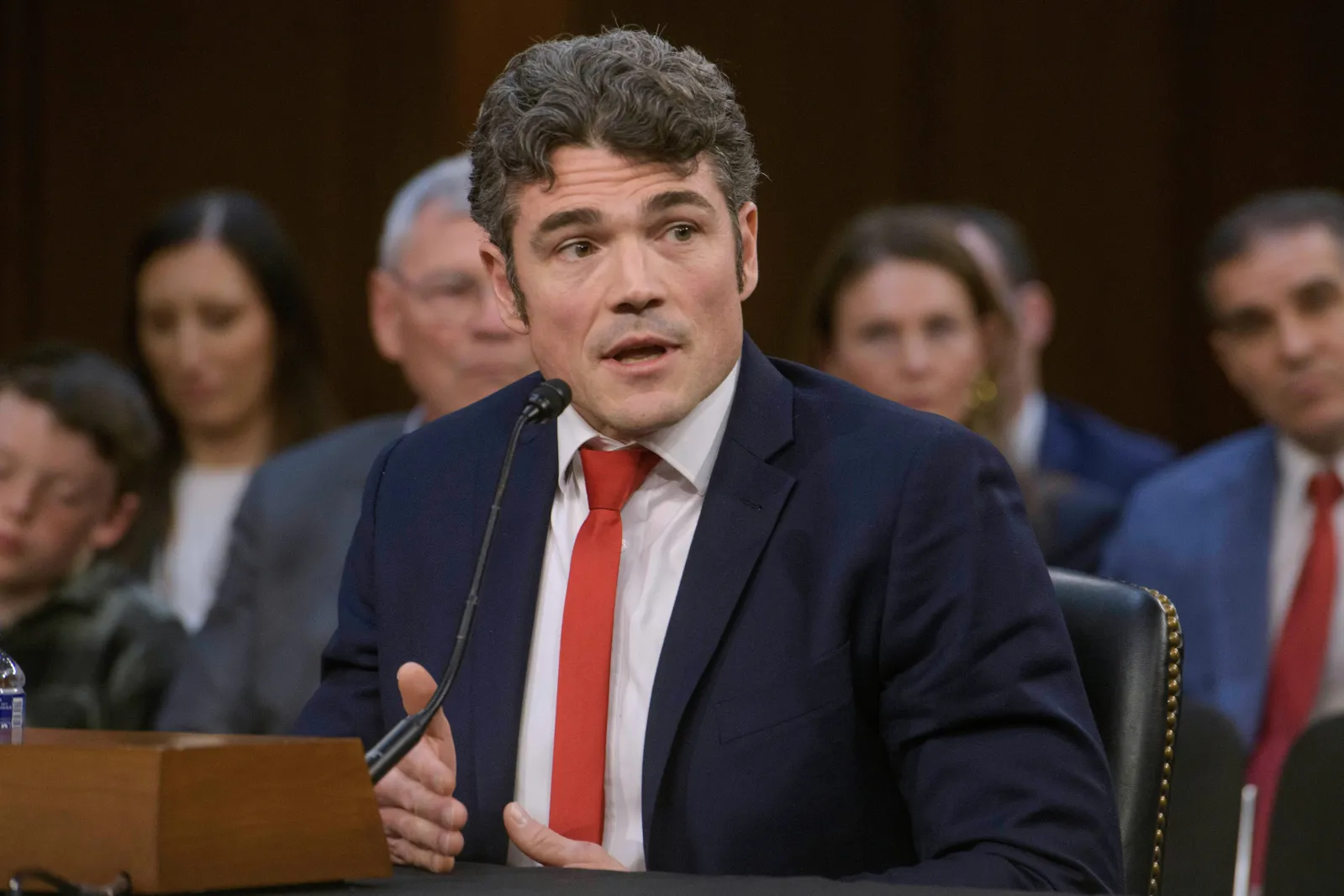
Joe Kent is a U.S. military veteran and former CIA officer who served as director of the National Counterterrorism Center after being confirmed by the Senate last year. A former Green Beret with multiple combat deployments, Kent previously ran unsuccessfully for Congress in Washington state and was appointed to the counterterrorism post by Trump, despite Democratic opposition citing his past political associations.
When Trump nominated Kent to lead the National Counterterrorism Center in February 2025, he praised Kent’s military and intelligence background, calling him a former Green Beret and CIA officer who had “hunted down terrorists and criminals his entire adult life.”
Trump said Kent understood “the terrible cost of terrorism” and would help “keep America safe by eradicating all terrorism,” citing both his service record and personal loss.
...
What Did Joe Kent's Resignation Letter Say?
In his resignation letter, Kent said he “cannot in good conscience” support the Trump administration’s war in Iran, arguing that Tehran posed no imminent threat to the United States. He wrote that the conflict was launched under pressure from Israel and criticized the justification for military strikes, urging the president to reconsider the course of the war while emphasizing the human cost of prolonged military conflict.
“Iran posed no imminent threat to our nation, and it is clear that we started this war due to pressure from Israel and its powerful American lobby,” Kent said in a statement posted on social media.
White House press secretary Karoline Leavitt forcefully rejected Kent’s claims, disputing his assertions in a lengthy statement posted on X. Leavitt also dismissed Kent’s suggestion that President Donald Trump was influenced by Israel in ordering the strikes, calling the allegation “both insulting and laughable.”
“As President Trump has clearly and explicitly stated, he had strong and compelling evidence that Iran was going to attack the United States first,” Leavitt said. “This evidence was compiled from many sources and factors. President Trump would never make the decision to deploy military assets against a foreign adversary in a vacuum.”

...
What Is the National Counterterrorism Center?
The National Counterterrorism Center is a U.S. government agency housed within the Office of the Director of National Intelligence, led by Tulsi Gabbard, and is responsible for analyzing and integrating intelligence related to terrorist threats. It coordinates counterterrorism efforts across federal agencies and serves as a central hub for assessing risks to U.S. national security, with its director acting as a senior adviser to the president on terrorism‑related matters.
Gabbard wrote in a social media post Tuesday that it was up to Trump to decide whether Iran posed a threat.
“After carefully reviewing all the information before him, President Trump concluded that the terrorist Islamist regime in Iran posed an imminent threat and he took action based on that conclusion,” Gabbard wrote in the post. She did not mention her own views of the strikes.
Updates: 3/17/26, 2:14 p.m. ET: This article was updated with new information and remarks.
Updates: 3/17/26, 6:37 p.m. ET: This article was updated with new information and remarks.
View 0 Comments
Submit Correction
View Editorial & AI Guidelines