10
Loading video...

By Dan Gooding
Associate News Editor
0
Share
Newsweek is a Trust Project member
See more of our trusted coverage when you search.Prefer Newsweek on Googleto see more of our trusted coverage when you search.
The United States does not need to produce as many jobs because of the Trump administration's mass deportation strategy, Treasury Secretary Scott Bessent said Thursday.
After a recent report showed signs that the U.S. job market may be weakening, Bessent argued that fewer jobs are needed because deportations and lower levels of immigration have reduced the size of the workforce.
"I think the jobs numbers are quite noisy," Bessent told CNBC. "The other thing that's important, too, is the jobs that we're seeing are going to Americans. After the deportations that we've seen during President Donald Trump's administration, and the closing of the border, this unfettered migration, we don't need to produce as many jobs."
Read More on Politics
His remarks shifted the focus from the administration's frequent campaign argument that deportations would create opportunities for American workers to a broader argument that a smaller labor force requires fewer new jobs.
“Secretary Bessent is right: President Trump’s immigration enforcement agenda is unburdening the U.S. economy while expanding opportunities for American citizens," White House Spokesman Kush Desai told Newsweek. "Wage growth in key sectors like construction and manufacturing reflects how this agenda is benefitting everyday American workers.”
The administration's perspective was met with opposition from immigration advocates and economists Thursday. The American Immigration Council's director of research Nan Wu told Newsweek that the deportation campaign was focused on deporting workers the U.S. economy needs to keep vital industries afloat.
"Removing these workers, and then claiming that our economy no longer needs to 'create' as many jobs, is no economic success story," Wu said Thursday.

...
What the Latest Data Shows
Bessent's comments come after a difficult stretch for the labor market. The Bureau of Labor Statistics (BLS) reported this month that the U.S. lost 23,000 jobs in July, while payroll estimates for May and June were revised downward by a combined 103,000 jobs, suggesting hiring was weaker than previously believed.
The unemployment rate stood at 4.1 percent, while the labor force participation rate fell to 61.4 percent, continuing a decline seen earlier this year.
Administration officials have argued that tougher immigration enforcement is helping ensure that available jobs go to American workers. But many economists view a shrinking labor force as a long-term challenge for economic growth because having fewer workers generally means that businesses can produce fewer goods and services.
"Bessent is certainly right that the U.S. economy isn’t producing many jobs. Hiring is extraordinarily weak—hiring rates are where they were in 2011, in the aftermath of the great recession," Heidi Shierholz, president of the Economic Policy Institute, told Newsweek. "But the idea that weak job growth is somehow okay economically if it is the result of deportations is deeply wrong.
"Deporting immigrants does not make U.S.-born workers better off. That is not how the economy works. Deportations don’t just affect those being deported, they ripple through the entire economy."
Shierholz said that when there are fewer immigrant roofers and framers, fewer homes are built, meaning less work for U.S.-born electricians and plumbers.
Related Story
New Visa Proposal Would Let States Bring in Migrant Workers
The argument has surfaced repeatedly in government and private-sector analyses. A 2026 report from the Social Security Trustees projected that labor-force growth will remain historically weak in the coming decades, largely because of an aging population and slower growth in the working-age population.
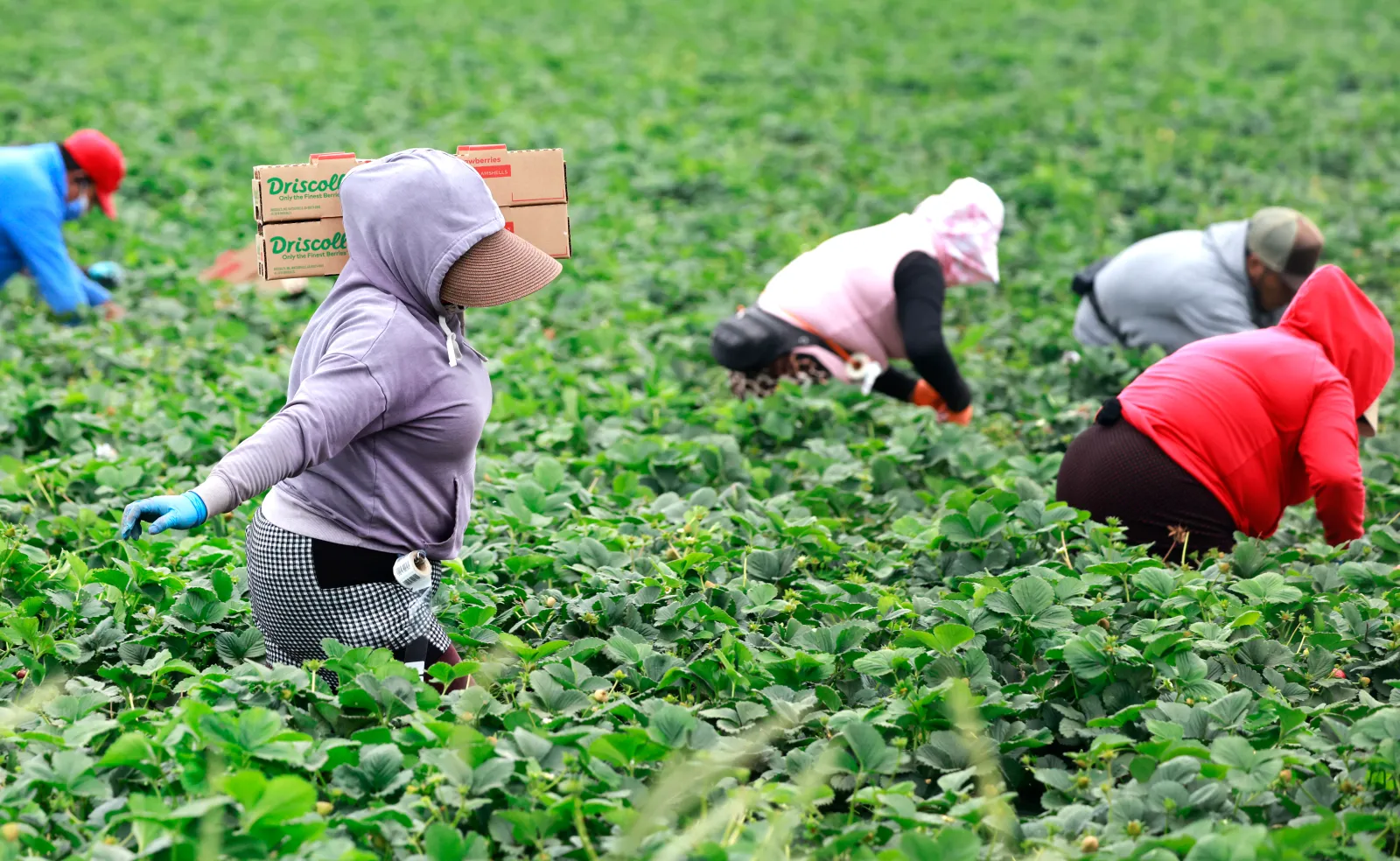
Trump administration agencies have acknowledged the importance of immigrant workers in certain sectors. In a recent federal rulemaking, the Department of Homeland Security stated that immigrants fill critical gaps across industries including agriculture, healthcare, construction and transportation, and noted that immigrants are a net positive for the U.S. economy overall.
Newsweek previously reported that labor-market researchers and immigration analysts warned that mass deportations could reduce the number of available workers at a time when employers continue to report hiring challenges.
Stuart Anderson of the National Foundation for American Policy told Newsweek before the 2024 election that without immigrants and their children, the U.S. would have seen little labor-force growth in recent years.
He told Newsweek on Thursday said that the administration's policies had "failed to help" American workers.
"The unemployment rate for U.S.-born workers increased to 4.6 percent in July from 4.3 percent when Donald Trump took office in January," Anderson said. "Expelling workers and reducing the labor supply reduces economic dynamism and provides fewer opportunities for employers and entrepreneurs to invest in new or existing businesses. Nobody will start a second restaurant if they can't find enough employees for their current restaurant."

...
How Bessent's Explanation Differs From Campaign Messaging
During the campaign, Trump and Vice President JD Vance frequently argued that undocumented immigrants were competing with Americans for jobs and housing, and that tougher immigration enforcement would improve opportunities for U.S.-born workers.
Bessent did not dispute that argument. Instead, he suggested that deportations and lower immigration have reduced the number of workers in the economy, meaning fewer new jobs are needed than in previous years.
Economists remain divided over how immigration affects wages and employment. Some argue that lower immigration can reduce competition for certain jobs, while others contend that immigrants help drive economic growth by filling labor shortages, spending money and supporting new business creation.
"The [administration's] policies give employers less incentive to invest in training or take more chances on marginal workers because there are fewer economic opportunities, in part because immigrants are also consumers, and reducing immigration also reduces the domestic market for goods and services," Anderson said.
Bessent's comments, therefore, add to a conversation that is less about whether deportations create opportunities for Americans and more about whether reducing the size of the workforce ultimately helps or harms long-term economic growth.
"Mass deportation could shrink our economy's capacity to grow by removing the entrepreneurs, taxpayers, and workers who help American businesses grow," Wu said. "The real solution needed here is building an immigration system that meets the country’s workforce needs and recognizes the vital role that immigrants play in generating wealth and prosperity."
Update 8/20/26, 4:48 p.m. ET: This article was updated with comment from Kush Desai and Nan Wu.
Update 8/20/26, 5:42 p.m. ET: This article was updated with comment from Heidi Shierholz.
Contact Newsweek editors on this story: Gabe Whisnant and Dave Siminoff.
View 0 Comments
Submit Correction
View Editorial & AI Guidelines