
By Jesus Mesa
Reporter
0
Share
Newsweek is a Trust Project member
See more of our trusted coverage when you search.Prefer Newsweek on Googleto see more of our trusted coverage when you search.
Vice President JD Vance, one of the most prominent Catholic conservatives in national office, now navigates a dispute between two institutions that have shaped his public identity: the church he belongs to and the administration he serves.
The tension erupted into public view on Wednesday when Vance stood in Budapest and claimed not to know Cardinal Christophe Pierre—the Vatican's ambassador to the United States.
"For one, with no disrespect to the cardinal, I don't know who Cardinal Christophe Pierre is," he said at a rally for Viktor Orbán.
Read More on Politics
When reminded of Pierre's role, Vance paused. "Oh…right, right. I just didn't remember the name."
The claim puzzled observers. Vance has positioned himself as the Trump administration's primary Vatican interlocutor. Days earlier, The Free Press had broken news of a tense Pentagon meeting with that same cardinal—one that would strain U.S.-Vatican relations to their breaking point.
When reporters pressed him about the confrontation, Vance shifted tone. "I would actually like to talk to Cardinal Christophe Pierre and figure out what actually happened. I think it's always a bad idea to offer an opinion on stories that are unconfirmed and uncorroborated, so I'm not going to do that."
The Pentagon Confrontation
Months of theological tension hardened into geopolitical conflict in January.
On January 9, Pope Leo XIV—the first American pope—delivered a State of the World address warning that "a diplomacy that promotes dialogue and seeks consensus among all parties is being replaced by a diplomacy based on force."
Pentagon officials took the speech as a direct challenge, particularly after the January 3 military raid on Venezuela and Trump's assertion of unchallenged U.S. dominion over the Western Hemisphere.
Days after the pope's speech, Under Secretary of Defense Elbridge Colby—a Catholic and close ally of Vance—summoned Cardinal Pierre to the Pentagon. According to Vatican and U.S. officials, Colby told the papal ambassador: "America has the military power to do whatever it wants in the world. The Catholic Church had better take its side."

...
The meeting grew heated. A U.S. official invoked the Avignon Papacy—the 1309-1377 period when the French Crown used military force to subjugate the church. Vatican officials interpreted the reference as an implicit threat. Cardinal Pierre sat in silence.
Christopher Hale, an independent journalist covering Vatican affairs, called it "the most remarkable moment in the long and knotted history of the American republic's relationship with the Catholic Church."
Pope Leo XIV declined the White House invitation that Vance had extended. Instead of visiting for America's 250th anniversary, he announced he would spend July Fourth on Lampedusa, the Italian island where African migrants wash ashore. One Vatican official told The Free Press: "The Pope may well never visit the United States under this administration."
On Thursday, as reporting on the meeting dominated headlines, the U.S. Embassy to the Holy See issued a statement. Ambassador Brian Burch said he had spoken with Cardinal Pierre, who denied the media account. According to the embassy's social media posts, Pierre described the January meeting as "frank, but very cordial" and a "normal encounter," saying the reporting "does not reflect what happened" and was "just invented to make a story."
A Theological Rupture
But the clash between the White House and Vatican began long before the Pentagon meeting—rooted in the vice president's interpretation of Catholic teaching itself.
Vance was baptized and confirmed on the same day in August 2019 at age 35 at St. Gertrude Priory in Cincinnati. His conversion began at Yale Law School when Peter Thiel introduced him to René Girard and St. Augustine.
- ESSENTIAL READING: The Next MAGA Matrix Dilemma Has Arrived
- How Brigitte Macron Became Donald’s Trump Card
In January 2025, just weeks into the Trump administration, Vance invoked the Catholic concept of "ordo amoris"—the order of love—to defend mass deportation policies. "You love your family, and then you love your neighbor, and then you love your community, and then you love your fellow citizens in your own country," he said on Fox News.
Pope Francis responded in February with a letter to U.S. bishops directly rejecting his interpretation. "Christian love is not a concentric expansion of interests," Francis wrote.

...
Emma McDonald Kennedy, assistant professor of Christian ethics at Villanova University, told Newsweek that Vance's interpretation diverges from customary Catholic principles. "Vance's interpretation falls outside of traditional Catholic thought. The concept has a long and detailed history, but Vance's version fell outside the bounds of Church teaching," Kennedy said.
She explained the church's position: "While there is definitely empowerment of lay people like JD Vance to interpret concepts and speak publicly about their faith, there is also an important role for church authorities—bishops and the Pope—to respond and clarify what those terms traditionally mean."
Around the same time, Vance accused the U.S. Conference of Catholic Bishops of prioritizing money over morality in resettling immigrants. Cardinal Timothy Dolan called the remarks "scurrilous" and "very nasty." Vance later privately apologized, telling Dillon the comment "was out of line and that's not true."
Kennedy told Newsweek: "It is concerning to see someone portray their Catholic faith as an incredibly important part of their life and journey, and to see that that doesn't seem to align with a lot of the actions that they're taking on the public stage."
Where the Church Stands
As Vance's public theology drew criticism, Pope Leo XIV was articulating a competing vision of what Catholicism demands.
Michele Dillon, dean of the College of Liberal Arts at the University of New Hampshire, told Newsweek that Pope Leo XIV follows a longer papal tradition. "Pope Leo XIII, at the end of the 19th century, is credited with the first beginnings of articulating what's called today Catholic social teaching. Every pope since those days has been emphasizing and articulating what that means, even as the issues change," Dillon said.
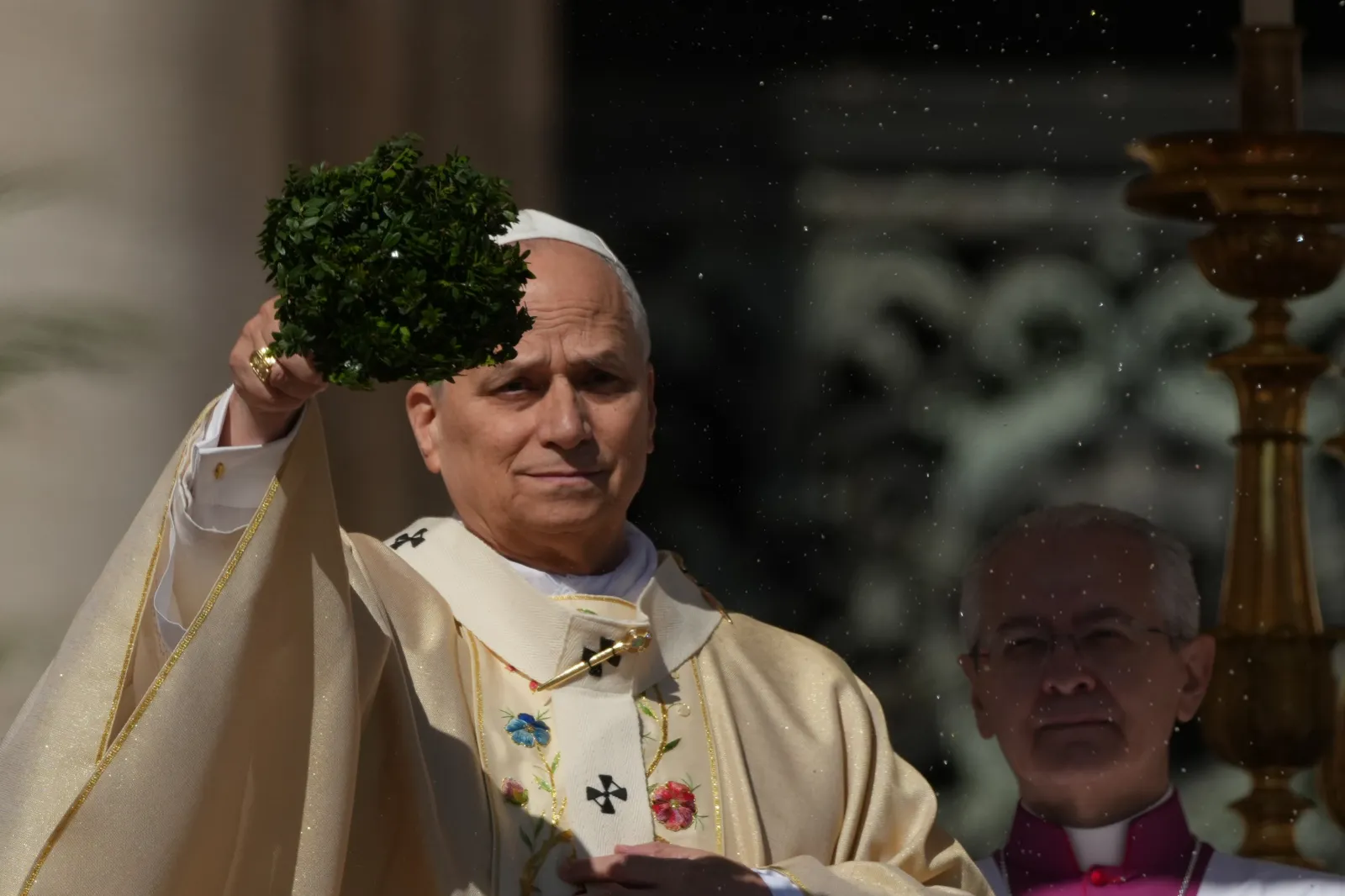
By taking the name Leo XIV in honor of Leo XIII, the pope was deliberately following that lineage. On Palm Sunday, March 29, he declared that God "does not listen to the prayers of those who wage war, but rejects them"—a statement many understood as a rebuke of Secretary of Defense Pete Hegseth's Pentagon worship services.
...
Dillon also told Newsweek that Vance's case is significant because he has become the most publicly visible Catholic in American government while interpreting Catholicism in ways that prioritize politics.
"People tend to interpret Catholicism through the lens of their politics rather than the other way around," Dillon said. "Thirty or forty years ago, if you knew someone was Catholic, you could predict their positions on various issues. Today, knowing that someone is Catholic is not very helpful at all."
Now Vance faces a reckoning: His faith memoir arrives amid the deepest U.S.-Vatican tensions in modern memory. He announced his forthcoming book, Communion: Finding My Way Back to Faith, on March 31. The book arrives June 16—less than three weeks before Pope Leo's Lampedusa visit on July Fourth.
Every promotional appearance will unfold as Vance defends a faith commitment while his administration wages conflict with the institution that embodies that faith.
View 0 Comments
Submit Correction
View Editorial & AI Guidelines