...

By Sam Stevenson
Associate News Editor
Share
Newsweek is a Trust Project member
See more of our trusted coverage when you search.Prefer Newsweek on Googleto see more of our trusted coverage when you search.
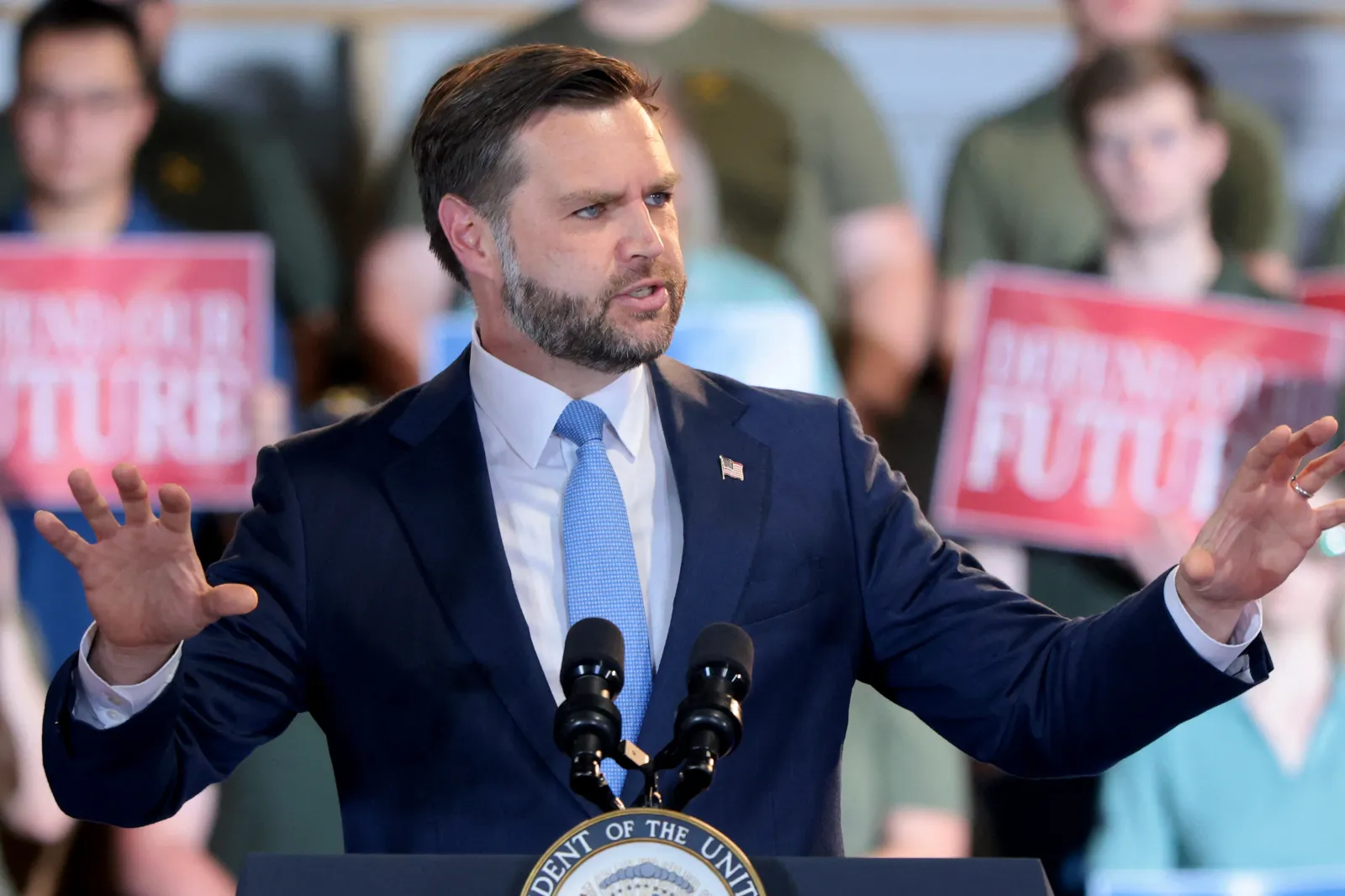
A fundraising text sent in Vice President JD Vance’s name has told recipients not to donate if they cannot afford to, adding: "Groceries cost what they cost."
The message, shared Tuesday by Natalie Allison, a White House reporter for The Washington Post, read: "If you can’t give right now, don’t, Natalie. Groceries cost what they cost. But can you answer this for me?" It included a link and was signed "JD Vance."
Vance’s personal role in drafting or approving the communication remains unclear.
Read More on Politics
The link leads to a Republican National Committee fundraising page titled "A letter from JD Vance".
The page, which frames the appeal as a rejection of aggressive political fundraising tactics, repeats the grocery line and adds: "I’m not going to make you feel guilty over a number.
"I’ll tell you the truth, including the parts you don’t want to hear," says the letter. "The Republican National Committee needs money."
It goes on to present visitors with suggested donations, including a preselected $47 contribution and an option to give an additional $47 on August 28.
The Democratic National Committee (DNC) has seized on the wording.
In a Tuesday press release, DNC Rapid Response Director Kendall Witmer accused the Trump administration of making everyday costs less affordable and said Vance was "turning a blind eye to the hardship of American families."
Newsweek reached out to Vance's office for comment via website contact form on Wednesday morning.
...
Why It Matters
The unusual pitch lands as living costs dominate voters’ concerns, and Democrats gain an advantage over Republicans on the issue before November’s midterm elections.
A Reuters/Ipsos poll, based on a nationally representative probability sample of 4,505 general population adults aged 18 or older, conducted from July 29 to August 3, with a margin of sampling error of plus or minus 1.5 percentage points, found that 48 percent of Americans considered living costs the most important factor in their midterm vote.
Thirty-five percent preferred the Democratic Party’s approach to the issue, compared with 27 percent who chose the Republican Party.
A separate Marquette Law School Poll, conducted July 22-29, 2026, interviewing 1,076 adults nationwide, with a margin of error of plus or minus 3.2 percentage points, found that 35 percent of adults named inflation and living costs as the country’s most important issue, ahead of the economy at 15 percent.
What Americans Are Paying
Official figures show that grocery inflation has slowed dramatically from its earlier post-pandemic peaks, but prices are continuing to rise from already elevated levels.
The Bureau of Labor Statistics said its food-at-home index increased 2.7 percent during the 12 months ending in July.
Restaurant and other food-away-from-home prices climbed 3.4 percent, while the broader food index rose 3 percent.
Changes varied sharply across supermarket aisles. Beef and veal cost 9.4 percent more than in July 2025, including increases of 9 percent for uncooked ground beef and 9.6 percent for steaks.
Breakfast cereal rose 4.1 percent, rice increased 6.2 percent and white bread was up 4 percent. Chicken prices, by contrast, fell 2.7 percent.
The Agriculture Department’s July outlook forecast that grocery prices would increase by 2.5 percent across 2026, with a forecast interval of 1.7 to 3.3 percent. Food-away-from-home prices were forecast to rise by 3.6 percent.
Cost Concerns Shape The Midterms
Public opinion data suggest that prices remain more politically potent than the monthly inflation rate alone might indicate.
In the Reuters/Ipsos survey, 70 percent disapproved of President Donald Trump’s handling of living costs and the same share disapproved of his handling of inflation. Approval stood at 23 percent and 22 percent, respectively.
Cost concerns have also gained importance over time. The share calling living costs their main consideration for the congressional elections rose from 39 percent in January to 48 percent in the late-July and early-August poll.
Marquette’s national survey reached a similar conclusion. Inflation and living costs had ranked first in every Marquette national poll of 2026, while 19 percent of respondents said their financial position had improved over the previous year.
Election Day is November 3. Every voting seat in the House and 35 Senate seats, including two special elections, will be contested, making control of Congress the immediate prize as both parties try to persuade voters that they offer the more credible answer to rising bills.
Submit Correction
View Editorial & AI Guidelines