10
Loading video...

By Amir Daftari
News Reporter
0
Share
Newsweek is a Trust Project member
See more of our trusted coverage when you search.Prefer Newsweek on Googleto see more of our trusted coverage when you search.
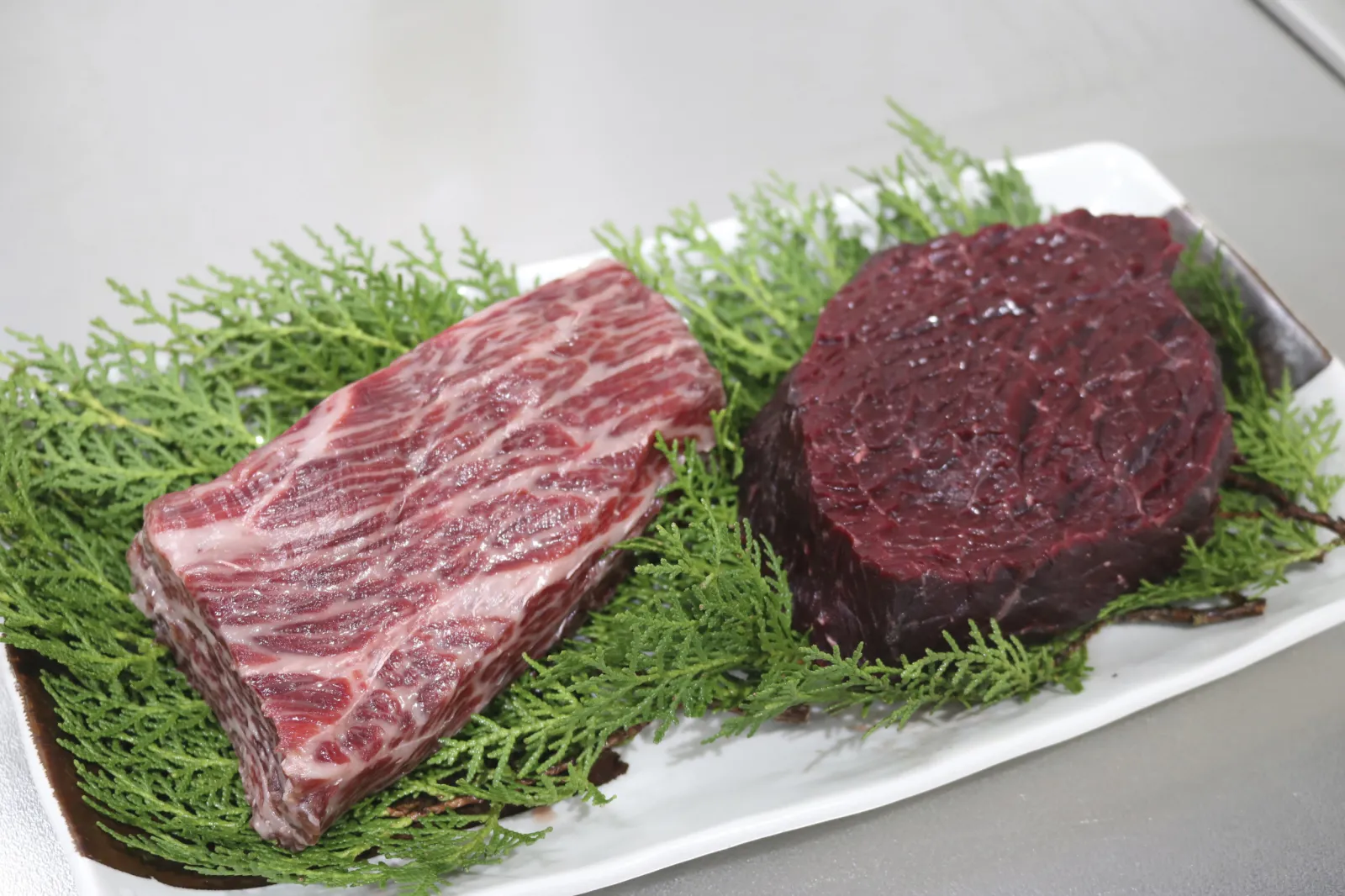
Fresh fin whale meat was auctioned in Japan for the first time in nearly 50 years, with prices reaching over $1,300 per kilogram on Thursday.
This marks a significant moment for Japan's whaling industry as it seeks to revive interest in whale meat amid growing challenges and criticism.
The auction, held at the Sapporo fish market and Shimonoseki port, featured 1.4 tons of fin whale meat caught off Hokkaido.
Read More on News
The tail meat, known as "onomi," fetched the peak price of $1,312 per kilogram in Shimonoseki, according to officials.
"We hear the larger the whale, the better the taste," said city official Ryo Minezoe, though he admitted he had never tried it himself.
Fin whales, the second-largest whale species after blue whales, were previously protected due to overhunting.

...
Why Are Fin Whales Back on the Menu?
Japan's Fisheries Agency added fin whales to the list of species that can be hunted legally, citing population recovery in the North Pacific.
The move comes after Japan withdrew from the International Whaling Commission (IWC) in 2019, resuming commercial whaling within its exclusive economic zone.
Japan caught 30 fin whales this season, half the quota of 60, alongside 294 minke, Bryde's, and sei whales—below the annual quota of 379. Conservationists, however, remain skeptical.
Nanami Kurasawa, head of the Dolphin & Whale Action Network, opposes hunting fin whales, arguing their populations near Japan are insufficiently studied.
Whaling officials argue efficiency in catching larger whales supports the industry's survival, but critics point to overhunting and climate change as potential threats to whale populations.
Can Japan Sustain Its Whaling Industry?
Despite historical roots, whale meat faces dwindling demand in modern Japan. Consumption peaked at 233,000 tons in 1962 but has plummeted to around 2,000 tons annually, according to Fisheries Agency data.
Officials aim to increase supply to 5,000 tons, though experts question the feasibility of this goal.
...
"It is not a kind of food you have daily, but a delicacy," said Nobuhiro Kishigami, an expert on indigenous whaling at the National Museum of Ethnology in Osaka.
He noted whale meat is more expensive than other meats and rarely consumed outside traditional whaling towns. Without substantial government subsidies, he doubts the industry's sustainability.
Controversy and Criticism Persist
Japan's return to commercial whaling has drawn international criticism.
While antiwhaling protests have declined since the country ended its Antarctic "research whaling" program, conservationists remain vocal. Fin whales were previously designated for protection by the IWC in 1976 due to overhunting.
The auction reflects a broader struggle to keep Japan's whaling industry viable, balancing economic interests with conservationist concerns. Whether demand for whale meat can be revived in a changing Japan remains uncertain.
This article includes reporting from The Associated Press
View 0 Comments
Submit Correction
View Editorial & AI Guidelines