...

By Ryan Chan
China News Reporter
0
Share
Newsweek is a Trust Project member
See more of our trusted coverage when you search.Prefer Newsweek on Googleto see more of our trusted coverage when you search.
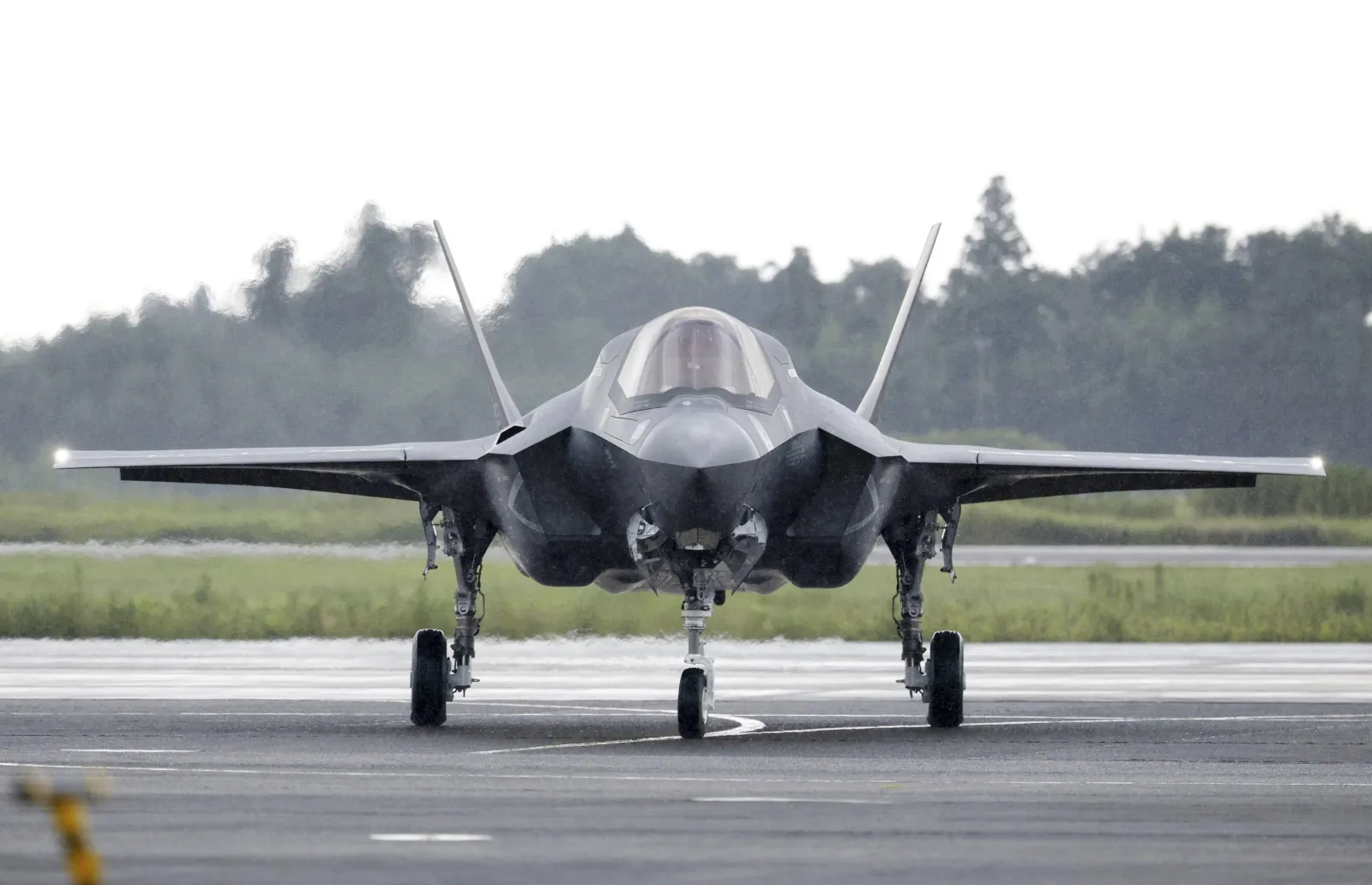
The first three F-35 stealth fighter jets designed for operations from Japanese aircraft carriers arrived in the Northeast Asian country on Thursday as part of Tokyo's ongoing efforts to bolster the defense of its remote southwestern islands amid China's growing military threat.
Newsweek has contacted the Chinese defense and foreign ministries for comment via email.
Why It Matters
Japan, a key ally in the United States' strategy to contain the Chinese military, is converting two helicopter carriers—JS Izumo and JS Kaga—into aircraft carriers. Both ships are slated to operate the F-35B jets, the short takeoff and vertical landing variant of the F-35 family.
Read More on World
Only a limited number of airfields on Japan's southwestern islands can support conventional fighter operations. Because of their close proximity to Taiwan, these outlying islands would be vulnerable to Chinese strikes if used to support U.S. military operations in a Taiwan conflict.
In addition to the 42 F-35B aircraft it has ordered, Japan has procured a total of 105 F-35A jets for its air force, which are designed to operate from conventional runways. This makes the U.S. ally the second-largest operator of the Lockheed Martin-built jets in the world.
What To Know
The Japanese F-35B jets landed at Nyutabaru Air Base, located on the eastern coast of Kyushu, Japan's southernmost main island.
Citing the Japan Air Self-Defense Force, the Associated Press reported that a fourth jet was expected to arrive at the base at a later date.
X user @itackey2, a local photographer, posted a series of photographs on the platform that showed each of the jets landing using a different method—vertical, short and conventional. The photos demonstrate the aircraft's unique capability to operate from various types of runways on ships and on land.
Japan's Defense Ministry previously said eight F-35B jets were scheduled for delivery during fiscal year 2025, which runs from April 1 to March 31. According to Lockheed Martin, the jets are scheduled to be deployed aboard the Izumo in 2027 and the Kaga in 2028.
...
Meanwhile, the Kaga is participating in a multinational naval war game in the western Pacific alongside two other warships capable of operating F-35B jets—the U.S. Navy amphibious assault ship USS America and the British aircraft carrier HMS Prince of Wales.
Separately on Thursday, a Japanese F-2A single-seat fighter jet crashed into the Pacific Ocean off the coast of Ibaraki prefecture—located on Honshu, the largest main island of Japan—after taking off from Hyakuri Air Base for a training flight, Kyodo News reported.
The pilot, who reported an anomaly during the flight, ejected from the aircraft and was rescued. Following the crash, the Japan Air Self-Defense Force grounded all 90 jets of the type, except for those needed for urgent duties, such as responding to airspace violations.
What People Are Saying
The Japan Air Self-Defense Force wrote on X on Thursday: "[Japan Air Self-Defense Force] will continue further refining and strengthening Japan's air capability through the deployment of F-35B."
Lockheed Martin wrote on its website: "The F-35 Lightning II is designed and built to counter the most advanced threats—making it a perfect fit for the Japan Air Self-Defense Force (JASDF)."
What Happens Next
It remains to be seen whether the U.S. and Japan will accelerate the delivery of the F-35B jets as China continues to expand its military reach and presence across the western Pacific.
View 0 Comments
Submit Correction
View Editorial & AI Guidelines