10
Loading video...

By Ryan Chan
China News Reporter
0
Share
Newsweek is a Trust Project member
See more of our trusted coverage when you search.Prefer Newsweek on Googleto see more of our trusted coverage when you search.
Japan—a key United States ally in the Western Pacific—showcased its ship-sinking and air-defense capabilities during live-fire drills in Australia amid China's growing military threat.
The live-fire events were part of Exercise Talisman Sabre 2025—an ongoing multinational war game involving the U.S. and 18 other countries from the Indo-Pacific, North America, and Europe—designed to test and rehearse capabilities in support of regional stability.
Newsweek has reached out to the Chinese Defense Ministry for comment via email.
Read More on World
Why It Matters
China has expanded its military presence—particularly its navy—across the Western Pacific in recent years, raising alarms among the U.S. and its regional allies. It has also built up a large missile arsenal capable of striking Japan, including U.S. military bases located there.
Japan—a key element of the U.S. island chain strategy to contain China in the Western Pacific—has been bolstering its defenses against potential Chinese aggression by upgrading its ship-killing weapons and acquiring advanced warships capable of intercepting missiles.
Exercise Talisman Sabre 2025 has previously featured two live-fire events involving anti-ship missiles, including a strike on a maritime target by a U.S. land-based missile system.
What To Know
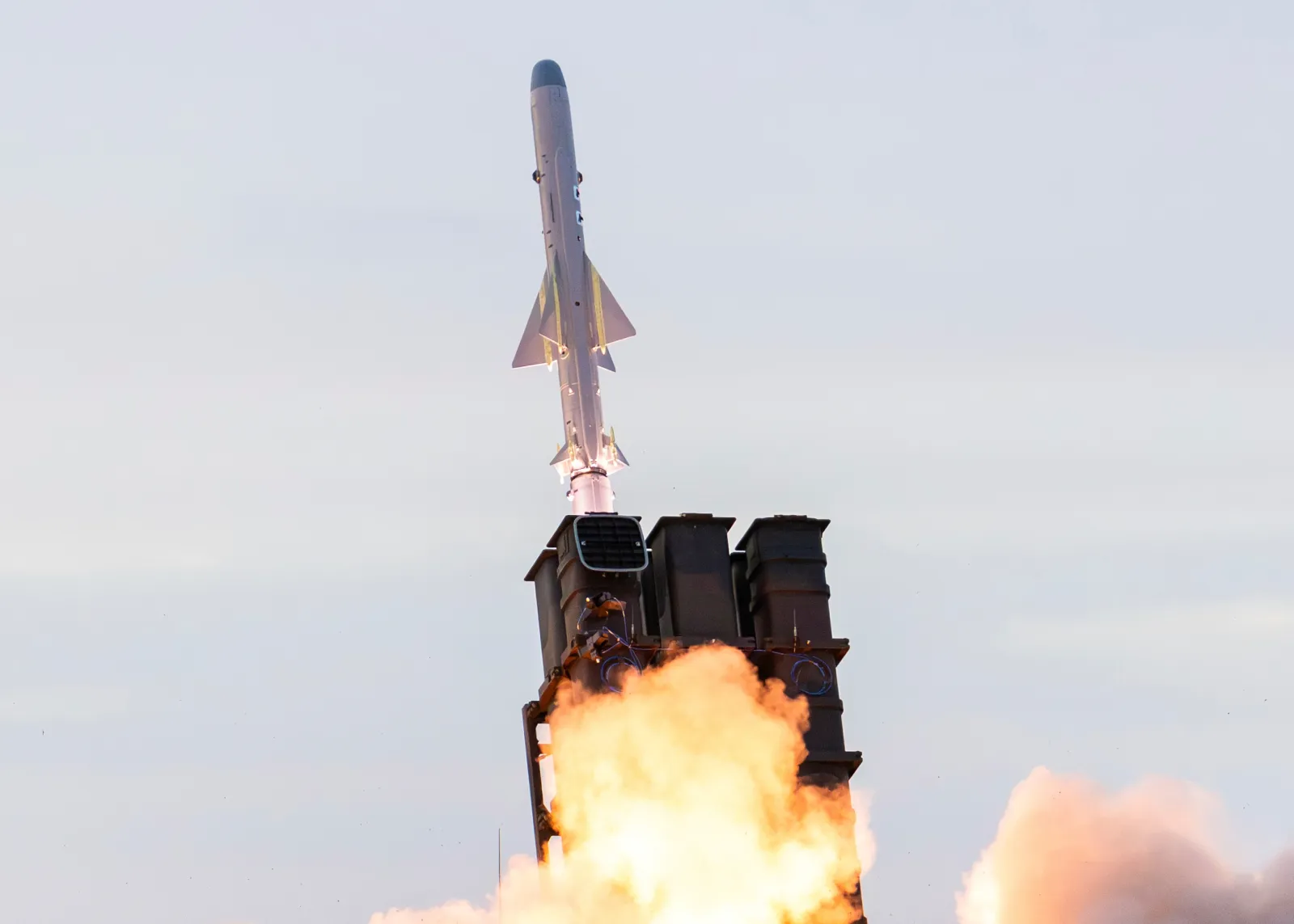
Photos released by the Australian military on Tuesday show that the Japan Ground Self-Defense Force conducted a "live-fire surface engagement" at the Beecroft Weapons Range in New South Wales, on the east coast of Australia, firing two Type 12 anti-ship missiles.
...
The missiles were launched from a truck-mounted platform and flew toward a floating target located 18.6 miles offshore in Jervis Bay, following different trajectories. Exercise director, Australian Brigadier Damian Hill, said both missiles struck the target simultaneously.
The Type 12 anti-ship missile is capable of hitting maritime targets approximately 124 miles away. An upgraded version—with a modified missile shape—extends the flight range to at least 559 miles, and eventually up to 745 miles, according to the specialist outlet Naval News.
Prior to the anti-ship missile drill, the Japan Ground Self-Defense Force's Type 03 medium-range surface-to-air missile system conducted firing at the Shoalwater Bay Training Area in Queensland, northeastern Australia, on July 14, according to released footage and imagery.
"Through anti-aircraft firing training targeting cruise missiles and other threats, we aim to enhance our firing capabilities while strengthening coordination with participating countries, including the United States and Australia," the Joint Staff of Japan's Defense Ministry said.
The Type 03 surface-to-air missile is a land-based air defense system with a reported range of 31 miles, capable of engaging targets such as cruise missiles, fighter jets, and helicopters.
What People Are Saying
Lieutenant General Joel B. Vowell, deputy commanding general of the U.S. Army Pacific, said in a press release on July 13: "By rehearsing, by practicing together, by staying in tune with each other, we are providing that readiness to our armies, our navies, our air forces, our space forces, our cyber forces."
Japan's defense white paper 2025 read: "China has been swiftly increasing its national defense expenditures, thereby extensively and rapidly enhancing its military capability in a qualitative and quantitative manner and intensifying its activities in the East China Sea, including around the Senkaku Islands, and the Pacific."
The Senkaku Islands are an islet group in the East China Sea, ruled by Japan but claimed by both China and Taiwan as the Diaoyu Islands and the Diaoyutai Islands, respectively.

...
What Happens Next
It remains to be seen whether additional live-fire drills will be conducted during Exercise Talisman Sabre 2025, which began on July 13 and is scheduled to conclude on August 4.
View 0 Comments
Submit Correction
View Editorial & AI Guidelines