
10
Loading video...

By Amanda Castro
Associate News Editor
0
Share
Newsweek is a Trust Project member
See more of our trusted coverage when you search.Prefer Newsweek on Googleto see more of our trusted coverage when you search.
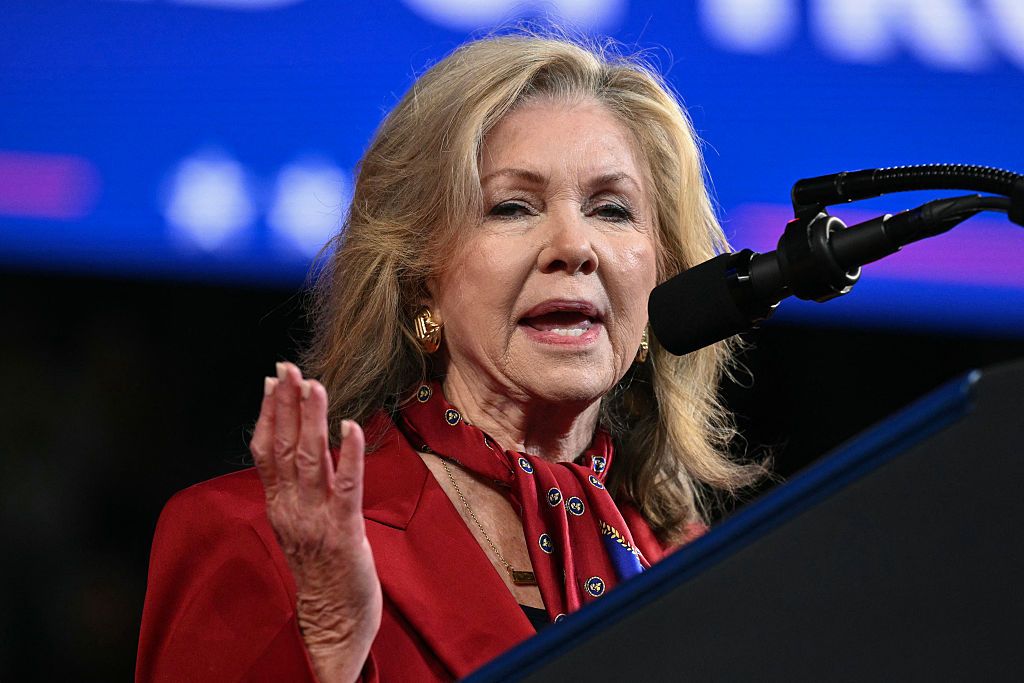
A Trump-appointed federal judge has been assigned to oversee Senator Marsha Blackburn’s lawsuit against former special counsel Jack Smith after every active district judge in Middle Tennessee recused from the case.
U.S. District Judge Douglas R. Cole, whom President Donald Trump nominated to the federal bench in 2019, was assigned the case by Sixth Circuit Chief Judge Raymond M. Kethledge of the U.S. Court of Appeals for the Sixth Circuit, who was designated to preside after all four active district judges in the Middle District of Tennessee withdrew from the litigation, according to an order issued Wednesday.
...
Read More on News
President George W. Bush appointed Kethledge to the appeals court.
"All District Judges of the Middle District of Tennessee have recused in this matter," the new order said. "Chief Judge Raymond M. Kethledge of the Sixth Circuit Court of Appeals has designated United States District Judge Douglas R. Cole to preside over the case. Accordingly, the case is hereby reassigned to Judge Cole."
Cole’s assignment resolves an unusual procedural question that had hung over the lawsuit since October 5, when Chief U.S. District Judge William L. Campbell Jr. announced that the entire active district bench had stepped aside. The court has not publicly explained the recusals.
The Justice Department declined to comment on the reassignment, citing the pending litigation.
Why Every Middle Tennessee Judge Recused
Blackburn filed the lawsuit in the U.S. District Court for the Middle District of Tennessee on September 30. The first recusal came two days later, when U.S. District Judge Aleta A. Trauger entered an order withdrawing from the case and returning it to the clerk for reassignment.
Then, on October 5, Campbell issued a broader order saying all district judges in the Middle District of Tennessee had recused. The order said the Sixth Circuit would designate a district judge from outside the district and would reassign the case once it did. The order gave no explanation for why the judges stepped aside.
Related Story
Newsweek Webinar: How the Politics of AI Could Shape Midterms
The district has four active district judges: Campbell and Eli J. Richardson, both appointed by Trump; Trauger, appointed by President Bill Clinton; and Waverly D. Crenshaw Jr., appointed by President Barack Obama, according to Newsweek’s previous reporting. So, the withdrawal of the entire active bench crossed partisan lines in terms of the presidents who selected the judges.
Federal law does not require every recusal to stem from the same type of conflict. Under 28 U.S.C. § 455, judges must disqualify themselves when their impartiality "might reasonably be questioned," while the statute separately lists circumstances including personal bias, prior involvement in a matter, certain financial interests and specified relationships to people involved in a case.
Nothing in the October 5 order identifies which, if any, of those provisions prompted the Middle Tennessee judges to step aside.
Margaret Harker, an attorney representing Blackburn through the New Civil Liberties Alliance, previously told Newsweek that the group had been notified of the recusals but had no additional information about their basis.
"We look forward to vindicating Senator Blackburn’s civil liberties as the case continues," Harker said.
Who Is Judge Douglas R. Cole?
Cole serves as a U.S. district judge in the Southern District of Ohio and was appointed to the federal bench by Trump. His selection means the lawsuit remains filed in Middle Tennessee but will be handled by a judge from another district, as the October 5 recusal order contemplated.
Wednesday's order assigned Kethledge as chief judge of the Sixth Circuit. The circuit covers the federal courts in Tennessee and Ohio, allowing Cole to hear proceedings arising in the Tennessee district.
Cole’s appointment also creates a notable wrinkle in a case involving one of Trump’s closest allies in Congress and the former special counsel who twice brought federal criminal charges against Trump.
That political backdrop doesn't indicate how Cole will approach the litigation, and the assignment order gives no indication of the merits of Blackburn’s claims.
Two Trump-appointed judges already serving in the Middle District of Tennessee, along with judges appointed by Democratic presidents, were among those who recused.
Douglas Cole Is Also Handling JD Vance Home Vandalism Case
Cole is also presiding over the federal prosecution of William Davenport DeFoor, a Cincinnati man who later pleaded guilty to charges stemming from damage at Vice President JD Vance’s home. The case had already generated a contentious detention fight earlier this year over whether DeFoor should remain in custody or receive treatment at a psychiatric facility.
At a January 13 detention hearing, prosecutors argued that DeFoor should remain jailed, citing his prior supervision history and arguing that his conduct at Vance’s residence posed a danger to the community. His attorney, Paul Montague Laufman, disputed the government's characterization and argued for his release to a psychiatric facility with electronic monitoring.
Magistrate Judge Stephanie K. Bowman ultimately ordered DeFoor detained. She cited concerns about what she described as an escalation in his crises, from an incident at his own home to damage at a business and then at the vice president's residence. Bowman said she was not satisfied that the proposed conditions would ensure DeFoor's and the community's safety.
DeFoor later pleaded guilty on September 1 to engaging in physical violence against property in restricted grounds and willfully damaging U.S. property. Cole has not yet sentenced him, so there is no sentence to compare against federal sentencing guidelines. Each offense carries a maximum prison term of 10 years; neither statute imposes a mandatory minimum prison sentence.
Why Marsha Blackburn Is Suing Jack Smith
Blackburn, a Tennessee Republican, sued Smith personally on September 30, with the Justice Department named as a relief defendant. The complaint centers on phone toll records obtained during Arctic Frost, the federal investigation into events surrounding the certification of the 2020 presidential election.
Blackburn says investigators subpoenaed records from a cellphone she used for legislative purposes. According to her complaint, the records disclosed who she communicated with, as well as the timing and duration of those communications. Her lawsuit does not allege that investigators obtained the content of those calls.
The senator says Smith and other officials also obtained a nondisclosure order that prevented Verizon from alerting her to the subpoena. Her complaint states that investigators did not tell either the company or the court considering the secrecy order that the targeted records belonged to a sitting senator. This effectively deprived her of an opportunity to challenge the demand on constitutional grounds. Those allegations have not been adjudicated.
Blackburn's Senate office said the subpoena was issued on May 25, 2023. It added that she did not learn her records had been obtained until October 6, 2025. Her office also says Smith’s investigation sought toll records belonging to at least 20 members of Congress, all Republicans, as well as roughly 400 Republican individuals and organizations.
"Through his Arctic Frost witch hunt that targeted conservatives across America and even the President of the United States, Jack Smith perpetrated one of the worst abuses of government power in our nation’s history," Blackburn said when announcing the lawsuit.
"This lawsuit is solely about holding Mr. Smith accountable and ensuring that our nation’s justice system can never again be weaponized against the American people," she added.
Smith has disputed the underlying characterization of his actions. As Newsweek previously reported, he has said investigators obtained toll records, not the contents of lawmakers’ communications. Smith added that his office consulted the Justice Department’s Public Integrity Section before issuing the subpoenas.
What Blackburn's Lawsuit Alleges
The legal dispute goes beyond whether investigators should have obtained Blackburn’s telephone metadata. Her 46-page complaint alleges violations of the Constitution’s Speech or Debate Clause, the First Amendment, and the Fourth Amendment. It also challenges the constitutionality of Smith's appointment as special counsel.
The Speech or Debate Clause protects members of Congress in connection with legislative acts, and Blackburn says Smith’s acquisition of records related to her legislative activities interfered with that protection. The complaint adds that the secrecy surrounding the subpoena prevented her from asserting the privilege before Verizon produced the information.
Blackburn also challenges the legal basis for Smith’s appointment. The complaint says that former Attorney General Merrick Garland lacked statutory authority to appoint Smith. It adds that the appointment violated the Constitution’s Appointments Clause. Those are Blackburn's legal claims, not the court's findings.
The lawsuit seeks declaratory and injunctive relief as well as nominal damages. Blackburn's office said she is seeking $1 from Smith, presenting the case as an effort to establish accountability rather than obtain a substantial financial award.
Legal Fight Over Congressional Records
The case could force the court to confront the scope of constitutional protections surrounding investigative access to a lawmaker's communications records. Blackburn says that obtaining her toll data implicated legislative activity protected by the Speech or Debate Clause. She adds that keeping the subpoena secret deprived her of a chance to invoke that protection before the records were disclosed.
That does not mean investigators are categorically barred from examining records connected to lawmakers. Previous litigation involving Republican Representative Scott Perry's cellphone during the investigation produced a more fact-specific approach to determining whether particular congressional communications qualified as protected legislative material, as Newsweek previously reported.
Blackburn's case raises a different procedural problem because her complaint says the government obtained her records without her knowing about the subpoena at the time. Her lawyers are therefore seeking relief after the alleged constitutional violation occurred rather than asking a court to block investigators from obtaining the material in the first place.
With Cole now assigned, the litigation can move beyond the judicial-reassignment issue that followed the Middle Tennessee recusals.
The substantive questions remain unresolved, including whether Smith's acquisition of Blackburn's records violated congressional protections and whether her broader challenge to his appointment can succeed.
Neither the mass-recusal order nor Cole's assignment addresses those claims on their merits.
Newsweek’s reporters and editors used Martyn, our AI assistant, to produce this story. Learn more about Martyn here.
Contact Newsweek editors on this story: Matthew Cannon and James Debens
View 0 Comments
Submit Correction
View Editorial & AI Guidelines