...

By Newsweek Editors
0
Share
Newsweek is a Trust Project member
See more of our trusted coverage when you search.Prefer Newsweek on Googleto see more of our trusted coverage when you search.
The Supreme Court struck down President Donald Trump’s far-reaching global tariffs on Friday, handing him a significant loss on an issue central to his economic agenda.
In a 6—3 decision, the justices rejected Trump’s use of emergency powers under the 1977 International Emergency Economic Powers Act (IEEPA) to impose sweeping "reciprocal" tariffs on nearly every country, along with specific levies targeting China, Canada, Mexico, Brazil and India.
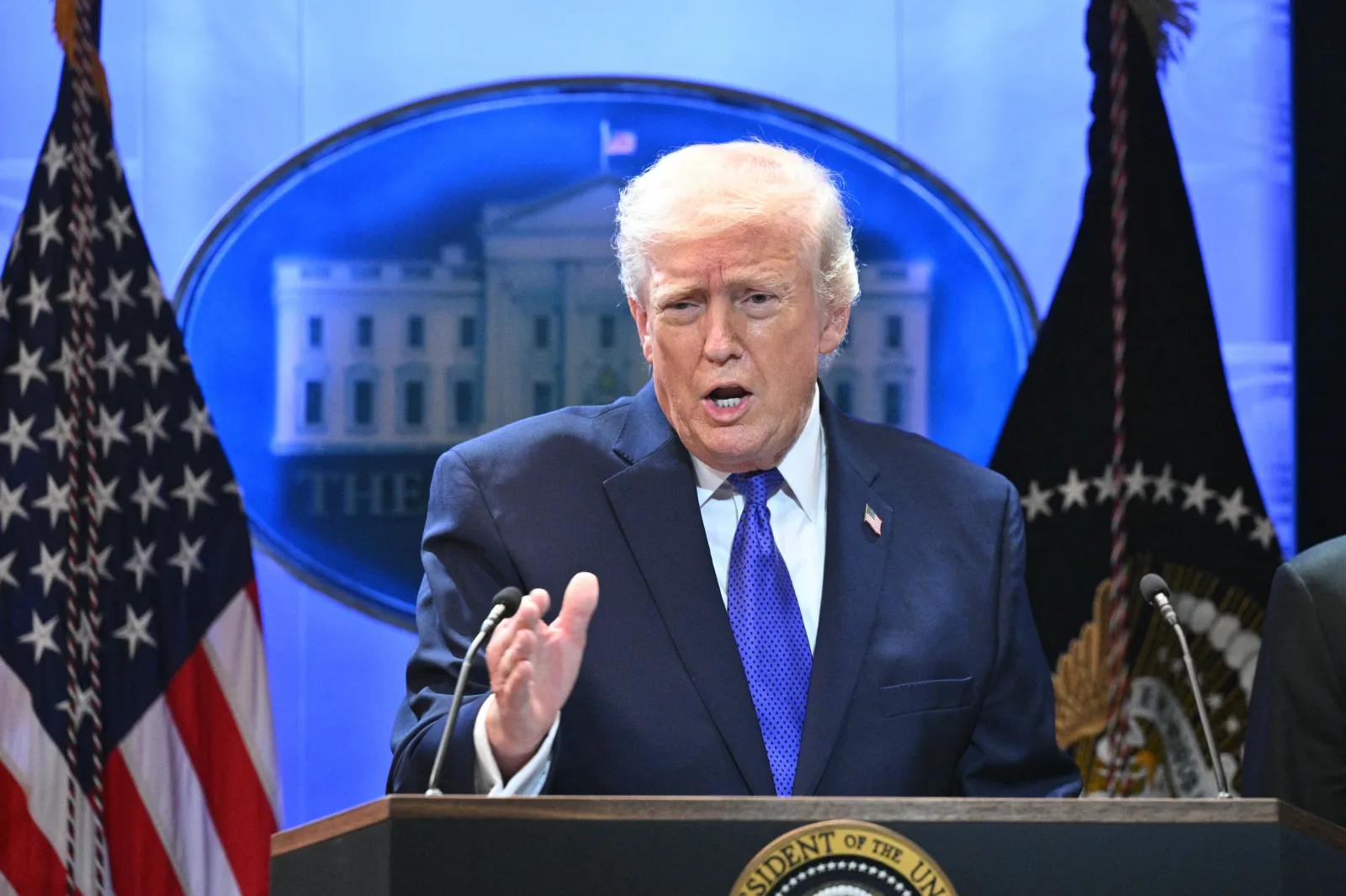
In an extraordinary press conference hours after the Supreme Court announcement, Trump said the decision was "deeply disappointing."
Read More on Analysis
He added he thought the court was being "swayed by foreign interests," without providing any more detail. He said foreign countries would celebrate—but not for long.
The ruling marks the first major piece of Trump’s second-term agenda to reach the High Court—a court he helped shape with three conservative appointments during his first term. And the defeat raises a key question: Is Trump’s tariff era now over?
Constitutional Line in the Sand
Chief Justice John Roberts, writing for the majority, said the Constitution clearly gives Congress—not the president—the power to impose taxes, including tariffs. The Founding Fathers, he wrote, did not give that authority to the executive branch, setting firm limits on presidential power. "The Framers did not vest any part of the taxing power in the Executive Branch," Roberts wrote.
In dissent, Justice Brett Kavanaugh argued: "The tariffs at issue here may or may not be wise policy. But as a matter of text, history, and precedent, they are clearly lawful."
Trump was scathing of the conservative justices who voted to knock down his tariffs—Roberts and Justices Amy Coney Barrett and Neil Gorsuch, both of whom were appointed to the court during Trump's first White House term. He said: "They’re just being fools and lapdogs for the RINOs and radical left Democrats."
The divide reflects a long-running debate over how much authority a president has on trade—one that intensified under Trump’s broad use of emergency powers.
The decision strikes down a key part of Trump’s recent tariff push, including the sweeping "Liberation Day" duties on most U.S. trading partners. However, other tariffs remain in place under different laws, such as Section 232, which Trump has used to tax imports like steel, aluminum and cars.
Trump vows new tariff path
Following the verdict, Trump said he will pivot to other legal authorities to keep his tariff agenda intact.
"Their decision is incorrect. But it doesn’t matter because we have very powerful alternatives," he said, arguing the ruling would not derail his broader trade strategy. He acknowledged that other statutes involve a more complex and bureaucratic process than the rapid-fire approach he used under the IEEPA.
Calling it "a little bit longer process," Trump said he initially moved quickly to "make things simple," but signaled he is prepared to change course. He pointed to the Trade Expansion Act and even the Tariff Act of 1930 as possible avenues, insisting the Court’s decision would not "substantially constrain" his authority.
"We have alternatives. Great alternatives," he said, adding that it was "ridiculous" he could order full economic embargoes against countries, but not raise tariffs.
Trump’s response suggests the ruling may slow—but not fundamentally alter—his trade agenda.
Other laws allow Trump to impose tariffs, but they are likely to be slower, more open to legal challenges and political scrutiny, creating delays and uncertainty.
Most Americans felt Trump overstepped on tariffs: poll
Public opinion has consistently signaled discomfort with the breadth of Trump’s tariff strategy.
An AP-NORC poll conducted in January found that roughly 6 in 10 Americans believed Trump had "gone too far" in imposing new tariffs on other countries. The partisan divide was stark: about 9 in 10 Democrats said he had overstepped, along with roughly 6 in 10 independents. Just 25 percent of Republicans agreed.
The skepticism has been persistent. In an AP-NORC survey last April, about half of U.S. adults said they opposed tariffs on all imported goods, compared with roughly 3 in 10 who supported the idea. Around 2 in 10 said they were neutral.
Trump will persevere with overall trade strategy
The Supreme Court’s ruling is unlikely to fundamentally alter Trump’s overall trade strategy. And it is notable that Wall Street remained calm after the ruling was announced.
While the justices blocked his use of emergency powers for broad global tariffs, he still has other legal options. Trump can use laws such as Section 232, which allows tariffs for national security reasons, or return to tools he used in his first term to target specific countries or industries. Some trade laws, including older ones, give presidents wide authority.
The decision limits how he can act, but it certainly does not eliminate his ability to tax imports.
View 0 Comments
Submit Correction
View Editorial & AI Guidelines