...

By Ellie Cook
Senior Defense Reporter
0
Share
Newsweek is a Trust Project member
See more of our trusted coverage when you search.Prefer Newsweek on Googleto see more of our trusted coverage when you search.
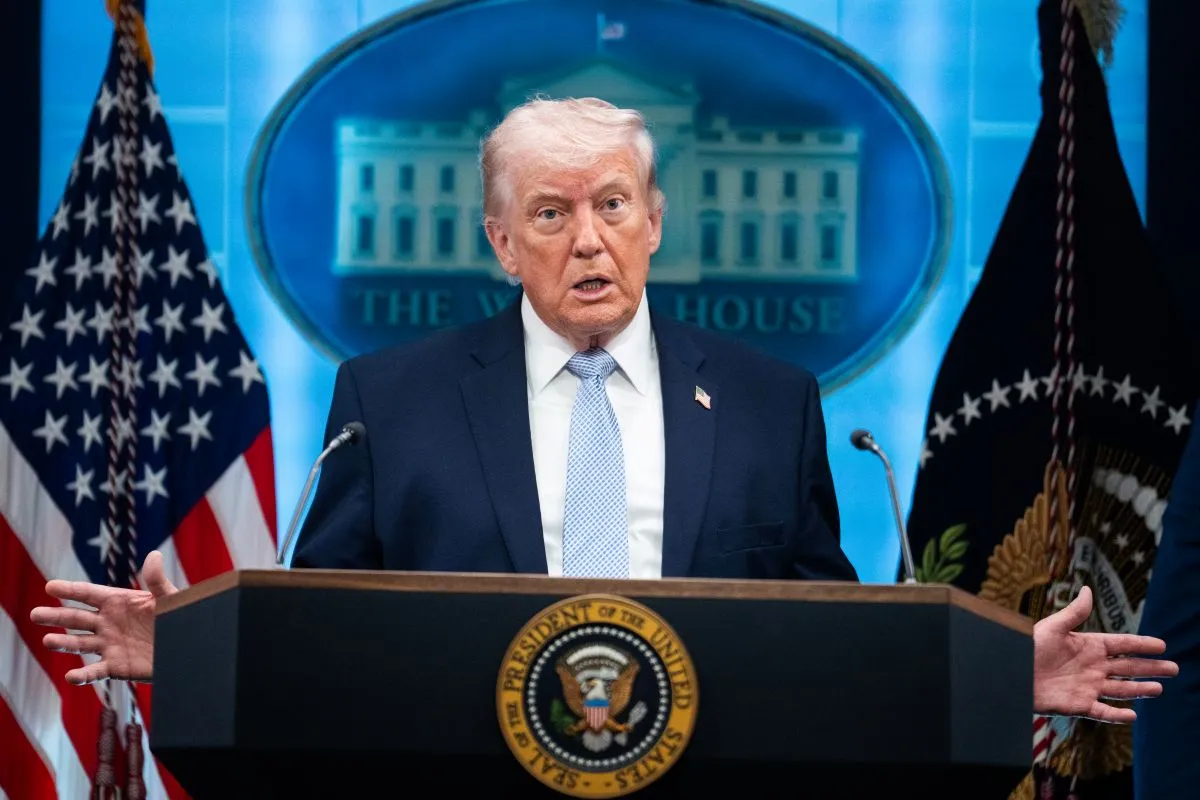
President Donald Trump has repeatedly threatened to bomb Iran, attempting to force Tehran into concessions in peace talks only to pull back at the last moment, but his trademark unpredictability has failed to clinch the deal the White House has pursued for months and may only be becoming less effective.
In his latest pivot, Trump said on Monday he had held off a planned U.S. attack on Iran after the leaders of Qatar, Saudi Arabia and the United Arab Emirates convinced him acceptable terms to end more than 11 weeks of war in the Middle East could be in sight.
Trump's comments came as Iran said Pakistan, which has mediated talks between Washington and Tehran, had passed a new peace proposal on to U.S. negotiators.
Read More on World
But the president's apparent change of heart was met with derision by a top Iranian adviser, who said Iran's "iron fist" would force the U.S. "to retreat and surrender" after Trump backtracked on his own military plans.
While brinkmanship tactics—or pushing your opponent into backing down through threats of extreme consequences—work, they lose their impact when top officials repeatedly bluff and then ease off, David Blagden, an associate professor of international security and strategy at the University of Exeter in the U.K., told Newsweek.
...
So, when has Trump previously rolled back his rhetoric or adjusted deadlines imposed on Iran?
March 23, Day 24 of War. Reason: 'Productive Conversations' With Iran
Trump had said on March 21 that he would "obliterate" Iran's power facilities if ships could not pass through the Strait of Hormuz unscathed within 48 hours. Iran responded the following day by saying it would target energy and water facilities in Gulf states if Trump followed through on his threat.
But on March 23, the U.S. president said he would not order strikes on Iranian energy sites for five days, saying he had been swayed by "very good and productive conversations" with Iran. Tehran denied it was negotiating with Washington.
March 26, Day 27. Reason: Request from Tehran
On March 26, Trump announced a halt on the targeting of energy infrastructure for another 10 days after what he described as a request from the Iranian government. This set a new deadline of April 6.
On April 4, Trump wrote on Truth Social that Iran had "48 hours" before he unleashed "all hell" on the country, a reminder of this April 6 deadline.
"Time is running out," he added.
April 7, Day 39. Reason: Pakistani Intervention
Trump appeared to move his deadline again, giving Iran until April 7 at 8 p.m. ET to make a deal or open the strait. He said early on April 7 that a "whole civilization will die tonight, never to be brought back again."
Just hours before his 8 p.m. deadline, Trump said he had agreed to a two-week ceasefire after petitions from Pakistani Prime Minister Shehbaz Sharif and the country's defense chief, Asim Munir.
Trump said at the time Iran had put forward a 10-point peace proposal that was a "workable basis" for talks.
The ceasefire has been in place ever since, although sporadic strike exchanges have continued.
May 18, Day 80. Reason: Request from Gulf Allies
Trump said on May 18 the U.S. had planned an attack on Iran for Tuesday, but Qatar, Saudi Arabia and the UAE requested U.S. forces to hold off on the strikes.
The president said the Gulf states' leaders believed a deal could be reached that would satisfy U.S. demands and would take Iranian nuclear weapons off the table.
Trump then said the U.S. was willing to launch "a full, large scale assault of Iran, on a moment’s notice" if a deal isn't agreed.
'Life Support'
Fresh American strikes on Iran would likely have shattered the fragile ceasefire between Washington and Tehran, announced by Trump in early April. Trump said last week the truce was on "life support," just days after the U.S. said it had struck military sites in response to Iran launching missiles, drones and small boats as three U.S. warships passed through the Strait of Hormuz.
Iran has effectively blocked the strait, a vital trade passageway, to ships it considers unfriendly since the U.S. and Israel started the current war on February 28. The closure threw global markets into chaos, left thousands of crew members stranded and sent fuel prices rising, with around a fifth of the world's oil and gas unable to make the journey through the strait.
Despite briefly declaring the narrow chokepoint open last month, Iran has maintained its grip on the waterway and said this week it had set up a new body to control traffic through it.
The U.S. demands Iran fully reopens the Strait of Hormuz and says it's off the table for Tehran to be able to develop a nuclear weapon. Iran has long said it only has a peaceful nuclear program to generate electricity for its civilian population but international experts say the country has enriched uranium close to weapons grade, far beyond what is needed for non-military nuclear programs.
Tehran's latest proposal includes a recognition of Iran's right to enrich uranium, Iranian Deputy Foreign Minister Kazem Gharibabadi told Iranian lawmakers on Tuesday, according to the country's IRNA state news agency.
The U.S. would also commit to lifting its blockade of Iranian ports, which the U.S. announced last month, and to paying for the damage strikes on Iran has caused in the country, Iranian media reported. The most recent Iranian offering in negotiations would also put an end to Israel's war against militant group Hezbollah in Lebanon and lift sanctions on Tehran.
Trump has dismissed all versions of a deal so far, and reiterated on Monday the U.S. will not accept Iranian access to nuclear weapons—meaning Trump may once again threaten military action.
Domestic Pressure Bearing Down
"For Iran, the Clock is Ticking," Trump wrote on social media on Sunday, adding: "TIME IS OF THE ESSENCE!"
The same could be true for the White House. Trump was swept back to power for his second term by voters convinced by his stance against U.S. intervention abroad, but his administration has been forced to insist it's not bogged down in a "forever war" in Iran, resisting comparisons with Iraq and Afghanistan.
Around 65 percent of U.S. voters said they disapproved of Trump's handling of the war in Iran, according to a poll published by The New York Times and the Siena research institute on Monday. A total of 64 percent of respondents said they felt it was the wrong decision to go to war with Iran.
Just 37 percent of those polled approved of how Trump is managing as president more generally, piling further pressure on Republicans already facing growing unease with Trump's economic and immigration policies stacked against their electoral campaigns in the November midterms.
View 0 Comments
Submit Correction
View Editorial & AI Guidelines