...

By Micah McCartney
Reporter
0
Share
Newsweek is a Trust Project member
See more of our trusted coverage when you search.Prefer Newsweek on Googleto see more of our trusted coverage when you search.
Iran is reportedly nearing a procurement deal for Chinese surface-to-ship cruise missiles as U.S. President Donald Trump's threat of strikes looms overhead.
The negotiations—which Reuters reported, citing sources familiar with the discussions—have raised concerns among some on Capitol Hill. But several analysts question whether the transfer, even if completed, would materially shift the balance in the current crisis, arguing that the story was, for now, more theater than threat.
Newsweek has contacted the Iranian and Chinese foreign ministries by email. The Pentagon declined a request for comment.
Read More on World
Why It Matters
The report comes as tensions spike in the Gulf, with about one-third of the U.S. Navy, including two aircraft carrier groups—the USS Abraham Lincoln and USS Gerald R. Ford—operating nearby. Trump, who previously ordered a strike he said devastated Iran's potential capacity to build nuclear weapons, on Saturday gave the Islamic Republic "probably 10 days" to reach an agreement on its nuclear program.
What Is the CM-302?
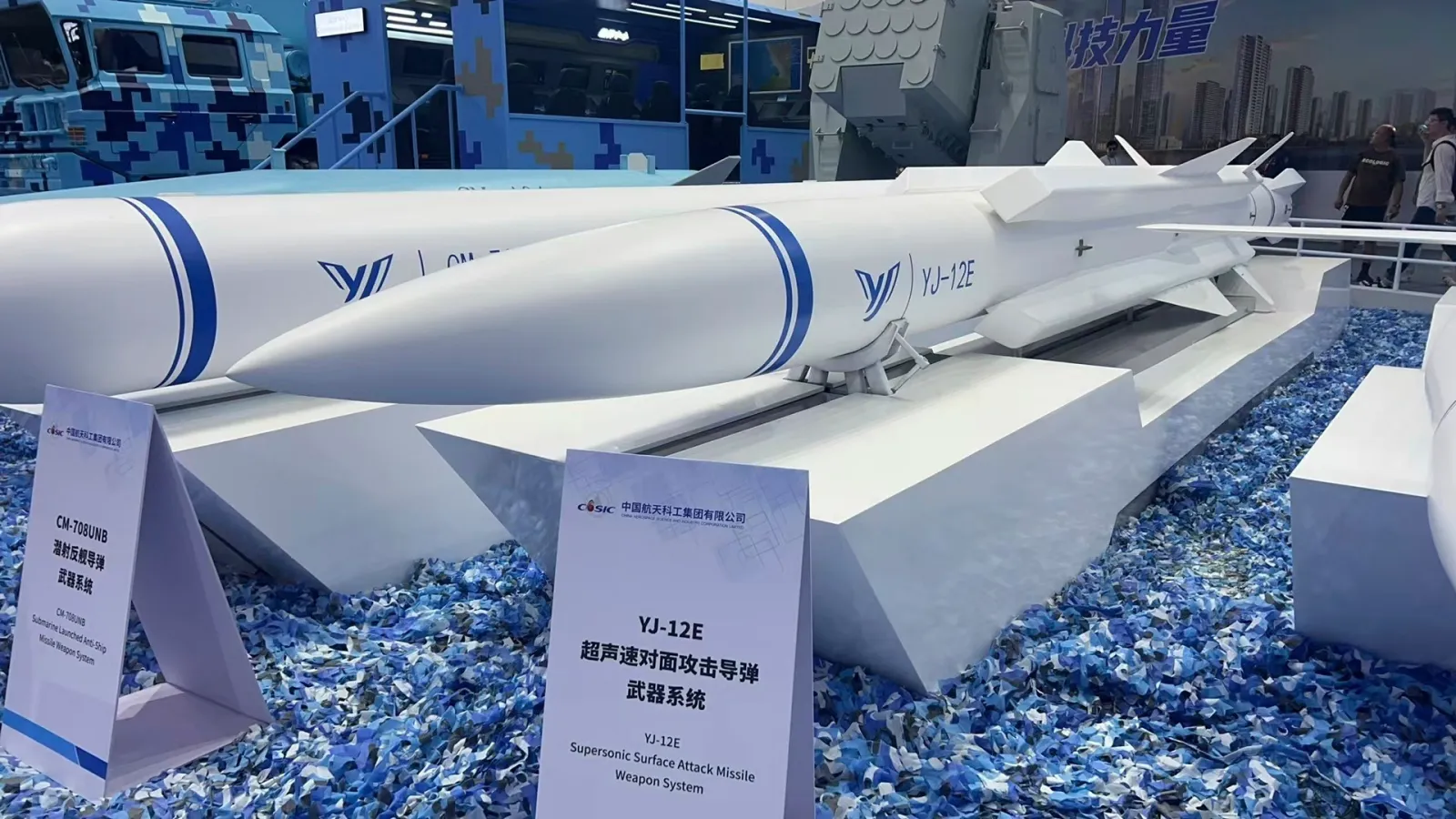
Negotiations over the supersonic CM-302, the export-approved version of the formidable YJ-12 family of missiles, began at least two years ago, Reuters reported. The talks gathered pace during the recent conflict with Israel, culminating in a visit to China by Iranian Deputy Defense Minister Massoud Oraei.
Reuters' sources did not specify a delivery date or the number of missiles under discussion.
In sufficient quantities, the CM-302s—hailed by China Aerospace Science and Industry Corporation as among the world's most advanced anti-ship missiles—have a range of about 180 miles and are designed to skim the water's surface at high speed to evade shipboard defenses.
Would It Benefit Iran?
Whether or not the deal goes forward, the ambiguity itself carries value for Beijing, according to Alessandro Arduino, an affiliate lecturer at King's College London's Lau China Institute and associate fellow with the Royal United Services Institute.
"The talk of a Chinese transfer of advanced anti-ship cruise missiles to Iran, particularly systems such as the YJ-series, is, at this stage, more politically useful than strategically plausible," he told Newsweek.
"Without shipping a single missile, China can introduce uncertainty into U.S. planning calculations and remind Washington to avoid the transfer of military equipment in the Indo-Pacific, or else," Arduino continued.
...
It also fits neatly into the narratives of multiple stakeholders, Arduino added. He said: "After the severe damage inflicted during Israel's 12-day air campaign and the U.S. Midnight Hammer operation, suggesting access to sophisticated anti-ship capabilities allows Iran to project an image of rapid military recovery and modernization.
"For Washington, the story reinforces a familiar frame: China as a destabilizing enabler of revisionist powers," Arduino continued. "For Beijing, ambiguity has value as strategic signaling."
If a transfer occurs, it will not be in time to make a difference if the current diplomatic crisis escalates to a hot conflict. Iranian personnel would require time to train on and field the systems. Even advanced weapons systems are of little use if not fully absorbed into a country's defense architecture, as shown by the U.S.'s capture of Venezuelan President Nicolás Maduro last month.
"The missiles would certainly pose another threat to the U.S. Navy, but only if Iran has the time to learn how to employ the missiles effectively," Brian Carter, a fellow at the American Enterprise Institute think tank's Critical Threats Project, told Newsweek. "Iran's efforts to acquire the missiles, which go back at least two years, nonetheless illustrate the extremely close cooperation between US. adversaries in Beijing and Tehran as they try to undermine the United States around the globe."
A U.S. House select committee focused on the Chinese Communist Party raised the alarm over the potential deal and the asymmetric edge it could provide in the face of U.S. naval might. The committee called on the administration to revoke China's most-favored-nation trade status.
"This will give the administration more leverage in negotiations, protect national security, and level the playing field. China has taken advantage of America for too long, arming our enemies while it undermines our economy and working families," committee Chair John Moolenaar, a Michigan Republican, said in a statement.
What Has China Said?
Asked whether China would support Iran if the U.S. attacks, Chinese Foreign Ministry spokesperson Mao Ning reiterated Beijing's position during a news conference on Thursday.
"We are closely following the developments regarding Iran. China advocates resolving issues through political and diplomatic channels and opposes the use or threat of force in international relations," she said.
"The people of China and Iran enjoy traditional friendship. China supports the Iranian government and people in upholding their nation's stability and legitimate rights and interests," she told reporters.
Where Talks Stand
The third round of indirect Iran-U.S. nuclear negotiations took place on Thursday between Iranian Foreign Minister Seyed Abbas Araghchi and his Omani counterpart, Badr Albusaidi. Iran seeks a fair agreement through diplomatic means but will not give up its "right for peaceful use of nuclear tech," Araghchi said during an interview with India Today. He said the country stood fully prepared for both peace and war.
In a polarized era, the center is dismissed as bland. At Newsweek, ours is different: The Courageous Center—it's not "both sides," it's sharp, challenging and alive with ideas. We follow facts, not factions. If that sounds like the kind of journalism you want to see thrive, we need you.
When you become a Newsweek Member, you support a mission to keep the center strong and vibrant. Members enjoy: Ad-free browsing, exclusive content and editor conversations. Help keep the center courageous. Join today.


View 0 Comments
Submit Correction
View Editorial & AI Guidelines