
...

By Jordan King
Reporter
0
Share
Newsweek is a Trust Project member
See more of our trusted coverage when you search.Prefer Newsweek on Googleto see more of our trusted coverage when you search.
Whether Cuba will be next on U.S. President Donald Trump's list of states to topple has been an ongoing question since his January operation in Venezuela.
The New York Times reported on Monday that the Trump administration was seeking the removal of Cuban President Miguel Díaz-Canel.
Newsweek could not independently verify the report, but Trump told reporters in the Oval Office on Monday that he believed he would have "the honor of taking Cuba."
Read More on News
"Whether I free it, take it—I think I could do anything I want with it, if you want to know the truth," he continued. "They are a very weakened nation right now."
He has previously threatened a "friendly takeover" of the socialist island—a longtime foe of the U.S.—while U.S. Senator Lindsey Graham, a Republican from South Carolina, told Fox News earlier this month: "This communist dictatorship in Cuba? Their days are numbered."
Who Is Miguel Díaz-Canel?
Díaz-Canel has been the president of Cuba since 2018, after succeeding Fidel Castro's brother Raúl Castro. In 2021, he also became first secretary of the Communist Party of Cuba, making him the first Cuban leader since the 1959 revolution who is not a Castro.
His leadership has been marked by economic struggles, protests and attempts at limited reforms, alongside continued one-party rule.
Díaz-Canel has repeatedly spoken out against Trump and has blamed American sanctions for Cuba's economic crisis.
On Friday, he said his government was in talks with the U.S. to find "solutions through dialogue to the bilateral differences between the two nations," but he said these discussions were in their "first phase."
The Associated Press, citing "a U.S. official and a source with knowledge of talks between Washington and Havana," reported that the Trump administration wanted Díaz-Canel to leave power.
...
How Trump's Venezuela Operation Has Hit Cuba
Cuba has been under U.S. embargo since the 1959 revolution, which the U.N. General Assembly has repeatedly voted in favor of lifting.
While in office, U.S. President Barack Obama briefly eased the sanctions, but the first Trump administration reimposed and hardened them, doubling down in his second term.
Tensions between Washington and Havana have reached a new level since January, after the Trump administration seized Venezuelan President Nicolás Maduro and his wife from their home in Caracas to face "narco-terrorism" charges in New York, collapsing oil exports from the South American country to the Caribbean island.
Venezuela has historically been Cuba's biggest oil supplier. Although these figures have dropped in recent years, Venezuela still accounted for about a third of Cuba's oil imports last year, according to the Financial Times.
On top of losing access to Venezuela's supply, Cuba has faced additional isolation, as Trump has threatened strict tariffs on any nation that supplies the country with energy—such as Mexico, which also used to provide Cuba with oil.
Cuba produces 40 percent of its petroleum, according to the Associated Press, but this has not been enough to keep the country going during Trump's energy blockade.
Cuba's Energy Crisis
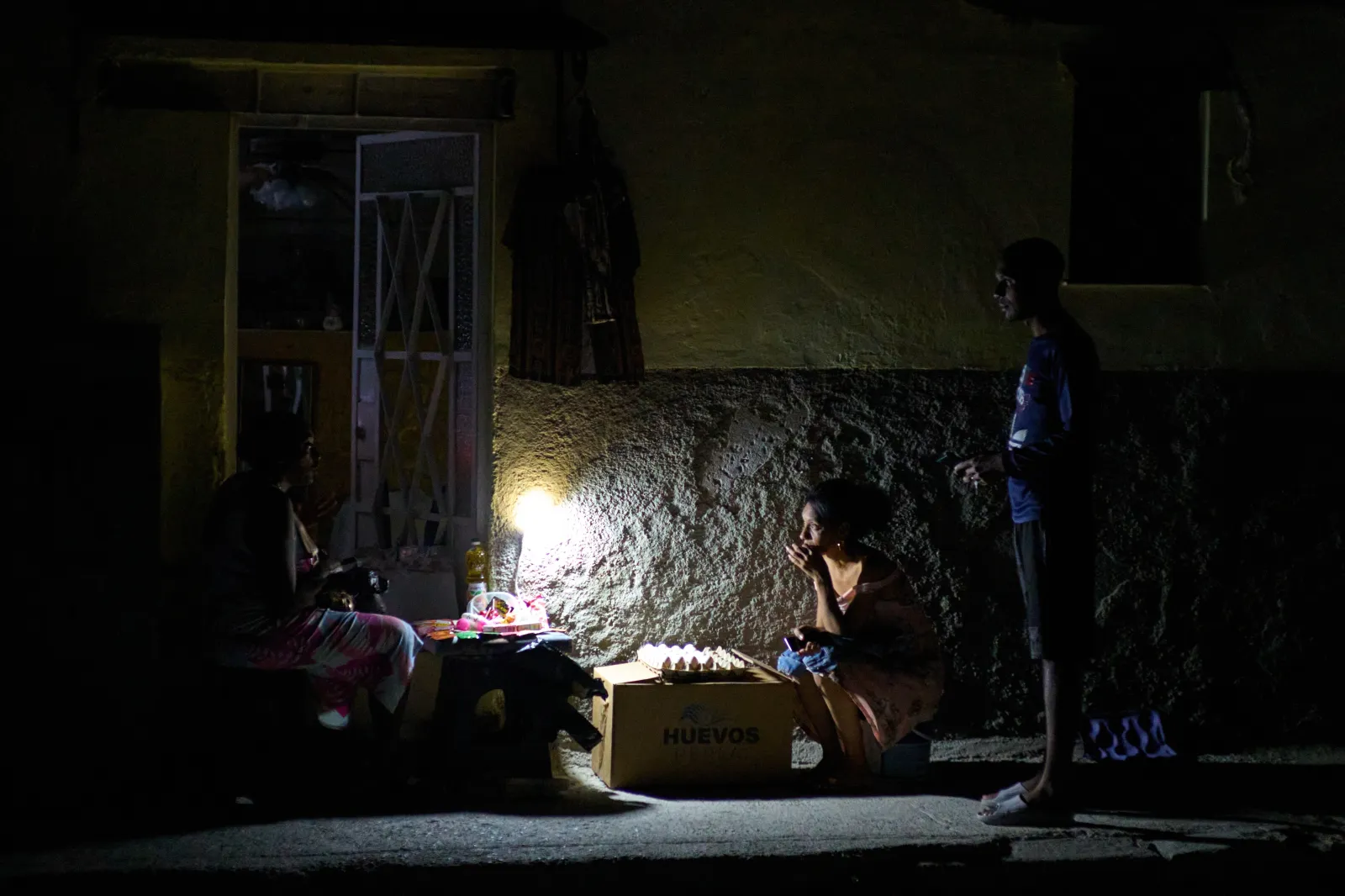
Cuban Ambassador to the United Nations Ernesto Soberón Guzmán told Newsweek last month that this threat was not technically a "new measure" from Trump, who had previously imposed fines on shipping companies and oil tankers arriving on the island, but he warned that the fuel situation was creating daily hours-long blackouts across wide stretches of Cuba.
The island has not received oil shipments in more than three months, Díaz-Canel said on Friday, and has operated on solar power, natural gas and thermoelectric plants.
On Monday, the Cuban Ministry of Energy and Mines said there was an island-wide blackout, leaving 11 million people without electricity—the third major blackout in the country in the past four months, the Associated Press reported.
...
Crews worked to restart thermoelectric plants, but "it must be done gradually to avoid setbacks," Lázaro Guerra, the ministry's electricity director, told state media late on Monday night, adding, "Because systems, when very weak, are more susceptible to failure."
Cuba's aging grid has significantly eroded in recent years, according to William LeoGrande, a professor at American University who specializes in U.S.-Cuba relations.
The island's infrastructure is "way past its normal useful life," he told the Associated Press, adding that continuing without oil shipments would be "constant misery for the general population."
"And eventually, the economy could collapse just completely and then you would have social chaos and probably mass migration," he said.
Trump has not explicitly set out what his conditions would be to lift sanctions against Cuba, and it remains to be seen what will come of his talks with Havana and whether they will include the removal of Díaz-Canel.
In a polarized era, the center is dismissed as bland. At Newsweek, ours is different: The Courageous Center—it's not "both sides," it's sharp, challenging and alive with ideas. We follow facts, not factions. If that sounds like the kind of journalism you want to see thrive, we need you.
When you become a Newsweek Member, you support a mission to keep the center strong and vibrant. Members enjoy: Ad-free browsing, exclusive content and editor conversations. Help keep the center courageous. Join today.


View 0 Comments
Submit Correction
View Editorial & AI Guidelines