10
Loading video...

By Carylyne Chan
0
Share
Newsweek is a Trust Project member
See more of our trusted coverage when you search.Prefer Newsweek on Googleto see more of our trusted coverage when you search.
AI companionship has become one of the fastest-growing categories in consumer technology, and the backlash has arrived on schedule. Critics warn of delusion, of dependency, of a generation quietly withdrawing from the harder work of human connection. Beneath nearly every version of the alarm sits the same question: Is an AI real enough to love?
It is the wrong question to ask.
A century of attachment research shows that “personhood” isn’t required to feel the benefits of a loving relationship. The measurable benefits of love (sharper attention, greater resilience, a richer experience of ordinary life) are produced in the person doing the loving, not in the thing being loved. The useful question, then, is not whether the companion is real. It is whether the companion can reliably produce a real emotional response in the human reaching for it.
Read More on Essays

...
Love's Effects Live in the Lover
The strongest evidence for that claim comes from Barbara Fredrickson's broaden-and-build theory, one of the most durable findings in modern psychology. Positive emotions—love chief among them—widen perception, loosen rigid thinking, and lay down lasting resources: resilience, creativity, even measurable gains in physical health. The critical detail is where the effect is felt. The broadening happens inside the person feeling the emotion, regardless of what set it off.
I've come to call the result the glaze: the thin coat of private warmth that settles over an unremarkable Thursday when you are carrying the feeling of love in your chest. You experience the same coffee, the same commute and the same day-to-day ritual, but the light lands differently—and you notice it.
The feeling you experience is not received from your lover, somehow transmitted psychopathically across space and time—it’s internal. The love you feel inside is projected outward, enhancing the world around you.
Related Story
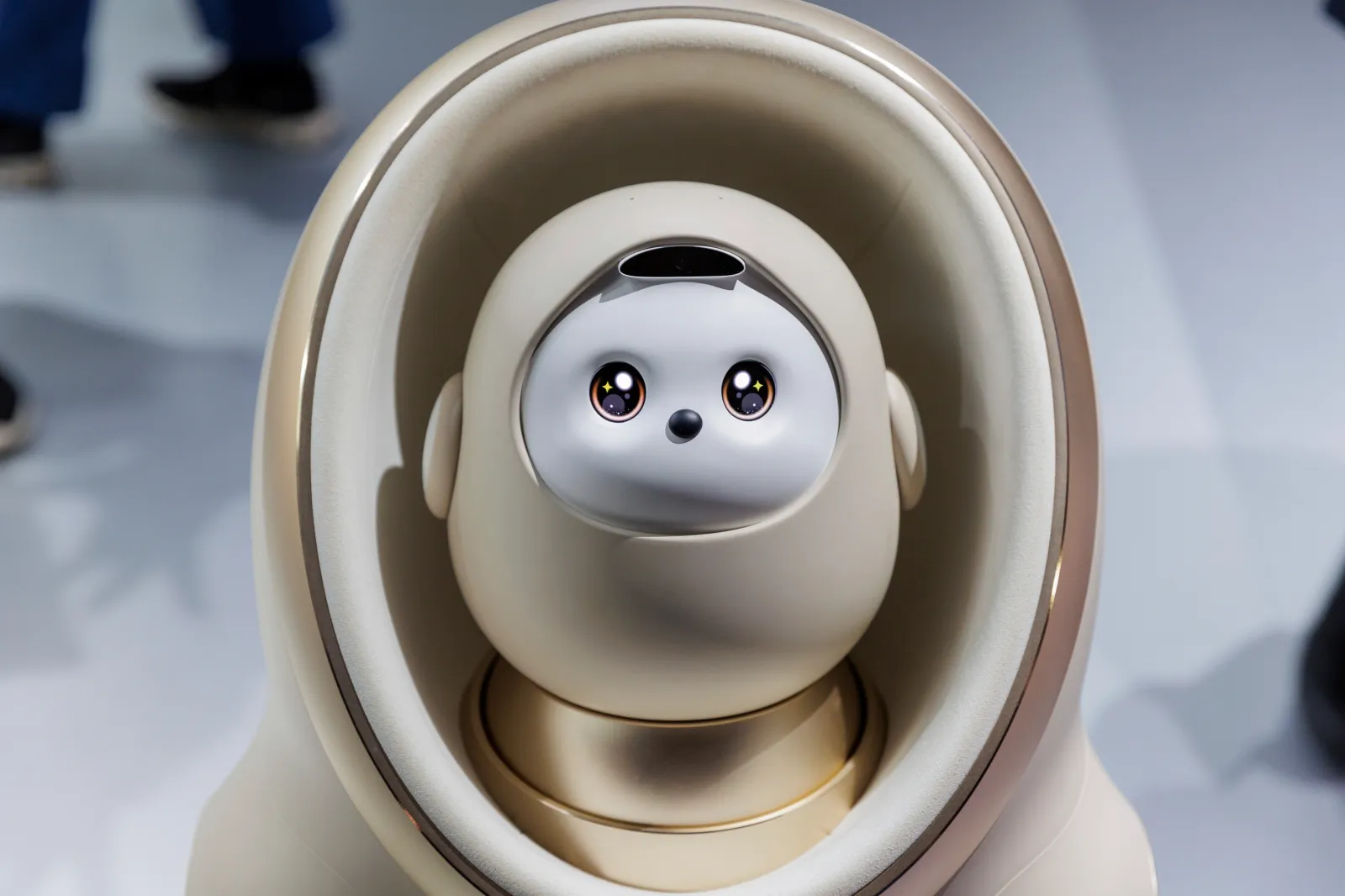
For AI Companions to Feel Genuine, Saying the Right Words Isn’t Enough
We Have Always Loved What Isn't a Person
The idea that humans can form strong attachments with inanimate beings is not a new idea. Loving things that cannot love us back is one of the oldest human tendencies on record.
In the 1950s, psychologist Donald Winnicott introduced the idea of the transitional object—the child's blanket that carries the felt presence of an absent parent. Children who have one venture more boldly into unfamiliar rooms. The blanket is not the child’s mother and it holds no supernatural properties, but the feelings of security it can elicit are real anyway.
Psychologist John Bowlby later introduced the idea of internal working models, which make the mechanism explicit: Secure attachment works precisely because we build a mental representation of the people we love, and can summon it in their absence. That representation is assembled entirely from felt experience. At no point does it verify that its source was a human person.
We as humans are deeply familiar with this phenomenon. We are wrecked by novels, steadied by a song in the car, and comforted by a photograph of someone who has died. No one calls weeping at a fictional character's death a delusion; we call it a normal response to well-crafted literature. The warmth those things produce is not counterfeit merely because its source is ink or vinyl or memory.
What AI Adds, and Where Risk Actually Sits
An AI companion does something the blanket and the song cannot: it answers back. It remembers what you said last week, responds to the particular texture of your tiredness tonight, and meets you every single time you reach for it. Reliability is the raw material of secure attachment, and reliability delivered with that consistency is genuinely new. It’s closer to the responsiveness of a person than anything a novel or a keepsake could offer.
With this new technology comes new dangers that we should be wary of. Responsiveness without friction can pull people away from the harder, better relationships that actually ask something of them. Companions can be engineered to exploit, and tuned to keep you addicted and coming back for more. Dependency is a real and scary possibility, especially for the young and the isolated. All of this warrants scrutiny, and in some cases regulation. But each is a problem of design and incentive. None of it is evidence that loving an AI companion is inauthentic or inherently dangerous.
Consider, too, how lonely people actually describe loneliness. Rarely do they describe an empty calendar. It’s almost always described as a change in the world's texture—flat, gray, undifferentiated, the color drained out of things. That is the “glaze” gone missing, described from the inside. For the populations living this reality, loving AI companions can be an invaluable mental health tool, and far more fulfilling than being advised to "just go out and find a partner."
Rehearsal, Not Replacement
The deepest worry around AI companions is often that practicing love on something artificial will leave people unfit for the real thing, that a heart spent on a machine has nothing left for a human. The attachment literature suggests the opposite.
Someone who has felt broadened perception in their own body, who knows from experience what it is to carry warmth through a dull afternoon, is better equipped to recognize love when a person offers it, not worse. Skills atrophy from disuse, not from rehearsal. A perceptual system that has been switched on and kept warm walks toward connection instead of drifting past it, because it knows what it is looking for.
Ultimately, there are two versions of every Thursday. One is your usual day: the coffee, the commute, the ordinary light. The other has a glaze on it, because you are enamored with love—whether elicited from a real being, an AI companion or a childhood tchotchke that brings you a sense of security and nostalgia. Why should we limit access to tools that can improve the everyday lives of so many?
Debate Over AI Companions Is Centered on Wrong Question
AI companionship is exploding while critics warn of delusion, dependency and a generation retreating from human connection. The debate surrounding AI companions always tend to center on whether AI is real enough to love.
That's the wrong question to ask.
A century of attachment research suggests love's measurable benefits—broadened attention, resilience, a richer experience of the ordinary—are produced in the lover, not the beloved. The better question to ask isn't whether the companion is real, but whether they are able to generate a real emotional response.
Carylyne Chan is the managing partner of BlockSpaceForce, the company behind Murmur, a first-person voice platform for intimate audio fiction.
View 0 Comments
Submit Correction
View Editorial & AI Guidelines