...


By Associated Press and Frances Mao
0
Share
Newsweek is a Trust Project member
See more of our trusted coverage when you search.Prefer Newsweek on Googleto see more of our trusted coverage when you search.
...
The U.S. Treasury Department on Thursday announced it was further easing sanctions on Russian oil by granting a license that authorizes the delivery and sale of some Russian crude oil and petroleum products for the next month.
Trump signaled earlier this week that he would take more action to address the squeeze on oil flows, after his administration decided to grant temporary permission for India to buy Russian oil.
Read More on World
Oil prices have been volatile, surging more than 70% since the war bega. Following Iranian attacks on vessels in the Strait of Hormuz this week, the price has spiked again to $100 per barrel, causing share markets worldwide to sink.
The European Union earlier this week warned the White House against the "temptation" of relaxing Russia sanctions, which had been imposed in response to Russia's full-scale invasion of Ukraine in 2022.
On Thursday, the U.S. said the new exemption would apply only to Russian oil already at sea.
Last week, analysts estimated there were about 125 million barrels loaded on tankers. To put that in perspective, about 20 million barrels of oil per day usually pass through the Strait of Hormuz, according to the International Energy Agency.
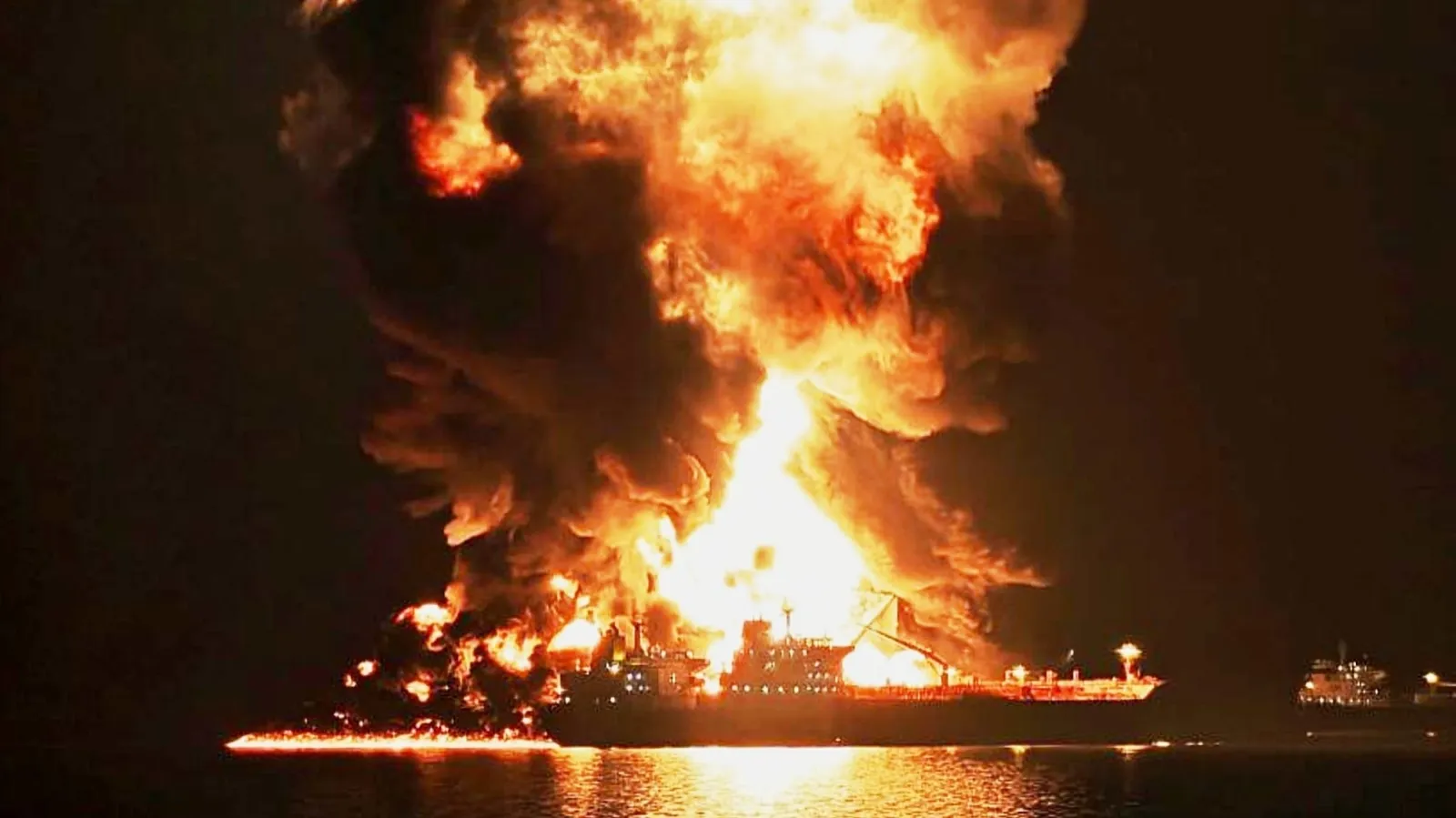
A fifth of the world’s traded oil flows through the waterway leading from the Persian Gulf toward the Indian Ocean. Supply concerns have been fuelled by Iran's effective shutdown of the strait, which is forcing Gulf states to restrict their production and leading to oil regulators having to release back-up supplies.
Iran has made clear it plans to keep up attacks on energy infrastructure across the region and use the effective closure of the strait as leverage against the United States and Israel.
- Countries Around the World Scramble to Cope With Oil Shock
- Why The U.S. Will Struggle To Guard The Oil Strait
The first message from Iran's new supreme leader Mojtaba Khamenei reiterated that Tehran would keep the strait closed, repeating previous promises from the regime that "not a single liter" of oil would make it to the U.S., Israel and their allies.
At a news conference Thursday, Iran’s ambassador to Tunisia, Mir Masoud Hosseinian, also said Iranian naval forces “have established full control” over the strait and “carried out precise strikes in response to attacks on our oil infrastructure.”
“Global energy security is contingent on respect for Iran’s sovereignty,” he said.
The U.S. has claimed at various points that they could open the strait by sending a naval escort for ships currently stranded in the Gulf. However on Thursday, the U.S. Energy Secretary Chris Wright also disclosed in an interview to CNBC that their forces were not ready to do this yet.
Experts have also told Newsweek that mounting an escort naval operation would be a "complicated" task for the U.S. Navy.
Meanwhile, the pinch of the restricted oil flow and supply is being felt worldwide. Countries in Asia and around the world are scrambling with the shock rise in oil and gas prices, which are fuelling inflation rise fears for other basic goods and services.
South Korea reinstated government-set caps on oil prices for the first time in three decades as it sought to calm soaring fuel costs. The two-week caps, which took effect Friday, set maximum prices for petroleum products supplied by refiners to gas stations and other businesses.
Meanwhile in Thailand, government officials have been ordered to work from home, stop wearing suits and skip foreign trips to save energy while Pakistan’s government has shifted to a four-day work week. Bangladesh is closing its universitie and Vietnam has sent out an order for everyone to increase fuel efficiency.
View 0 Comments
Submit Correction
View Editorial & AI Guidelines