...


By Peter Aitken and Steve Mollman
0
Share
Newsweek is a Trust Project member
See more of our trusted coverage when you search.Prefer Newsweek on Googleto see more of our trusted coverage when you search.
Iranian Foreign Minister Abbas Araghchi left Pakistan on Saturday without meeting U.S. officials—who, it turns out, didn't make the trip.
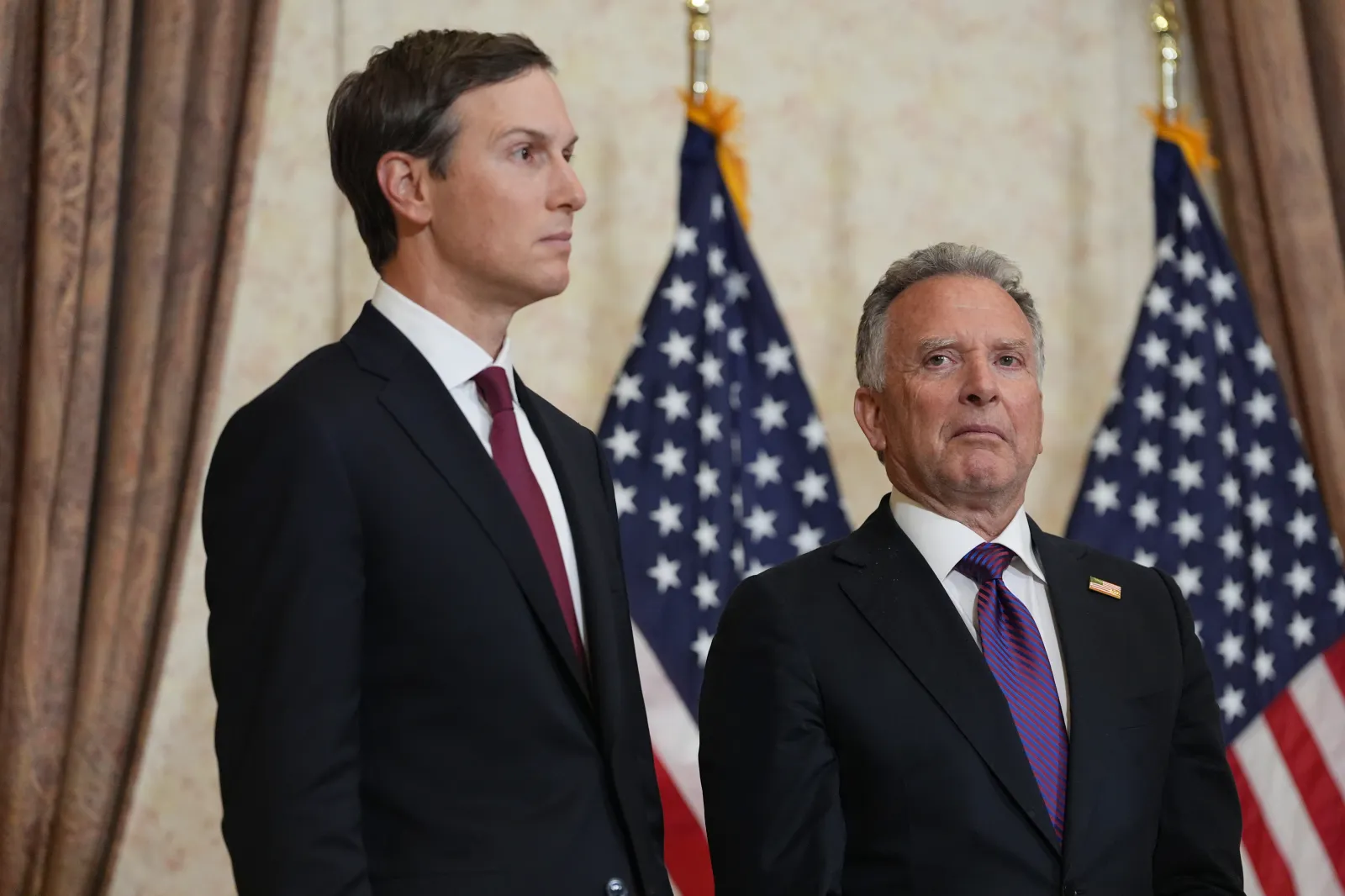
The White House had said Friday it planned to send envoys Steve Witkoff and Jared Kushner to Pakistan to meet with Araghchi, as the United States and Iran continue to seek a diplomatic end to the Iran war.
Those plans changed. On Saturday, President Donald Trump confirmed on Truth Social that he didn't send his envoys after all.
Read More on News
"I just cancelled the trip of my representatives going to Islamabad, Pakistan, to meet with the Iranians. Too much time wasted on traveling, too much work! Besides which, there is tremendous infighting and confusion within their 'leadership.' Nobody knows who is in charge, including them. Also, we have all the cards, they have none! If they want to talk, all they have to do is call!!!"
Shortly after Araghchi touched down in Pakistan late Friday, his government said there would be no direct negotiations with American government representatives during this visit. “No meeting is planned to take place between Iran and the U.S.," foreign ministry spokesman Esmael Baqaei said on X.
Instead, Baqaei said Pakistani officials would convey messages between the delegations. Baqaei thanked the Pakistani government for its “ongoing mediation & good offices for ending American imposed war of aggression.”
Araghchi posted to X after leaving Pakistan: "Very fruitful visit to Pakistan, whose good offices and brotherly efforts to bring back peace to our region we very much value. Shared Iran's position concerning workable framework to permanently end the war on Iran. Have yet to see if the U.S. is truly serious about diplomacy."
White House press secretary Karoline Leavitt had said in an interview on Fox News that Witkoff and Kushner would meet with Araghchi. “We’re hopeful that it will be a productive conversation and hopefully move the ball forward to a deal,” Leavitt said. She said Vice President JD Vance would not travel but that he remains “deeply involved,” and would be willing to go to Pakistan “if we feel it’s a necessary use of his time.”
The talks update comes as U.S. Central Command (CENTCOM) says guided-missile destroyer USS Rafael Peralta enforced the blockade against an Iranian-flagged ship on Friday.
Why It Matters
President Donald Trump earlier this week extended the ceasefire between the warring nations as he cited an allegedly fractured leadership in Iran—which Tehran denied—saying the U.S. is waiting for a "unified proposal," indicating competing goals among different factions in Iran.
On Friday, Trump told Reuters in a phone interview Iran is "making an offer, and we'll have to see," adding he did not yet know the details of the proposal. When pressed on whom the U.S. is dealing with from Iran, Trump said he didn't want to say, but that "we're dealing with the people that are in charge now."
In the meantime, the U.S. maintains its blockade of Iranian ports in the Strait of Hormuz, and remains prepared for renewed hostilities if talks fail.
...

...
Why Is the US at War With Iran?
The war with Iran developed after a decade of failed and often whiplash diplomacy that involved personal grievances and rapid military escalation. The U.S. and Iran agreed to a nuclear deal in the waning days of the Obama administration, known as the Joint Comprehensive Plan of Action (JCPOA), which went into effect in 2015.
However, Trump withdrew from the JCPOA and escalated tensions with Tehran, culminating in the assassination of Qasem Soleimani, who commanded Iran's elite Quds Force of the IRGC, in 2020. This led to vows of vengeance from Iran, and ultimately the Mideast nation planned assassinations for both Trump and his then-national security adviser John Bolton.
Former President Joe Biden attempted to resurrect the JCPOA, but failed to do so, and Trump's return for a second term marked a sharp escalation in tensions once again—tensions that were already inflamed over Israel's operations in the Gaza Strip following Hamas' October 7, 2023, attack, which Iran used as a political cudgel.
Trump ordered Operation Midnight Hammer in June 2025, which ostensibly destroyed nuclear enrichment facilities in Iran, and the U.S. pursued diplomatic talks with Iran to limit further attempts at nuclear enrichment. Negotiations stalled in February this year, with the U.S. demanding zero enrichment and Iran refusing to dismantle its program.
A 10‑day ultimatum and a 60‑day negotiating window expired without agreement, giving Washington the pretext to move ahead with military action. Officials framed the action, termed Operation Epic Fury, as necessary to eliminate “imminent threats” from Iran, citing goals such as destroying Iran’s ballistic missile program, degrading its navy and drone capabilities, and preventing Tehran from ever acquiring a nuclear weapon.
Some U.S. statements also suggested weakening or even collapsing Iran’s leadership could be an outcome of the campaign.
Since then, the conflict has expanded into a regional crisis. Iran has launched attacks on U.S. and allied targets, threatened shipping in the Strait of Hormuz, and used asymmetric tactics to pressure Washington. The U.S. and Israel have continued air operations, while global markets have been shaken by disruptions to oil and gas flows.

...

...
How Many Americans Have Died in the War?
The Iran war has claimed the lives of 13 U.S. military service members.
Six of those service members died after a U.S. military refueling aircraft crashed in Iraq, while the other seven were killed in action during other operations throughout the war.
This is in addition to the many injured, with estimates ranging to 300 to 400 service members. The Military Times has reported the number as 380, as of April 8.
Steve Witkoff, Jared Kushner Will Be in Islamabad: What We Know
Witkoff and Kushner, the president's son-in-law, along with Vance took part in talks with Araghchi and Mohammad Bagher Ghalibaf, the speaker of Iran's parliament, two weeks ago, but those talks resulted in no conclusion and uncertainty over further talks.
Trump told Reuters on Friday that Iran planned to make an offer aimed at satisfying U.S. demands, but he did not know what the offer entailed.
He said the U.S. military will maintain its blockade against Iran’s ports until an agreement is reached.
Asked what is needed to lift the blockade, Trump said: “I’d have to be able to answer that question later. I have to see what they’re offering.”
Defense Secretary Pete Hegseth on Friday said the war was Trump's "gift to the world" and it was entering a new phase that gives Iran a chance to negotiate a "serious" deal.
"It’s a bold and dangerous mission, a gift to the world. Historic. Courtesy of a bold and historic president," Hegseth said during a briefing on Friday. "As the President said, we have all the time in the world. Iran has a historic chance to make a serious deal, and the ball is in their court."
This article includes reporting by the Associated Press.
View 0 Comments
Submit Correction
View Editorial & AI Guidelines