...

By Newsweek Editors
0
Share
Newsweek is a Trust Project member
See more of our trusted coverage when you search.Prefer Newsweek on Googleto see more of our trusted coverage when you search.
When Donald Rumsfeld famously spoke of “known unknowns” about Iraq back in 2002, the then-U.S. Secretary of Defense was describing the kinds of knowledge gaps that can define successes and failures in a conflict.
That concept has returned with force in the U.S.-Israeli war with Iran, launched on February 28 with a salvo of strikes that assassinated Supreme Leader Ali Khamenei.
The U.S. and Israel have inflicted heavy military damage so far, but Iran continues to fight back, albeit asymmetrically.
Read More on Analysis
Key questions—known unknowns, as Rumsfeld might put it—now shape the conflict’s trajectory.
They may ultimately determine whether this war ends quickly or spirals into a disaster.
1: Is Iran’s New Supreme Leader Alive and Fully in Charge?
The most immediate uncertainty sits at the top of Iran’s political system.
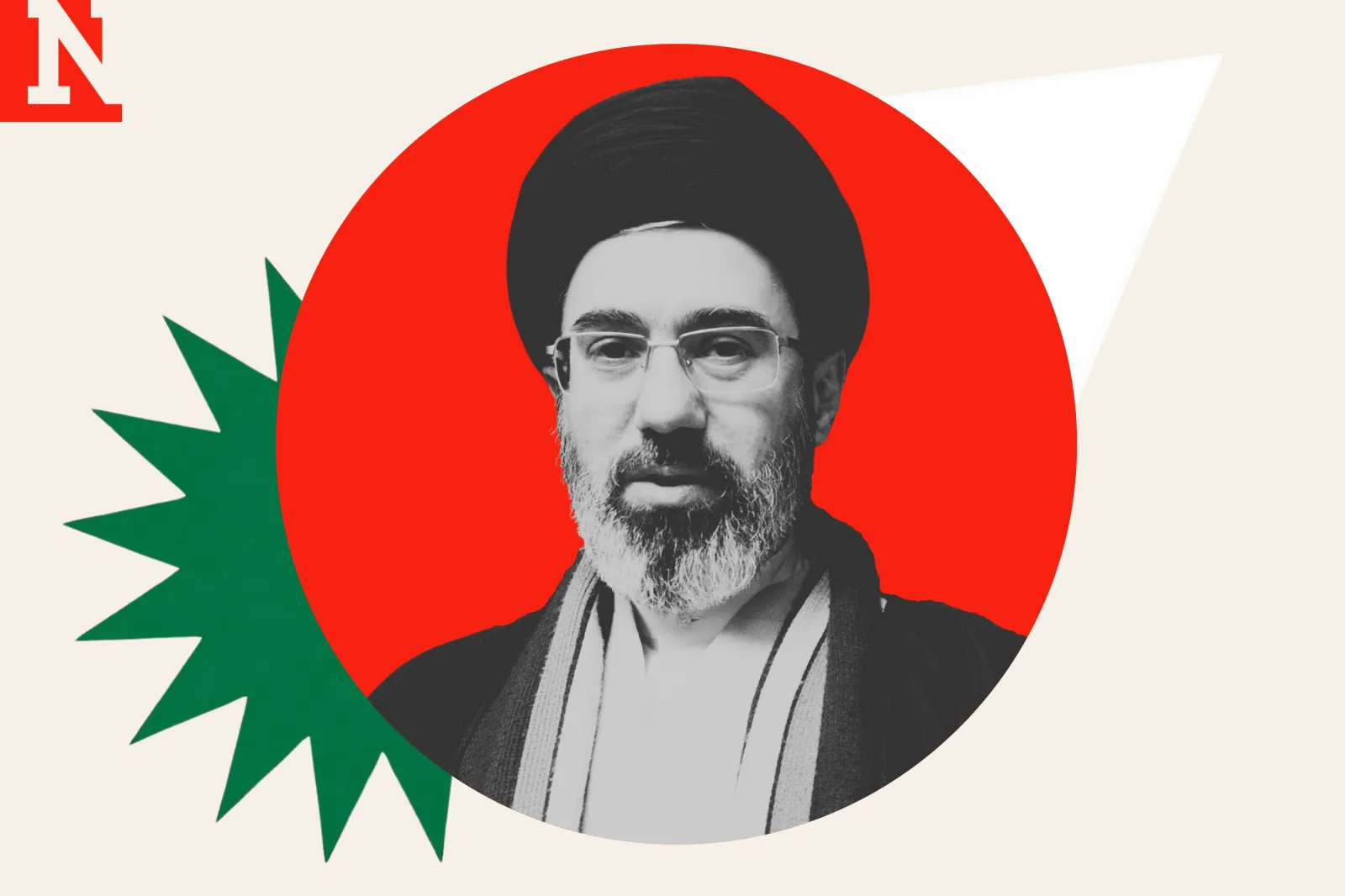
Mojtaba Khamenei, appointed Supreme Leader after his father’s death, has not appeared publicly since the war began.
His absence has fueled persistent speculation that he was seriously wounded in the initial strikes that killed his father and wife.
Iranian state media insists he is alive and leading the country, but his first message was delivered in written form, not on camera.
His father typically delivered statements in person, and the clips were then shown on state TV and circulated across social media.
There is no proof of life or health so far for the heir.
U.S. officials have openly questioned his condition, with President Donald Trump suggesting Khamenei is “damaged” but alive.
If Mojtaba Khamenei is unable to govern day to day, the decision-making power his father held may now sit elsewhere.
Who is calling the shots in Iran right now?
The stakes are high. An incapacitated Supreme Leader could weaken decision-making or intensify factional struggles inside the regime. If Iran is masking instability at the top, it risks miscalculation abroad and loss of control at home.
2: How Much Firepower Does Iran Still Have?
Before the war, Iran possessed the Middle East’s largest missile force and a vast arsenal of attack drones.
U.S. and Israeli strikes have destroyed a large share of Iran’s launch infrastructure, dramatically reducing the volume of daily attacks.
Military officials say missile and drone launches have fallen sharply since the first week of fighting.
Still, Iran continues to fire. Mobile launchers, underground facilities, and dispersed stockpiles make total destruction difficult.
Drones, in particular, remain a concern. They are cheap, easy to produce, and difficult to fully eliminate.
Iran has shown it can sustain pressure even after absorbing major losses. And they are still using drones and missiles against Gulf states and tankers transiting the vital Strait of Hormuz.
They are also rolling mines into the Strait to apply pressure on the U.S. through the global oil market.
What remains unknown is the true depth of Iran’s reserves and production capacity.
Intelligence agencies do not know for sure how many missiles and drones were hidden before the war, or how quickly Tehran can rebuild under fire. They have estimates, not certainties.
As long as Iran retains the ability to strike U.S. bases, Israel, or regional infrastructure, it can prolong the conflict and raise the cost of continued military action.
3: Is the War Weakening the Regime—or Strengthening It?
The war erupted after months of intense and deadly domestic unrest in Iran, raising hopes among some Western officials and exiled opposition figures that military pressure could tip the regime over the edge.
Trump even used his first address to the people after starting the war to call on Iranians to take control of their country’s institutions from the regime, hoping the strikes would be the catalyst for change.
Instead, the early signs are mixed.
Nightly chanting against the regime in some cities offers a glimmer of hope after the brutal pre-war crackdown on protests.
But Iran’s leadership has exploited the attacks to rally nationalist sentiment, staging pro-government demonstrations and framing the war as foreign aggression against the nation itself.
At the same time, the IRGC has tightened security, deploying forces across cities to prevent renewed protests.
Iran’s opposition remains deeply fragmented, lacking unified leadership or clear coordination inside the country.
One of those figures, the exiled Prince Reza Pahlavi, has told supporters the final moment is near and to await his call to action.
But Pahlavi's true influence inside Iran, where many still remember the brutal reign of his father, the last Shah, remains to be seen.
While anger at the regime runs deep, fear, repression, and wartime uncertainty have so far prevented a mass uprising needed to overthrow the country’s clerical rulers.
The war could still shift that balance—especially if economic conditions deteriorate further—but it could also give the regime cover to crush dissent more brutally.
Whether this conflict becomes the catalyst for internal collapse or a lifeline for authoritarian survival remains one of the war’s most consequential unknowns.
4: Where Is Iran’s Nuclear Material Now?
Although the war was triggered by Iran’s alleged nuclear ambitions, the fate of its enriched uranium remains unresolved.
Before hostilities, Iran possessed enough 60 percent enriched uranium to potentially fuel several nuclear weapons.
Airstrikes have damaged nuclear sites, but U.S. officials acknowledge that some material, stored deep underground, was not destroyed.
Iran had warning and incentive to disperse nuclear assets ahead of the attacks.
Western intelligence agencies and the International Atomic Energy Agency lack full visibility after years of restricted inspections.
That leaves open the possibility that some uranium was moved to undeclared locations.
This uncertainty complicates any endgame.
Air power alone cannot eliminate nuclear know-how, and Washington has openly discussed the risks of a ground operation to secure remaining material.
As long as the location and quantity of Iran’s enriched uranium remain unclear, the central objective of the war—preventing a nuclear-armed Iran—remains unfulfilled.
5: How Far Will Iran Take the War Beyond the Region?
One alarming unknown lies outside the Middle East.
Western intelligence agencies are investigating signs that Iran may have activated dormant operatives abroad, so-called “sleeper cells”.
An intercepted encrypted transmission earlier this month prompted heightened alerts across the U.S. and Europe, though officials say there is no specific threat identified.
Iran has a long history of asymmetric retaliation, relying on covert networks, proxy attacks, and deniable operations when under direct pressure.
With its leadership targeted and territory under sustained attack, Tehran may see overseas action as one of its remaining levers.
The scale of that threat is unclear.
Iran and Hezbollah have previously conducted surveillance and operations far from home, but how many operatives remain in place and whether they have been activated remains unknown.
Even Trump left a little room for doubt.
Trump told reporters he had been briefed on Iranian sleeper cells in the U.S., adding that “we know where most of them are, we’ve got our eye on all of them—I think.”
The Mask of Momentum
Taken together, these unknowns explain why the war’s apparent momentum masks deeper strategic uncertainty.
Iran’s leadership structure is opaque, its remaining military capacity unclear, its domestic stability unresolved, its nuclear material unaccounted for, and its ability to widen the conflict still an open question.
U.S. and Israeli firepower has imposed real costs, and the attacks have intensified over the course of the war, but it has not delivered decisive answers so far.
Instead, the conflict is drifting into a familiar danger zone, one of tactical success without strategic clarity.
Hey gang, Carlo Versano here. I hope you enjoyed this article. As Newsweek's Director of Politics and Culture and editor of the 1600 newsletter, I'm keen to hear what you think. Now, Newsweek is offering a new service to allow you to communicate directly with me in the form of a text message chat. You can sign up and get a direct line to me, as well as the reporters who work for me. You can shape our coverage.
As a Newsweek member, we're offering this service to you for free. You can sign up below, or read more about how it works here. Let's talk!
View 0 Comments
Submit Correction
View Editorial & AI Guidelines