...

By Gabe Whisnant
News Editor
0
Share
Newsweek is a Trust Project member
See more of our trusted coverage when you search.Prefer Newsweek on Googleto see more of our trusted coverage when you search.
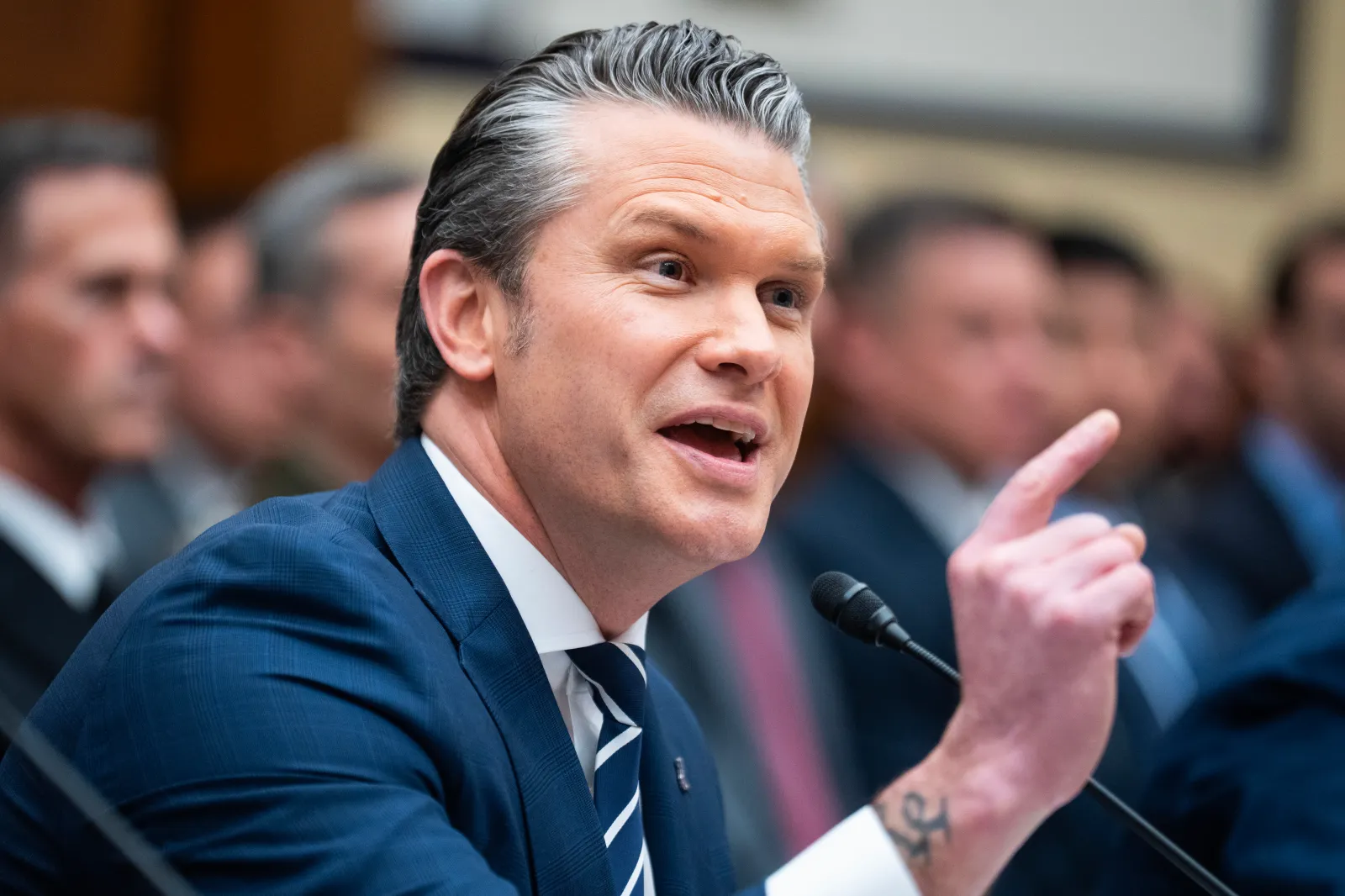
Defense Secretary Pete Hegseth on Wednesday accused congressional critics of the U.S. war with Iran of being the “biggest adversary” facing the mission as he testified before the House Armed Services Committee.
His remarks come as lawmakers intensify scrutiny of the conflict’s mounting costs, casualties and legal footing, two months after President Donald Trump launched military operations without explicit congressional authorization.
The confrontation underscores a deepening rift between the Pentagon and Congress that could shape funding decisions, war powers challenges and the administration’s ability to sustain the operation against Iran.
Read More on U.S.
In prepared opening remarks before questioning began, Hegseth said that “the reckless, feckless and defeatist words of congressional Democrats and some Republicans” pose a greater threat than Iran itself, a statement that immediately drew sharp pushback from Democrats who accused the administration of misleading the public about the war’s objectives and duration.
Why Are Pete Hegseth and Dan Caine Testifying?
Hegseth and Joint Chiefs Chairman General Dan Caine are testifying before Congress this week as part of hearings on the Trump administration’s proposed 2027 defense budget, which would increase Pentagon spending to a record $1.5 trillion. The House Armed Services Committee hearing is focused on military readiness, weapons procurement and long‑term strategy.
The testimony comes as lawmakers intensify scrutiny of the U.S. war with Iran, launched on February 28 without congressional authorization and now estimated to have cost $25 billion. Members of both parties are pressing Hegseth and Caine for clarity on the conflict’s objectives, results and strain on U.S. forces and munitions.
Democrats have questioned civilian casualties, the depletion of critical weapons stockpiles and Iran’s ability to penetrate U.S. defenses with drone attacks that killed or wounded American troops. A fragile ceasefire is in place, but the broader military and political endgame remains unclear.
Hegseth is also facing bipartisan unease over changes to Pentagon leadership, while Caine is expected to address the operational impact amid a heightened war posture. Lawmakers are using the hearings to assess wartime decision‑making and the military’s preparedness going forward.
What Lawmakers Challenged Hegseth and Caine On
Democratic lawmakers repeatedly challenged Hegseth over his description of Iran’s nuclear program, zeroing in on an exchange in which he said Tehran’s nuclear facilities had been “obliterated.”
Representative Adam Smith of Washington pressed Hegseth on why the U.S. went to war if Iran’s nuclear program had already been destroyed, prompting Hegseth to argue that Tehran had not abandoned its nuclear ambitions. The hearing, nominally focused on the Pentagon’s proposed 2027 budget, quickly became a confrontation over the conduct of the war, which was launched without congressional authorization.
Smith, the committee’s top Democrat, pressed Hegseth on how that claim squared with the administration’s assertion that the war was necessary to stop an imminent nuclear threat.

...
“Whoa, whoa, whoa,” Smith said, questioning why the U.S. would initiate a war if Iran’s nuclear program had already been destroyed. Hegseth responded that Iran had not abandoned its nuclear ambitions, arguing that intent—not just physical facilities—justified the military action.
Lawmakers also confronted the Pentagon over the mounting costs of the conflict and the strain on U.S. military resources. Pentagon officials told the committee that the war has already cost about $25 billion, much of it spent on munitions, as lawmakers warned about depleted stockpiles and readiness concerns.
Other Democrats raised civilian casualty reports, including the bombing of a school, and questioned how Iranian drone swarms were able to penetrate U.S. defenses, killing or wounding American troops. Smith warned against what he described as a broader strategy of coercion and force, saying: “You can win a whole lot of little, small battles and lose the war.”
Hegseth pushed back forcefully, saying skepticism from lawmakers was undermining the military effort.
“The biggest challenge, the biggest adversary we face at this point are the reckless, feckless and defeatist words of congressional Democrats and some Republicans,” he said, as Caine sat beside him during the contentious hearing.
Hegseth also sharply criticized Representative John Garamendi, saying he had seen the California Democrat describe the conflict as a “quagmire” in a television interview earlier in the day. Hegseth said comparing the operation to the wars in Iraq and Afghanistan was premature and unfair to U.S. troops, arguing that those conflicts were marked by years of unclear missions and failed nation‑building. Calling the characterization damaging so early in the campaign, Hegseth said that Garamendi “should know better” than to label the war that way just two months in.
View 0 Comments
Submit Correction
View Editorial & AI Guidelines