


By Amanda Castro, Jordan King, and John Feng
0
Share
Newsweek is a Trust Project member
See more of our trusted coverage when you search.Prefer Newsweek on Googleto see more of our trusted coverage when you search.
Israeli Prime Minister Benjamin Netanyahu said Israel will continue striking Hezbollah in Lebanon, insisting there is “no cease-fire in Lebanon” despite a fragile U.S.–Iran truce. His remarks came just hours after signaling openness to talks with the Lebanese government about disarming the Iran‑backed group, a move now overshadowed by escalating violence and mounting international concern.
What To Know
- Netanyahu said Israel will keep hitting Hezbollah “with force” until the group is disarmed.
- Israeli strikes on Lebanon have strained the two‑day‑old U.S.–Iran ceasefire, which Washington says does not cover Lebanon.
- Iran insists Lebanon must be included in the truce and warned it may skip Pakistan peace talks if it is not.
- European leaders urged Israel to halt its attacks, warning the violence could collapse the broader ceasefire.
- Lebanon’s health ministry reported 303 deaths from Israeli strikes on Wednesday, the deadliest day since the war began.
- Israel warned civilians to evacuate parts of Beirut, prompting mass flight northward.
- Kuwait said its military intercepted drones targeting “vital facilities” amid rising Gulf tensions.
- Marine traffic through the Strait of Hormuz remains minimal, with Wednesday marking the lowest levels since late March.
- Israel said it struck more than 100 targets in Lebanon and killed a senior aide to Hezbollah leader Naim Qassem.
- Oil prices climbed again, with Brent crude rising to $98 a barrel amid uncertainty over the ceasefire’s durability.
- Pakistan is preparing to host U.S. and Iranian officials for talks on Saturday, led by Vice President JD Vance.
- The IMF says the war will force a downgrade of global growth forecasts due to supply disruptions and economic fallout.
- Regional death Rights groups report at least 1,665 civilians killed in Iran, more than 1,500 in Lebanon, and dozens across Gulf states.
This live blog is now closed.
Apr 09, 2026 at 08:03 PM EDT
Rep. Burchett blames ‘greed’ for gas price spike as Iran war fuels economic strain
Representative Tim Burchett, a Tennessee Republican endorsed by President Donald Trump, accused major oil companies and lawmakers in Washington of driving up U.S. gas prices through “just greed,” posting the criticism in a video recorded at a gas station late Tuesday. His comments come as Americans continue to feel the economic fallout of the war with Iran, which has pushed fuel costs sharply higher nationwide.
In the video, Burchett described families being forced to choose between basic necessities and the cost of filling their tanks. He rejected arguments that the price surge reflects normal market behavior, pointing instead to subsidies and tax benefits that he said shield the industry from true competition. “This is not competition,” he said. “This is a gross misuse of power and greed.”
Gas prices have become one of the most visible domestic consequences of the conflict. According to AAA, the national average has risen by more than a dollar per gallon since late February, topping $4 for the first time since 2022. The spike followed disruptions to shipping through the Strait of Hormuz, a key route for global oil supplies. While prices briefly eased after the announcement of a two‑week U.S.–Iran ceasefire, renewed clashes involving Israel and Hezbollah have cast doubt on whether the truce can stabilize markets.
Burchett also questioned why U.S. consumers are paying more when the country does not import crude oil from Iran, pointing to the steady price of other petroleum‑based products as evidence that the increases are unjustified. He acknowledged that critics would urge him to pursue legislative action but argued that industry influence in Washington makes reform difficult.
Apr 09, 2026 at 07:50 PM EDT
WATCH: Did China have a secret hand in the US-Iran ceasefire? Everything we know
Apr 09, 2026 at 07:37 PM EDT
Iranians mark 40 days since Khamenei’s death with mass mourning rallies

...
Crowds across Iran gathered Thursday to commemorate the 40th day since the death of Supreme Leader Ayatollah Ali Khamenei, a milestone in Shiite mourning traditions that drew large turnouts in cities nationwide. In Tehran, an NBC News freelance producer reported dense crowds near Khamenei’s former home and office, where mourners packed the surrounding streets.
Families arrived with children, some riding motorcycles and waving Iranian and Hezbollah flags. Many participants beat their chests, wept, and moved slowly past the compound in a steady procession. Chants rejecting compromise and surrender echoed through the area, reflecting the charged political atmosphere following Khamenei’s killing on the first day of U.S.–Israeli strikes.
Khamenei’s son, Mojtaba Khamenei, was selected as his successor but has not yet appeared in public, heightening uncertainty surrounding Iran’s leadership transition.
Apr 09, 2026 at 07:24 PM EDT
Kallas says Israeli strikes in Beirut ‘hard to argue’ as self-defense
European Commission Vice President Kaja Kallas sharply criticized Israel’s heavy bombardment of Beirut, saying Thursday that the scale of destruction made it difficult to justify the strikes as self‑defense. In a post on X, Kallas wrote that while Hezbollah had drawn Lebanon into the conflict, Israel’s response “does not justify inflicting such massive destruction.”
Her comments followed a day of intense Israeli attacks that, according to Lebanon’s Health Ministry, killed more than 200 people. Kallas said the severity of the bombardment made it “hard to argue” that such actions fell within the bounds of legitimate defense.
She also warned that Israel’s operations were placing the fragile U.S.–Iran ceasefire under “severe strain,” adding that the truce should extend to Lebanon to prevent further escalation.
Apr 09, 2026 at 07:11 PM EDT
Israeli raids intensify across West Bank as Lebanon assault escalates
Israeli strikes on Lebanon continued Thursday as violence simultaneously surged in the occupied West Bank, where settlers and Israeli forces carried out a series of raids and attacks on Palestinian communities, according to the Wafa news agency.
In Jerusalem, settlers entered the Al‑Aqsa Mosque compound under police protection and performed religious rituals inside the courtyard, an act that has repeatedly heightened tensions at the site. West of Ramallah, settlers fenced off privately owned Palestinian land in the village of al‑Janiya, while a Palestinian man was injured after being assaulted near Burin, south of Nablus.
Israeli forces also expanded their operations across the territory. A child was detained during a raid on Beit Furik, east of Nablus, after what witnesses described as an assault by soldiers. In the Ramallah area, three Palestinians — including a child — were wounded during an army incursion into the Umm ash‑Sharayet neighborhood. Further north, troops entered Mithlon, south of Jenin, detaining several young men, including former prisoners, and interrogating them inside a home converted into a temporary military post.
Apr 09, 2026 at 06:58 PM EDT
NATO chief defends allies but says some were slow to back U.S. in Iran war
NATO Secretary‑General Mark Rutte defended the alliance’s cohesion on Thursday, while acknowledging that several European governments were “a bit slow” to support the United States after the outbreak of the war with Iran. Speaking in Washington, Rutte said some allies were “surprised” by the conflict, noting that President Donald Trump did not inform them ahead of the initial strikes.
Rutte argued, however, that European support has since become extensive. He pointed to “massive” contributions in basing, logistics and other military assistance aimed at helping the U.S. prevent Iran from acquiring a nuclear weapon and curbing its regional activities. “Nearly without exception, allies are doing everything the United States is asking,” he said.
He also highlighted the United Kingdom’s efforts to align military, political and economic tools to ensure freedom of passage through the Strait of Hormuz, a key U.S. priority as the conflict continues to disrupt global energy flows.
Apr 09, 2026 at 06:45 PM EDT
Houthi-aligned commentator issues warning as ceasefire tensions rise
A senior figure in Iran’s network of regional allies issued a stark warning on Thursday, underscoring the growing strain on the fragile U.S.–Iran ceasefire and the risk of renewed escalation in Lebanon.
Mahdi Mohammadi, a political commentator aligned with Iran’s hard‑line camp, said in a post on X that only “a limited number of hours” remained for what he described as U.S.‑backed forces in Lebanon to halt their actions. He warned that without what he called “complete restraint,” there would be no ceasefire or negotiations, adding that missiles were “ready to fly.”
Mohammadi framed his remarks as part of what he described as a new regional order following what Iranian officials have called their “victory” in the war, saying the shared interests of Iran‑aligned groups must be reinforced “with kind words; otherwise, with war.”
Apr 09, 2026 at 06:31 PM EDT
Global economy faces new strain as IMF warns Iran war will slow growth
The International Monetary Fund is warning that the war in Iran has delivered a fresh shock to an already fragile global economy, with Managing Director Kristalina Georgieva saying the conflict will mean slower growth this year due to damaged energy infrastructure and widespread supply‑chain disruptions.
Georgieva said the newly announced two‑week ceasefire between the U.S. and Iran may soften the blow, but even the most optimistic scenario still points to lasting economic fallout. “There will be no neat and clean return to the status quo ante,” she said ahead of next week’s IMF–World Bank spring meetings.
Before the war, the IMF had been preparing to upgrade its global growth outlook. Now, oil prices have surged above $100 a barrel, U.S. gasoline has climbed past $4 a gallon, and economists fear a renewed inflation wave that could force central banks to raise interest rates again.
Georgieva warned that policymakers must avoid tightening too aggressively, noting that central banks were slow to respond to post‑pandemic inflation and now risk overcorrecting. She also said the conflict underscores the need for broader thinking on energy security, even as the IMF has deemphasized green‑energy initiatives under the current U.S. administration.
The IMF will release updated forecasts next Tuesday, including multiple scenarios reflecting the uncertain trajectory of the war and its global economic consequences.
Apr 09, 2026 at 06:18 PM EDT
Markets edge higher after Israel signals openness to Lebanon talks
U.S. markets ticked upward Thursday after Israel said it was prepared to open peace talks with Lebanon, a move investors interpreted as a potential easing of regional tensions. The S&P 500 rose about 0.6 percent in afternoon trading, recovering from earlier losses.
Oil prices also pulled back from the day’s highs. Brent crude hovered near $96 a barrel, still elevated — more than 30 percent above pre‑war levels — but slightly below its earlier peak as traders weighed the possibility of diplomatic progress.
Apr 09, 2026 at 06:05 PM EDT
JD Vance’s moment of truth
For much of Donald Trump’s presidency, JD Vance has tried to walk a narrow line on foreign policy.
The vice president has cast himself as an "America first" skeptic of foreign wars, shaped by his service as a Marine in Iraq, while remaining publicly loyal to a president who prizes force, leverage and spectacle.
Now, as Vance prepares to lead U.S. negotiations in Islamabad aimed at ending the war with Iran, that balancing act enters its most consequential phase.
The talks in Pakistan, brokered by Islamabad after a fragile, time‑limited ceasefire, mark the highest‑level engagement between Washington and Tehran since 1979.
The decision to send the vice president—rather than rely solely on diplomats or envoys—signals how seriously the White House views this moment.
It also reflects a belief that Vance the dove, a doubter of the Iran war, can close the peace deal.
Read more and become a Newsweek member.
Apr 09, 2026 at 05:52 PM EDT
WATCH: Trump’s Iran move sparks ‘TACO Tuesday’ memes
Apr 09, 2026 at 05:39 PM EDT
Switzerland keeps channels open as Pakistan leads U.S.–Iran mediation
As Pakistan takes center stage in efforts to broker talks between the United States and Iran, Switzerland is signaling that its long‑standing role as a discreet messenger and host remains available — even if decisions are now being made elsewhere.
Just weeks before the war erupted, Iranian and American officials met in Geneva for Oman‑mediated discussions on Tehran’s nuclear program. Those talks ended with cautious optimism, including from Swiss officials, before the conflict derailed diplomacy. With a ceasefire now in place, some observers have wondered whether negotiations might return to Geneva. Swiss officials say they remain in contact with all sides under their “good offices,” but the venue for renewed talks will be determined by the parties themselves.
On Wednesday, Switzerland’s foreign ministry welcomed the truce as “an essential step toward de‑escalation” and said it is reviewing its implications — including whether to reopen the Swiss embassy in Tehran, closed for a month amid heavy bombardment. Ambassador Olivier Bangerter was evacuated as security deteriorated.
Switzerland continues to represent U.S. interests in Iran, relaying messages through its diplomatic channel. But Pakistan — which represents Iran’s interests in the U.S. — has emerged as the primary mediator, backed by Oman, Qatar, and active support from China. Islamabad’s unique position as the region’s only declared nuclear power, and its ties with both Washington and Tehran, have elevated its role.
Still, Bern has not been sidelined. Switzerland has never served as the direct intermediary in U.S.–Iran negotiations, but it has quietly supported mediators in the past, including during the 2023 prisoner exchange arranged by Qatar. Swiss Foreign Minister Ignazio Cassis also recently spoke with Iranian Foreign Minister Abbas Araghchi during Oman‑led indirect talks.
Apr 09, 2026 at 05:26 PM EDT
Netanyahu: Iran threat ‘distanced,’ not defeated
Prime Minister Benjamin Netanyahu used his first public remarks since the U.S.–Iran ceasefire took effect to warn that Israel’s campaign against Iran and Hezbollah is far from over, even as daily life in much of the country begins to resume. Speaking nearly 18 hours after the truce started, he said Iran’s missile and nuclear threats had been “distanced” but not removed, adding: “We still have goals to complete… either by agreement or by the resumption of fighting.”
His comments came after the deadliest day in Lebanon since the latest round of fighting began, with Israeli strikes killing more than 200 people and injuring over 1,000, according to Lebanese authorities. Israel said it hit more than 100 Hezbollah targets within minutes of the ceasefire announcement, underscoring its position that Lebanon is not covered by the truce.
Inside Israel, schools reopened and airports returned to full operations, but uncertainty lingers. After more than two years of near‑constant conflict — from the 2023 Hamas attack to the current war with Iran — some Israelis are openly wondering whether weeks spent in shelters achieved lasting security.
The political stakes for Netanyahu are rising as elections approach later this year. Critics argue that Israel has endured heavy losses without decisive victories, while the United States shifts its focus to negotiations with Iran in Pakistan, where Israeli officials will not be present.
Analysts say the talks will likely center on clarifying the ceasefire’s terms, especially the dispute over Lebanon. Former Israeli ambassador Michael Herzog noted that Israel and the U.S. now diverge on priorities: Israel is focused on Iran’s buried stockpile of highly enriched uranium, while Washington is prioritizing reopening the Strait of Hormuz, whose closure has fueled a global energy crisis.
Netanyahu’s influence over the process may be limited, experts say, even as his political alliance with President Trump remains central to his standing at home. The next test of that relationship could come later this month, when Israel marks Independence Day — and when Trump is slated to receive an Israel Prize for what organizers called his “unique contribution to the Jewish people.” Whether he attends remains uncertain.
Apr 09, 2026 at 05:13 PM EDT
Russia warns Israel’s Lebanon strikes risk derailing negotiations
Russia’s Foreign Ministry has sharply condemned Israel’s latest attacks on Lebanon, warning that the escalation threatens to upend the delicate diplomatic efforts now underway to sustain the U.S.–Iran ceasefire.
In a statement, the ministry said Israel’s actions “push Lebanon towards the brink of an escalating humanitarian catastrophe” and further destabilize a country already grappling with severe economic and social strain.
Apr 09, 2026 at 05:00 PM EDT
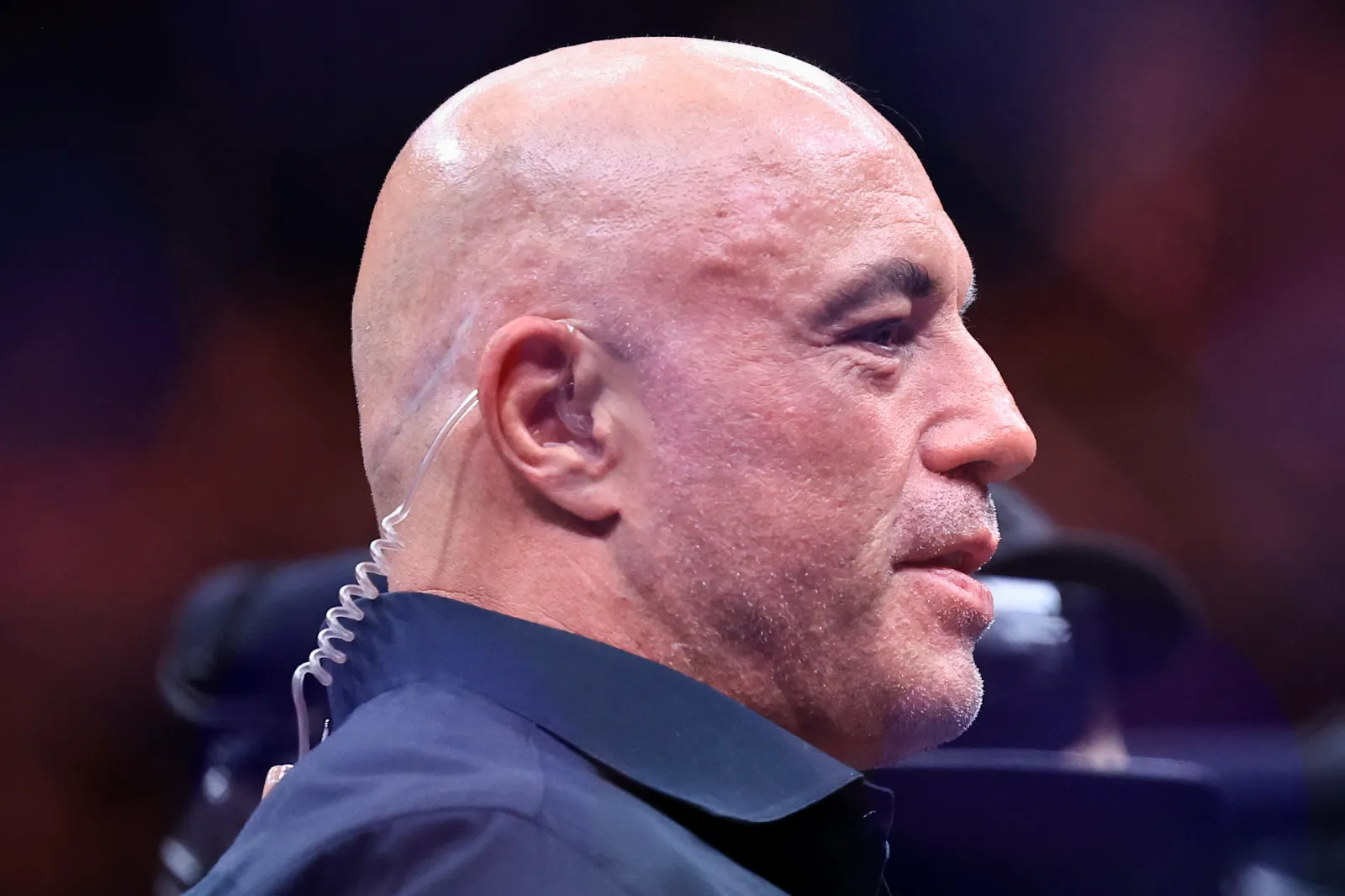
Joe Rogan connects Epstein files to Trump’s Iran war
...
Podcaster Joe Rogan tied two of President Donald Trump's most contentious issues together Wednesday, suggesting the war in Iran was a way to distract from the handling of the Epstein files.
Speaking to comedian Arsenio Hall about those seeking to manage political optics and control the narrative, Rogan and his guest agreed that at least one person should be prosecuted over the revelations in the Epstein files released by the Department of Justice in recent months.
Rogan said that while Trump was threatening to prosecute journalists publishing information on the Iran war, no one was being charged over the Epstein files. Hall said this was a classic distraction tactic.
"Look, the Epstein Files comes out. We go to war with Iran," Rogan said on the Joe Rogan Experience. "It's, it's a good way to get people to stop talking about certain things."
Apr 09, 2026 at 04:47 PM EDT
IMF warns Iran war will leave long-term damage to global economy
The International Monetary Fund says the war in Iran will leave deep and lasting marks on the global economy, even if the current ceasefire holds. Managing director Kristalina Georgieva said on Thursday that the conflict’s economic fallout will persist well beyond any negotiated pause in fighting.
Georgieva cautioned that the Fund is preparing to downgrade global growth, noting that the “most hopeful scenario” still involves slower expansion than previously forecast. She pointed to “scarring effects” from the war — including disrupted trade routes, damaged infrastructure, and shaken investor confidence — and warned there would be “no neat and clean return to the status quo.”
Apr 09, 2026 at 04:43 PM EDT
Yemen’s Houthi leader calls U.S.–Iran ceasefire a ‘great victory’ for Tehran
Abdel‑Malik al‑Houthi, the leader of Yemen’s Houthi movement, hailed the newly announced ceasefire between the United States and Iran as a major win for Tehran and its network of regional allies. Speaking in a video message carried by the Houthi‑run Al Masirah TV channel, he said the agreement represented a triumph not only for Iran but for what he called the broader “axis of resistance” across the Middle East.
Al‑Houthi argued that the war had strengthened Iran’s strategic position, claiming it helped restore deterrence against its adversaries. His remarks come as Iran‑aligned groups across the region continue to frame the ceasefire as evidence of U.S. pressure and battlefield costs.
Apr 09, 2026 at 04:30 PM EDT
Confusion over U.S. and Iranian proposals fuels doubts about ceasefire
Uncertainty surrounding competing U.S. and Iranian plans to end the war is casting a shadow over the fragile two‑week ceasefire, with officials from both sides offering conflicting accounts of what has actually been agreed. At the center of the dispute is Iran’s 10‑point proposal, which is expected to form the basis of negotiations in Islamabad this weekend. President Donald Trump has described the plan as “workable,” even though Tehran previously rejected Washington’s 15‑point framework as overly demanding.
U.S. messaging has been inconsistent. Vice President JD Vance dismissed the publicly circulated Iranian document as inauthentic, while Trump alternated between praising the proposal and insisting that only a separate set of “meaningful points” — not disclosed publicly — underpins the ceasefire. The White House has also reiterated that any uranium enrichment inside Iran remains a red line, contradicting language in the Persian‑language version of Iran’s plan, which asserts U.S. acceptance of Iran’s enrichment rights.
Iran, for its part, has emphasized that its counterproposal includes compensation for wartime damage, a U.S. commitment to non‑aggression, continued Iranian leverage over the Strait of Hormuz, and recognition of its nuclear program. Tehran has long maintained that enrichment is a sovereign right, while U.S. officials say it is a non‑starter.
The existence of multiple versions of Iran’s 10‑point plan — one in English and one in Persian — has only deepened the confusion. The two diverge on key issues, particularly nuclear terms, raising questions about what negotiators will actually be discussing when talks begin.
Apr 09, 2026 at 04:17 PM EDT
Former NATO ambassador warns Alliance facing its ‘biggest crisis’ after Trump–Rutte meeting
Former U.S. ambassador to NATO Ivo Daalder told CNN that President Donald Trump’s meeting with NATO Secretary‑General Mark Rutte comes at what he called the most severe rupture in the alliance’s 77‑year history. Speaking with anchor Audie Cornish, Daalder said Rutte has previously managed to guide Trump through diplomacy using “charm and flattery,” but argued that the current divide is far deeper and no longer responsive to personal rapport.
Daalder said European frustration is rooted in the administration’s decision to launch a war widely viewed abroad as illegal under international law, without consulting NATO allies. He noted that several European governments have since restricted overflight access and base use, prompting concerns inside the White House. “Don’t be surprised,” he said, if allies balk after being excluded from the decision‑making process.
He added that the United States still relies heavily on European airspace and bases to conduct its military operations, despite the president’s recent rhetoric suggesting NATO is a burden. The result, he said, is an alliance “so much weaker than it has been for so long.”
European leaders, including officials from Spain and France, have publicly criticized the U.S. approach to the conflict, warning that military escalation — particularly around the Strait of Hormuz — risks global consequences.
Daalder said the administration should reassess its assumptions about NATO’s value, emphasizing that even when allies disagree with U.S. actions, their logistical support remains indispensable.
Apr 09, 2026 at 04:13 PM EDT
Hezbollah official rejects prospect of Israel–Lebanon talks
A senior Hezbollah official dismissed the idea of negotiations with Israel on Thursday, only hours after Israeli Prime Minister Benjamin Netanyahu said his government intended to pursue talks aimed at disarming the group. Speaking on condition of anonymity, the official said Hezbollah “is not concerned with the decisions of the state or any decision the government may take regarding negotiations,” describing the current relationship between the movement and the Lebanese government as “negative and bad.”
The official added that Hezbollah could not formally respond until Beirut clarified its position, but insisted the group would continue “to defend Lebanon and our occupied lands.” He also echoed Iran’s position that Lebanon was meant to be included in the U.S.–Iran ceasefire, suggesting that ongoing Israeli strikes undermine the truce’s credibility.
Apr 09, 2026 at 04:12 PM EDT
Two non-Iranian tankers cross Hormuz for first time since ceasefire
Two foreign‑flagged oil tankers passed through the Strait of Hormuz for the first time since the U.S.–Iran ceasefire began, a small but notable shift in traffic through the world’s most sensitive energy chokepoint. Ship‑tracking firm Kpler identified the vessels as carrying Palau and Gabon flags, marking the first non‑Iranian crude shipments to move through the strait under the two‑week truce.
Eight bulk carriers transporting dry cargo have also made the transit since the ceasefire took effect. But despite these isolated crossings, overall marine traffic remains extremely limited, with most commercial operators still avoiding the waterway amid uncertainty over the durability of the truce and ongoing regional tensions.
Apr 09, 2026 at 04:04 PM EDT
Trump’s standing slips with Catholic voters as Vatican tensions rise
President Donald Trump’s approval rating among Catholic voters has dipped into negative territory, according to new Fox News polling, as friction between the White House and the Vatican draws heightened public attention.
A White House spokesperson told Newsweek that what matters to Americans is having a leader who “takes decisive action to eliminate threats,” pointing to the administration’s handling of Operation Epic Fury. The Vatican has not yet commented.
The shift comes at a sensitive political moment, with the 2026 midterms approaching and religious voting blocs under renewed scrutiny.
Recent polling shows a clear reversal: in late March, 52% of Catholic respondents disapproved of Trump’s job performance, compared with 48% who approved. Just weeks earlier, the same polling series showed Trump in positive territory with that group. Both surveys were conducted by Beacon Research and Shaw & Company Research using consistent methodology.
The downturn coincides with escalating tensions between Washington and the Holy See. Pope Leo XIV has openly criticized the administration’s rhetoric on Iran, including Trump’s warning that “a whole civilization will die tonight” if Tehran missed a U.S. deadline. Reports of a tense January meeting between Pentagon officials and the Vatican’s ambassador have also fueled diplomatic strain, prompting Vice President JD Vance to say he would review the claims.
The pope has repeatedly urged world leaders to halt armed conflicts, including the U.S.–Israeli war against Iran and Russia’s invasion of Ukraine. His planned U.S. visit for the nation’s 250th anniversary has reportedly been postponed amid foreign‑policy disagreements.
Apr 09, 2026 at 03:51 PM EDT
Global oil recovery could take a year even if Iran war ends now, experts warn
Global energy markets are unlikely to return to anything resembling pre‑war stability for at least six to twelve months — and potentially far longer — even if the Iran conflict were to end immediately, according to analysts assessing the crisis's fallout.
Hopes for a rapid reopening of the Strait of Hormuz evaporated after Israel launched heavy strikes on Lebanon just hours after the U.S.–Iran ceasefire was announced. Iranian media then reported that tanker traffic had again been halted, deepening uncertainty over one of the world’s most critical shipping lanes.
Oil prices, which plunged by roughly $20 a barrel after news of the ceasefire, have since rebounded above $97, underscoring how fragile the market remains. Analysts say the past two days have shown how distant a negotiated end to the conflict still is.
Helima Croft of RBC Capital Markets said reopening Hormuz will be “exceedingly messy,” noting that Gulf states oppose Iran’s proposal for a formalized toll system and that Tehran may effectively have leverage over “nearly every barrel” leaving the waterway until alternative export routes are built.
Australian Treasurer Jim Chalmers warned that the economic shock from the war will continue to hit households and businesses, saying a durable ceasefire and a full assessment of infrastructure damage are essential before markets can stabilize.
Commodity strategists say even under ideal conditions, restarting shuttered wells, repositioning tankers, repairing refineries and restoring supply chains will take months. Westpac’s Robert Rennie noted that fuel retailers were quick to raise prices when the war began, but the recent dip in global oil prices has yet to reach consumers.
The International Energy Agency estimates that about 9 million barrels per day — roughly 9% of global supply — is currently paused awaiting safe passage through Hormuz. Some production could resume within weeks, but Kuwait Petroleum has warned that restoring full output from its shut‑in wells may take up to four months.
Longer shutdowns carry higher risks, including corrosion and equipment failure, which could push recovery timelines close to a year. Liquefied natural gas will take even longer to rebound: Qatar’s massive Ras Laffan facility, offline since early March, may remain out of operation for two to three years.
Analysts agree that even after the war ends, Middle Eastern oil and gas will likely carry a lasting “geopolitical premium,” reshaping global energy markets well beyond the immediate crisis.
Apr 09, 2026 at 03:38 PM EDT
IMF chief says global growth downgrade coming amid Iran war
International Monetary Fund managing director Kristalina Georgieva said Thursday that the IMF will cut its global growth forecast as the war in Iran continues to disrupt economies worldwide. Speaking at an event in Washington, she warned that even the best‑case scenario — in which the current temporary ceasefire holds — will still drag on global output.
Georgieva cited “infrastructure damage, supply disruptions, losses of confidence, and other scarring effects” as key reasons the Fund now expects slower expansion than previously projected. She noted that the conflict’s ripple effects are being felt far beyond the region, from energy markets to trade flows.
Apr 09, 2026 at 03:25 PM EDT
Germany’s Merz warns Israel’s Lebanon strikes threaten wider peace effort
German Chancellor Friedrich Merz said European leaders have been urging Israeli Prime Minister Benjamin Netanyahu to halt Israel’s military campaign in Lebanon, warning that the scale of the assault risks undermining the fragile regional diplomacy now underway.
“The severity with which Israel is waging war there could cause the peace process as a whole to fail,” Merz told reporters in Berlin, noting that European governments are increasingly concerned that continued strikes could derail ceasefire negotiations involving the United States and Iran.
Apr 09, 2026 at 03:12 PM EDT
WATCH: Deadly Israeli bombardment hits 100 targets in 10 minutes in Lebanon
Apr 09, 2026 at 02:59 PM EDT
Lebanon hospitals warn trauma supplies could run out within days
Lebanon’s already strained health system is facing a new emergency as hospitals warn they may exhaust critical trauma supplies within days following the surge in casualties from Israel’s latest large‑scale strikes, the World Health Organization has said.
Dr. Abdinasir Abubakar, the WHO representative in Lebanon, told Reuters that stocks of essential trauma kits — including bandages, antibiotics and anesthetics used to treat blast and shrapnel injuries — are nearing depletion. “Some of the trauma management supplies were in short supply and we may run out in a few days,” he said.
The warning comes after one of the deadliest 24‑hour periods since the conflict escalated, overwhelming emergency rooms and pushing hospitals beyond capacity. Aid agencies say replenishing supplies has become increasingly difficult amid ongoing strikes and uncertainty over safe transport routes.
Apr 09, 2026 at 02:46 PM EDT
Iran says it nearly responded to Israeli strikes on Lebanon before Pakistan stepped in
Iran’s deputy foreign minister Saeed Khatibzadeh says Tehran was preparing to retaliate against Israel’s latest strikes on Lebanon, but held back after urgent intervention from Pakistan, the mediator of the U.S.–Iran ceasefire.
According to comments reported by Iran’s judiciary outlet Mizan, Khatibzadeh warned that “any peace in the region must include Lebanon,” calling the situation “very critical” as Israeli attacks continued despite the truce.
He said Iran was “on the verge of responding” to what it views as a ceasefire violation, but paused after Pakistan relayed messages that the United States would restrain Israel. Khatibzadeh added that Washington must now prove it can stop the strikes.
The dispute over Lebanon’s status in the ceasefire has become a central point of tension. Pakistan and Iran insist Lebanon was included, while U.S. and Israeli officials say it was not. Vice President JD Vance said Wednesday that the disagreement stems from a “legitimate misunderstanding,” arguing that Washington never agreed to extend the truce to Lebanese territory.
Apr 09, 2026 at 02:33 PM EDT
Pakistan and Lebanon hold talks as confusion over ceasefire deepens
Pakistani Prime Minister Shehbaz Sharif has spoken by phone with Lebanese Prime Minister Nawaf Salam, as Beirut reels from ongoing Israeli attacks and uncertainty grows over whether Lebanon is covered by the U.S.–Iran ceasefire.
According to a readout from Sharif’s office, Pakistan “strongly condemned” Israel’s continued strikes and said Salam had requested Islamabad’s support in securing an immediate halt to the assault on Lebanon and its civilians.
The call comes amid a widening dispute over the scope of the two‑week truce announced earlier this week. Washington insists Lebanon is not included, while Pakistan — which brokered the agreement — maintains that it is part of the deal. The disagreement has fueled diplomatic tension and left Lebanese officials and residents unsure whether any protection applies to them.
Apr 09, 2026 at 02:26 PM EDT
Trump says he’s ‘very optimistic’ about Iran deal as Vance prepares for Pakistan talks
President Donald Trump said Thursday he was “very optimistic” that a peace agreement with Iran was within reach, as a U.S. delegation led by Vice President JD Vance prepared to travel to Pakistan for negotiations aimed at ending the nearly six‑week conflict. In a phone interview with NBC News, Trump said Iranian officials were “much more reasonable” in private meetings and claimed they were agreeing to key U.S. demands. He also warned that failing to reach a deal would be “very painful” for Tehran.
The president’s confidence comes as the tentative U.S.–Iran ceasefire shows early signs of strain. Israeli forces continued operations in southern Lebanon, targeting areas controlled by the Iran‑backed Hezbollah movement. A senior administration official told NBC News that Trump urged Israeli Prime Minister Benjamin Netanyahu on Wednesday to scale back the strikes to avoid jeopardizing the upcoming talks. Trump confirmed the call, saying Netanyahu had agreed to “low‑key” operations. Vance, speaking separately in Hungary, suggested Israel might “check themselves a little bit” as diplomacy ramps up.
The Pakistan talks are expected to be the most direct attempt yet to secure a durable end to the conflict, though regional tensions remain high and the ceasefire’s durability uncertain.
Apr 09, 2026 at 02:20 PM EDT
Heavy fighting erupts in Bint Jbeil as Israeli forces push toward key border town
Intense battles are underway in Bint Jbeil, a southern Lebanese town just a few kilometers from the Blue Line, as Israeli forces attempt once again to break through Hezbollah’s defenses. Residents in the wider region reported the sound of jets and drones overhead throughout the morning, along with a series of distant explosions. A bridge damaged overnight has already been repaired by the Lebanese military and civil defense teams.
Bint Jbeil has been a focal point of the ground campaign for weeks. Israeli troops have repeatedly tried to enter the town but have faced strong resistance from Hezbollah fighters. According to local reporting, Israeli units are now attempting to besiege the area, with clashes reaching the first streets on the town’s eastern edge.
Israel says it will continue efforts to establish a buffer zone along the border and strike Hezbollah positions. In response, Hezbollah has launched additional attacks into Israeli territory, heightening anxiety among civilians in southern Lebanon who had hoped the country would be included in ceasefire negotiations.
Apr 09, 2026 at 02:07 PM EDT
Pentagon power struggle deepens as Hegseth–Driscoll rift spills into public view
A new Hill report details escalating infighting inside the Pentagon, where Defense Secretary Pete Hegseth and Army Secretary Dan Driscoll are locked in a widening battle for influence. Anonymous officials told the outlet that Hegseth’s team “believes they’ve uncovered proof that Driscoll has become a resistance figure… not only against Hegseth, but against President Trump as well,” according to the report.
The tensions intensified after Hegseth abruptly purged more than a dozen senior Army leaders, including Driscoll’s widely respected chief of staff, Gen. Randy George. The firings stunned officials, particularly as the U.S. remains engaged in a war with Iran. Some Republicans have rallied behind George, and others privately expressed concern that Hegseth is removing “really good generals for no reason,” per The Hill.
Hegseth’s camp has denied the allegations, with Pentagon spokesperson Sean Parnell calling the report “fake news” and insisting the Defense Secretary maintains strong relationships across the services. But other officials described Hegseth as increasingly “paranoid” after recent Cabinet firings and fearful that Driscoll — who was tapped by President Trump to negotiate with Ukraine — could outshine him.
Driscoll, meanwhile, has earned bipartisan praise and is viewed by some insiders as a potential successor if Hegseth were ever removed. The White House has publicly backed both men, but behind the scenes, officials told The Hill that Hegseth has tried to sideline Driscoll by targeting his advisers and blocking promotions.
The turmoil has raised broader questions about stability inside the Department of War, with one former official warning that the internal conflict is “irresponsible” at a moment of active conflict abroad. Driscoll has rejected claims of subversion, saying he has “no plans to depart or resign” and remains focused on strengthening the Army.
Apr 09, 2026 at 01:54 PM EDT
Global condemnation after Israeli strikes in Lebanon undercut fragile ceasefire
Israel’s massive bombardment of Lebanon in the hours following the announcement of a U.S.–Iran ceasefire has drawn sharp international condemnation and thrown the truce into immediate jeopardy. More than 200 people were killed in strikes that hit densely populated neighborhoods, prompting outrage from the International Committee of the Red Cross and other humanitarian groups.
Prime Minister Benjamin Netanyahu insisted Lebanon was never part of the ceasefire negotiated by President Donald Trump, saying the military would continue targeting Hezbollah. He claimed Israeli forces had killed Naim Qassem, a senior figure in the group. U.S. Vice President JD Vance backed that interpretation, calling the dispute over Lebanon’s status a “legitimate misunderstanding.”
Iranian President Masoud Pezeshkian warned that continued Israeli attacks would make upcoming negotiations “meaningless,” while Pakistan, which brokered the truce, maintains Lebanon was included. Former U.S. envoy Robert Malley said the Pakistani account appeared credible and suggested Washington had quietly allowed Israel additional time to strike before enforcing restraint.
The ceasefire’s instability is already visible at sea. Only 11 ships passed through the Strait of Hormuz in the first 24 hours of the truce — a fraction of normal traffic — and roughly 1,400 vessels remain stranded. Oil prices, which initially fell on news of the ceasefire, climbed back toward $100 per barrel on Thursday.
Global allies are urging a comprehensive halt to hostilities. A joint statement from the UK, EU members, Canada and Japan called for the ceasefire to apply “including in Lebanon.” EU foreign policy chief Kaja Kallas said Israel’s strikes, which killed hundreds, made it difficult to argue they were acts of self‑defense. France’s foreign minister labeled the attacks “unacceptable,” and Britain’s Yvette Cooper warned that excluding Lebanon from the truce would destabilize the region.
As delegations prepare to gather in Islamabad for high‑stakes talks, Trump issued another ultimatum online, threatening a return to U.S. attacks if Iran does not comply with what he called “the real agreement,” including fully reopening Hormuz and ensuring it has “no nuclear weapons.” He made no mention of Lebanon.
Apr 09, 2026 at 01:41 PM EDT
Oil prices surge toward $100 as ceasefire tensions hit global markets
Oil prices climbed sharply on Thursday, edging back toward $100 per barrel, while stock markets surrendered some of the gains sparked by initial optimism over the U.S.–Iran ceasefire.
The S&P 500 slipped 0.2%, the Dow Jones Industrial Average fell 166 points (0.3%), and the Nasdaq dipped 0.2% as disagreements between the United States, Iran and Israel over the terms of the two‑week truce rattled investors.
Benchmark U.S. crude jumped 5.4% to $99.48, after Iranian semi‑official media suggested the military had mined the Strait of Hormuz, the chokepoint at the center of President Donald Trump’s demands for Iran to reopen shipping lanes. Brent crude rose 3.5% to $98.06.
Strategists at Macquarie said the gulf between U.S. and Iranian positions means upward pressure on oil may be “here to stay for a while,” even if traffic eventually resumes through Hormuz. Analysts warn that fears of renewed fighting could prompt buyers to hoard supplies, keeping barrels off the market even without direct attacks.
Mixed U.S. economic data added to the market’s unease. A key inflation measure for February came in slightly hotter than expected, while new unemployment claims rose more than economists projected — a possible sign of accelerating layoffs. Treasury yields swung but ultimately held steady, with the 10‑year anchored at 4.29%, up sharply from pre‑war levels.
Persistently high oil prices could complicate the Federal Reserve’s path toward future rate cuts, and minutes released Wednesday showed some officials even discussing the possibility of a rate hike if inflation remains stubborn.
Overseas, markets also weakened: South Korea’s Kospi fell 1.6%, and Germany’s DAX dropped 1.4%, reflecting global concern that the ceasefire may not hold.
Apr 09, 2026 at 01:33 PM EDT
Iran says Pakistan talks depend on U.S. upholding ceasefire terms
Iran signaled Thursday that it will not commit to peace talks in Pakistan unless the United States fully adheres to the ceasefire terms across every front of the conflict — including in Lebanon. Foreign ministry spokesman Esmaeil Baghaei told Iranian state media that halting the fighting there is an “inseparable” element of the proposal Pakistan has put forward.
Baghaei said Tehran is still reviewing Islamabad’s invitation and will announce a delegation if travel plans are finalized. His remarks underscore Iran’s insistence that any diplomatic process must address what it views as ongoing violations of the truce, particularly amid continued Israeli strikes in Lebanon.
Apr 09, 2026 at 01:28 PM EDT
House Democrats push Iran war powers vote despite expected GOP block
House Democrats will attempt on Thursday to force a vote on a resolution limiting Donald Trump’s authority to wage war against Iran, even though Republicans are almost certain to block the effort. The move reflects growing unease in Congress as a fragile, two‑week ceasefire shows signs of unraveling.
Democrats plan to use unanimous consent, a procedure that allows a measure to pass instantly if no member objects. Any single objection kills the effort — and Republicans are widely expected to do just that.
The ceasefire announced Tuesday is already under strain. Israel has continued striking Lebanon, saying it is targeting Hezbollah, while Iran insists Lebanon is covered by the truce — a claim rejected by both the U.S. and Israel. Lebanese officials say at least 254 people were killed and more than 800 injured in the latest wave of strikes, which leveled parts of central Beirut.
Iran has also reportedly moved to halt oil tanker traffic through the Strait of Hormuz again, hours after the first ships were allowed through. No formal ceasefire text has been released, and Vice President JD Vance has described the agreement as “fragile.” The UN secretary‑general warned that continued Israeli operations in Lebanon “pose a grave risk” to the deal.
Against this backdrop, House Minority Leader Hakeem Jeffries is pressing ahead. In a letter to Democrats, he said a two‑week pause is “woefully insufficient” and urged the House — currently on recess until April 14 — to return immediately to vote on a resolution to “permanently end the war in the Middle East.”
Republican support remains unlikely. Representative Nancy Mace, who previously signaled openness to backing Democrats, is no longer expected to cross party lines. Representative Don Bacon, a retired Air Force general who supported a separate war powers measure earlier this year, told Politico he would “listen” but added, “I want us to defeat Iran.”
In the Senate, Minority Leader Chuck Schumer said the chamber will vote on its own Iran war powers resolution when lawmakers return to Washington next week.
Apr 09, 2026 at 01:15 PM EDT
Pentagon remark on ‘Avignon Papacy’ sparks tension with Vatican
A reported reference to the “Avignon papacy” by a senior Pentagon official has intensified scrutiny of the Trump administration’s relationship with the Vatican, amid ongoing friction over the Iran war and Pope Leo XIV’s vocal criticism of U.S. policy.
According to reporting first shared by The Free Press, the remark was made during a heated January meeting between Under Secretary of War for Policy Elbridge Colby and Cardinal Christophe Pierre, then the Vatican’s ambassador to Washington. The historical allusion — tied to a 14th‑century period when popes were pressured into relocating from Rome to Avignon — was widely interpreted by observers as a pointed warning about the consequences of opposing state power.
A Pentagon spokesperson told Newsweek the account was “highly exaggerated and distorted,” insisting the meeting had been “respectful and reasonable.” Still, the episode has fueled speculation about why Pope Leo XIV later canceled a planned U.S. visit.
Speaking in Hungary on Wednesday, Vice President JD Vance said he would review the reports but declined to comment on “unconfirmed and uncorroborated” claims.
The Vatican has not publicly addressed the alleged exchange, though tensions have been evident for months. Pope Leo XIV has repeatedly condemned the Iran war, and analysts cited the January meeting as a key factor in the Holy See’s decision to indefinitely postpone participation in the United States’ 250th anniversary celebrations.
Apr 09, 2026 at 01:02 PM EDT
Iran confirms delegation will attend Islamabad talks, warns ceasefire hinges on Lebanon
Iranian foreign ministry spokesperson Saeed Khatibzadeh has confirmed that Tehran’s delegation will travel to Islamabad for direct talks with the United States, according to reporting from Iran’s Fars news agency. But he also signaled that any progress will depend on Washington’s ability to rein in Israeli military action.
Khatibzadeh said the U.S. must stop Israel from attacking Lebanon before any agreement can be finalized, reiterating Iran’s position that Lebanon must be included in the ceasefire framework. He warned that “the coming hours are very critical,” underscoring how fragile the truce remains after days of escalating violence.
Apr 09, 2026 at 12:49 PM EDT
Family of Britons detained in Iran urges Starmer to act during ceasefire window
The son of Lindsay and Craig Foreman, a British couple held in Evin prison for 15 months on espionage charges, is urging Prime Minister Keir Starmer to make their case a priority as a two‑week ceasefire between the U.S. and Iran opens a rare diplomatic window.
Joe Bennett said the pause in hostilities creates a “very opportune moment” for the UK to press Tehran, noting that two French detainees were released this week after nearly four years in custody. He called on Starmer and Foreign Secretary Yvette Cooper to raise the Foremans’ detention in every conversation with regional partners during the prime minister’s current Gulf trip.
“If peace is genuinely part of the agenda, then that has to include the releasing of innocent people,” Bennett said, adding that the French government’s vocal advocacy should serve as an example for the UK.
Bennett, who has built cross‑party support in Parliament for his parents’ release, said there has been “no visible progress” despite repeated meetings with officials. He described the past two days as “tumultuous,” with fears spiking after President Donald Trump threatened Iran before agreeing to the ceasefire.
Speaking to his mother by phone on Thursday, Bennett said the couple now hopes the UK will “fight for them” as talks move forward. “Everyone talks about the top of the agenda, but they forget there are innocent human beings at the centre of this,” he said.
Apr 09, 2026 at 12:36 PM EDT
Hormuz crisis deepens as Iran issues new rules for ship passage
The Strait of Hormuz remains at the center of global tension as Iran tightens its control over the vital waterway, even after a two‑week ceasefire was announced between Tehran and the United States. The narrow channel — which once carried 20 percent of the world’s oil and LNG — has been effectively paralyzed since Iran began targeting vessels in response to U.S. and Israeli strikes in February.
Before the war, the strait was toll‑free and considered safe for commercial shipping. But Iran’s retaliatory attacks halted nearly all movement, stranding vessels and triggering one of the worst energy supply disruptions in modern history. Despite U.S. President Donald Trump’s threats earlier this week to strike Iranian infrastructure if the strait remained closed, Tehran refused to reopen it until a ceasefire was brokered by Pakistan.
As part of the truce, Iran has now issued new terms governing passage. Foreign Minister Abbas Aragchi said ships may transit only in coordination with Iran’s armed forces. The Islamic Revolutionary Guard Corps (IRGC) released a new navigation map directing vessels closer to Iran’s coastline, citing the risk of anti‑ship mines in traditional lanes. Analysts say only three to five ships have passed through since the pause in fighting began.
It remains unclear whether Iran is collecting tolls during the ceasefire, though several vessels reportedly paid in Chinese yuan during the crisis — a move seen as both a sanctions workaround and a challenge to the U.S. dollar. Trump has insisted the strait will be “OPEN & SAFE,” saying U.S. forces will remain in the area and could resume attacks if negotiations falter.
Iran’s unpublished 10‑point plan, which forms the basis of upcoming talks in Islamabad, reportedly demands an end to U.S. and Israeli strikes, the lifting of sanctions, and Iranian control over Hormuz. Iranian media have floated potential tolls of up to $2 million per vessel or $1 per barrel shipped, with revenue earmarked for reconstruction. Oman, which shares the strait, has rejected the idea.
International law generally prohibits charging fees for passage through straits, though Iran and the U.S. have not ratified the relevant treaty. Some experts say Iran could legally charge for de‑mining or safety services instead.
Global reaction has been swift. Gulf states have urged the reopening of the strait, while a UN Security Council resolution calling for coordinated action to restore traffic was vetoed by Russia and China. Maritime analysts warn that shipowners — losing millions daily — may comply with Iran’s rules simply to get their vessels moving again.
With hundreds of tankers still stranded and energy markets rattled, the future of Hormuz now hinges on whether this ceasefire holds — and whether Iran’s new terms become a lasting reality.
Apr 09, 2026 at 12:23 PM EDT
ADNOC chief says Strait of Hormuz remains effectively closed despite ceasefire
The Strait of Hormuz has not reopened to normal ship traffic despite the newly announced two‑week ceasefire between the United States and Iran, the head of the Abu Dhabi National Oil Company (ADNOC) said Thursday.
ADNOC CEO Sultan Ahmed Al Jaber wrote that “the Strait of Hormuz is not open,” stressing that access is still “restricted, conditioned and controlled.” He said Iran is requiring ships to obtain its permission before transiting the waterway — a practice he described as “coercion,” not freedom of navigation.
The warning comes as freight analysts report that tanker movement has not increased since the ceasefire took effect. Traffic remains at the same minimal levels seen throughout the war, despite President Donald Trump’s insistence that the truce required the “complete, immediate and safe opening” of the strait.
Iran’s military leadership said Wednesday it would continue to “manage and intelligently control” the passage, according to state media.
Oil flows through the strait collapsed after Iran began attacking vessels, triggering what analysts call the largest supply disruption in history. Before the conflict, roughly 20% of global oil moved through the narrow channel. Al Jaber said the last pre‑war shipments are only now reaching their destinations, and the futures market will soon collide with the physical reality of constrained supply.
He warned that 230 loaded tankers are currently stuck waiting to exit the Gulf. Each day of restricted passage, he said, tightens markets, lifts prices and strains economies far beyond the energy sector.
Calling the strait a natural passage protected under international law, Al Jaber said stability now depends on restoring “full and reliable supply — not partial access, not temporary measures, not controlled passage.”
Apr 09, 2026 at 12:13 PM EDT
Netanyahu authorizes direct talks with Lebanon as ceasefire wavers
Prime Minister Benjamin Netanyahu said Thursday that he has authorized Israel to begin direct negotiations with Lebanon “as soon as possible,” even as the fragile U.S.–Iran ceasefire strains under continued Israeli strikes on Beirut.
Netanyahu said the move came after requests from Lebanese officials and that any talks would center on disarming Hezbollah and laying the groundwork for peaceful relations between the neighboring states. He also welcomed Lebanon’s prime minister’s call to demilitarize Beirut, framing it as a potential opening for diplomacy.
Lebanon has not publicly responded, and the timing of the announcement.
Apr 09, 2026 at 12:10 PM EDT
Fed minutes reveal deep concern over economic risks from Iran war
Newly released minutes from the Federal Reserve’s March 17–18 policy meeting show officials were increasingly worried that the war involving Iran could ripple through nearly every corner of the U.S. economy, from inflation to hiring.
The FOMC voted to keep interest rates unchanged at that meeting, but the minutes published Wednesday make clear that the conflict — then entering its third week — was a major source of uncertainty. Participants warned that the war could fuel higher energy prices, weaken investor confidence and dampen business sentiment.
“Uncertainty about the economic outlook remained elevated and the conflict in the Middle East was an additional source of uncertainty,” the minutes said.
Economists had already cautioned that the U.S.–Israeli strikes on Iran in late February could push up oil prices and strain consumer and business budgets. Even with this week’s ceasefire announcement, analysts say the economic fallout may take time to ease, especially given doubts about the truce’s durability.
Officials highlighted the risk that prolonged conflict could keep energy costs elevated, feeding into core inflation. They also noted that U.S. equities fell sharply in the early weeks of the war and that a drawn‑out crisis could further soften the labor market.
While geopolitical risks contributed to the Fed’s decision to hold rates steady, the minutes also suggest that weaker job conditions — combined with the hit to household purchasing power from higher oil prices — could justify rate cuts later this year.
Fed Chair Jerome Powell said after the meeting that policymakers view current monetary settings as appropriate but remain alert to risks on both inflation and employment.
Oil prices dropped and U.S. stocks rebounded after news of the ceasefire, though officials cautioned that the economic picture remains fragile.
Apr 09, 2026 at 11:57 AM EDT
Missile debris from Iran–Israel conflict leaves casualties in West Bank
Several people have been killed in the Israeli‑occupied West Bank since the Iran–Israel conflict began, as the territory continues to be struck by falling debris from Iranian missiles intercepted over Israel.
Although the United States and Iran have agreed to a two‑week ceasefire, residents in the West Bank say only a permanent end to the fighting can protect civilians from the fallout of missile interceptions.
According to Palestinian authorities, more than 270 pieces of missile debris have landed across the West Bank in roughly one month — an average of about 10 per day — since the conflict erupted in late February. One of the deadliest incidents occurred on March 18, when debris struck Beit Awwa in the southern West Bank, killing four women.
A brother of one of the victims told NHK the women had been inside a small building used as a beauty salon when debris fell nearby, just before Ramadan celebrations. The blast left the structure riddled with holes in its walls and roof.
Unlike Israel, the West Bank has no shelters or warning sirens, leaving residents with little protection. The victim’s brother said the women “were killed for no reason,” stressing that civilians — who have no role in the war — are the ones paying the price.
Apr 09, 2026 at 11:44 AM EDT
Iran’s president warns Israeli strikes make ceasefire ‘meaningless’
Iranian President Masoud Pezeshkian said Thursday that Israel’s continued attacks on Lebanon amount to “a clear violation” of the two‑week ceasefire and risk rendering upcoming peace talks pointless.
In a post on X, Pezeshkian said the strikes were “a clear violation of the initial ceasefire agreement,” accusing Israel of acting in bad faith. He warned that such actions signal “deception and lack of commitment to potential agreements.”
Pezeshkian added that “the continuation of these actions will render negotiations meaningless,” stressing that Iran remains prepared to respond. “Our hands remain on the trigger. Iran will never leave its Lebanese brothers and sisters alone,” he wrote.
Apr 09, 2026 at 11:31 AM EDT
What Trump’s ciritics are getting wrong about Iran
President Donald Trump’s Iran war has already been declared a strategic failure—costly, destabilizing, and self-defeating—across Washington’s policy and media elite.
Not for nothing. The two-week ceasefire announced this week is paper-thin, and the war’s ultimate outcome still hangs in the balance.
The fight has shifted, for now at least, from sorties to terms. Vice President JD Vance is headed to Islamabad for direct talks with Iranian officials on a final settlement to end the conflict.
Who controls the Strait of Hormuz? What happens to Iran’s nuclear and missile programs? Will Iran cut off its proxy militias across the Middle East?
Those questions, and others like them, remain unresolved. So any final verdict is premature, whether it’s Trump claiming total victory or his critics calling this a bigger American strategic defeat than Vietnam.
Bluster and bravado from Washington and Tehran have shaped the war’s narrative so far.
Read more here and become a Newsweek member.
Apr 09, 2026 at 11:18 AM EDT
Iran’s nationwide internet blackout reaches 41 days, monitor says
Iran’s sweeping internet shutdown has entered its 41st day, surpassing 960 hours without access to the global web, according to monitoring group NetBlocks.
In a post on X, the organization said the blackout — imposed amid the country’s ongoing conflict and political unrest — is “unprecedented in scale and duration for a connected society” and continues to violate Iranians’ fundamental rights to communicate and access information.
Apr 09, 2026 at 11:05 AM EDT
Israeli strikes on Lebanon expose ceasefire rift as truce faces immediate strain
One day after U.S. President Donald Trump announced a two‑week ceasefire between Washington and Iran, Israel carried out its deadliest attacks of the conflict in Lebanon, killing hundreds and pushing the fragile agreement to the brink.
The strikes underscored a fundamental dispute over the scope of the truce. Iran insists Lebanon is an “inseparable part” of the deal, while Israel and the United States maintain it is not covered — a gap now shaping the trajectory of the ceasefire and the fate of the Strait of Hormuz, whose reopening was a central U.S. demand.
Fresh Israeli strikes hit Lebanon again this morning, including one attack that killed more than 10 people, among them women and children, according to the National News Agency. The IDF also ordered evacuations across large areas of Beirut’s southern suburbs, signaling that operations remain active and expansive.
At least 182 people were killed in yesterday’s bombardment, prompting widespread international condemnation. Pakistan — the mediator of the ceasefire — had initially said Lebanon was included in the agreement. U.S. Vice President JD Vance later described the situation as a “legitimate misunderstanding.”
In response to the strikes, Iran halted oil tanker traffic through the Strait of Hormuz, according to the semi‑official Fars news agency. Iranian parliament speaker Mohammad Bagher Ghalibaf warned that ceasefire violations “carry explicit costs and STRONG responses.”
Despite Trump’s insistence that the ceasefire required the “COMPLETE, IMMEDIATE, and SAFE OPENING” of the strait, only a handful of vessels have passed through since the truce began. Vance reiterated Wednesday that if Iran does not reopen the waterway, the ceasefire will collapse.
For the first time since the war began, no Gulf states — aside from Bahrain, which intercepted seven drones in the past 24 hours — reported overnight attacks. The UAE explicitly stated it had not been targeted, suggesting the ceasefire is holding in that part of the region.
Preparations continue for weekend talks in Islamabad, where Vance, Jared Kushner, and special envoy Steve Witkoff are expected to meet with Iranian officials. The question of Lebanon’s status — and the future of the Strait of Hormuz — now looms over those negotiations.
Apr 09, 2026 at 11:00 AM EDT
Trump presses Netanyahu to ease Lebanon strikes ahead of Iran talks
President Donald Trump urged Israeli Prime Minister Benjamin Netanyahu to scale back Israel’s military strikes in Lebanon, according to a senior administration official, in an effort to protect the fragile diplomatic track with Iran.
The request came during a phone call on Wednesday, shortly after Netanyahu publicly vowed to continue forceful operations against Hezbollah. While both Washington and Jerusalem maintain that Lebanon is not covered by the current U.S.–Iran ceasefire, the official said Israel agreed “to be a helpful partner” as negotiations approach.
Iranian officials have warned that continued Israeli strikes could prompt retaliation and jeopardize the two‑week truce. The administration sees reducing tensions in Lebanon as essential to keeping the talks on track.
Apr 09, 2026 at 10:52 AM EDT
Turkish minister calls Iran crisis ‘mother of all crises,’ says Turkey positioned to withstand shock
Turkish Energy and Natural Resources Minister Alparslan Bayraktar described the global turmoil triggered by Iran’s retaliatory closure of the Strait of Hormuz as “the mother of all crises,” warning that the disruption has reshaped global energy dynamics.
Speaking in an interview with Al Jazeera Arabic, Bayraktar said Turkey's long‑term investments in energy infrastructure and its strategic position between Asia and Europe have made it a central player in regional energy security. He highlighted the importance of the Blue Stream and TurkStream pipelines, which carry Russian natural gas to Turkiye and onward to Europe.
Bayraktar argued that Turkey is better prepared than many countries to weather the crisis, citing its strategic reserves and gas storage facilities, which he said are 72 percent full. By contrast, he noted that storage levels across Europe stand at just 28 percent, leaving the continent far more vulnerable to prolonged supply disruptions.
Apr 09, 2026 at 10:39 AM EDT
No ship movements through Hormuz amid confusion over Iran’s payment demands
No vessels are currently transiting the Strait of Hormuz, according to Muyu Xu, a Singapore‑based analyst with the data firm Kpler, who said traffic has come to a standstill as shipping companies struggle to understand Iran’s shifting requirements for passage.
Xu noted that several Chinese ships remain in the long queue awaiting clearance, but described the broader situation as “confused and unclear.” She said Iran initially indicated it would accept renminbi (yuan) as payment last week, only to later signal a preference for cryptocurrency instead.
“They don’t know whether they need to pay first, or they go past first and then Iran sends a bill. It’s just a lot of uncertainty here,” she said.
Apr 09, 2026 at 10:26 AM EDT
UK Defense Secretary rejects any toll system in Strait of Hormuz
Britain’s Defense Secretary John Healey said Thursday that the UK firmly opposes the introduction of tolls for ships transiting the Strait of Hormuz, pushing back on recent suggestions that such a system could be part of future security arrangements.
Healey told reporters that Britain and its partners want the strategic waterway to remain “open, free, [and] consistent with the long‑established laws of international navigation, without any sort of tolls for passage.”
Asked about President Donald Trump’s public consideration of a joint U.S.–Iran toll mechanism, Healey warned that adopting such a model would set a troubling precedent. “The introduction of any sort of pay‑for‑passage tolls would create a potential principle that could be used and abused by others elsewhere,” he said.
Apr 09, 2026 at 10:13 AM EDT
WATCH: Chuck Schumer claims Trump decisions leading to furious allies
Apr 09, 2026 at 10:00 AM EDT
European leaders urge Lebanon’s inclusion in cease-fire after deadly Israeli strikes
European officials intensified calls on Thursday for Lebanon to be formally included in the U.S.–Iran cease-fire, following a wave of Israeli attacks on Hezbollah that killed more than 200 people in one night — the deadliest strikes since the conflict expanded in late February.
Iran has accused Israel of violating the truce and warned through the Revolutionary Guards that continued attacks on Lebanon would prompt a military response. Israel and the United States maintain that Lebanon is not covered by the agreement.
Lebanese health authorities say more than 1,700 people have been killed since the fighting between Israel and Hezbollah, an Iran‑backed militia, escalated.
The renewed European pressure comes as American and Iranian officials prepare for face‑to‑face talks in Pakistan, which brokered the cease-fire.
Foreign Secretary Yvette Cooper called Israel’s latest strikes a “deeply damaging” escalation and said Lebanon must be included in the cease-fire to avoid further regional destabilization. Her remarks came as Prime Minister Keir Starmer met with Gulf partners, including Saudi Arabia and the United Arab Emirates.
Foreign Minister Jean‑Noël Barrot condemned Israel’s intensified operations, saying they undermined the fragile truce. He argued that while Iran must stop using Hezbollah to threaten Israel, Lebanon should not become the “scapegoat” of an Israeli government frustrated by the U.S.–Iran agreement.
E.U. foreign policy chief Kaja Kallas said the Israeli strikes had placed the cease-fire “under severe strain” and insisted the truce must extend to Lebanon. She noted that the scale of the attacks — which killed hundreds — made it difficult to justify them as self-defense.
Foreign Minister José Manuel Albares denounced the strikes as “a shame to humanity’s conscience” and announced that Spain would reopen its embassy in Iran, closed for a month. Spain has been among the most outspoken critics of the U.S. and Israel over the assault on Iran.
Apr 09, 2026 at 09:47 AM EDT
Lebanon to file urgent UN complaint after Israeli escalation, Salam says
Lebanese Prime Minister Nawaf Salam said the cabinet has approved an urgent complaint to the United Nations Security Council over what it described as a sharp escalation in Israeli attacks on Lebanon. He also announced immediate steps to reinforce state authority in the Beirut governorate, including directing security forces to assert full control.
In a statement posted on X, the Lebanese Presidency said Israel’s “dangerous escalation” defied ongoing regional efforts to halt the war and showed clear disregard for international law and humanitarian norms.
The presidency added that weapons possession in the Beirut governorate—an area where Hezbollah maintains significant operational presence—will now be limited strictly to official security forces. The move, it said, aims to safeguard “the safety, security, and property of citizens.”
Apr 09, 2026 at 09:33 AM EDT
Gulf states report first full halt in Iranian strikes since war began
Several Gulf countries reported no hostile aerial activity on Thursday, marking the first sustained pause in Iranian missile and drone attacks since the conflict erupted on February 28.
The United Arab Emirates said its airspace was “free of any air threats” on April 9, according to a statement from its Defence Ministry.
Military authorities in Saudi Arabia, Qatar, Kuwait and Oman also issued no alerts or reports of incoming missiles or drones—an unusual break after weeks of near‑daily interceptions.
Bahrain’s armed forces released an updated tally of Iranian projectiles launched during the war but did not indicate that any new attacks occurred today.
Apr 09, 2026 at 09:20 AM EDT
Iranian speaker warns ceasefire includes Lebanon, signals ‘strong’ response to violations
Iranian parliament speaker Mohammad Bagher Ghalibaf said Thursday that Lebanon was an integral part of the two‑week ceasefire agreement between Tehran and the United States, warning that any breach would trigger serious repercussions.
In a post on X, Ghalibaf wrote that Lebanon and what he described as the broader “Resistance Axis” were “an inseparable part of the ceasefire,” framing recent Israeli attacks on Lebanon as direct violations of the deal.
He added that such violations “carry explicit costs and STRONG responses,” signaling that Iran and its allies view the strikes as a threat to the fragile pause in hostilities.
Apr 09, 2026 at 09:07 AM EDT
Netanyahu’s corruption trial to resume after emergency lifted
Israeli Prime Minister Benjamin Netanyahu’s long‑running corruption trial will restart on Sunday, the courts announced, just hours after Israel ended the state of emergency imposed during its war with Iran.
A spokesperson for the Israeli judiciary said hearings would now “resume as usual,” with sessions scheduled from Sunday through Wednesday following the system’s return to normal operations.
Netanyahu, the first sitting Israeli leader to face criminal charges, is on trial for alleged bribery, fraud and breach of trust stemming from investigations that concluded in 2019. He denies all accusations. The proceedings, which began in 2020 and could carry potential prison sentences, have been repeatedly postponed due to wartime disruptions and Netanyahu’s official duties, leaving the timeline for a verdict still uncertain.
Apr 09, 2026 at 08:36 AM EDT
UAE confirms no air threats in past hours
The United Arab Emirates (UAE)'s Ministry of Defense confirmed that its airspace has been free of any air threats in the past hours.
"UAE air defence systems did not detect any ballistic missiles, cruise missiles, or UAVs launched from Iran," the defense ministry said.
It added that it has "full readiness to address any threats and to respond firmly to any attempts that aim to undermine the UAE’s security, ensuring the protection of its sovereignty, security and stability, and safeguarding national interests."
Since the start of Iranian attacks, which followed America and Israel's strikes on February 28, UAE air defences have engaged a total of 537 ballistic missiles, 26 cruise missiles, and 2,256 UAVs, the ministry said.
Apr 09, 2026 at 08:20 AM EDT
Footage shows Israeli strikes on Lebanon
Apr 09, 2026 at 08:18 AM EDT
Iran says Lebanon ‘inseparable part’ ceasefire
Iran’s parliament speaker Mohammad Bagher Qalibaf said in a post on X that Lebanon is an "inseparable part" of the two-week ceasefire.
"Lebanon and the entire Resistance Axis, as Iran’s allies, form an inseparable part of the ceasefire," he said. "PM Shehbaz Sharif publicly and clearly stressed the Lebanon issue; there is no room for denial and backtracking."
It comes after Israel moved forward in its war with Hezbollah, striking more than 100 targets in Lebanon. Both Israel and the U.S. deny that Lebanon is covered by the two-week ceasefire.
When Trump was asked about the strikes When asked about Israel’s latest strikes on PBS News, he said, “That’s a separate skirmish.”
Apr 09, 2026 at 07:56 AM EDT
Iran warns of ‘strong responses’
Iran’s parliament speaker Mohammad Bagher Qalibaf said in a post on X that ceasefire violations would bring “explicit costs and STRONG responses.”
He also insisted that the two-week ceasefire agreement between Iran and America does extend to Lebanon, which both Israel and the U.S. deny.
“Ceasefire violations carry explicit and STRONG responses,” he wrote. “Extinguish the fire immediately.”
Apr 09, 2026 at 07:25 AM EDT
‘Straight of Hormuz open but ships need permisison’ – Iran
Deputy Foreign Minister Saeed Khatibzadeh said in a TV interview with British broadcaster ITV: “The Strait of Hormuz is open, but of course each tanker and vessel should make necessary arrangements with Iranian authorities to securely pass."
This is because of “technical restrictions because of the war zone," he said.
“This is why all the ships that would like to pass through the Strait of Hormuz, they have to communicate with our army and military,” he said.
“Those technical restrictions are very much connected to the war-time conditions and it takes time to be removed,” Khatibzadeh added. “So safe passage is secured. Strait of Hormuz is open. But of course, every each tanker and every each vessel should make necessary arrangements with the Iranian authorities to be able to securely pass the strait.”
Apr 09, 2026 at 06:27 AM EDT
Pakistan condemns Israeli strikes on Lebanon: They ‘undermine international efforts’
Pakistan's Ministry of Foreign Affairs condemned Israel's strikes on Lebanon, saying they "undermine international efforts to establish peace and stability in the region and constitute a blatant violation of international law and fundamental humanitarian principles."
"Pakistan condemns, in the strongest terms, the ongoing Israeli aggression against Lebanon, resulting in the loss of innocent lives and the widespread destruction of infrastructure," the ministry said in a statement.
"Pakistan calls upon the international community to take urgent and concrete steps to end Israeli aggression against Lebanon," it added.
Both Israel and Trump have said the two-week ceasefire agreed on Wednesday does not include Israel's war with Hezbollah in Lebanon.
Israeli military spokesperson Lt. Col. Nadav Shoshani said Hezbollah is trying to "scatter" its operations to populated civilian areas like downtown Beirut.
Apr 09, 2026 at 06:22 AM EDT
Iran publishes chart suggesting it may have mined Strait of Hormuz
Semiofficial news agencies in Iran published a chart that suggests forces may have mined the Strait of Hormuz during the war.
The chart, released by the ISNA news agency and Tasnim, displayed a circle marked "danger zone" in Farsi over the route ships take through the strait, according to the AP.
Apr 09, 2026 at 06:02 AM EDT
Iran negotiating team to arrive in Islamabad
Iran's negotiating team is set to arrive in Islamabad on Thursday night "for serious talks based on 10 points proposed by Iran," the Iranian ambassador there, Reza Amiri Moghadam, said.
He added that the team would attend despite “skepticism of Iranian public opinion due to repeated ceasefire violations by Israeli regime to sabotage the diplomatic initiative," referring to Israel's strikes on Lebanon.
White House Press Secretary Karoline Leavitt said on Wednesday that the 10-point plan was “fundamentally unserious” and unacceptable to U.S. negotiators, saying it was "literally thrown in the garbage."
Apr 09, 2026 at 05:55 AM EDT
Israel bombs 100 Lebanon targets in 10 minutes
The Israel Defense Forces (IDF) said it carried out "the largest coordinated strike across Lebanon," in 10 minutes, hitting more than 100 Hezbollah headquarters, military arrays and command-and-control centers in Beirut, Beqaa and southern Lebanon.
It said these targets included:
- Intelligence command centers and central headquarters used planning terror attacks
- Infrastructure of firepower and naval arrays, responsible for launching missiles
- Assets of the Radwan Force, & the Aerial unit—Hezbollah's elite units
Lebanon said at least 182 people were killed and hundreds were wounded, making it the deadliest day in the latest Israel-Hezbollah war.
Newsweek has covered this in more detail here.
Apr 09, 2026 at 05:10 AM EDT
Iran accuses US of violating framework for deal
Iranian Parliament Speaker Mohammad Bagher Qalibaf the U.S. of violating three of Tehran’s 10 conditions for an end to the fighting.
He spoke out agianat Israeli attacks on Hezbollah in Lebanon, an alleged drone incursion into Iranian airspace after the ceasefire was in effect and the Trump administration’s repeated assertion that it will not accept any Iranian enrichment capabilities as part of an agreement to end the conflict.
White House Press Secretary Karoline Leavitt said the 10-point plan was “fundamentally unserious” and unacceptable to U.S. negotiators, saying it wsa "literally thrown in the garbage."
It was previously widely reported that the plan was "workable basis on which to negotiate" but Leavitt said these reports were false.
Newsweek has broken down the 10-point proposal, in detail, here.
Apr 09, 2026 at 04:52 AM EDT
Israel attacks Lebanon
Israel moved forward with its war on Hezbollah and attacked Lebanon, hitting commercial and residential areas in Beirut, according to AP.
Lebanon said at least 182 people were killed, making it the deadliest day since the recent Israel-Hezbollah war started on since March 1, the AP reports.
Israeli military spokesperson Lt. Col. Nadav Shoshani said Hezbollah was trying to "scatter" its operations to populated civilian areas like downtown Beirut.
“We are seeing them move in a more dispersed way and try to embed their operations behind civilians more and more,” Shoshani said Wednesday.
Apr 09, 2026 at 04:34 AM EDT
Trump warns Iran of ‘bigger and better’ strikes
Donald Trump warned that America will launch "bigger and better" strikes that are "stronger than anyone has ever seen before" on Iran if it does not reach a "real agreement."
He said in a post on Truth Social: "All U.S. Ships, Aircraft, and Military Personnel, with additional Ammunition, Weaponry, and anything else that is appropriate and necessary for the lethal prosecution and destruction of an already substantially degraded Enemy, will remain in place in, and around, Iran, until such time as the REAL AGREEMENT reached is fully complied with."
"If for any reason it is not, which is highly unlikely, then the 'Shootin’ Starts,' bigger, and better, and stronger than anyone has ever seen before. It was agreed, a long time ago, and despite all of the fake rhetoric to the contrary - NO NUCLEAR WEAPONS and, the Strait of Hormuz WILL BE OPEN & SAFE. In the meantime our great Military is Loading Up and Resting, looking forward, actually, to its next Conquest. AMERICA IS BACK!"
View 0 Comments
Submit Correction
View Editorial & AI Guidelines