Jacquelyn Martin/Vahid Salemi/AP


By Matthew Robinson and Brendan Cole
0
Share
Newsweek is a Trust Project member
See more of our trusted coverage when you search.Prefer Newsweek on Googleto see more of our trusted coverage when you search.
An unofficial draft of a U.S.-Iran peace deal would see shipping through the critical Strait of Hormuz return to pre-war levels within a month, according to Iranian state TV.
The Iranian report said that the U.S. would also agree to end its naval blockade and withdraw its military forces from around the country. The report added that U.S. military vessels would not be covered by the deal, and that shipping traffic through the strait would be managed by Iran in coordination with Oman.
Iranian state TV described the so-called Islamabad memorandum framework as not yet finalized and said Tehran would take no steps without tangible verification. The White House has dismissed the report in Iranian media as “a complete fabrication."
Read More on World
But as the Iran war enters its fourth month, roiling global energy markets and causing instability in the Middle East, the reported deal, if implemented, could mean immediate gains and losses for both sides.
Winners
1. Iran
Iran appears to secure several immediate, visible gains if the draft framework holds. It would mean an end to the U.S. naval blockade in place since April 13 that has prevented vessels from entering or leaving Iranian ports.
While Tehran’s blockade of the Strait of Hormuz has spiked global energy prices, the U.S. countermeasures have also harmed the economy of the Islamic Republic, whose parlous state had prompted protests in December. Tehran had signaled that it was prepared to suffer more economic pain under the blockade, which, if lifted, would allow it to resume oil exports, its biggest revenue generator.
The U.S. would also withdraw military forces from Iran’s vicinity, easing pressure on the Islamic Republic, which faced American attacks on Monday on what the Trump administration said were military targets, despite an uneasy ceasefire in place since April 7.
Iranian lawmaker Meysam Zohourian, secretary of parliament’s Economic Committee, wrote on X that the draft plan includes a $300 billion reconstruction program for Iran and ending US primary and secondary sanctions under a timetable. Tehran has said it would sign a peace agreement if Washington released $24 billion in frozen assets.
Tehran’s top negotiator, parliament speaker Mohammad Bagher Ghalibaf, said no deal would be finalized until half of the frozen assets, around $12 billion, were transferred, following the announcement of a memorandum of understanding. This money would immediately help Iran's battered economy.
...
2. Global Energy Markets
The deal, as reported, would restore maritime traffic in the Strait of Hormuz to pre-war levels within a month. Given that one-fifth of the world’s hydrocarbons transits the waterway, markets are likely to breathe a sigh of relief, as will consumers and businesses hit hard by spiking oil prices, leading to Americans paying up to 50 percent more for a gallon of fuel at the pump.
Before the report of a draft deal, markets expert Susannah Streeter told Newsweek that there had been hopes that a deal could be reached despite recent skirmishes.
“With Gulf states intensifying pressure on the US to pursue peace, and the mid-term election campaigns heating up in the States, the expectation is that some kind of resolution will be agreed, but more patience is clearly needed,” said Streeter, the chief investment strategist at Wealth Club.
3. President Donald Trump's Administration
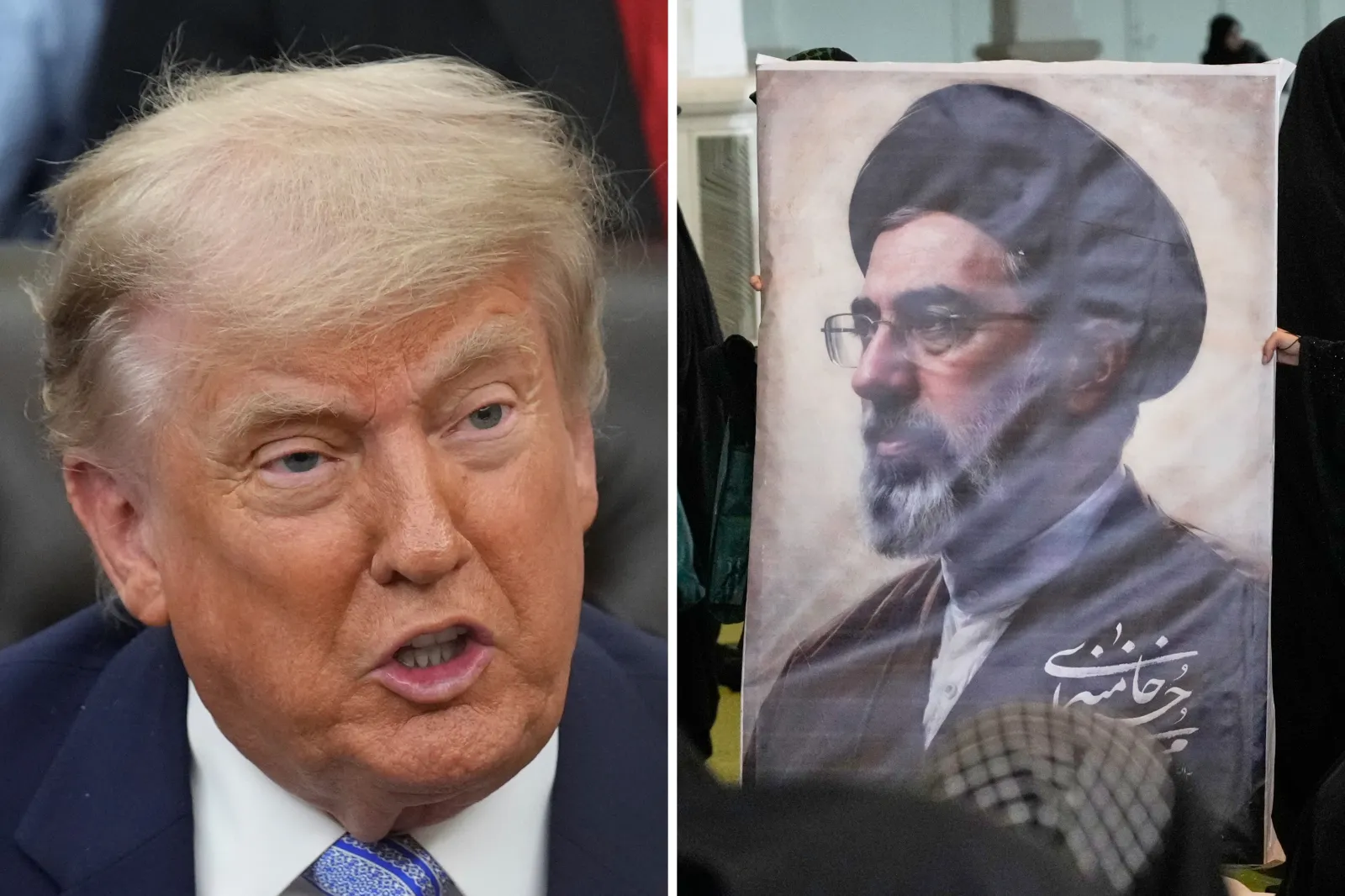
Trump posted on Truth Social last weekend that an agreement had been “largely negotiated." While this seemed to be rejected by Tehran, a deal that ends the war would be politically significant for Trump, who is under pressure ahead of U.S. mid-term elections, where higher consumer prices will be a factor for Americans at the ballot box.
He would have avoided further regional escalation, which would have been difficult to sustain amid growing international condemnation. It would also present him with an off-ramp to a conflict that has raised the ire of his MAGA base and give him bragging rights over how he had brokered peace, a potential boon for the deal-maker-in-chief.
Trump said Wednesday any potential deal with Iran must meet a higher standard, suggesting the U.S. may walk away if it falls short of his expectations.
Speaking at a Cabinet meeting, Trump said he was “not sure we should make the deal” unless more countries join the Abraham Accords, the U.S.-brokered agreements aimed at normalizing relations with Israel. He said he is “requesting strongly” that countries including Saudi Arabia and Qatar sign on, but declined to explicitly link their participation to any agreement with Iran.
Trump added that while a “good deal” with Iran may be achievable, he is seeking stronger terms.
“It’s got to be perfect,” Trump said. “I didn’t do this to get a crummy agreement.”
The president also said that the United States would not accept any arrangement giving Iran or Oman control over the Strait of Hormuz, insisting the waterway remain open to all.
Trump said the strait is “international waters” and that “nobody’s going to control it,” adding that the U.S. would continue to “watch over it” as negotiations with Iran continue.
When asked whether he would accept a deal allowing Iran and Oman to jointly manage the strategic shipping route, Trump rejected the idea and issued a warning directed at Oman.
“Oman will behave just like everybody else, or we’ll have to blow them up,” Trump said, before adding, “They understand that. They’ll be fine.”
4. Mediators
Pakistan has been acting as a mediator in the talks, and a deal would increase its standing as a credible broker, boosting its diplomatic relevance. Gulf states, which have been in the firing line of Iranian attacks, would also benefit from a deal that restores trade flows.
Losers
1. U.S. Leverage on Iran's Nuclear Program
Trump's repeated reason for launching the war was to eliminate Iran's nuclear program, but it is unclear to what extent the reported deal would manage this.
The biggest strategic concession for the U.S. may be what is not included. Nuclear issues are not mentioned, and there are no details on caps on Iran's nuclear program nor on inspections.
The Times of Israel editor David Horovitz said in a Wednesday op-ed that the terms of the deal would constitute a strategic failure for Trump. This was because the deal as reported was focused on reopening the Strait of Hormuz and easing pressure on Iran, while leaving the war’s goals unresolved—namely Iran’s nuclear program, missile capabilities, support for proxy armed groups and the future of the Islamic Republic itself.
2. Israel
Horovitz's op-ed said that Israel joined forces with the U.S. in the strikes on Iran on February 28 with the aim of destroying Iran's nuclear weapons program and ballistic missiles industry, halting its support for proxies like Hezbollah and Hamas, and creating the conditions for the Iranian masses to oust it from power.
But he believes a de-escalation in the war may reduce pressure on Iran and that reopening Hormuz showed how much leverage Tehran had gained by blocking the waterway.
Removing military pressure and releasing major funds to Tehran before any clear nuclear settlement would be “catastrophic” for Israel and the wider free world, he added in the piece, which warned the deal's terms would lead to the war's "epochal failure."
The deal, as reported, would "provide for vast sums of money pouring into Tehran’s coffers in the short-term, the better to develop more potent military capabilities, further arm and empower its proxies, and foster more global terrorism including against Jews," he added.
3. Hardliners
Critics will argue this resembles a "sanctions relief first" model without binding guarantees. Any deal struck between the U.S. and Iran risks undermining Trump's support, if it is seen as giving too many concessions to Tehran, which could be politically difficult within the Republican Party.
Republican Senators Roger Wicker of Mississippi, Lindsey Graham of South Carolina, and Ted Cruz of Texas have said parts of the working proposals in earlier reports of a deal seemed too favorable to Tehran and too closely resembled the 2015 Joint Comprehensive Plan of Action (JCPOA) agreement reached with Iran, which Trump scrapped during his first term.
View 0 Comments
Submit Correction
View Editorial & AI Guidelines