
Getty Images

By Hugh Cameron
Reporter
0
Share
Newsweek is a Trust Project member
See more of our trusted coverage when you search.Prefer Newsweek on Googleto see more of our trusted coverage when you search.
War may be hell, or as Edwin Starr's 1970 protest song goes, good for “absolutely nothing.”
But while casualties and costs mount, for Secretary of State Marco Rubio, the new conflict in Iran appears to be proving a formidable résumé builder.
The former Florida senator once dubbed “little Marco” by his now-boss, is catching up to other Republican and supposed Democratic frontrunners in rankings of 2028 presidential hopefuls, and appears increasingly valued by Donald Trump.
Read More on Politics
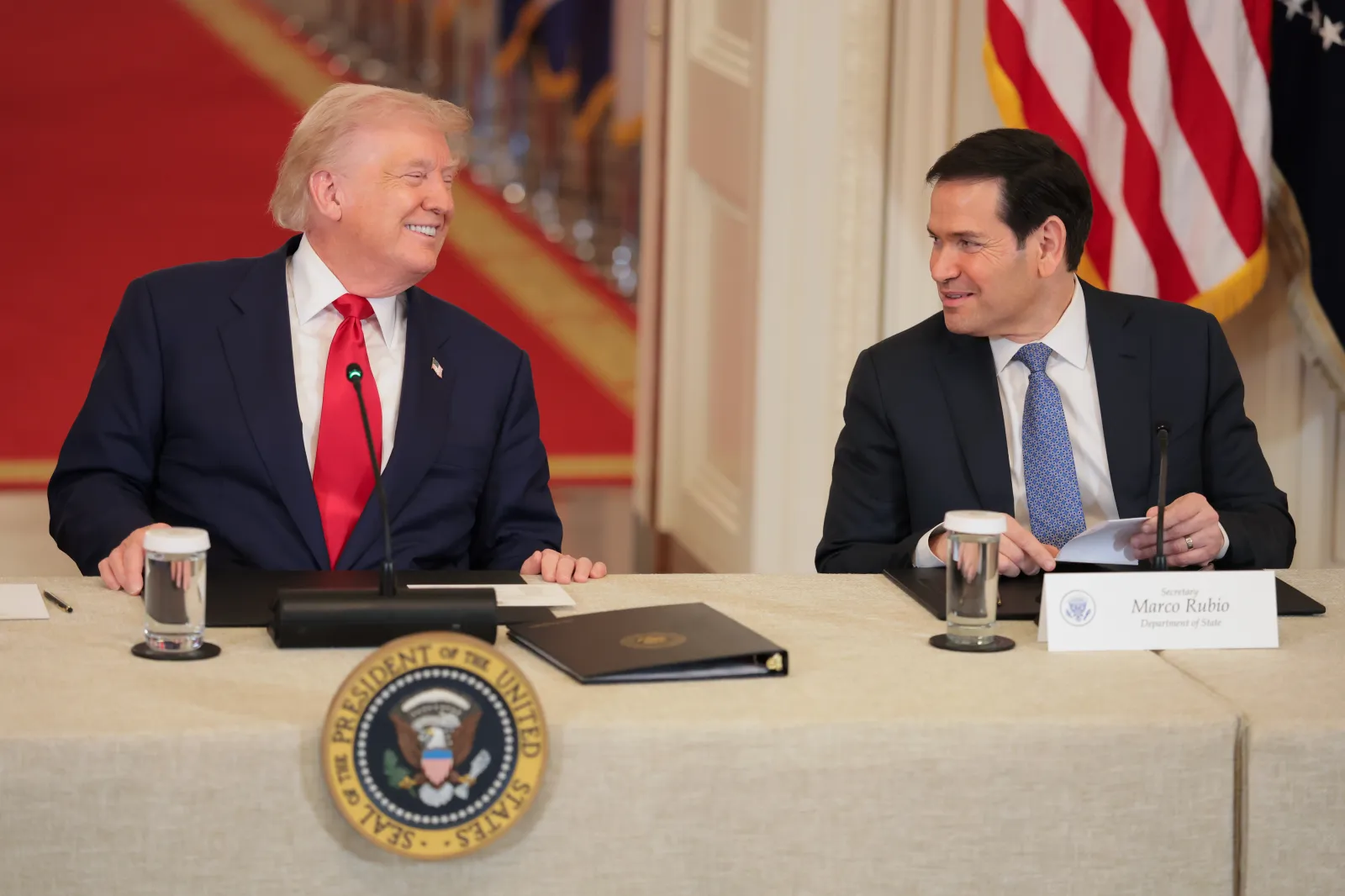
“I’m telling you, he’s going to go down as the best Secretary of State in the country’s history,” the president said of Rubio at a recent White House event.
Explanations for Rubio’s ascent, to some, appear simple.
“Rubio’s profile is naturally rising because foreign policy is dominating the current news cycle and, as Secretary of State, he’s been front and center,” Brittany Martinez, Republican strategist and executive director the conservative advocacy group Principles First, told Newsweek.
Getty Images
A War Cabinet Audition
The war has brought with it the familiar set of rituals for a U.S. administration—a procession of press conferences and diplomatic pilgrimages designed to trumpet early successes and allay fears at home and abroad.
And these events have given Rubio ample opportunity to showcase his statesmanship bona fides, and to cut a more measured tone as Pete Hegseth, Secretary of Defense (or War), clashes with reporters, brags of “crushing the enemy” and quips, after Rubio spoke Spanish at a recent forum, that the only language he speaks is “American.”
Data indicates that the American public is not fully sold on the Iran intervention. A Reuters/Ipsos poll conducted February 28 - March 1 suggested 27 percent approved and 43 percent disapproved, with 29 percent unsure.
Yet a more recent Ipsos poll, conducted March 6 - 9, suggested approval ticked up slightly to 29 percent, with 43 percent disapproving and 26 percent unsure. Notably for Rubio, the more recent poll suggested significant gains in Republican support for the war—up from 55 percent in the earlier poll to 66 percent in the latter—and a moderate uptick among independents—up from 19 percent to 23 percent.
Meanwhile, as one of the war’s chief proponents, early signs indicate Rubio’s national profile is growing.
Prediction markets show his odds of securing the Republican nomination for president in 2028 have risen to just under 30 percent from around 19 percent before Operation Epic Fury commenced. The Secretary of State enjoyed a comparable bump when the U.S. captured Venezuelan President Nicolás Maduro on January 3.
On one Kalshi contract, Rubio now sits only one point behind Democrat Gavin Newsom and Vice President JD Vance, both on 19 percent, as 2028’s eventual victor.
...
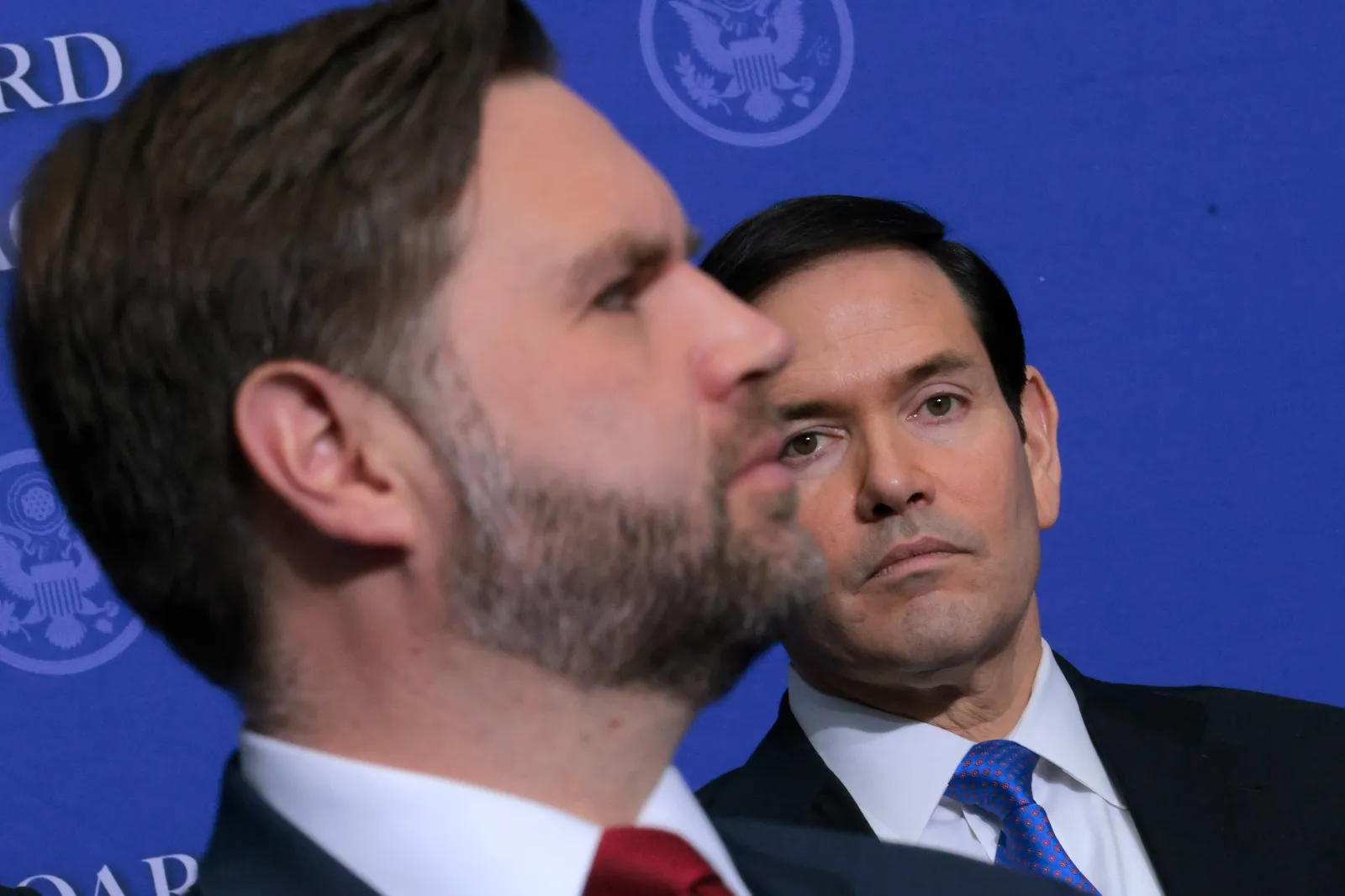
Vance still leads handily in an average of surveys gathered by RacetotheWH to simulate a theoretical 2028 GOP primary, reflecting his status as MAGA’s heir apparent and the behind-the-scenes moves he is already making ahead of an expected oval office run.
But Rubio’s recent rise has at the very least complicated the Trump succession debate.
Both have in the past been highly critical of their current boss. Rubio called him a “con artist” when the pair squared off in 2016, and Vance once fretted, during his now abandoned “Never Trump” phase, that the current president could go on to become “America’s Hitler.”
But these doubts have long since faded, with Rubio hailing Trump as “one of the most historic figures in American history,” during the recent “Shield of Americas” summit, while thanking him for his “bold leadership” and the privilege of serving in his administration.
And for Rubio, the praise is being requited.
“Marco Rubio is doing a great job. I think he’s going to go down as the greatest secretary of State in history,” Trump told reporters on Monday, adding: “He’s been successful no matter where he’s been.”
During the same press conference, when asked for “points of disagreement” between him and the vice president, Trump said Vance was “philosophically a little different from me” and “less enthusiastic” about what is now his top foreign policy priority.
...
Experts say Rubio’s political standing has become closely linked to the increasing importance of international affairs in Trump’s agenda—a domain that dovetails naturally with his more interventionist instincts.
"Marco Rubio has always believed that the world is a better and safer place when America plays a leading role,” Whit Ayres, Rubio's pollster for his 2010 and 2016 Senate campaigns, and his 2016 Presidential run, told Newsweek. “I've seen no evidence that he has changed that view at all."
“I think the fact that we are at war in the Middle East is pretty good evidence that the short-lived period of isolationists ruling the party has ended,” said Matthew Baum, professor of global communications and public policy at Harvard. “Rubio’s rising profile is arguably a byproduct of an increased emphasis by the President on a muscular foreign policy in recent months.”
As foreign policy takes center stage, how a potential candidate is received abroad also carries greater weight.
Vance’s “threat from within” speech at last year’s Munich Security Conference was met largely with silence from the “stone-faced” attendees, according to reporting from CNN at the time, and was roundly declared by analysts as another nail in the coffin of transatlantic cooperation***.*** Rubio’s own Munich address, by contrast, was well-received and earned a standing ovation from the world leaders in attendance.
“As prediction markets now suggest, Marco Rubio’s stock as a presidential candidate has been rising and certainly seems to have benefited from the Venezuela conflict and his February Munich appearance, where he projected a firm but more measured vision of the Trump administration’s foreign policy,” according to political scientist Peter Francia, director at East Carolina University’s Center for Survey Research,
Iran War Could Dictate Rivalry
Despite the new discussions about whether “Rubio versus Vance” will be the real competition for the Republican ticket, the administration is downplaying the notion that a rivalry is emerging.
Asked about the potential matchup, White House communications director Steven Cheung told NBC News: "No amount of crazed media speculation about Vice President Vance and Secretary Rubio will deter this Administration’s mission of fighting for the American people."
Vance also dismissed such speculation during an interview with Fox News in November, and Rubio told Vanity Fair in December that he would be “one of the first people to support” the vice president should he make a run in 2028.
Whether Rubio can maintain his current momentum and build an even greater case for the nomination, will ultimately hinge on the success of America’s overseas commitments, analysts suggest.
“The verdict is still out on Iran,” said Baum. “I notice that JD Vance is staying fairly silent on Iran, perhaps positioning himself as the alternative to Rubio if things go sideways with respect to Iran, assuming that damages Rubio’s position.”
“Visibility in a crisis doesn’t automatically translate into durable political strength,” Martinez told Newsweek. “Especially when the underlying conflicts themselves are complicated and not universally popular with the public, as recent polling suggests.
**“**It provides him media coverage as he appears to be able to handle the world stage. So, yes, these events have elevated him,” said pollster and political affairs strategist Alex Patton.
“But warning: He could also bear some of the responsibility if things go badly,” he added. “And anyone can fall out of favor with President Trump at a moment's notice.”
In a polarized era, the center is dismissed as bland. At Newsweek, ours is different: The Courageous Center—it's not "both sides," it's sharp, challenging and alive with ideas. We follow facts, not factions. If that sounds like the kind of journalism you want to see thrive, we need you.
When you become a Newsweek Member, you support a mission to keep the center strong and vibrant. Members enjoy: Ad-free browsing, exclusive content and editor conversations. Help keep the center courageous. Join today.


View 0 Comments
Submit Correction
View Editorial & AI Guidelines