
...

By Tom O'Connor
Deputy Editor, National Security and Foreign Policy
0
Share
Newsweek is a Trust Project member
See more of our trusted coverage when you search.Prefer Newsweek on Googleto see more of our trusted coverage when you search.
The U.S.-Israeli war with Iran and efforts to find a diplomatic solution have propelled the regional position of an Arab nation known for its neutrality and behind-the-scenes backchannel mediation.
Oman, which has long sought to avoid entanglement in regional confrontations, finds itself in the spotlight as it seeks to navigate a frontline role in determining the post-war fate of the Strait of Hormuz and the future architecture of Persian Gulf security.
Oman and Iran are now engaged in direct discussions over the Strait of Hormuz. Conflicting reports have emerged over whether or not passage through one of the world's most critical oil and gas trade chokepoints will be subject to some form of toll or fee, as the Islamic Republic has hinted and the United States has opposed.
Read More
Why US Bases in the Persian Gulf Are Doomed9 min read

As Iran Proposes Tolls With Oman, Will It Ever Give Up Strait Of Hormuz?9 min read

Where the New Middle East Order Stands Today7 min read

The talks come as Oman, sometimes referred to as the "Switzerland of the Middle East," navigates a historic evolution in its foreign policy.
"Oman is likely to transition gradually from the role of a traditional mediator to that of a regional facilitator—combining diplomatic mediation, contributing to maritime security arrangements, and building regional mechanisms for crisis management and confidence-building—without abandoning its decision-making independence or its principles of non-alignment," Abdullah Baabood, an Omani academic serving on the board of directors of the Gulf International Forum, told Newsweek.
"This development could enhance its regional and international standing, provided that it remains based on the balance, neutrality and credibility that the Sultanate has accumulated over decades."
...
Why Oman Matters
Oman, one of only three sultanates around the world along with Brunei and Malaysia, has been led by Sultan Haitham bin Tariq since the 2020 death of his cousin, Sultan Qaboos bin Said, who had led the nation since 1970. It's one of six Gulf Cooperation Council (GCC) states in addition to Bahrain, Kuwait, Qatar, Saudi Arabia and the United Arab Emirates.
Oman is unique among the GCC countries not only in its long-standing policy of non-alignment but also its geographic position directly along the Strait of Hormuz via the Musandam Peninsula exclave opposite the southern coast of Iran. Ties between the two nations are also markedly warmer than much of Tehran's relations with other GCC states, a dynamic dating to pre-revolutionary Iran's aid for Oman against the leftist Dhofar rebellion in the 1960s and '70s.
This goodwill survived the 1979 Islamic Revolution that toppled the Iranian monarchy. Just a year later, however, Muscat moved to bolster ties with Washington, becoming the first Persian Gulf state to allow U.S. military access, and security ties have only accelerated over the decades.
Oman was thus eager to avoid a direct U.S.-Iran clash and played a lead role in mediating attempts to avoid war earlier this year. When the U.S. and Israel initiated the conflict on February 28 in the midst of the talks, neither Muscat's mediation efforts nor its historic relations with Tehran proved enough to sway Iran against targeting Oman and other GCC states throughout the conflict as part of a strategy to exert pressure on regional countries hosting U.S. military bases.
Related Story
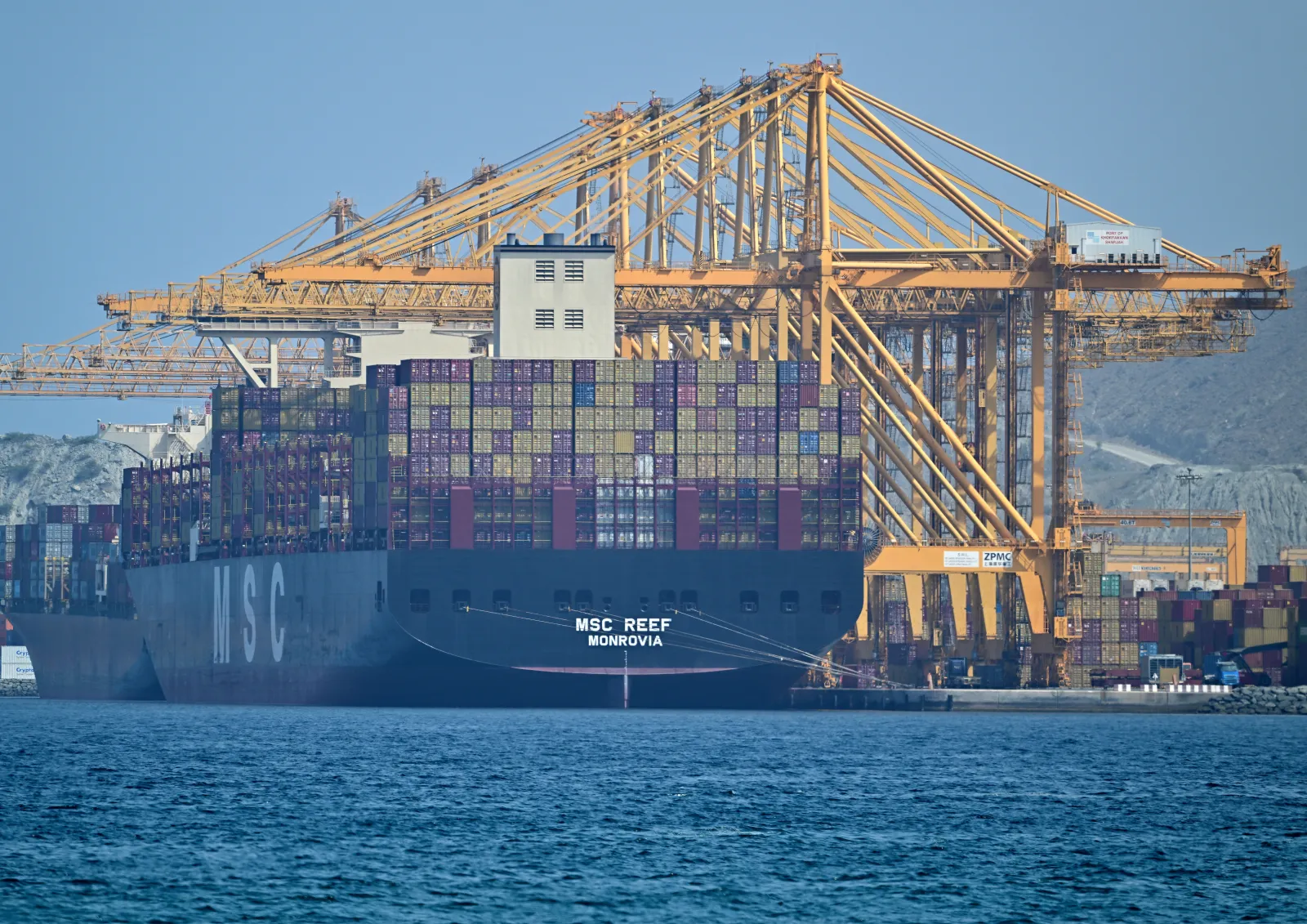
As Iran Proposes Tolls With Oman, Will It Ever Give Up Strait Of Hormuz?
Still, their contacts remain intact and are set to play a key part in what comes next for the Persian Gulf.
With Oman already taking a more active approach, Baabood said the shift does not contrast with the Sultanate's core outlook, which he argued has "never been a passive neutrality, but rather it is an active neutrality rooted in diplomatic engagement and the prevention of escalation."
But there have been new realities to take into account. Baabood argued that recent events have "demonstrated that any military confrontation between major or regional powers could rapidly spill over into Gulf states, even if they are not direct parties to the conflict."
They have also "revealed the limitations of external security guarantees and showed that the security of the Gulf cannot depend solely on stockpiling weapons, foreign military bases, or military deterrence, but requires regional security arrangements that include all littoral states," Baabood said.
Oman's endeavor is not without risks, either.
"The challenge lies in ensuring that any more active role is not misconstrued as aligning with one party against another," Baabood said. "Therefore, Oman will strive to ensure its role is based on international legitimacy, freedom of navigation and coordination with the GCC countries and coastal states, while keeping channels of dialogue open with all parties."

...
Strait of Hormuz Status
Perhaps most precarious for Oman will be the task of formulating a solution for the Strait of Hormuz question that satisfies all sides.
The crisis in the strait erupted as Iran made good on its long-standing threats to throttle maritime traffic in response to U.S.-Israeli strikes that killed the nation's supreme leader, Ayatollah Ali Khamenei, along with other top officials and led to the widespread destruction of military and civilian infrastructure.
By March, Iran's Islamic Revolutionary Guard Corps (IRGC) declared full control over the Strait of Hormuz, eventually only allowing the transit of vessels from select countries. The mechanism was later transitioned into an effective toll-collecting system, prompting the U.S. to institute its own blockade of the Persian Gulf in April, following a ceasefire and failed peace talks.
The U.S. blockade has since been lifted as a result of a memorandum of understanding signed by the two countries on June 17.
The document outlined that Iran was to allow vessels to transit the Strait of Hormuz unimpeded for 60 days. Meanwhile, Iran would engage in a dialogue with Oman "to define the future administration and maritime services in the Strait of Hormuz, in discussions with other Persian Gulf Littoral States, in line with applicable international law and the sovereign rights of coastal states of the Strait of Hormuz."
That dialogue formally began on Monday as Iranian and Omani officials met in Muscat. Afterward, Iranian Deputy Foreign Minister Kazem Gharibabadi said Tehran's priority would be to reach a deal with Oman, but that the Islamic Republic would be prepared to move forward with its own agenda if an agreement did not materialize.
A report published Monday by The New York Times cited an Iranian official and regional diplomat saying that Oman was preparing to share with the U.S. a proposal that would outline fees for shipping companies transiting the Strait of Hormuz.
The alleged Omani plan, previously reported on by The Telegraph, would mirror models enacted in two other key trade corridors, the Strait of Malacca and Singapore Strait, where countries dependent on the waterways contribute to a private fund dedicated to maintaining them.
Questions over how voluntary these fees would be, who would contribute and how much remain unanswered.
Newsweek has reached out to the Omani Embassy to the United States for comment.
Tyler Parker, assistant professor at Mercer University who has conducted research in Oman, said that the "details remain uncertain" regarding the emerging Oman-Iran framework, though he noted Muscat was simultaneously "coordinating with fellow GCC members, especially Qatar, on ensuring shipping transit through the Strait and broader conflict de-escalation."

...
Between Washington and Tehran
The U.S. perception may also prove consequential, particularly as President Donald Trump's administration views Oman's neutrality with skepticism.
"Given that U.S. officials perceive Oman as overly neutral amid Iran’s regional actions, it may be difficult to restore Oman’s crucial third-party diplomacy between the U.S. and Iran," Parker told Newsweek. "But it is not impossible."
"One way to do so would be for Oman to re-prioritize its long-held, quiet facilitation when opportunities arise," Parker said. "In the immediate term, given its geographic centrality to the current conflict, and its political sovereignty over the Musandam Peninsula, Oman is likely to lean into its decades of independence to weather the waves of the current conflict as its dialogue and diplomacy continues apace."
Joseph A. Kéchichian, senior fellow at the King Faisal Center for Research and Islamic Studies in Saudi Arabia, felt Muscat was in a strong position to leverage its history and reputation to overcome diplomatic deadlocks.
"Oman is an ancient nation with deep roots and while its history recorded serious internal and regional clashes, its contemporary preferences have built on a legacy of peaceful co-existence," Kéchichian told Newsweek. "A natural mediator, just about every foe benefitted from Muscat’s foresights, ranging the gamut from Iran to its GCC partners, and from Yemeni factions to leading global powers in search of face-saving mechanisms.
"One suspects that this unblemished record will not be discarded as Oman is likely to continue its moderate inclinations, standing as an adult model able to tame war-mongers."
That also extends to the U.S., to which Oman will "remain one of the most reliable and honest partners Washington can ever have, and confide whatever reservations they have with Iran—in private," he argued.
"Consequently, Omani leaders will most likely continue to talk with Iran, find a workable solution to reopen traffic lanes through the Straits, and uphold the country’s neutrality, even as they seek to foster even closer ties between the Sultanate and everyone else," Kéchichian said.
View 0 Comments
Submit Correction
View Editorial & AI Guidelines