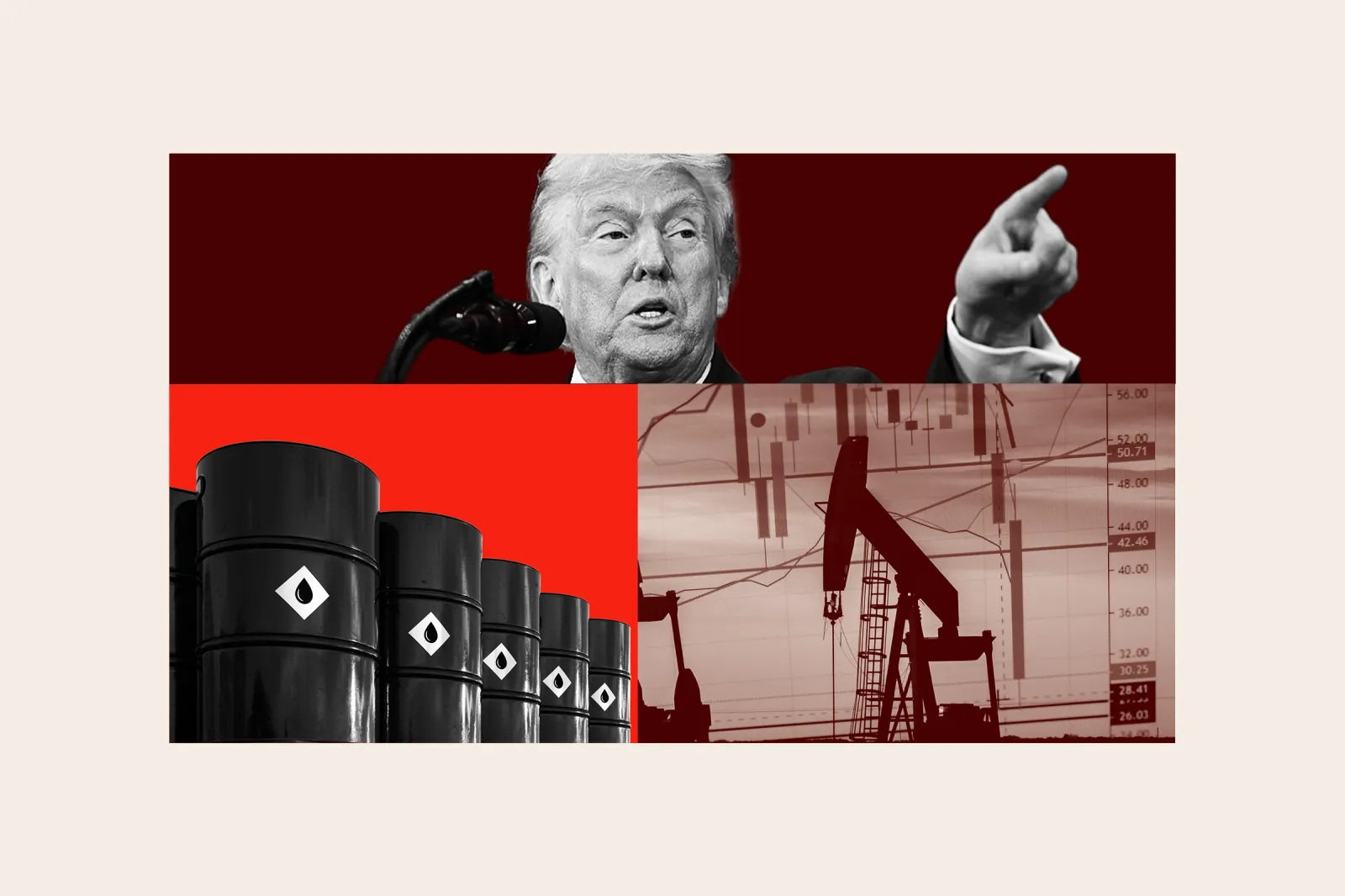
Photo-illustration by Newsweek/Getty

By Jesus Mesa
Reporter
0
Share
Newsweek is a Trust Project member
See more of our trusted coverage when you search.Prefer Newsweek on Googleto see more of our trusted coverage when you search.
Gasoline prices have jumped 64 cents a gallon in two weeks. Diesel is at $4.60 nationally, up 83 cents since the U.S. and Israel began bombing Iran in late February. In California, drivers are paying $5.34 a gallon. Fertilizer prices have surged 44 percent. Food prices are climbing.
The Trump administration has assured Americans these are temporary disruptions. Once the military objectives are achieved, prices will drop rapidly—potentially even lower than before the strikes began, President Donald Trump has said.
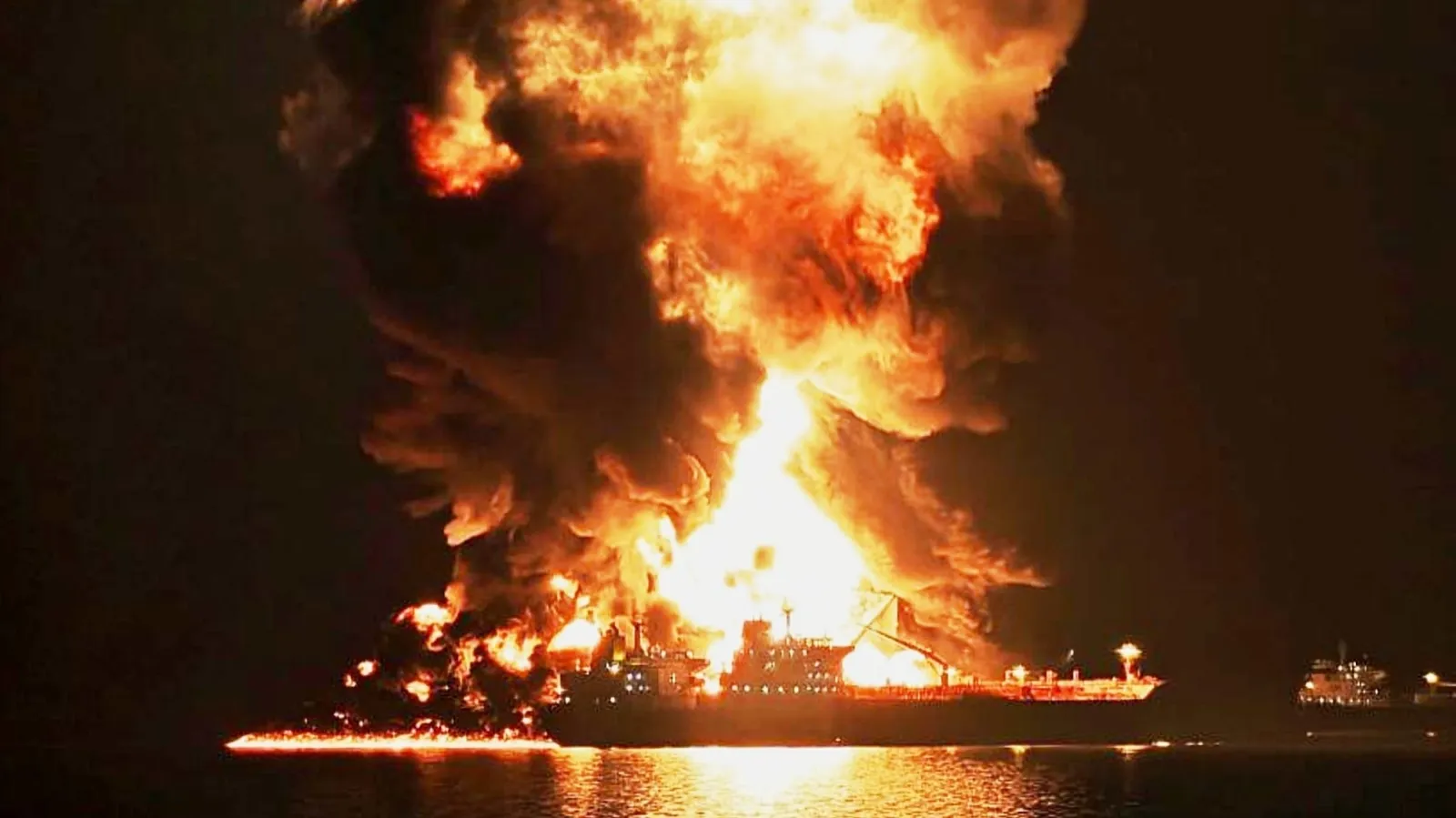
But on the battlefield, the signals look different. The Strait of Hormuz, the waterway through which 20 percent of the world's oil flows, remains effectively closed. Iran has laid mines in the waterway and attacked commercial vessels. Only two ships passed through on March 6. Before the war, the daily average was 138. There is no timeline for when shipping will resume.
Read More on Politics
Economic experts are growing worried. If oil prices average around $140 per barrel for two months, according to Oxford Economics, global real GDP would decline by 0.7 percent by year-end. Unemployment would rise. Inflation would spike to 5.8 percent. The Eurozone, the UK and Japan would contract. The U.S. would flirt with recession.
There is one solution that would bring prices down, according to energy experts across the spectrum: End the war.
The One Solution No One Is Pursuing
The Center for American Progress (CAP), a liberal policy institute based in Washington, D.C., reached a stark conclusion in a report released this week: The Trump administration is not pursuing the most obvious solution to lower energy prices—ending the war in Iran.
Courtney Federico, associate director for international climate policy at CAP, said in written comments to Newsweek that reopening the Strait of Hormuz is essential to stabilizing prices in the short term, but assessments from military leaders show the Trump administration cannot accomplish this through force alone.
"The options the Trump administration have put forward, such as their recent move to temporarily lift sanctions on Russian oil at sea, have had a negligible effect on prices. That's because they are only exploring options that allow the oil and gas industry to continue to profit at these higher costs," Federico said.

...
Adi Imsirovic, an energy market expert with 35 years' experience in oil trading and former global head of oil at Gazprom Marketing & Trading, agreed that the solution is straightforward. "Trump should come out and say, 'Look, we won. We've destroyed what we want to destroy. Just pull out.' That's it. That would gradually restore order in the whole region. Anything other than that is just going to lead to further escalation," he told Newsweek.
Yet the administration has indicated it has no plans to end the war quickly. Defense Secretary Pete Hegseth said on March 4 that the timeline was uncertain. "You can say four weeks, but it could be six, it could be eight, it could be three. Ultimately, we set the pace and the tempo."
The White House has argued that current price spikes are temporary. In a statement to Newsweek, Taylor Rogers, White House spokesperson, said the administration believes the prices will drop again shortly.
"President Trump has been clear that these are short-term disruptions," Rogers said. "Ultimately, once the military objectives are completed and the Iranian terrorist regime is neutralized, oil and gas prices will drop rapidly again, potentially even lower than before the strikes begin."
But as oil prices jump and gas prices climb, the administration has pursued a series of tactical measures: releasing oil from the Strategic Petroleum Reserve, temporarily waiving the Jones Act to allow foreign vessels to transport oil between U.S. ports, and lifting sanctions on Russian oil at sea.
...
Jon Hoffman, research fellow at the Cato Institute who studies defense and foreign policy, said these measures are insufficient, adding that the administration has backed itself into a corner.
"The Trump administration has inserted itself into something that is rapidly becoming a prolonged war of attrition that you are not suited to fight," he told Newsweek.
Hoffman pointed to the political dynamics keeping the administration locked in. "There was this aura of invincibility surrounding Trump after Venezuela. Those who were advocating for war knew that the minute Trump dropped the first bomb, he would be locked in," he said.
The Cost
Oxford Economics modeled a scenario in which the war continues, and where the economic damage will be severe and broad. Brent crude oil will average $140 per barrel for two months and the result: global real GDP declines by 0.7 percent by year-end. The UK, Eurozone and Japan slip into mild recessions. Unemployment rises. U.S. inflation peaks at 5 percent in the second quarter and stays elevated through the year, 1.4 percentage points higher than baseline forecasts. Global inflation would spike to 5.8 percent, the highest since 2022.
Bernard Yaros, lead U.S. economist at Oxford Economics, cautioned that the forecasting firm's tools for containing the shock are limited. "It's meant for temporary disruptions, and if this is a prolonged conflict, then you can't rely on it," he told Newsweek in reference to Strategic Petroleum Reserve releases.
Imsirovic said if the conflict becomes protracted, oil prices could reach $200 per barrel. "If we have a forever war, we shall see $200 barrel oil. I have no doubts about it. If we have a forever war, the deficiency in supply will be massive, demand will get destroyed by higher prices, and the economy gets hammered," he told Newsweek.

...
Nicholas Mulder, professor at Cornell University who studies economic impacts of wars and sanctions, warned that the issue is not just the economic damage but the political effect. "The issue is rather the political effect of higher prices in an already decelerating domestic economy, one in which the job market has been weakening and tariffs are weighing on households and businesses," he told Newsweek.
The political cost is mounting, especially for Republicans. GOP Senator Rand Paul of Kentucky warned last week that high oil prices combined with continued military action would be disastrous at the ballot box. "I think high oil prices will be a problem. If you add in high gas prices, high oil prices, and if we're still bombing Iran with kinetic action—I think you're gonna see a disastrous election," he said.
Representative Thomas Massie of Kentucky, one of the few GOP critics of Trump, made the argument more directly. "The price of gas has gone up $0.47 and the price of diesel has gone up $0.83 in 10 days due to War with Iran. This isn't America First," Massie said on X.
What Can Be Done
But not every economic expert believes a ceasefire would be the sole reason for prices dropping. Patrick De Haan, head of petroleum analysis at GasBuddy, a fuel-price tracking platform, cautioned that even ending the war may not immediately solve the problem.
"A ceasefire may not necessarily address the Strait. It's restoring shipping in the Strait that is key," De Haan said. The Strategic Petroleum Reserve release rate of roughly 1.5 million barrels per day is nowhere close to the 20 million barrels per day lost through the Strait. "Prices continue rising until demand falls to balance global supply levels," he added.
There are also some scenarios for the short term. If the war persists, experts say there are tactical measures that could ease pressure on prices, though none are silver bullets.
"Providing good insurance is probably the most important thing to do. If you give vessels good insurance cover, people will chance it. You give the crew $5,000 bonuses each for one trip—that's not a drop in the ocean. They'll go through. And maximize the UAE-Saudi pipelines, which move six and a half million barrels. That's something," Imsirovic said.
But these measures only work if the war continues at current intensity. They do not solve the underlying problem.

...
In the longer term, according to CAP, the administration could reverse its own damage. The Trump administration eliminated federal rebates for electric vehicles and nullified vehicle fuel efficiency standards, policies that will add from 25 to 37 cents per gallon to gasoline costs by 2035, forcing Americans to pay an additional $339 billion to an industry already profiting from the crisis.
CAP also argues the administration should reconsider approvals for new liquefied natural gas export facilities, which increase domestic gas prices by exposing consumers to a global market.
The U.S. Treasury has also been weighing potential measures involving oil futures to combat rising prices, according to reports. But exchange leaders are warning against intervention. Terry Duffy, chief executive of CME Group, the world's largest derivatives exchange, said during a panel discussion: "Markets do not like it when governments intervene on oil prices."
Another exchange CEO cautioned that Treasury intervention risked aggravating the problem by raising the risk of hefty losses for the government if energy prices continue to rise. John McKenzie, CEO of TMX Group, said: "I usually find those things lead to unintended consequences. You create a different problem by trying to solve the first problem. The market will sort this out itself."
Imsirovic echoed these concerns. "Price is just information. You can't bury that," he told Newsweek, citing the Soviet collapse as a cautionary tale.
"If governments try to control prices or play futures markets—that's what the communists did in the Soviet Union, and that's why the Soviet economy collapsed. You can lower the price, but then people lose trust in that price, and you can't use it to manage your risk. You get killed twice. Stop the war, and then things will go back to normal eventually. That's all I can say."
View 0 Comments
Submit Correction
View Editorial & AI Guidelines