...

By Hollie Silverman
News Editor
0
Share
Newsweek is a Trust Project member
See more of our trusted coverage when you search.Prefer Newsweek on Googleto see more of our trusted coverage when you search.
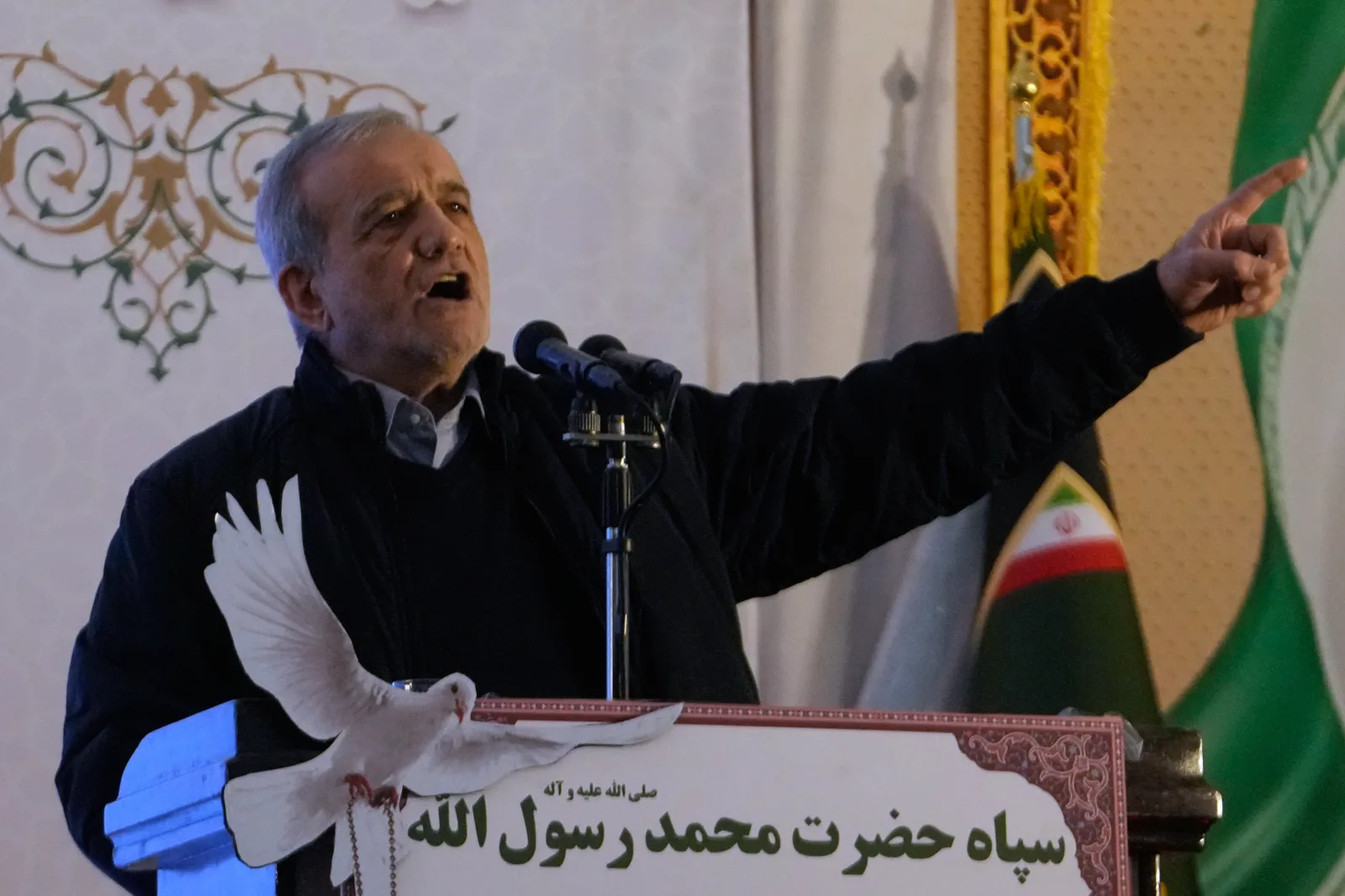
Iranian President Masoud Pezeshkian said Iran saw “encouraging signals” from recent indirect talks with the U.S. but vowed the country would not “bow down” to pressure, as the U.S. expanded its military footprint in the Middle East with additional aircraft and carriers, raising fears of a wider conflict.
Pezeshkian explained that Iran remained committed to regional stability while preparing “for any potential scenario," in a post on X Sunday.
Pezeshkian’s comments came as President Donald Trump and senior U.S. officials signaled that time was running short for a negotiated outcome, while Oman and other mediators said another round of talks would resume in Geneva this week.
Read More on News
Why It Matters
The latest development unfolded following a significant U.S. force buildup in Iran including two aircraft carriers and more than 120 additional aircraft deployed to the area, multiple outlets reported.
U.S. pressure centered on Iran’s uranium enrichment levels and regional activities, while Iran insisted on its right to a peaceful nuclear program and sought sanctions relief. The stakes extended beyond the negotiating table, with foreign governments advising citizens to leave Iran and markets sensitive to any disruption in Gulf shipping lanes, Al Jazeera reported.
Residents in Tehran expressed concern about the prospect of war as governments including Sweden, Serbia, Poland, and Australia advised their citizens to leave Iran.
...
What to Know
The Iranian president posted on X that while the country is committed to peace, it remains ready to act if needed, saying the country has "made all necessary preparations for any potential scenario."
Iranian Foreign Minister Abbas Araghchi said a diplomatic solution was within reach and that negotiators aimed to finalize elements of a proposal for Washington within “two to three days,” adding that Iran would respond decisively to any attack, according to a report from Al Jazeera.
Iran and the U.S. held indirect talks in Muscat on February 6 and Geneva on February 17, with mediators stating that negotiators planned to reconvene in Geneva on Thursday.
President Trump said on Thursday that “bad things will happen” without a deal and gave Tehran “10 to 15 days” to reach an agreement.
Those statements were followed by Steve Witkoff, the administration’s chief Middle East negotiator, noting that the president was “curious” why Iran had not yet “capitulated” during an interview with Fox Saturday.
U.S. forces deployed two aircraft carriers and more than 120 additional aircraft to the Middle East, a concentration described by media as the largest airpower in the region since 2003.
What People Are Saying
Pezeshkian said in a post on X on Sunday: “Iran is committed to peace and stability in the region. Recent negotiations involved the exchange of practical proposals and yielded encouraging signals. However, we continue to closely monitor U.S. actions and have made all necessary preparations for any potential scenario."
Iranian Foreign Minister Abbas Araghchi said in media interviews ahead of the next round of talks, as reported by AFP: “If the U.S. attacks us, then we have every right to defend ourselves... there is a good chance to have a diplomatic solution.”
President Donald Trump said Thursday, per CBS News: “Now is the time for Iran to join us on a path that will complete what we’re doing...If they join us, that’ll be great. If they don’t join us, that’ll be great, too. But it’ll be a very different path.”
Badr Albusaidi, Sultanate of Oman, said in a post on X Sunday: "Pleased to confirm US-Iran negotiations are now set for Geneva this Thursday, with a positive push to go the extra mile towards finalizing the deal."
What Happens Next
Mediators said U.S.-Iran talks were scheduled to resume in Geneva on Thursday, with both sides indicating they were preparing text for potential agreement elements.
Regional militaries remained on heightened alert as deployments continued. Iran said it would respond to any strike, while U.S. officials maintained that all options were on the table. The situation could change rapidly depending on the outcome of the Geneva round.
View 0 Comments
Submit Correction
View Editorial & AI Guidelines