...

By Hugh Cameron
Reporter
0
Share
Newsweek is a Trust Project member
See more of our trusted coverage when you search.Prefer Newsweek on Googleto see more of our trusted coverage when you search.
A surge of prediction market wagers tied to U.S. military action in Iran, and the windfall of profits reaped by those with auspiciously timed bets, has resulted in scrutiny of both the traders’ accounts and the platforms themselves.
Roughly $529 million was bet on a collection of Polymarket contracts linked to the timing of the U.S.-Israeli strikes in Iran, which ultimately occurred on Saturday. According to the blockchain analytics firm Bubblemaps, six accounts were able to make $1.2 million, including one which joined the platform in February, had never placed a bet on any other topic, and earned around $500,000.
These “suspected insiders,” Bubblemaps said, had little prior history of such large-scale bets and entered their positions just “hours before the strike.”
Read More on News
Newsweek contacted Polymarket via email outside of regular hours for comment.
Why It Matters
While the U.S. has been signaling possible military action for weeks—drawing in thousands of bets collectively worth hundreds of millions of dollars—the timing and scale of certain wagers has intensified criticism of the relatively light regulations governing prediction markets like Polymarket.
Insider trading on the platform led to the arrest of two Israelis in early February, and legislative pressure in the U.S. is building for greater oversight, specifically when it comes to wagers relating to military action and death.
What To Know
Around half a billion dollars was placed on when the U.S. would first launch strikes against Iran, with Saturday, February 28, seeing by far the largest volume and a total of $89.6 million wagered.
Nicolas Vaiman, cofounder and CEO at Bubblemaps, told Newsweek that while there was no way of determining for certain that these accounts had profited from insider knowledge, the firm’s algorithm-based anomaly-detection methods flagged several reasons for suspicion.
“In this case, those Polymarket accounts had no prior activity and only placed bets on the February 28 U.S. strike on Iran, the day before the strike,” he said. "This was compelling for us to share.”
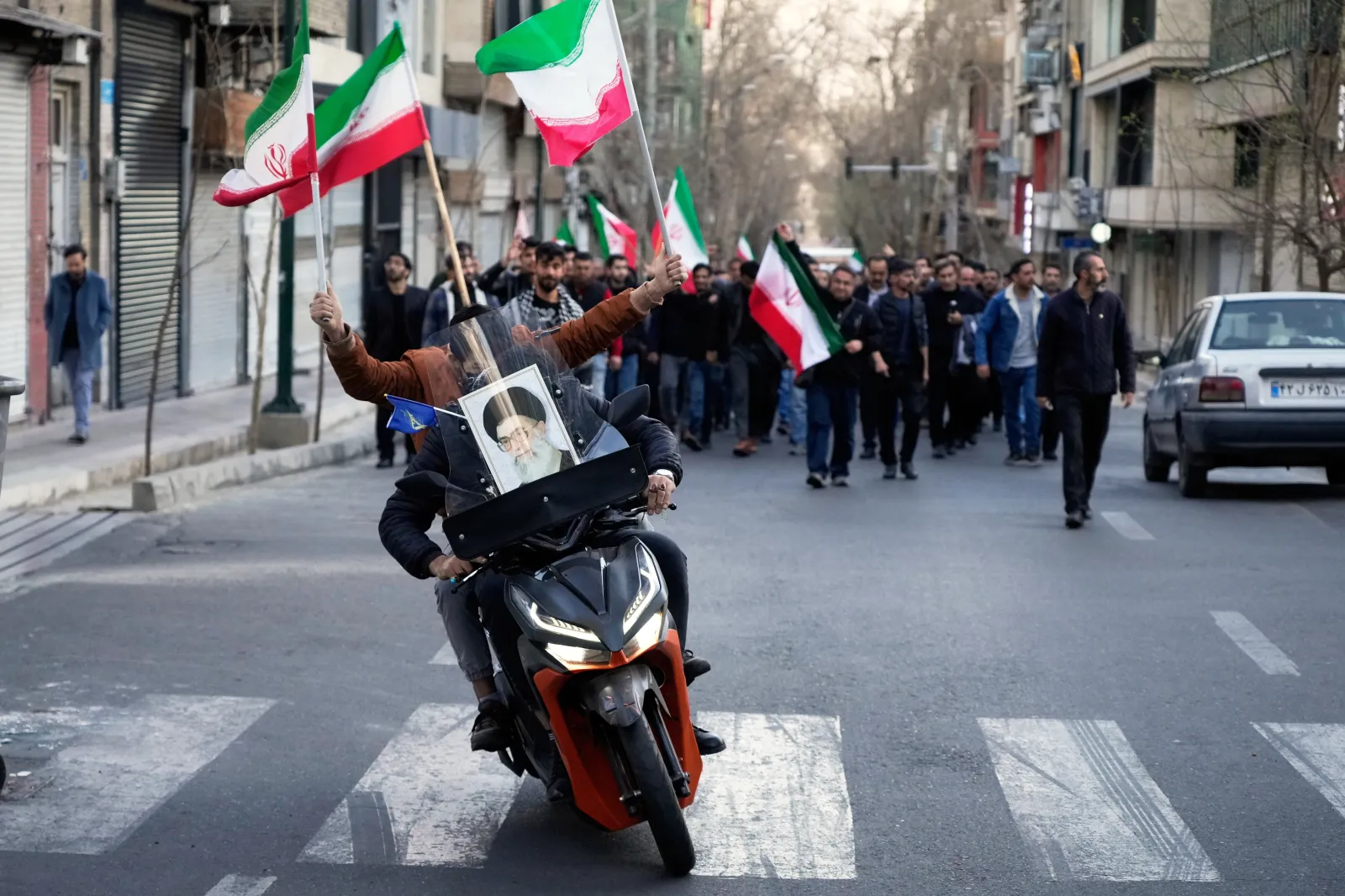
Among the accounts that reaped heavy rewards for Iran-related predictions was one trading under the username “Magamyman,” which made over $500,000 betting on the timing of Iranian Supreme Leader Ayatollah Ali Khamenei’s ouster. The cleric was killed during Saturday's joint strikes on Iran.
“It appears that a Polymarket account called ‘Magamyman’ made $515,000 in a single day betting on last night's U.S. strike on Iran, with the first trade placed 71 minutes before the news broke publicly,” Democratic Representative Mike Levin of California posted to X on Sunday.
“Prediction markets cannot be a vehicle for profiting off advance knowledge of military action,” he added. “We need answers, transparency, and oversight.”
...
And users on the rival prediction market Kalshi are also expressing anger over the payout conditions on the platform.
"Robbery. This platform is terrible," wrote one Kalshi bettor, with an image showing their loss on a bet that Khamenei would be “out as supreme leader” by March 1.
Kalshi reminded users shortly before news of Khamenei’s death became public that it “does not offer markets that settle on death.”
“If Ali Khamenei dies, the market will resolve based on the last traded price prior to confirmed reporting of death,” it wrote on X.
In a post to X, Kalshi founder Tarek Mansour acknowledged that many users were “frustrated about the Khamenei market,” and said that the trades were settled according to its longstanding rules, and stressed that no trader lost money on these wagers as Kalshi reimbursed all fees and net losses out of pocket.
“As a result, Kalshi incurred a substantial loss to make users whole,” he wrote.
What People Are Saying
Kalshi founder Tarek Mansour posted to X: “We don’t list markets directly tied to death. When there are markets where potential outcomes involve death, we design the rules to prevent people from profiting from death. That is what we did here. I know some of you disagree and prefer that we list these markets without a death carveout because it keeps the rules simple and because many traditional markets, like oil futures, can be proxy markets for war and death. But we believe that’s different than having a market directly settling on someone’s death, which is not allowed for U.S. regulated entities.”
Bubblemaps CEO Nicolas Vaiman told Newsweek: “On many prediction platforms, you just need a wallet to trade. It’s easy to create one and there’s often no direct link to your real identity. That makes it much simpler to act on early information without feeling immediately exposed.
“In military or geopolitical situations, information usually doesn’t sit with one person: planning involves officials, advisers, officers, agencies, sometimes even multiple countries. So the number of people who might know something in advance can be large. When you combine a wide circle of potential insiders with anonymous access to a market that lets you bet directly on a specific event, the temptation is obvious. That’s what makes the risk higher.”
What Happens Next
Users of both platforms continue to bet significant sums on further developments in the conflict.
On Polymarket’s website, around 200 wagers are open for various outcomes, including bets on who will succeed Khamenei as Iran’s next supreme leader, when Tehran and Washington might broker a ceasefire, and whether U.S. forces will enter the country.
Update 3/3/26, 7:53 a.m. ET: This article was updated with comments from Nicolas Vaiman, CEO and cofounder of Bubblemaps.
In a polarized era, the center is dismissed as bland. At Newsweek, ours is different: The Courageous Center—it's not "both sides," it's sharp, challenging and alive with ideas. We follow facts, not factions. If that sounds like the kind of journalism you want to see thrive, we need you.
When you become a Newsweek Member, you support a mission to keep the center strong and vibrant. Members enjoy: Ad-free browsing, exclusive content and editor conversations. Help keep the center courageous. Join today.


View 0 Comments
Submit Correction
View Editorial & AI Guidelines