
...


By Sam Stevenson and John Feng
0
Share
Newsweek is a Trust Project member
See more of our trusted coverage when you search.Prefer Newsweek on Googleto see more of our trusted coverage when you search.
Iran’s military has declared the Strait of Hormuz "closed," citing air strikes in Lebanon as "America's blatant breach" of the Memorandum of Understanding to end the war, Iran's semi-official Tasnim news agency reported—even as politicians on both sides insisted the key shipping lane was open.
"The Strait of Hormuz will be closed to vessel traffic," a message attributed to the Iranian military's operation command and posted on Tasnim's Telegram account said about 9:10 a.m. ET
The claim directly contradicts comments made just hours earlier by Iran’s foreign ministry, which told Tasnim that shipping through the strait was “operating normally” and denied any closure.
Read More on News
U.S. Vice President JD Vance told FOX News Channel’s FOX & Friends in a live interview about 9:30 a.m that “the straits really are open,” pointing to ongoing efforts to keep shipping lanes clear.
He said: “We are not seeing any evidence that the Iranians are still closing down the Strait of Hormuz.”
U.S. Central Command announced on X, meanwhile, that "commercial ship traffic in the Strait of Hormuz increased June 20 as U.S. forces continued operating in the general area to support freedom of navigation."
Tasnim is a semi‑official Iranian news agency associated with the country’s Islamic Revolutionary Guard Corps, meaning its reporting often reflects military or hardline positions rather than unified government policy.
The conflicting signals add fresh uncertainty to the status of one of the world’s most important oil chokepoints, through which roughly one‑fifth of global energy supplies pass under normal conditions.
Newsweek contacted the White House, the U.S. State Department, Iran’s foreign ministry, and shipping giant Maersk for comment via email on Saturday morning, asking for clarification on whether the Strait of Hormuz is currently open, how they interpret the ceasefire terms, and what this means for global shipping and security.
Why It Matters
Global shipping, oil markets, and diplomatic efforts to end the wider Middle East conflict are all directly impacted by the uncertainty over whether the strait is open or not.
This latest announcement underscores how fragile the U.S.-Iran ceasefire deal remains, particularly as fighting linked to Israel and Hezbollah continues to escalate.
READ MORE: What Trump Said He Wanted To Achieve in Iran War—And What He Says Now
...
What To Know
Iran’s latest move comes against a backdrop of rising frustration in Tehran over what it sees as violations of a newly agreed ceasefire framework.
The country’s joint military command announced the closure of the strait, citing continued Israeli attacks in Lebanon and accusing Washington of acting in “bad faith” by failing to enforce key commitments.
Its statement, broadcast on state television, warned that “if the aggression continues, subsequent steps have been planned,” signaling the potential for further escalation beyond the closure itself.
Yet within minutes of that announcement, Iranian authorities struck a different tone elsewhere.
State media confirmed that the country’s negotiating team was preparing to travel to Switzerland for talks with U.S. counterparts—a trip that had previously been canceled.
Officials indicated the journey would focus less on compromise and more on pressing the U.S. to honor its side of the agreement.
Foreign Ministry spokesperson Esmail Baghaei made that position clear, saying the visit was aimed at “demanding that the other side fulfill its obligations.”
He added that meaningful negotiations toward a final agreement would only begin once key provisions—particularly an end to fighting in Lebanon—are implemented.
These internal contradictions mirror the broader confusion surrounding the status of the strait itself. Only hours before the military announcement, Iran’s foreign ministry had publicly dismissed reports of a closure, insisting maritime traffic was continuing normally.
Lebanon Fighting Threatens Deal
Developments on the ground in Lebanon appear to be central to the latest escalation. Israeli strikes in southern Lebanon on Saturday reportedly killed at least 16 people, including two children, even as a ceasefire between Israel and Hezbollah was meant to be in effect.
Heavy fighting in the days prior had already strained the agreement. Reports indicate at least 47 people were killed in Lebanon and four Israeli soldiers died during clashes on Friday, underscoring how fragile the ceasefire remains.
Israeli officials say their actions are a response to attacks by Hezbollah, including reports that the group launched more than 50 projectiles toward Israeli forces overnight. Hezbollah, in turn, has accused Israel of violating the ceasefire and insisted it will continue to defend itself while remaining formally committed to the truce.
This cycle of accusation and retaliation has put the U.S.-Iran understanding under immediate pressure, with Tehran arguing that an end to hostilities in Lebanon was a core condition of the deal.
Negotiations Clouded By Uncertainty
Despite the escalating rhetoric, diplomatic efforts have not collapsed entirely. Iranian officials say talks in Switzerland are still expected to take place, though expectations for progress appear low.
U.S. officials are also engaged in parallel discussions, with envoys traveling to Europe amid attempts to stabilize the agreement. However, earlier delays and cancellations have already cast doubt on whether both sides share a common timeline—or even a common interpretation—of what the deal requires.
The memorandum of understanding itself includes provisions aimed at halting military operations and ensuring safe passage through the Strait of Hormuz. But those commitments now appear contested, with each side accusing the other of violations.
...

...
A Strategic Waterway At The Center
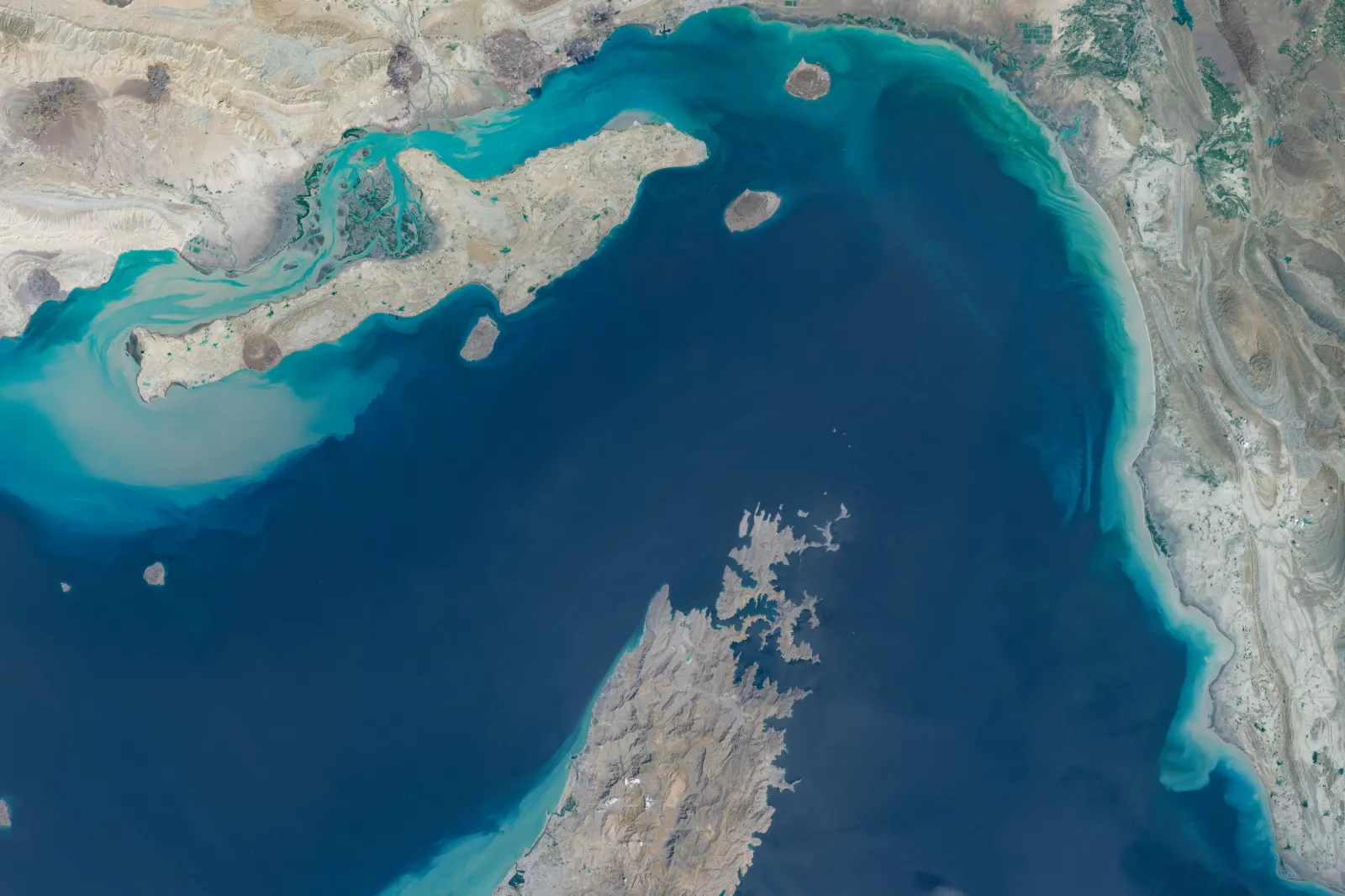
At the heart of the dispute is a narrow strip of water that carries enormous global significance. The Strait of Hormuz connects the Persian Gulf to global markets and typically handles about 20 percent of the world’s seaborne oil trade.
Because so much energy supply passes through it, even the perception of disruption can drive volatility in prices and shipping routes. Earlier in the conflict, closures or threats of closure had already caused traffic to drop sharply and forced ships to avoid the area altogether.
Iran has long viewed control over the strait as a key strategic lever, using it to exert pressure during times of conflict or negotiation.
What Happens Next
Attention now turns to whether talks in Switzerland can ease tensions or whether continued fighting in Lebanon will derail the agreement altogether.
Even if diplomacy continues, the current moment highlights how quickly momentum can shift. For now, the Strait of Hormuz remains not just a physical chokepoint, but a symbol of a deal under strain—and a region still on edge.
Update: 06/20/26, 10:51 a.m. ET. This breaking news article has been updated with the latest information.
View 0 Comments
Submit Correction
View Editorial & AI Guidelines