...

By Rayhan Asat
Human Rights Lawyer
0
Share
Newsweek is a Trust Project member
See more of our trusted coverage when you search.Prefer Newsweek on Googleto see more of our trusted coverage when you search.
At Davos, Canadian Prime Minister Mark Carney drew applause for his plea to middle powers to “build a new order that encompasses values.” While President Donald Trump’s saber-rattling has unsettled many, for me and others in my Uyghur community, it was also deeply painful to see Carney feted for his “principled pragmatism” only days after he visited China to forge a new strategic partnership, devoid of any mention of human rights concerns.
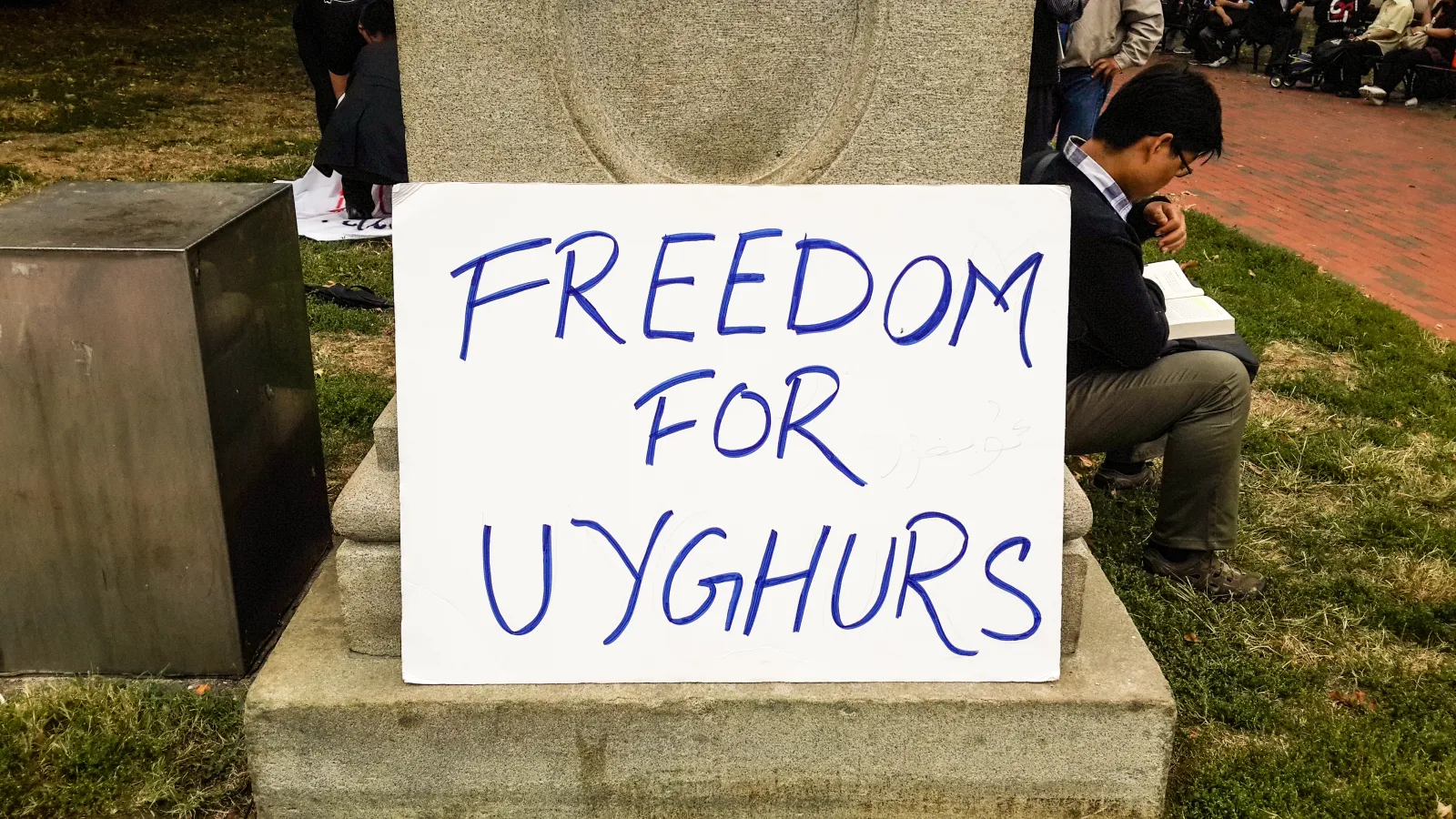
I’ve spent the past decade fighting for my own brilliant brother Ekpar Asat, and a million others who have vanished into China’s vast system of camps—mass imprisonment that has, over time, been allowed to harden into a grim “new normal.” This is the exact oppressive system that Czech stateman Václav Havel, whom Carney invoked, urged free people to resist.
...
Read More on Opinion
Much has been written about whether the U.S. has upended the legal order it built after World War II. But far less attention has been paid to how China has changed that order, who it served, and who it left to rot.
Carney’s embrace at Davos and his appeal to deal with the “world as it is, not as we wish it to be” left me with the question: Will the “new” world order he’s advertising protect everyone, or only those whose suffering is not inconvenient? The old order certainly didn’t. Treating human rights as separate from trade, as if mass atrocity can be compartmentalized to appease China, may have safeguarded commercial interests and avoided friction in the short-term—but it also helped normalize the intolerable.
It’s been 10 years since China began building a sprawling system of concentration camps—designed to bury atrocities behind bureaucracy and beyond tourists’ gaze. In April, Ekpar will have been missing for a decade.
It’s been three years since the U.N.’s foremost human rights body determined China is committing crimes against humanity. Carney and his “middle power” peers can hardly claim that they didn’t know.
But what happens when China’s façade becomes useful? Even for leaders of the democratic world, U.K. Prime Minister Keir Starmer recently visited China, it allows suffering to be acknowledged just enough to be set aside, framed as a difference in systems rather than a violation that demands consequence. Public pressure is muted, accountability deferred and appeals for justice quietly absorbed into diplomatic language.
I worry that this “new order” will leave people like my brother behind.
We have become disturbingly adept at normalizing horrors, especially those happening within the borders of deep authoritarian governments. North Koreans still escape with bone-chilling tales. For years, Syrians tried to tell the world what was happening inside Assad’s Saydnaya slaughterhouse.When a state masters hiding brutality against its citizenry, we can’t allow ourselves to accept the cover-up.
The contrast is telling. As President Trump menaces Greenland and bombs boats in the Caribbean, the defense of the rules-based order is on everyone’s lips. I expected Carney and other leaders to meet this moment with moral clarity as Uyghurs continue to be tortured in camps. Whether many will live to see those barbaric camp walls come down and to reunite with their loved ones remains uncertain.
As a human rights lawyer, my circle of friends reaches every corner where oppression haunts individuals. There’s a sad solidarity between the Uyghurs, Iranians, Venezuelans suffering under state violence and the Ukrainians under Russian occupation. The uncomfortable truth, one that we know in our bones, is that the international legal order owes us in blood. Our families live under cruelty, while cooperation becomes an excuse for paralysis, or trade agreements reduce the plight of torture victims, not even to a footnote.
It's not just Uyghurs; there are Tibetans, Hong Kongers. International law has never protected Taiwan. Its security rests not on legal norms, but on strategic necessity—especially its dominance in advanced semiconductor chips.
Carney argued that middle powers need to unite to hedge against stronger countries, because what we’re living through is not a transition but a rupture in the rules-based order. Trump is the proximate cause, but the architecture was crumbling long before him. The deeper irony is that leaders of the Global South, including President Luiz Inácio Lula da Silva’s advisor, argued that Brazil would continue working with Europe, China and others who champion multilateralism and international law. It’s unfathomable to square China's status as a champion with its promotion of what Professor Tom Ginsburg described as authoritarian international law.
An international legal order worth its name is more than just policing borders and battlefields. It must serve as a shield for those hidden from sight, protecting them from the machinery of disappearance, torture, cultural erasure and similar threats. With its failure, victims who have spent a decade observing the world normalize their pain ask, with a mix of rage and grief, exactly whom does the rules-based order benefit and whom does it neglect?
Rayhan Asat is a human rights lawyer of Uyghur descent, an international law scholar at Harvard Law School and a senior legal and policy advisor at the Atlantic Council Strategic Litigation Project.
The views expressed in this article are the writer's own.
View 0 Comments
Submit Correction
View Editorial & AI Guidelines