
By Alex J. Rouhandeh
National Political Correspondent
0
Share
Newsweek is a Trust Project member
See more of our trusted coverage when you search.Prefer Newsweek on Googleto see more of our trusted coverage when you search.

...
Over Super Bowl weekend, Democrats recorded another impressive special election victory. In a race to represent Louisiana state House District 60, Democratic candidate Chasity Verret Martinez won by 24 points after President Donald Trump had carried the district by 13 points in 2024. The 37-point swing wasn’t an anomaly. In Texas, Democrat Taylor Rehmet flipped Senate District 9 in a January special election, winning by 14 points, a 31-point swing from Trump’s victory in 2024.
Since Trump took office, similar patterns have emerged in special elections across Georgia, Mississippi, Pennsylvania and Iowa: prior to Martinez’s win, Democrats flipped eight Republican seats with an average swing of 19 points. Looking toward the 2026 midterms, polling of the generic ballot shows 48 percent of voters would back a “Democratic candidate” compared with 42 percent who would support a “Republican candidate,” according to January Emerson College Polling.
Read More on Politics
The special election results and polling have led Republican and Democratic strategists alike to conclude that Democrats are positioned for significant gains in the 2026 midterms—their first opportunity to regain political power in Washington after a year of watching Trump govern without meaningful opposition.
But none of that has done anything to give rank-and-file Democratic voters a sense of confidence. As they doomscroll through news of executive orders, policy reversals and political provocations, there’s palpable fear that the midterms will somehow slip away—not because of voter sentiment, but because of Democratic leadership itself. The party’s congressional leaders, Chuck Schumer and Hakeem Jeffries, inspire little enthusiasm and the Democratic Party currently has a nearly 56 percent unfavorability rating, according to polling averages calculated by Real Clear Politics.
To Molly Jong-Fast, prominent progressive pundit and host of the Fast Politics podcast, Democrats still haven’t gotten over the shock of Trump’s 2024 victory and are taking it out on their leaders. “These voters feel they were betrayed because Donald Trump got reelected,” she told Newsweek, “and Schumer thinks he can put a patch on it, but I don’t think he can.”
That anxiety—the gap between electoral performance and confidence in leadership—defines the challenge facing Ken Martin, who became the chair of the Democratic National Committee a year ago and now sits at the center of this paradox. A Minneapolis native, Martin, 52, spent 14 years as chair of the Minnesota Democratic-Farmer-Labor Party, or DFL, rising to national leadership in 2017 when he became president of the Association of State Democratic Chairs, thereby becoming a DNC vice chair.
In a recent 50-minute conversation with Newsweek at the DNC headquarters in Washington, D.C., Martin was candid about the challenges he faces but emphasized that, at the core of his identity, he is an organizer and stands by his strategy. He believes that special election wins don’t happen by accident; they require money, organization, candidate recruitment and voter contact infrastructure.
Martin’s job is ensuring the right combination of resources and strategy translates into November victories that actually shift power. And he ascended to his current position by promising to invest in the Democratic state parties to rebuild the Democratic Party’s organizing infrastructure across the country. His pitch: The special election streak isn’t luck or Trump backlash—it’s proof that his strategy works.
“I understand people’s anxiety, and I never take [criticism] personally because what they want to see right now is everyone doing their part, everyone using the power they have to push back and to actually organize,” he said. “I’m confident that we’re going to win, but not complacent, and the complacent part really matters because we’re working extremely hard down here to make sure that we’re building out the infrastructure to compete everywhere so we can win anywhere.”
But what is Martin’s strategy? And does it solve the deeper problem Democrats feel—that their leadership is fundamentally inadequate to the moment?

...
A Three-Pillar Vision
Martin’s vision rests on three interconnected pillars, all designed to reverse what he sees as decades of Democratic infrastructure decay. The first is year-round infrastructure. Minnesota is no conservative bastion, voting consistently for the Democratic presidential nominee since 1976, the longest active streak of any state. However, margins are often thin, and Martin inherited a party on the ropes when he took the position of DFL chair in 2011. The Democratic governor had just won by only half a percentage point; Republicans had taken control of both chambers of the Minnesota Legislature. Under Martin’s tenure, the Democrats went 25-0 in statewide elections. They currently control the state Senate and are tied with Republicans for control of the House. Perhaps most consequentially, Martin pulled the DFL out from over $700,000 in debt.
“Under his leadership, the party in Minnesota became the engine for a year-round organizing strategy for Democrats in the state that made a big difference,” U.S. Senator Tina Smith of Minnesota, whose rise in Minnesota politics coincided with Martin’s tenure, told Newsweek. “We figured out how to field candidates in every part of the state and then support those candidates.”
In effect, Martin’s current strategy focuses on taking Minnesota-style year-round Democratic organizing nationwide. He has taken the DNC’s support for state parties to new levels through his State Partnership Program, whereby the DNC issues a monthly transfer of more than $1 million to state parties, with underfunded red state chapters receiving an additional $5,000.
However, this has resulted in the DNC significantly trailing the Republican National Committee in cash on hand. The DNC has $14 million in cash while the RNC has $95 million. To make matters worse, the DNC also faces over $17 million in debt. In all, the DNC took in nearly $146 million in 2025, according to FEC data, while the RNC took in over $172 million. Ahead of that year’s elections, the DNC hosted 150 events in 47 states, signed up over 15,000 volunteers and contacted 1,650,000 voters, the organization reports.
“Ken Martin has done a fantastic job at bankrupting the DNC and losing control of his own party,” RNC National Press Secretary Kiersten Pels told Newsweek. “After one year as chair, the only thing Martin has proven is how weak and ineffective his leadership really is. He’s left Democrats buried in debt, divided and directionless.”
When Newsweek asked Martin about the cash disparity, he said: “We’re spending money, we’re not hoarding money. We didn’t come here just to raise money and have a big pile of cash to have people say, ‘Oh, the DNC must be doing great because they got all this money.’” In December, the DNC created its National Youth Coordinated Table, which works to bring the voices of youth organizing groups directly into the fold with the objective of expanding the Democrats’ professional network and extending its reach beyond college campuses. In January, it announced its “When We Count” initiative, a seven-figure investment in voter registration efforts.
“The DNC has put more of their energy into state party building, which is crucial,” U.S. Senator Elizabeth Warren of Massachusetts told Newsweek. “We’ve got a lot of fighters at the federal level, but we win or lose races precinct by precinct.”
The second pillar of Martin’s vision is down-ballot investment. Last year’s governor race wins for Democrats in the blue states of New Jersey and Virginia were no doubt important to Martin. However, it’s the Louisiana and Texas wins, two state senate pick-ups in Mississippi that broke the Republicans’ six-year supermajority, the retention of three liberal-aligned Pennsylvania Supreme Court Justices, and two Georgia Public Service Commission victories that represented Democrats’ first non-federal statewide victory in Georgia in nearly 20 years which illustrate the potential his strategy has to expand Democratic competitiveness.
“We don’t need to outraise the Republicans,” Martin told Newsweek. “We just need enough money to compete; to make the investments we need to build the infrastructure that we need to around the county, and that’s what we’re doing.”
The third pillar of his vision is grassroots organizing over consultant-driven campaigns. Reasoning behind these efforts stems partly from Martin’s belief that to win, Democrats must meet voters where they’re at and connect with them through unconventional means. He believes organizers who live in their communities are better poised to do this than the D.C.-based “consultant industrial complex…. people who believe that they know best on how to win elections” that he said his party relied too heavily upon in 2024.
“We spent over a billion dollars on the last presidential campaign on broadcast TV,” Martin said. “My wife and I, we don’t watch broadcast TV anymore. In fact, I don’t know many people my age that do. Yet our consultants were driving most of our media toward a tactic that actually helps them more than it helps us win.” Martin noted consultants make up to 20 percent commissions on media buys, resulting in hundreds of millions of dollars worth of fees in 2024.
Democrats are going to have to do more than simply run against Trump, he argues: “If all we do is resist Donald Trump, we’re not going to win because it won’t give the American people a sense of who we are, what we’re fighting for and, frankly, an alternative, a sense of what we would do different than Donald Trump’s doing right now to actually improve their lives.... You’ve got to build the infrastructure to do that, to have those conversations, to actually connect with voters.”

...
A Mixed Reception
In conversations with more than a dozen Democratic-aligned activists, organizers, party leaders and elected officials across the country, a monthslong reporting effort that sought to bridge the knowledge gaps between the national and state-based Democrats, I saw widespread support for Martin’s approach.
Jaime Harrison, who preceded Martin as DNC chair, from 2021 to 2025, is one of those supporters. His reasoning doesn’t just come from his experience leading the organization, it also dates to when he became chair of the South Carolina Democratic Party in 2013 and was rising within party ranks alongside Martin. President Joe Biden similarly believed in this approach, Harrison said, so when he won the 2020 election, he empowered Harrison—his pick for DNC chair—to execute a 50-state investment strategy. Harrison said that effort helped the party overperform in the 2022 midterms. However, Harrison wishes the investments went further.
When DNC chairs serve alongside a Democratic president, however, they must answer to the White House. And, of course, Biden dropped out of the presidential race, and the party went on to lose the 2024 election.
Yet, at the same time, well-placed party members in Washington who spoke to Newsweek complained about the strategy being idealistic and not suited to the moment. Some Democrats in Washington feel that instead of investing in state parties, the DNC should prioritize funding for proven candidates who’ve been able to win in red states through their individual brands.
Martin’s critics on both the left and right warned that an upcoming Supreme Court ruling in National Republican Senatorial Committee v. Federal Election Commission could pave the way for new finance rules that upend election dynamics. If the NRSC wins, federal limits on how much party committees, like the DNC and RNC, can spend in coordination with their federal candidates would be struck down, potentially allowing national party committees to engage in unlimited coordinated spending with their nominees.
This could make the RNC’s $95 million war chest all the more potent against vulnerable Congressional Democrats.
In January, on the day Martin announced the When We Count initiative, the beltway-focused outlet Punchbowl News reported that Congresswoman Susie Lee of Nevada convened a private meeting with Martin and the vulnerable “Frontline” House Democrats, of whom there are 26, to express concern over the chair’s prioritization of funds to state parties over the Democratic Congressional Campaign Committee, or DCCC. Congresswoman Kristen McDonald Rivet of Michigan reportedly “spoke up and said she needed more resources from the DNC, not messaging guidance.”
Neither Lee nor McDonald Rivet responded to Newsweek requests for comment.
Senator Kirsten Gillibrand of New York, chair of the Democratic Senatorial Campaign Committee, told Newsweek, “I work great with Ken Martin.”
A spokesperson for the DCCC said in a statement: “We value the DNC’s partnership. It is imperative that Democrats win back control of the House in 2026 and thanks to our candidates and our message, we are well-positioned to do so. Winning takes critical resources and we need all hands on deck to make sure Democrats as a whole have the money to compete and win.”
Congressman Tom Suozzi, who won back New York’s 3rd congressional district after the George Santos fiasco—in which Santos was exposed for telling a series of lies about his life and résumé—is a member of the DCCC’s Frontline program. He said he agrees with “the idea of building an organization in each of the 50 states,” but also believes it’s the DNC’s role to “help us to retake the majority. We can do both.”
In response to his critics, Martin told Newsweek, “Being a political party chair at any level, whether it’s local, state or national, is the equivalency of being a fire hydrant: you get pissed on by everyone. You get none of the credit when you win. You get all the blame when you lose. And frankly, if you’re doing your job right, you’re saying ‘no’ more than you’re saying ‘yes,’ meaning by the time you’re done with it, you have a lot fewer friends.”
Diagnosing Democratic Dysfunction
If Martin sometimes finds himself at odds with Democratic insiders, that’s partly because he doesn’t see himself as one. “I came to D.C. to make changes because I, like many people, [was] very frustrated with the Democratic Party for years,” he said. “I will never think of myself as an insider, to be honest with you, just the opposite.”
He added, “I came here to obviously make changes and to make sure that we win again—and win in a way that’s both durable and long lasting and helps us build power for working people in this country.”
Martin didn’t arrive at his diagnosis of Democratic dysfunction from a consultant’s deck or a think tank white paper. He watched it happening in real time. Paul Wellstone, the bushy-haired, balding college professor who ran an unabashedly progressive campaign for Senate in Minnesota in 1990 was Martin’s “first boss in politics.” The future DNC chair interned as a high school student for a bid focused on universal health care, education, labor rights and environmental issues. Martin clearly reveres Wellstone, who died in a 2002 plane crash, invoking his name in our interview four separate times. Though he was outspent seven to one, Wellstone, who spread his message from a converted 1968 Chevy school bus painted green, narrowly defeated the incumbent Republican with 50.4 percent of the vote by relying on his experience as a community organizer to overcome the dollar deficit.

...
Martin’s faith in that model came from necessity. He was raised in Minneapolis by a single mother who by the time of her 20th birthday already had four children. She dealt with chemical addiction issues, Martin told Newsweek, and the family spent time in and out of homeless shelters, relying on Medicaid for health care and SNAP benefits for groceries. He didn’t fully realize the challenge of the circumstances his family faced at the time.
“I never knew we were poor. You know, you just knew that you had a mom who was doing everything she could,” he said. “There were times, of course, you knew you’re poor when you didn’t have shelter and you were outside looking for a place to sleep, you’re moving from couch to couch, and didn’t have food to put on the table. Don’t get me wrong. But at the end of the day, I think she did the best she could to just create as normal of a life for those four kids as she could.”
It was Martin’s community that got him through that time, and Wellstone’s candidacy that propelled him into politics.
As Minnesota DFL chair, Martin had a front-row seat to what he now describes as a clear pattern of Democratic infrastructure collapse. Sophisticated and massive and expensive campaign operations were built for presidential cycles and then dismantled afterward. State parties became largely ceremonial between elections. Down-ballot races—state legislature, county commission, school board—received minimal support from national Democrats.
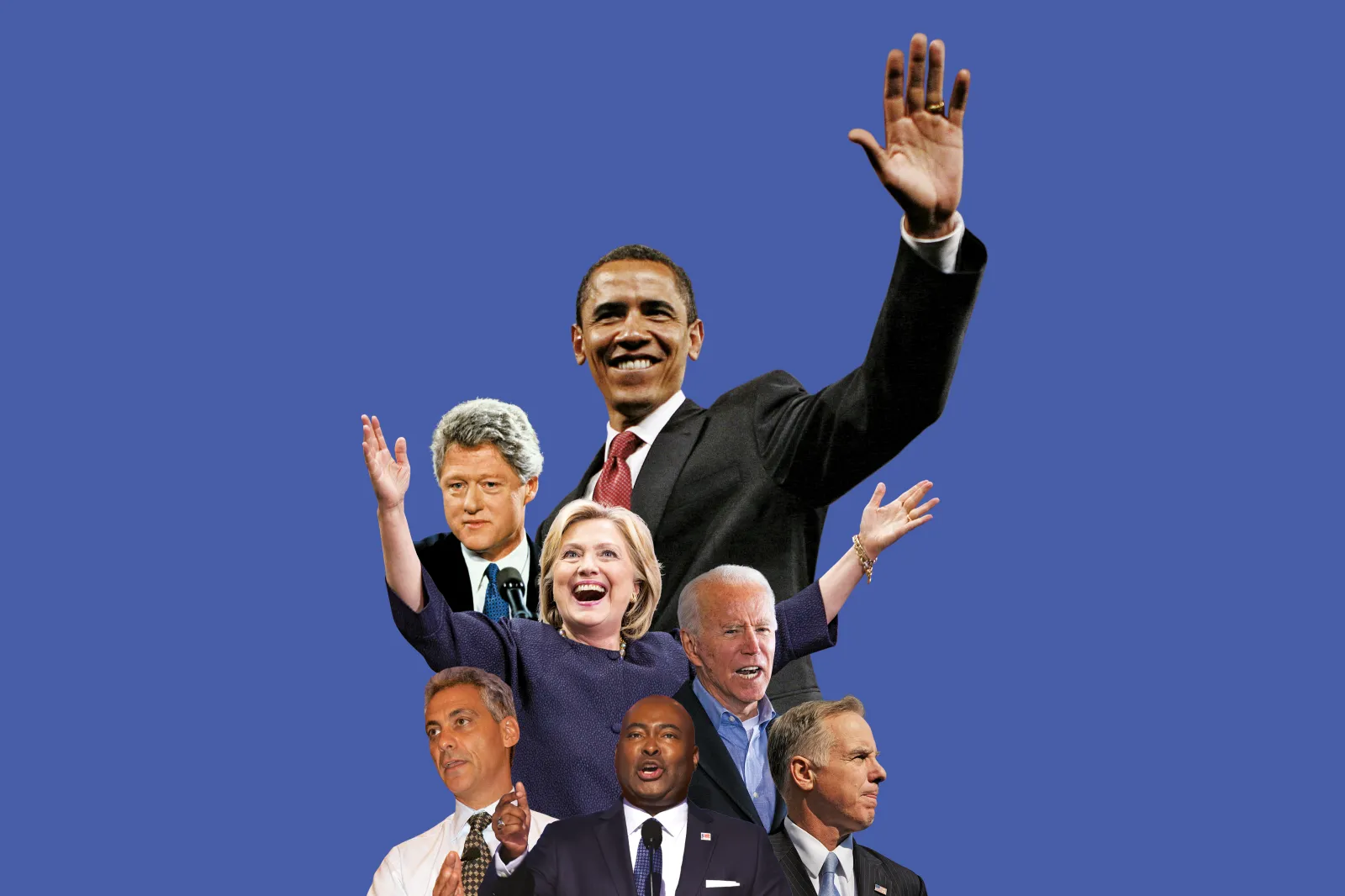
President Barack Obama’s 2008 election victory marked Democrats’ high-water mark in recent history. Not only did Obama pick up 365 of the 538 electoral votes, but Democrats went on to win 60 seats in the Senate, earning the first filibuster-proof supermajority in 30 years. They held 28 governorships and at one point controlled 27 state legislatures. Yet things began to unravel.
Part of Obama’s appeal in 2008 came from his outsider status. To beat Hillary Clinton—who was widely viewed as the DNC’s pick in the primary—he relied on his own grassroots network, Organizing for America. When he became president, he reorganized that campaign apparatus as Organizing for Action and instructed the DNC to integrate it into the party machinery.
“The Obama folks kept OFA running, and a lot of the resources that would have gone into the DNC went into OFA, and therefore they dramatically reduced the amount of money that went to state parties,” Harrison told Newsweek. “So during the Obama administration, those of us who were coming up, we saw how starved we were for resources, and so many of us state party chairs—myself, Ken and others—just said, ‘If we ever get an opportunity to get into the leadership of the DNC, then we’re going to push DNC and leadership to make a massive investment in state parties.’”
...
In 2010, Democrats lost Congressional races—as often happens to the incumbent party during a midterm year—but saw historically devastating results in state races, seeing a net loss of six governorships and losing control of 20 statehouse chambers. In 2012, during Obama’s reelection campaign, Democrats saw significant net gains in congressional seats but a net loss of one governorship and regained control of just one chamber. In 2014, Democrats lost three governorships and lost control of 10 statehouse chambers.
The consequences compounded. Without state legislative seats, Democrats lost the ability to draw favorable congressional maps after the 2010 census. Without local officeholders, the party lost its farm team for higher office. Without year-round organizers on the ground, Democratic campaigns became dependent on expensive last-minute media buys rather than sustained voter contact. By the time Donald Trump won in 2016, Republicans controlled 33 governor’s mansions and 32 state legislatures.
For Martin, the problem wasn’t just strategic—it was existential. The people who drifted from the Democrats during this period were his own people—working-class Americans who felt increasingly disconnected from a party they believed no longer represented their interests. “The majority of Americans now believe—and this is crazy, right?—they believe that the Republican Party best represents the interest of the working class, the middle class and the poor...and the Democratic Party is a party of the wealthy and the elites,” Martin said.
He pointed to specific moments when Democrats fueled this perception: Bill Clinton’s international trade deals in the 1990s that harmed working-class people “who felt like they were being sold down the river.” He additionally cited the financial crisis response in 2010 under Obama as another example, a year where congress passed the Dodd-Frank Act which progressive critics felt did not do enough to hold Wall Street accountable. Perhaps most crucially, however, he pointed to the handling of the COVID-19 pandemic under Biden, where people were “feeling squeezed economically, feeling isolated from community” amid high inflation and social distancing policies.
The critique places Martin in an uncomfortable position—he’s now the chair of the national party apparatus that many progressives blame for the disconnection he’s diagnosing. He won his position not by courting conventional Democratic powerbrokers but by appealing to state party leaders and grassroots organizers who share his frustrations. His chief rival for DNC chair, former Democratic Party of Wisconsin Chair Ben Wikler, picked up endorsements from the likes of Schumer, Jeffries, Senate Whip Dick Durbin and former Speaker Nancy Pelosi. But the majority of DNC delegates, many of whom come from humble roots, are in the state organizations, and they went to Martin, who won with over 55 percent of the vote on the first ballot.
‘Weight of the World’
Heading into the 2006 midterms, Democrats found themselves in a similar state to where they are 20 years later. Reeling from the 2000 and 2004 presidential victories of George W. Bush, they entrusted leadership of the DNC to former Vermont Governor Howard Dean, who pioneered the 50-state strategy of the kind playing out now.
At the time, this drew criticism from then-DCCC chair Congressman Rahm Emanuel of Illinois and DSCC chair Schumer, who felt resources were being diverted from critical federal races. Yet Democrats won House and Senate majorities in 2006 and saw net gains in Senate seats, governorships and statehouse chambers under Dean. However, that was before the 2010 Supreme Court ruling Citizens United v. Federal Election Commission redefined the role money plays in politics, and a media ecosystem that has been upended through social media and the rise of streaming, leaving parties still figuring out how best to allocate dollars. Races have become increasingly expensive, and concerned Democrats emphasize the NRSC v. FEC ruling could make federal victories even harder to pull off.
Officials affiliated with the Democratic Governors Association have told Newsweek they believe their members are in their strongest position in recent memory and feel confident a Democratic governor will be president in 2028. Similarly, people associated with the Democratic Legislative Campaign Committee are enthusiastic about their party’s trajectory when it comes to narrowing the statehouse chamber control gap. Martin’s name regularly comes up in these conversations, and these individuals speak fondly of his tenure.
Yet, until Martin proves his stateside strategy can deliver wins on the federal level, there will be critics, but proving them wrong drives him. Though his wife and two sons remain in Minnesota, Martin spends most of his time on the road, having traveled to 36 states during his first year as chair. Meanwhile, with Trump continuing to upend norms, and outrage, anxiety and hopelessness continuing to circulate through the Democratic Party, the ICE enforcement surge in Minneapolis has become the epicenter for activists and organizers.
“To me, this isn’t really about politics—this is my hometown that’s been terrorized over the last month and is still being terrorized,” Martin said. “Whether we can translate this energy to electoral wins, the answer is yes. Because, at the end of the day, people across the country are very concerned about what they’re seeing happening in places like Minneapolis and other parts of the country, with this overreach by this administration.”
Given this, Martin said it “sometimes it feels like the weight of the world is on my shoulders.” To keep peace, he relies on a practice that helped him as a child back in Minnesota around the time he met Wellstone.
“There are two things I say every morning. One is a serenity prayer: ‘God, grant me the serenity to accept the things I cannot change, the courage to change the things I can, and the wisdom to know the difference,’” he said. “The other thing I say every morning, in addition to the serenity prayer, is something that Paul used to say: ‘You can remake the world daily.’”
“Most Americans don’t know who I am, and that’s OK,” he said. “They don’t know who their political leaders are, but one thing they do know is that the actions of politicians can have a huge impact on their lives, either to help improve their lives or to make their lives much more difficult to live. So, for us, over the last year and certainly as we go into this year, the critical role is to make sure we’re building trust with them around the issues they care about and are giving them hope.”
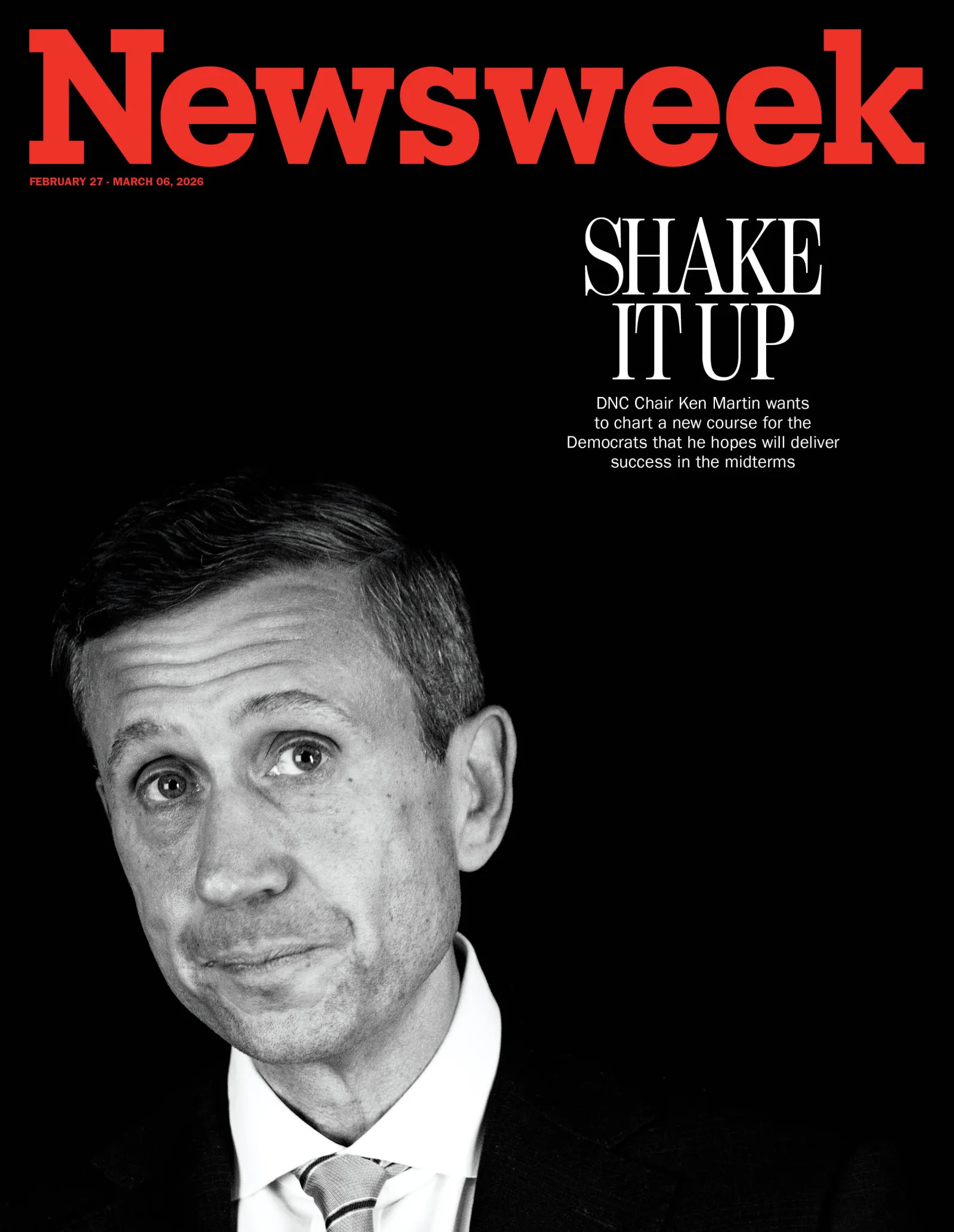
Photography by Bianca He for Newsweek
View 0 Comments
Submit Correction
View Editorial & AI Guidelines