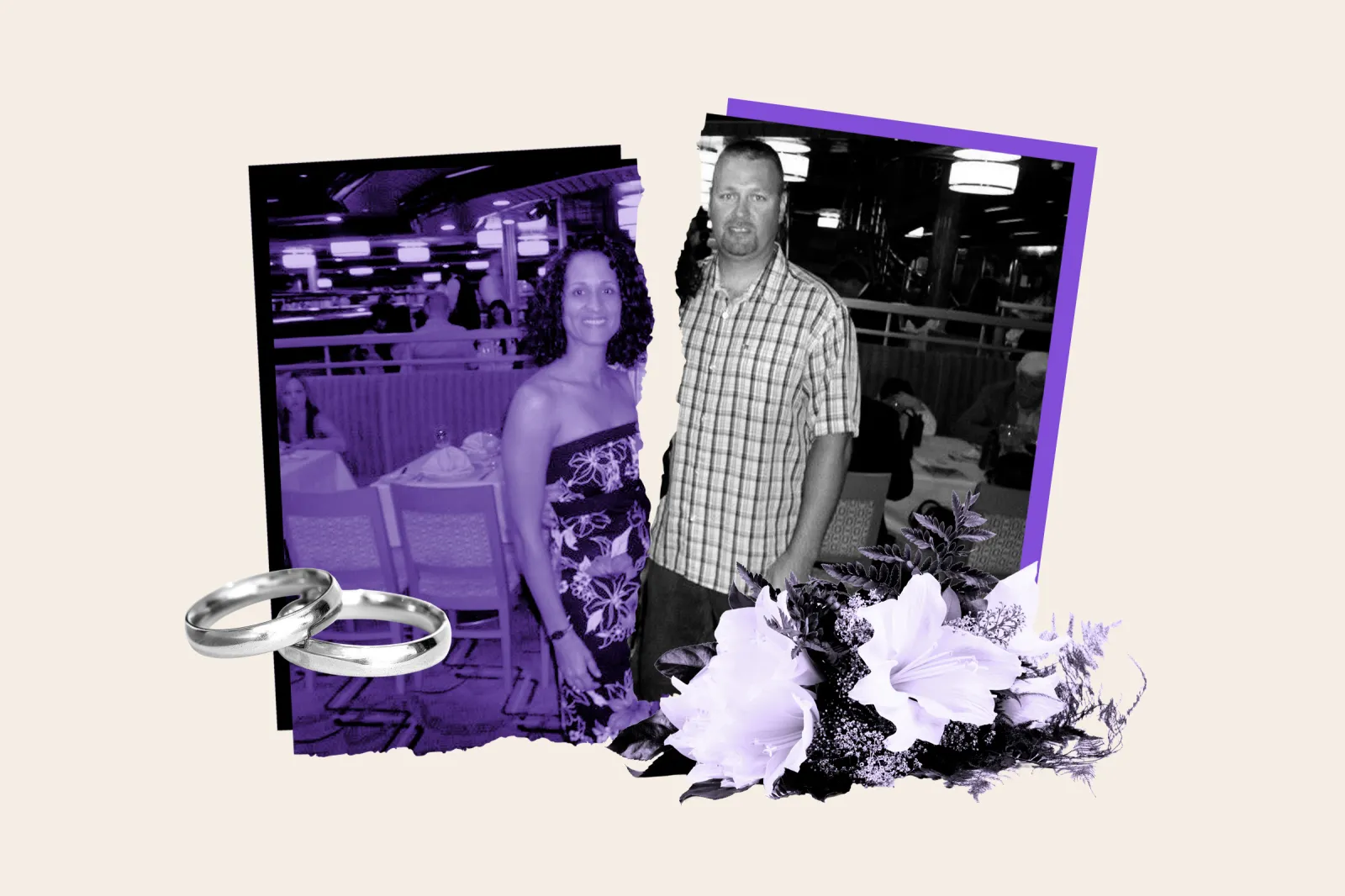
Photo-illustration by Newsweek/Gettty Images/Courtesy of Cindy Rodriguez Constable

By Cindy Rodriguez Constable
0
Share
Newsweek is a Trust Project member
See more of our trusted coverage when you search.Prefer Newsweek on Googleto see more of our trusted coverage when you search.
The divorce papers had been filed since May. Our final hearing was scheduled for September 25, 2017. After 20 years together, Kevin and I had navigated the end of our marriage with unusual grace—no attorneys, no hostility, just two people who still cared deeply about each other choosing to redefine their relationship.
A city government employee at the time, I was hosting a community event with the mayor on Friday, September 1, when my phone rang. Kevin's name flashed on the screen, and something in my gut told me to answer immediately, even though I was in the middle of a public event.
"I need to go to the hospital," he said, his voice strained in a way I'd never heard before. "Something's wrong."
Read More on My Turn
My 12-Year-Old Daughter Woke Up As Usual—That Same Day Life Changed Forever7 min read

I Loved Tanning. 22 Years Later, I’m still Living With the Consequences9 min read

A Stranger Put $250 in My Kid’s Account. Twice4 min read


...
I didn't ask questions. I signaled to a coworker, who graciously stepped in to cover for me, and I left. By the time I got to his house, Kevin could barely stand. I drove him straight to the emergency room, where they quickly determined he was in liver failure.
I spent that evening in the hospital, watching doctors run tests and start treatments, as I tried to process what was happening. Kevin and I had been separated for over a year, living apart, preparing for our lives to officially split in 24 days. But in that hospital room, none of that mattered. I was simply the person who knew him best, who could answer the doctors' questions about his medical history, who could be there when he needed someone.
On Saturday, I stayed at the hospital most of the day, leaving only to check on our daughters—15 and 23 at the time—and try to rest. That evening, as I was preparing to leave, Kevin looked at me from his hospital bed.
"I love you," he said.
"I love you too," I responded, the words as natural as breathing despite everything that had changed between us.
I told him I'd be back in the morning. Those were the last words we ever spoke to each other.
On Sunday, September 3, Kevin went into cardiac arrest. By the time I got back to the hospital, he was unconscious, intubated, and surrounded by machines keeping him alive. The doctors explained that his brain had been without oxygen for too long. The damage was catastrophic. He would never regain consciousness.
I stood in that ICU room, legally still his wife but emotionally somewhere in between spouse and friend, and I had to make decisions I'd never imagined making. Consult with medical teams. Explain his condition to our daughters and his family. Decide, after careful consultation with the doctors, when it was time to let him go.
We extubated Kevin on September 8. He passed peacefully, with me, my daughters and my future son-in-law holding onto him. All of us standing there with tears streaming down our faces.
The week between his cardiac arrest and his death remains a blur of hospital fluorescent lights, hushed conversations with doctors, and the surreal experience of being the primary decision-maker for someone I was supposed to be divorcing. I spent every possible moment at the hospital, going home only to sleep at night before returning first thing each morning. I couldn't have lived with myself if I'd done anything less.
Kevin's mother arrived from out of town and thanked me over and over for being there for her son. She still thanks me, years later, every time we speak. She'd always held out hope that we'd reconcile before the divorce went through. That hope died when Kevin did. The loss of her son was devastating, and as a mother myself, I can't imagine the weight of it.
Planning the funeral fell to me, with some input from the girls. Kevin and I had discussed our final wishes many times over the years—one of those conversations couples have in the abstract, never really believing they'll need the information. I knew he wanted to be cremated. I knew which songs mattered to him. I knew how he'd want to be remembered.
Knowing didn't make the actual planning any easier. Every decision felt weighted with impossible significance. Every choice reminded me that I was planning his funeral instead of finalizing our divorce.
The most surreal moment came on September 25—the day that was supposed to be our final divorce hearing. I'd called the court after Kevin's death, uncertain what to do. We'd self-filed without an attorney, and I had no idea what the proper procedure was when your almost-ex-husband dies before the divorce is finalized.
The clerk told me I had to appear at the hearing regardless and bring a death certificate.
So I did. I stood in that courtroom, barely two weeks after Kevin’s funeral, and explained to the judge that my husband had died before we could complete our divorce. I handed over the death certificate as evidence.
The judge was compassionate. He dismissed the case, which meant Kevin and I were still legally married when he died. I was officially a widow, not a divorcee—a title that felt profoundly wrong for what our relationship had actually been in those final months.
I'd spent over a year preparing myself emotionally to become a divorcee. I'd practiced introducing myself as "separated." I'd imagined holidays split between households and how strange it would be to watch Kevin date someone new. I'd been intentionally creating emotional distance, trying to establish the boundaries I thought I needed for our new dynamic.
What I never prepared for was standing in a courtroom with his death certificate, legally becoming his widow.
Friends and acquaintances struggled with how to address my grief. Those who didn't know about our impending divorce sent condolences to "Kevin's grieving widow" and expressed sympathy for the loss of my husband. Those who did know seemed confused about whether my grief was legitimate, as if preparing for divorce somehow inoculated me against the pain of his death.
Friends and acquaintances struggled with how to address my grief. Some seemed confused about whether it was legitimate, as if preparing for divorce somehow inoculated me against the pain of his death. A few even said, 'At least you were already preparing to live without him.'
A few people even said, "At least you were already preparing to live without him," which might be one of the most profoundly misguided things anyone said to me in those dark months.
Preparing for divorce and preparing for death are nothing alike.
Divorce would have meant Kevin was still in the world. Still available for my younger daughter's volleyball games. Still, someone I could text when the water heater broke or when my older daughter landed that new job she’d been preparing for. Still a co-parent helping me navigate the challenges of raising teenagers and young adults. His absence would have been a choice we made together, with the possibility—however remote—of changing our minds if circumstances changed.
Death left no room for second thoughts or reconciliation. Death meant Kevin was simply gone, taking with him not just the husband I'd loved for 20 years but also the friend and co-parent I was supposed to have for the next 40 years.
The grief was complicated in ways I hadn't anticipated. I mourned the husband I'd loved. I mourned the friend he was becoming. I mourned every future iteration of our relationship that we'd been carefully planning—holidays, coordinating schedules, graduations where we'd sit together as family, grandchildren we'd eventually share.

...
I also carried an unexpected layer of guilt. In the months before his death, I'd been distancing myself emotionally, trying to create the space I thought I needed to transition from wife to ex-wife. I'd stopped texting him random thoughts throughout the day. I'd been more businesslike in our conversations. I'd been practicing not leaning on him the way I had for two decades.
Now those months of intentional distance felt like time I'd wasted. We could have had more easy friendship, more comfortable conversations, more shared moments. Instead, I'd been busy preparing for a future that never came.
The unsigned divorce papers—well, technically they were filed but dismissed—exist somewhere in court records as an artifact of a future we never reached. A reminder of the life we were planning before everything changed in a single week.
People often ask if I regret not finalizing the divorce before Kevin died. The question itself reveals a fundamental misunderstanding. I don't regret where we were in our relationship when we lost him. We'd done the hard work of transitioning from spouses to friends with grace and respect. We'd protected our love for each other even as we acknowledged our marriage had run its course.
That's exactly what allowed me to be fully present for Kevin during his final days. I didn't hesitate to leave my event with the mayor when he called. I didn't question whether I should be the one at the hospital. I didn't wonder if being there was still my responsibility, given our impending divorce.
I was simply there, the way you show up for someone you've loved for 20 years, regardless of your legal relationship.
Kevin was a lovely human and a great father. I am grateful that I was the one who got to stand by him at the end, to hold his hand, to make sure our daughters had time to say goodbye, to let him go peacefully when it became clear he wasn't coming back.
Being there through his final days became one of the most meaningful experiences of my life, not because I was his wife—legally or otherwise—but because I was someone who had shared two decades of life with him. Someone who knew his deepest fears and final wishes. Someone who could speak for him when he could no longer speak for himself.
Our impending divorce didn't erase any of that shared history or diminish the profound connection we still had.
I've learned that grief doesn't respect the neat categories we try to put it in. It doesn't care whether you were happily married, miserably married, or somewhere in the messy middle of consciously uncoupling. Loss is loss, and the heart mourns what it mourns, regardless of paperwork or court dates.
I've also learned that you can love someone deeply and still know that your marriage needs to end. Those two truths can exist simultaneously, without contradiction. Kevin and I were right to choose divorce. We were also right to maintain our friendship and commitment to each other through that transition. His death doesn't invalidate the journey we were on together; it just changed the destination.
That Friday when Kevin called, I didn't hesitate. I left immediately. And in the week that followed, I never questioned whether being there was still my role to play.
It was. It always had been. The divorce papers didn't change that.
Cindy Rodriguez Constable is a leadership strategist and writer who explores the intersection of technology, people, and purpose at work. She focuses on how AI, organizational design and human behavior are reshaping leadership in the modern economy.
All views expressed in this article are the author's own.
Do you have a personal essay you want to share with Newsweek? Send your story to MyTurn@newsweek.com.
View 0 Comments
Submit Correction
View Editorial & AI Guidelines