...

By Brian Edsall
Freelance Writer and Photographer
0
Share
Newsweek is a Trust Project member
See more of our trusted coverage when you search.Prefer Newsweek on Googleto see more of our trusted coverage when you search.
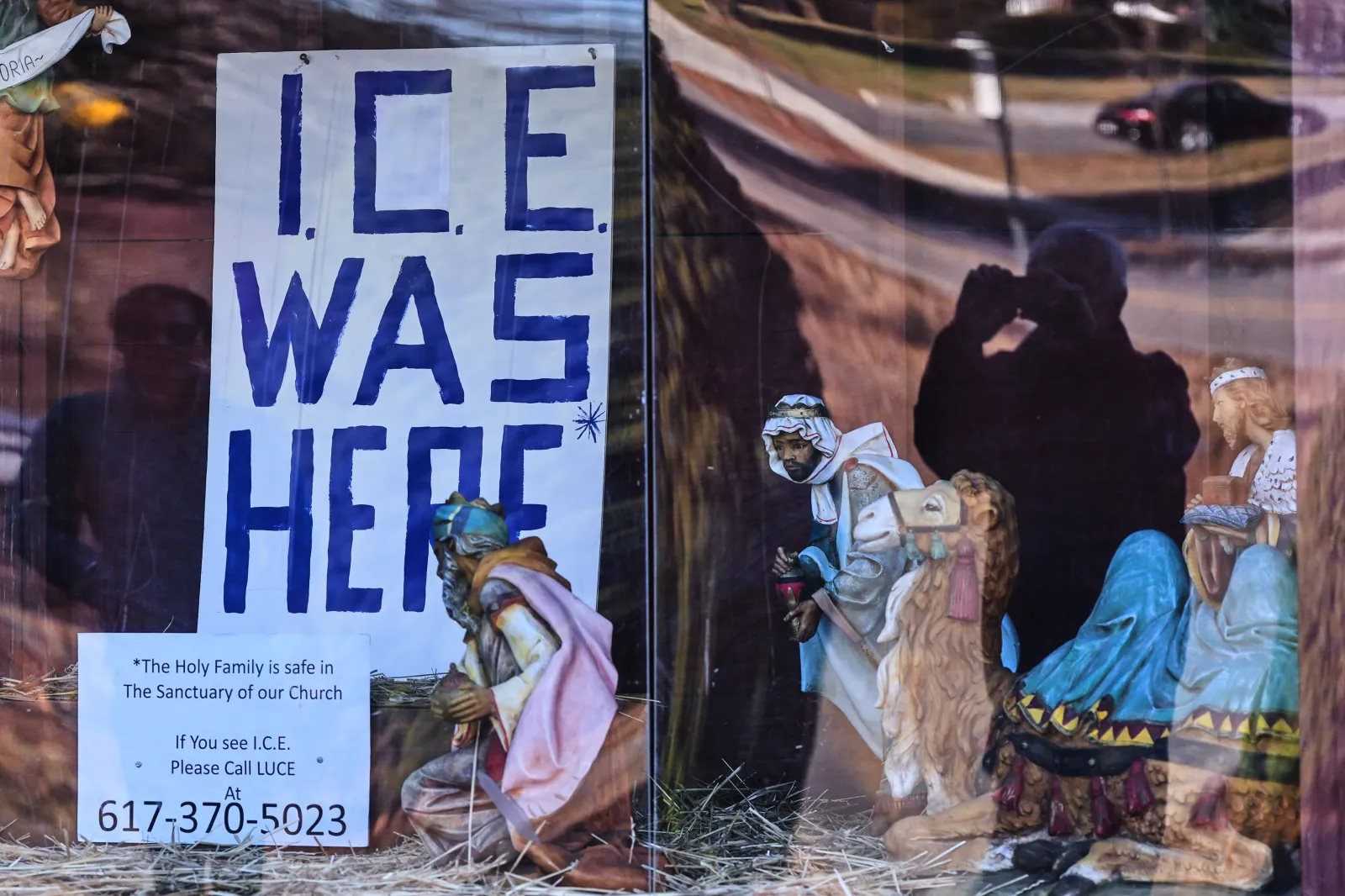
As Christians around the world prepare for Christmas—a celebration of Jesus Christ’s birth and a call to embody his teachings of love, peace, justice and service—it’s worth remembering that Jesus began life as a refugee as the Holy Family sought safety as strangers in a foreign land.
At the same time, America’s promise of refuge is being tested as immigration rhetoric and enforcement grow increasingly violent, dehumanizing and legally questionable. In this moment, Catholic leaders have emerged with a clear moral appeal, urging the nation to reflect on our treatment of those seeking safety at our borders.
This is not a rejection of the law or national security. It is a call to protect the humanity of people who come here seeking a new life.
Read More on Opinion
...
I was raised in the Catholic Church, where I witnessed genuine kindness. I also saw people tolerate dehumanization outside church walls. That contradiction pushed me away from practicing, though teachings on mercy, humility and care for the vulnerable still shape me. That is why I am moved by the Church’s bold stance on immigration.
In October, Pope Leo XIV affirmed he would stand with U.S. Catholic leaders defending immigrants facing mass deportations. He called for “deep reflection” on the treatment of immigrants who “have lived for years and years and years, never causing problems,” yet now find themselves at risk of deportation. His position echoes Pope Francis’ earlier warnings against “narratives that discriminate against and cause unnecessary suffering to our migrant and refugee brothers and sisters.”
Soon after, the U.S. Conference of Catholic Bishops issued a rare joint statement citing rising profiling, dehumanization, violence in immigration enforcement, fear in families facing separation and the loss of legal status. Pope Leo XIV backed their concerns, noting that while nations may regulate their borders, treating longtime residents “with instances of violence” is troubling.
Administration officials responded sharply. White House “border czar” Tom Homan said that “the Catholic Church is wrong” and the Pope should “leave enforcement to us.” Vice President J.D. Vance said the Church has “not been a good partner in common sense immigration enforcement.” Some rhetoric has mirrored far-right “remigration” movements, recasting exclusion as religious and patriotic duty.
Meanwhile, clergy advocating for immigrants have been pepper sprayed at peaceful protests, denied entry to detention centers, or arrested while praying outside federal buildings.
Immigrant communities have historically suffered under even the most progressive leaders. Japanese internment under Franklin D. Roosevelt exemplifies how fear can warp policy. But enforcement has become distinctly aggressive under this administration.
Research consistently shows that immigrants—including undocumented immigrants—are less likely than U.S.-born citizens to commit crimes. Though the administration claims to be targeting the “worst of the worst,” as of mid-November, more than 70 percent of people detained by Immigration and Customs Enforcement (ICE) had no criminal conviction. Long-time residents, veterans and even U.S. citizens have been wrongly detained or deported.
A majority of Americans agree that immigration benefits the country. Yet our legal immigration system is so complex and backlogged that “the right way” to immigrate can take years or decades. Fewer than 1 percent of people who want to move permanently to the U.S. can do so legally.
These, among other problems—including those exacerbated under the Biden administration—call for comprehensive, compassionate solutions.
Yet instead of addressing these failures, the Trump administration has laid traps within the system itself, detaining individuals at immigration courts, green card interviews and naturalization ceremonies, while also defying court rulings citing violations of the law and due process, threatening to denaturalize U.S. citizens, targeting those with protected status, escalating bans on legal immigration and challenging long-understood constitutional protections of birthright citizenship.
The human consequences have been devastating. Human rights groups have documented torturous conditions at detention facilities, as well as medical neglect that has included pregnant and postpartum women. At least 20 people have died in ICE custody this year—the highest number in decades—and more immigrant children have entered into the federal shelter system than the previous four years combined. Deportations have also sent migrants to countries where they face threats of violence and torture.
Public opinion, however, is beginning to shift. Latino voters, including many who supported Donald Trump in 2024, now mostly disapprove of the administration’s approach to immigration. While most support deporting individuals with serious criminal records, few support deporting all immigrants who are here illegally.
I no longer sit in the church pews each Sunday. But as I watch faith leaders pray outside detention centers, stand with immigrant families and speak with moral clarity, I recognize the faith I grew up with—a faith that insists every person is created in the image of God, and that our laws should reflect that truth.
Christians and people of goodwill will disagree about the specifics of immigration policy. But human dignity is never up for debate. Catholic leaders offer the nation that vital reminder during this season of reflection.
Brian Edsall is a photographer and writer whose work primarily explores dehumanization and social justice. His work can be viewed at BrianEdsall.com and on Substack.
The views expressed in this article are the writer's own.
View 0 Comments
Submit Correction
View Editorial & AI Guidelines