...

By Newsweek Editors
0
Share
Newsweek is a Trust Project member
See more of our trusted coverage when you search.Prefer Newsweek on Googleto see more of our trusted coverage when you search.
The Illinois Democratic primaries delivered a mixed verdict on the clout of the American Israel Public Affairs Committee (AIPAC), one that should unsettle both sides of the party’s Israel debate.
The results suggested limits to AIPAC’s power. They also showed that those limits do not amount to irrelevance.
The money remains enormous and the infrastructure formidable. But the political returns are increasingly uneven, and in some races heavy spending appeared to risk backlash.
Read More on Analysis
In Chicago‑area races that became a national proxy fight over Israel, candidates targeted by AIPAC‑aligned spending still found paths to victory. Several AIPAC‑backed bets, meanwhile, fell short despite millions of dollars in outside advertising.
The clearest example came in the open‑seat race to replace longtime Representative Jan Schakowsky.
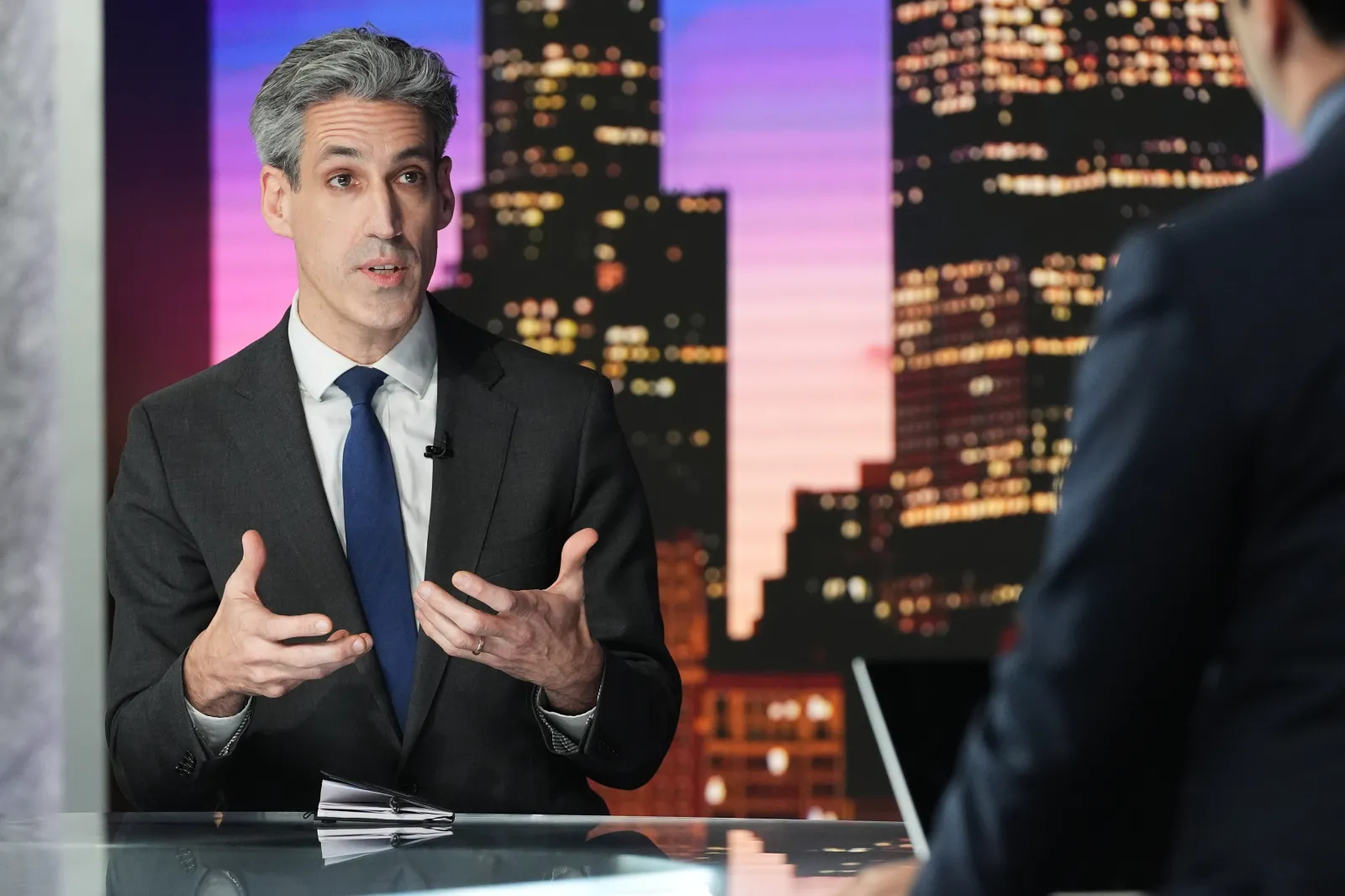
Evanston Mayor Daniel Biss, who wants the U.S. to stop arming Israel and recognize a Palestinian state, won a crowded Democratic primary that included progressive influencer and Palestinian American critic of Israel Kat Abughazaleh and state Senator Laura Fine, AIPAC’s preferred candidate.
An AIPAC‑aligned group poured more than $5 million into the race and shifted its late strategy, pulling anti‑Biss attacks and refocusing on Abughazaleh, amid concerns that hammering Biss could backfire by boosting the more outspoken critic.
It didn't work. Biss, the son of an Israeli mother whose parents survived the Holocaust, finished first and Abughazaleh came second, pushing Fine into third.
Across Illinois, the broader pattern was similar. AIPAC's allies won victories in the 2nd and 8th districts, but faced defeats in high‑spend contests like the 7th and the 9th.
AIPAC is not finished in Democratic politics. But it is operating on far tougher terrain. Israel has stopped functioning as a consensus cue inside the party, and heavy spending increasingly carries reputational costs with primary voters.
Money Still Matters
AIPAC's core advantage—cash, and the ability to deploy it quickly—remains real.
AIPAC-aligned spending in several Illinois House primaries approached $22 million, according to Politico, as pro-Israel groups turned the state into an early 2026 battleground.
In many cases, the outside money eclipsed what candidates could spend themselves.
Across four Chicago-area Democratic primaries, outside groups spent more than $21.6 million on broadcast, radio and digital ads, compared with about $13.1 million by the candidates, according to NOTUS, citing AdImpact.
The imbalance matters because modern primaries are low‑turnout, attention‑scarce affairs where late ad saturation can shape perceptions quickly, especially in crowded fields.
The Illinois 9th District race, with more than a dozen Democrats competing for a rare open seat, was a textbook case: Fragmented votes, high uncertainty, and a narrow window in which paid communication could define candidates before voters did.
But Illinois also underscored a second truth. Money both matters and provokes backlash.
AIPAC‑linked entities increasingly relied on affiliated or newly created groups, many of which avoided highlighting Israel in their branding or ad content.
The strategy reflects tactical sophistication, but it has also fueled intra‑party criticism over transparency and "dark money," reinforcing voter suspicion of outside interference and damaging candidates the efforts are supposed to help.
Israel Still Mobilizes Donors
Even as public opinion shifts, Israel remains one of the few issues capable of rapidly mobilizing high‑dollar donors and super PAC networks. It remains true in Democratic primaries, where foreign policy rarely becomes decisive without an external catalyst.
Illinois provided one. The unresolved Israel‑Gaza war loomed over the races, now compounded by the U.S.-Israel war with Iran.
The result was a magnet for pro‑Israel outside groups, allied donor ecosystems, and strategic spending aimed less at persuasion than at candidate selection.
AIPAC’s political operation sought to shape outcomes largely through nearly $22 million in spending that often avoided explicit Israel messaging in an implicit recognition that the issue itself can be politically radioactive with key Democratic constituencies.
AIPAC’s super PAC reserved major ad buys, while other groups viewed by critics as aligned with AIPAC poured in additional spending that was difficult to trace in real time due to disclosure rules.
The donor mobilization was also strategic. AIPAC has said it intends to be involved in dozens of races in 2026. Illinois was about more than Illinois. It was a signal to campaigns nationwide about the potential costs of being labeled hostile to Israel in a Democratic primary.
Democratic Voters Are No Longer Reliably Moved
But the Illinois results also showed the limits of translating money into obedience, especially when the spending itself becomes the story.
In the 9th District, AIPAC‑aligned groups spent heavily, yet Biss still won, despite being targeted early and despite a late tactical pivot.
The lesson is that money can’t always override other factors such as candidate fit, endorsements, local credibility, and backlash when voters perceive an outside actor trying to buy a seat.
AIPAC‑backed candidates prevailed in some districts. But in the two races where it reportedly spent the most, its preferred candidates lost, suggesting diminishing marginal returns at the very top end of investment.
The controversy itself has become politically salient. The proliferation of generically named PACs allows campaigns to execute AIPAC‑aligned strategies while avoiding the AIPAC label, a tacit acknowledgment that the brand can now be as much liability as asset.
This is the new dynamic. In Democratic primaries, AIPAC’s brand can function as both accelerant and irritant.
It can fund a flood of messaging to support campaigns. It can also hand opponents a ready‑made argument about special interests, dark money, and external interference, particularly potent in anti‑establishment races.
Israel Shifting From Consensus to Fault Line
For decades, the U.S.‑Israel relationship functioned as a rare bipartisan and intra‑party consensus. That era is fading.
Illinois highlighted a party in which Israel increasingly acts as a sorting mechanism, helping to define who is mainstream, who is progressive, and which candidates are acceptable to which donor networks.
Public opinion data reinforce that shift. Pew Research Center found in late 2025 that 59 percent of Americans held an unfavorable view of the Israeli government, while the share saying Israel was "going too far" in Gaza rose to 39 percent.
Recent Gallup polling shows sympathies approaching parity or beyond: 41 percent of Americans say they sympathize more with Palestinians, compared with 36 percent with Israelis—a reversal driven largely by Democrats and independents.
Among Democrats, skepticism toward Israel's government and military campaign in Gaza has grown sharply, increasing pressure on candidates to articulate positions on aid conditionality, ceasefires, and human‑rights standards.
About two-thirds of Democrats say their concerns lie more with the Palestinians, per Gallup, while only about two in 10 sympathize more with the Israelis. Just a decade ago, about half of Democrats sympathized more with the Israelis and only about one-quarter sympathized with the Palestinians.
Illinois also showed how quickly Israel can become a proxy for other Democratic tensions: Generational change, donor realignment, and the clash between movement politics and institutional power.
In that sense, AIPAC’s interventions may be accelerating the very transformation they aim to prevent, turning Israel policy from a quiet assumption into a loud, contested identity marker in Democratic primaries.
What the Shift Means
The broader shift matters politically for two reasons.
First, it weakens the ability of pro‑Israel organizations to rely on the general election center as a threat. The electorate is no longer uniformly receptive to maximal pro‑Israel messaging.
Second, it creates space, especially in Democratic primaries, for candidates to treat Israel as one issue among many, rather than a third rail where deviation guarantees punishment.
None of this means Israel is about to become politically toxic everywhere, or that AIPAC's spending machine is suddenly irrelevant. Illinois proved the opposite: The money will keep coming, and it will continue to shape races at the margins.
But the lesson for both Democrats and AIPAC is sharp. As public opinion shifts, influence becomes harder to purchase without backlash.
In a party already primed to distrust dark money and special‑interest branding, efforts to enforce issue discipline through outside spending now carry real political costs.
Sometimes, they even produce the inverse of the intended result.
Hey gang, Carlo Versano here. I hope you enjoyed this article. As Newsweek's Director of Politics and Culture and editor of the 1600 newsletter, I'm keen to hear what you think. Now, Newsweek is offering a new service to allow you to communicate directly with me in the form of a text message chat. You can sign up and get a direct line to me, as well as the reporters who work for me. You can shape our coverage.
As a Newsweek member, we're offering this service to you for free. You can sign up below, or read more about how it works here. Let's talk!
View 0 Comments
Submit Correction
View Editorial & AI Guidelines