
...

By Ian Randall
Deputy Science Editor
0
Share
Newsweek is a Trust Project member
See more of our trusted coverage when you search.Prefer Newsweek on Googleto see more of our trusted coverage when you search.
Volcanic eruptions may continue to plague Iceland's most populated region for years or even decades to come.
That is the warning of an international team of geologists, including researchers from the Universities of Oregon and California at San Diego, after studying the series of eruptions that began on the Reykjanes Peninsula in 2021.
Their analysis has revealed that all the recent eruptions have been fed from a shared magma reservoir lying some 6½ miles beneath the volcano Fagradalsfjall—one topped up by material from deeper down into the mantle.
Read More on Science
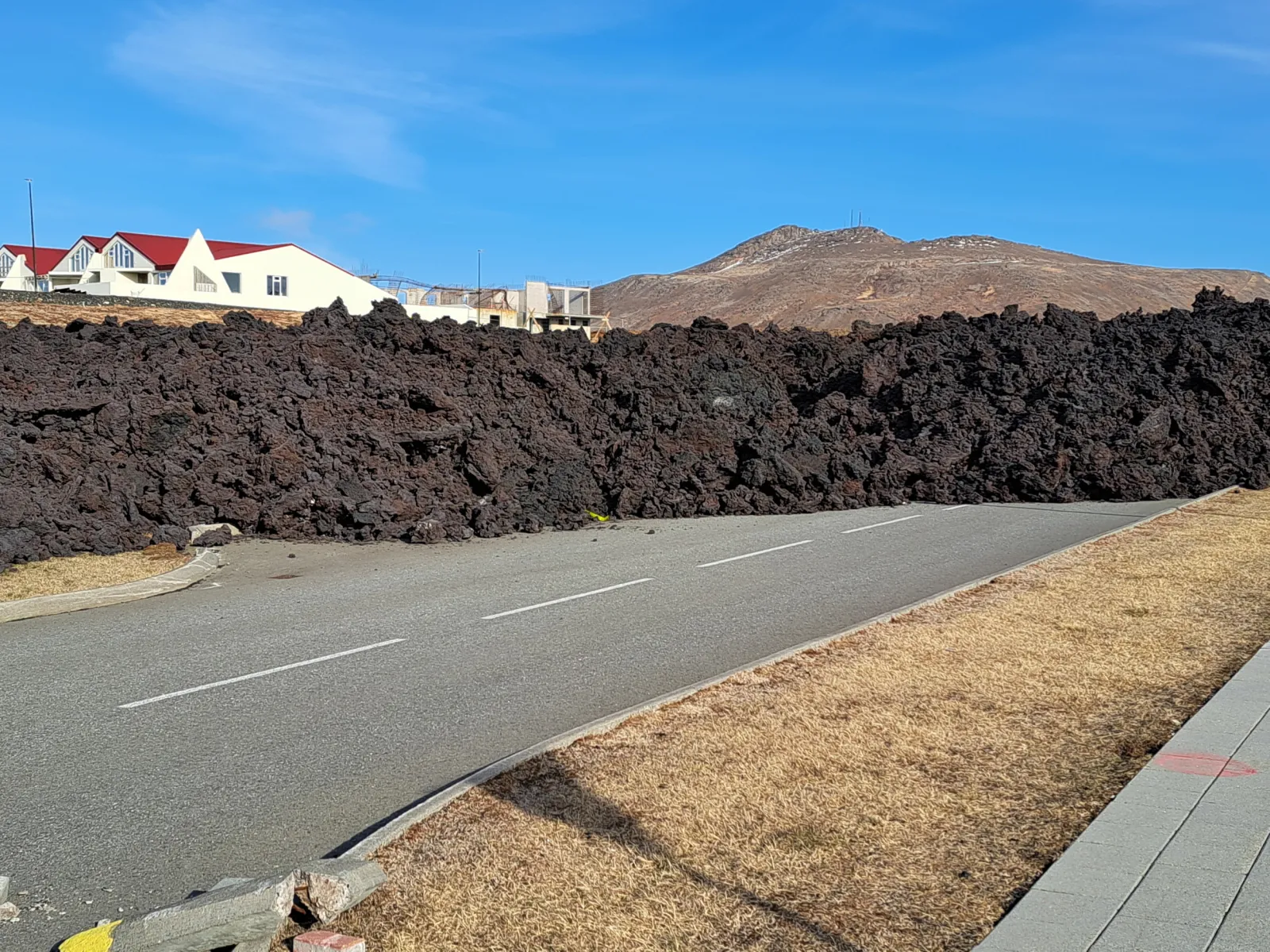
Given this, they expect more moderately sized eruptions of the kind that have forced the repeated (and, for some, ultimately permanent) evacuation from the town of Grindavík and neighboring areas over recent months.
...
Iceland experiences volcanic activity thanks to both its location on the Mid-Atlantic Ridge, where the Eurasian and North American tectonic plates are spreading apart, and above a mantle hotspot—both of which cause magma to well up toward the surface.
In fact, the entire island we see today has been built up by successive volcanic eruptions that began some 20 million years ago.
In recent history, the entirety of Iceland has faced volcanic eruptions only about once every three to five years. Since 2021, however, lava has spewed from eight fissure eruptions on the Reykjanes Peninsula alone—a region that is home to a whopping 70 percent of the nation's population.
"This pattern is likely to continue into the future, posing considerable risk to the local population and to important infrastructure," said study author and petrologist professor Valentin Troll of Sweden's Uppsala University in a statement.
Alongside the urban areas of Grindavík, Keflavík and Greater Reykjavík, Troll said, future eruptions could threaten Iceland's only international airport, several geothermal power plants and a popular tourist attraction—the Blue Lagoon geothermal spa.
"Eruptions of this kind typically quietly ooze out lavas that move with pedestrian/bicylcle speed, and thus there is likely more hazard to property/infrastructure than to humans," paper author and volcanologist professor Ilya Bindeman of the University of Oregon told Newsweek.
While channels and barriers can be built to redirect lava flows, he noted, "predicting where the fissure will happen is difficult, so some losses are inevitable."
...
In their study, the researchers analyzed both recordings of recent earthquake activity on the Reykjanes Peninsula and samples of lava, from which they were able to shine light on the geological processes behind the recent eruptions.
"A comparison of these eruptions with historical events provides strong evidence that Iceland will have to prepare and be ready for this volcanic episode to continue for some time—possibly even years to decades," Troll said.
Until recently, the Reykjanes Peninsula had lain volcanically dormant for 800 years. Before this, however, it experienced a volcanic era that lasted for centuries.
That previous episode, Troll told Newsweek, is thought to have been caused by tectonic plate movements opening up cracks and fissures in the crust that allowed magma to ascend from the depths.
"An episode of more intense plate movement may have been responsible for the episode of increased volcanism 800 years ago," the petrologist explained.
He added: "It would appear that, possibly, another such episode has now begun."

...
Today, the peninsula region is host to eight different volcanically active sites. But the exact nature of the magma reservoirs and plumbing systems that feed them is not entirely clear.
Comparing the material erupted by one volcano on the peninsula between 2021 and 2023 with that from a different volcano, the team found a matching chemical fingerprint—suggesting both share a single magma source.
Using the earthquake activity to probe the subsurface, much like ultrasound is used in hospitals to image the body, the researchers found signs of this magma reservoir at a depth of around 5½ to 7½ miles deep.
This reservoir, they said, is in turn fed by molten rock rising up from the hotspot, meaning that, in total, hundreds of square miles of lava could end up being erupted over the lifetime of the volcanic complex.
Although the researchers are certain more eruptions are on the way, the exact pattern of future episodes remains to be determined.
"Nature is never simple. We don't know how long and how frequently it will continue for the next ten or even hundred years," said Bindeman.
He added: "A pattern will emerge, but nature always has exceptions and irregularities."
With their initial study complete, the researchers said, plans are being explored to drill into the volcanic sites to acquire more information on the eruption processes.
The relatively runny composition of the magma that wells up beneath Iceland means that its volcanoes tend to be less volatile and explosive than those seen elsewhere in the world—making it the perfect "natural laboratory" where scientists can more safely get up close to active eruptions.
"When you witness a volcanic eruption, you can feel that these are the massive forces of nature, and you yourself are very small," said Bindeman.
He concluded: "These events are ordinary from the geological scale, but from the human scale, they can be devastating."
The full findings of the study were published in the journal Terra Nova.
Do you have a tip on a science story that Newsweek should be covering? Do you have a question about volcanoes? Let us know via science@newsweek.com.
Update 06/26/24, 10:00 a.m. ET: This article was updated with additional comments from Ilya Bindeman and Valentin Troll.
View 0 Comments
Submit Correction
View Editorial & AI Guidelines