10
Loading video...

By Billal Rahman
Immigration Reporter
0
Share
Newsweek is a Trust Project member
See more of our trusted coverage when you search.Prefer Newsweek on Googleto see more of our trusted coverage when you search.
The Trump administration detained 51 immigrants who were in the United States illegally and removed hundreds of commercial drivers and vehicles from service during a three-day enforcement operation across four Midwestern states.
The Department of Homeland Security (DHS) and Department of Transportation announced Tuesday that Operation Highway Shield, a three-day enforcement initiative conducted from July 28 to July 30 in Illinois, Indiana, Iowa and Ohio, resulted in the detention of 51 immigrants, including 21 drivers holding non-domiciled commercial driver's licenses issued by California and New York. Federal authorities also placed 766 drivers and vehicles out of service, arrested 86 operators on allegations including road rage and domestic violence, issued 36 violations for failing English-language proficiency tests and recovered nearly $1 million in stolen cargo.
The enforcement action comes as the Trump administration tightens licensing standards for some noncitizen drivers and increases scrutiny of the trucking industry's immigrant workforce, expanding its effort to reshape the industry through immigration enforcement and new licensing requirements for foreign-born drivers. It's the second event of its kind; A separate Florida phase of Operation Highway Shield conducted in March resulted in more than 3,300 inspections, with 176 drivers placed out of service, including 54 cited for English-language deficiencies, while 42 people were taken into federal immigration custody and 35 were arrested on criminal-related charges.
Read More on News
DHS Secretary Markwayne Mullin said the operation in late July in the Midwest removed more than 800 "dangerous truckers" from U.S. roads.
"I want to thank Secretary Duffy and our state and local partners for working with us to protect innocent lives from illegal aliens and other dangerous drivers on our highways," Mullin said in a press release.

...
Crackdown Expands
Non-domiciled CDLs are not a recent creation. Federal regulations dating to the late 1980s allowed certain foreign-domiciled drivers to obtain U.S. commercial licenses, with the system becoming fully operational when nationwide CDL requirements took effect in 1992.
Why Did the Trump Administration Crack Down on CDLs?
The administration has pointed to serious and fatal crashes involving immigrant truck drivers as evidence that tougher licensing standards and increased enforcement are needed.
Transportation Department officials said in February that at least 17 fatal crashes in 2025, resulting in 30 deaths, involved non-domiciled commercial drivers who would no longer qualify for licenses under the administration's revised rules.
Related Story
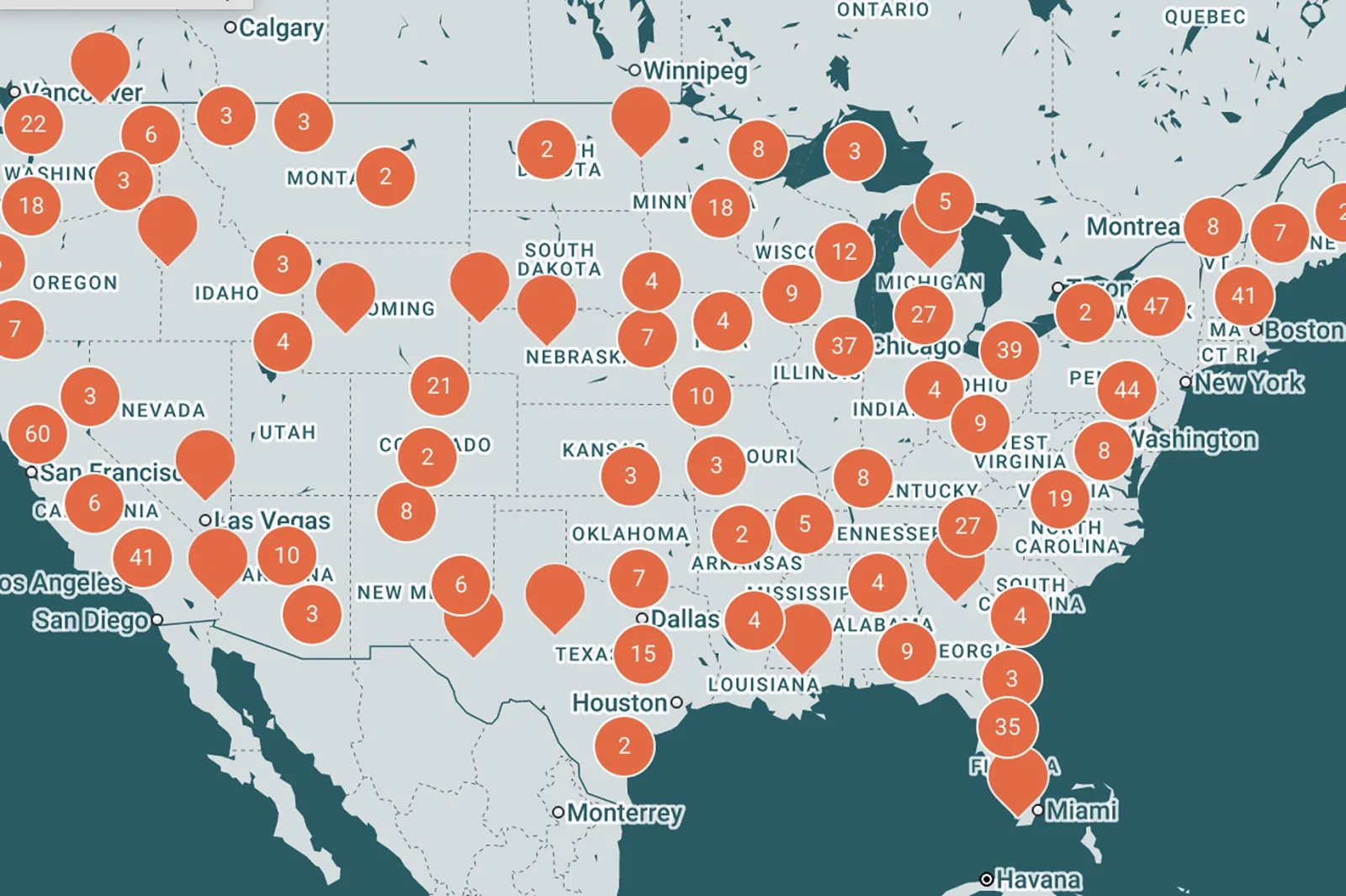
Map and List of Cities Hosting Nationwide Anti-Trump Protests on Labor Day
“Every life lost from an illegal trucker behind the wheel of a big rig is a completely preventable tragedy – and this administration will not stand for it,” U.S. Transportation Secretary Sean P. Duffy said in a press release on Tuesday. "Our new partnership with DHS builds on President Trump’s progress to secure our roads, eliminate fraud, and restore the integrity of trucking in America. I want to thank Secretary Mullin for collaborating with us on this mission as we continue to crack down on unqualified and unvetted foreign drivers. If you continue to illegally operate a big rig – your days on America’s streets are numbered.”
Who Did The CDL Crackdown Affect?
Actions earlier this year have led to the removal of Earlier this year, the Federal Motor Carrier Safety Administration implemented new restrictions on commercial driver's licenses held by certain noncitizens, limiting eligibility for several immigration categories that had previously been able to obtain non-domiciled CDLs.
The changes affected many asylum seekers, refugees and Deferred Action for Childhood Arrivals recipients, as well as some workers authorized through Employment Authorization Documents, commonly known as work permits. The rule took effect in March. Eligible categories include H-2A agricultural workers, H-2B temporary workers and certain E-2 treaty investors.
Related Story

Trump To Fast-Track Truck Licenses For Veterans–Who Is Eligible?
In April, Trump signed an executive order directing federal transportation authorities to enforce English-language proficiency requirements for commercial drivers and review licenses issued to foreign nationals authorized to work in the United States.
Advocates say the change has been felt most acutely by legally authorized workers who were previously eligible for non-domiciled CDLs and used them to secure jobs in the transportation sector. Those workers now face additional barriers to entering or remaining in an industry that has long provided opportunities for newcomers to the U.S. workforce.
Immigrants play a significant role in the U.S. trucking workforce. Foreign-born workers account for roughly 18 percent of employed truck drivers nationwide, according to federal labor statistics. The number of foreign-born truck drivers more than doubled between 2000 and 2021, growing to more than 720,000 from about 316,000.
Industry Pushback
The administration's policies have also drawn legal and industry opposition. A coalition of noncitizen drivers, labor unions, advocacy groups and 21 states has challenged the federal government's restrictions on non-domiciled commercial licenses, arguing there is insufficient evidence linking immigration status to highway safety risks.
In court filings, challengers have argued there is "no rational connection" between non-domiciled status and unsafe driving and contend that federal regulators have not demonstrated that broadly excluding noncitizen drivers would improve public safety.
Transportation Secretary Sean Duffy said in a press release on July 16 that the administration had removed more than 24,000 commercial drivers from the road for failing English-language proficiency requirements, prompted states to revoke more than 28,000 commercial driver's licenses that federal officials said were improperly issued to foreign drivers, and removed more than 9,500 training providers from the Federal Motor Carrier Safety Administration's registry.
Some trucking executives have warned that increased enforcement could further strain the industry's labor pool. Vadym Shpak, an Illinois trucking company owner whose workforce is largely made up of Eastern European immigrants, told industry publication Transport Topics in December of 2025 that experienced drivers were being removed from service following English-language inspections.
“These are good drivers, experienced drivers, but they get pulled over and the officer says their English isn’t good enough,” he said. “And you know what happens? I have to pay for everything.”
On July 15, Trump said his administration would take action to remove migrant truck drivers from U.S. roads and replace them with military veterans.
Related Story

VA Update: How Trump Freedom Haulers Plan May Benefit Thousands of Veterans
What's Next
Federal officials have indicated that Operation Highway Shield is part of a broader, ongoing enforcement campaign.
The Trump administration is also expanding coordination between the Department of Transportation, DHS, Immigration and Customs Enforcement (ICE) and other agencies as it targets what officials describe as unqualified and unlawfully operating commercial drivers. Federal regulators have separately announced efforts to investigate alleged fraud at commercial driver's license training schools and increase scrutiny of licensing practices involving non-domiciled CDL holders.
Those detained during the operation could face immigration proceedings, while drivers and carriers placed out of service may be required to address safety violations before returning to the road. Industry groups and immigration advocates are expected to continue closely monitoring the administration's enforcement strategy and its potential impact on trucking workforce shortages and freight operations nationwide.
Contact Newsweek editors on this story: Ben Kelly and Gray R. Thomas
View 0 Comments
Submit Correction
View Editorial & AI Guidelines