10
Loading video...

By Kevin Powell
Writer
0
Share
Newsweek is a Trust Project member
See more of our trusted coverage when you search.Prefer Newsweek on Googleto see more of our trusted coverage when you search.
I do not even know where to begin. I just know Hurricane Katrina, and that horrible aftermath, remains one of the saddest chapters of my life.
I was in New York, at home in my beloved Brooklyn, late August 2005, when I heard about the storm striking New Orleans. Not uncommon, since that was traditionally hurricane season. What was mind-boggling, frightening, was learning, subsequently, that levees had been breached—broken—flooding huge swaths of the Crescent City.
...
Read More on Opinion
Then came the images, mainly poor, working-class Black residents of New Orleans: on roofs screaming and waving makeshift signs for help; trying to walk, swim, or float to safety themselves; the dead people and the dead pets, merely there, unable to survive the raw combination of sweltering heat, human indifference, and severe hunger after days of waiting, praying.
As a humanitarian from my teen years forward, I decided to do two things immediately, as I could no longer watch and wait. I co-organized a big relief drive for Gulf Coast supplies, with my dear friend April Silver, at a popular nightclub in Manhattan. We wound up filling two 53-feet trucks that night. The very next morning, two pals, including filmmaker Lisa "Cynical" Smith and I flew to Baton Rouge, met a colleague I knew, then drove into New Orleans as the last inhabitants were evacuating, or refusing to exit for fear of losing their homes.
It was widespread pandemonium. Military helicopters hovered above, police and soldiers on the streets with pointed guns, debris everywhere. I both feared getting shot and getting arrested, because I, we, were Black, and there amid the wild rumors of looting, and residents being gunned down indiscriminately.

...
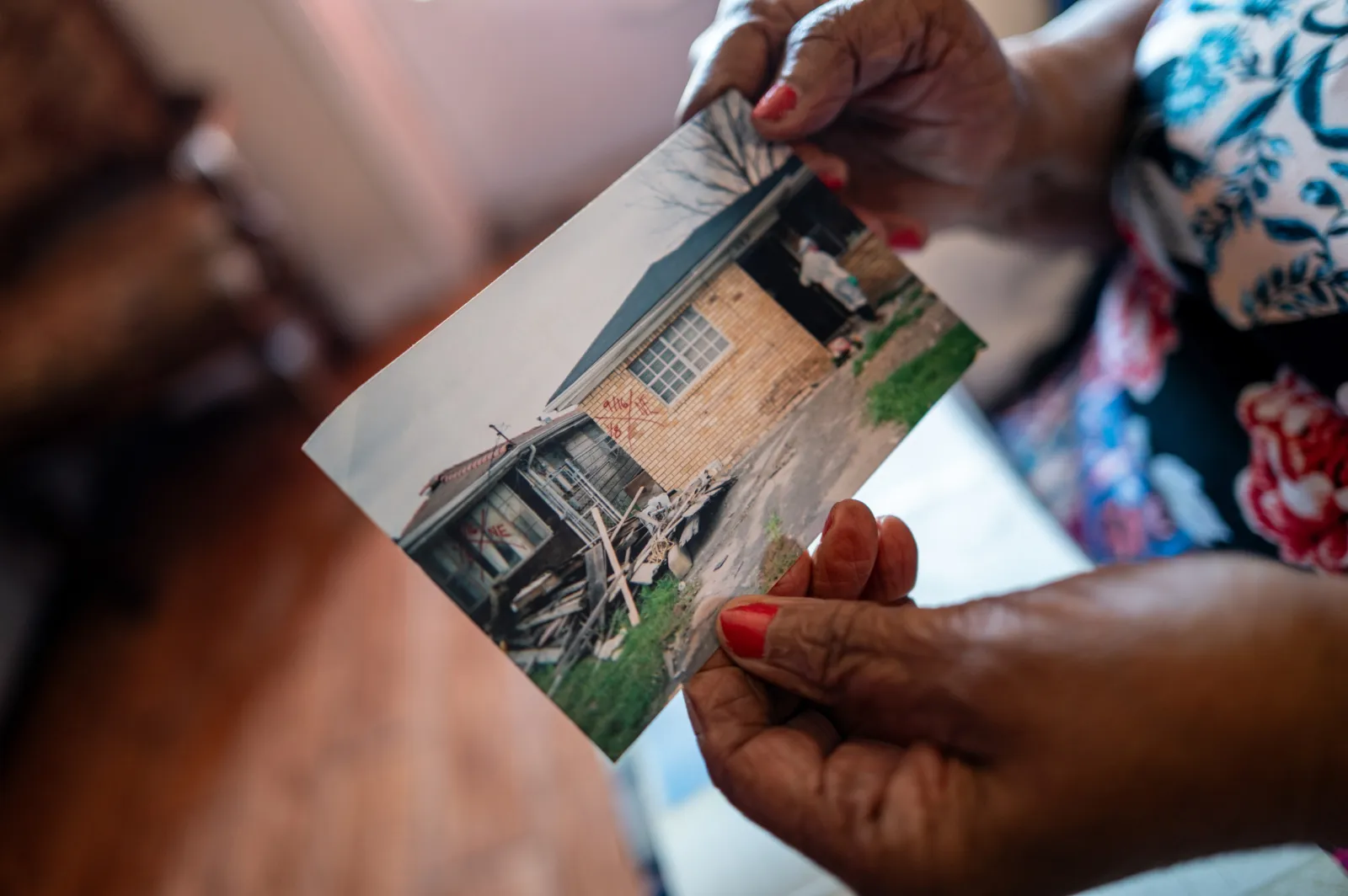
But none of this prepared us for one of the most devastated areas, the Lower 9th Ward of New Orleans. The sour smell of death was inescapable, as were remnants of what was left behind: discarded food bags and containers, soiled clothing, starved, bone-thin dogs, and cars, minivans, and SUVs submerged in dirty brown water.
I cried, and wailed again when we made our way from New Orleans back to Baton Rouge, and on to Houston to speak with survivors. Several took great offense to the media referring to them as "refugees," preferring to say they were American citizens who had been inhumanely abandoned.
One story especially ripped me apart as I listened, for three painful hours, in a congested hotel room. Mother, father, five children, and a 69-year-old grandmother. As the kids and grandma sat stoically, the shock etched across their worn eyes, the mother and father relayed how they were extremely torn whether to stay or to leave. Like countless Americans with meager resources, options were limited. Leave, and risk being arrested for driving on the interstate. Stay, and they could have died. This is why many, including this family, made their way to the roof, via the attic. The father had a massively fresh gash, from his right wrist, up across his whole hand, from banging and breaking iron and glass, to save his kinfolk. Grandmother did not want to go, as I had heard same about other elders. They'd been there forever, and were super-paranoid their property would be taken; and some, like this grandmother, whispered she had survived Hurricane Betsy in 1965, and was at peace with waiting for death to meet her in her bed.
Miraculously, the entire clan made it to the roof, and were eventually rescued. I have wondered long and hard whatever became of that family, of every family, the traumas they would have to endure for the remainder of their lives, because of the broken levees, because of the slow and misguided responses of the mayor, the governor, and the administration of former President George W. Bush.
Within a few months I and other leaders organized over 700 college students from across America, in the spirit of the Civil Rights Movement, to do something we coined "Katrina On The Ground." It was our attempt to help. That notwithstanding, I sobbed much, and fell into a lengthy depression that would affect me for a few years, because of this experience.
That heavy sadness came rushing back to me when my wife and I recently watched the excellent and powerfully detailed Hulu docu-series, Hurricane Katrina: Race Against Time, directed by Traci A. Curry and executive produced by Ryan Coogler.
Hurricane Katrina survivors know the horror of witnessing their lives wash away. Feeling like they are treated like criminals, non-human beings—worse than animals. The considerable displacement, the legions of native-born New Orleanians I have met across the United States since, who were forced out in 2005, and have never returned. The slick gentrification of those working-class Black communities under the guise of development. Yet, too, the hope and resiliency of a people who have given us jazz, America's singular classical music, and an everlasting culture you can only find in a place like New Orleans, to this day.
I have been back to New Orleans a few times since, it is different, although some have returned, and quite a few who make New Orleans what it is are still there. But it will never be like before, natives have said to me. When 9/11 happened, America rallied to support, yet the same did not, and has not, happened on that scale with and for the people of New Orleans.
Until it does, we shall never fully learn the lessons of Hurricane Katrina.
Kevin Powell is a Grammy-nominated poet, filmmaker, and author of 16 books, including The Kevin Powell Reader: Essential Writings and Conversations. He previously wrote a Newsweek cover story on Spike Lee. Kevin lives in Brooklyn, N.Y. Email him at kevin@kevinpowell.net
The views expressed in this article are the writer's own.
View 0 Comments
Submit Correction
View Editorial & AI Guidelines