...

By Lucy Notarantonio
Senior Reporter
0
Share
Newsweek is a Trust Project member
See more of our trusted coverage when you search.Prefer Newsweek on Googleto see more of our trusted coverage when you search.
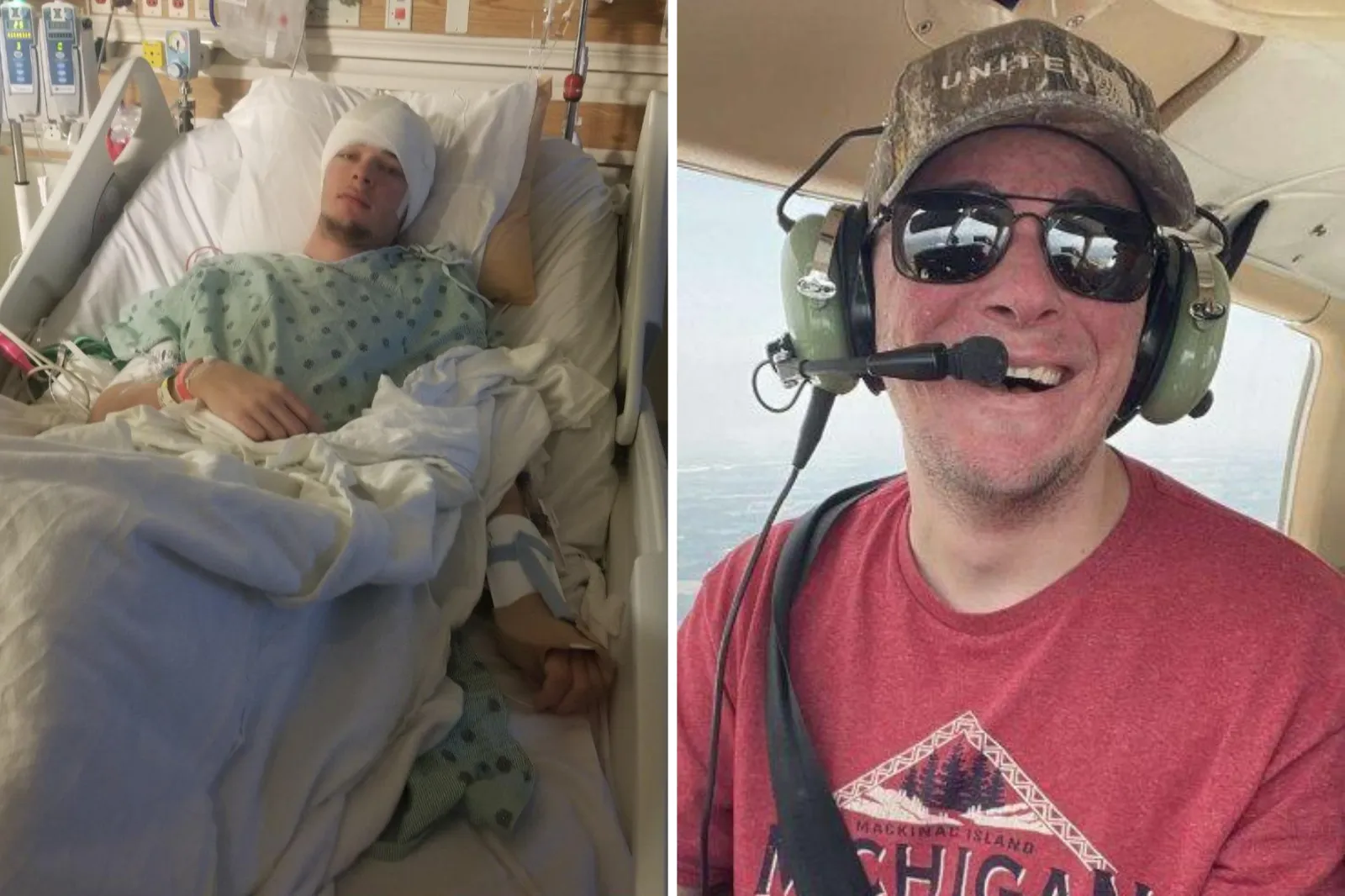
When Josh woke up one morning, his left arm jerking uncontrollably, he didn’t realize his life was about to change forever.
“I just assumed it was a vitamin deficiency or a muscle cramp,” the 27-year-old told Newsweek. “I was a pilot at the time, so I asked my doctor to take a conservative approach so it wouldn’t jeopardize my career.”
Days later, Josh, then 23, from Chicago, Illinois, would regain consciousness in a hospital bed to learn surgeons had removed almost the entire right frontal‑parietal lobe of his brain—roughly a third of it—after discovering a tumor.
Read More on Life
According to the National Brain Tumor Society, an estimated 1 million Americans are currently living with a primary brain tumor, and about 72 percent are benign.
“I remember being told I was on a liquids-only diet because I’d just had brain surgery,” Josh said. “I argued with the nurse because I thought it was impossible. I had regular checkups. Nothing was abnormal.”
...
A Subtle Symptom With a Serious Cause
He first noticed something was wrong when his left arm began moving rhythmically on its own.
The sensation persisted into the next day, prompting him to see his primary care doctor. The doctor called the movements “muscle spasms” but recommended an MRI.
At the time, Josh was scheduled to fly that evening but he knew it wouldn't be safe for him to do so. Worried about losing his medical clearance as a pilot, he phoned his employer and reported “COVID‑like symptoms” to buy himself time.
The same night, he sat on the sofa to play a video game and suddenly lost consciousness. When he came around, he felt strange but tried to stay calm until his wife returned home. He blacked out again shortly afterward—this time unable to stand or crawl—forcing him to dial 911.
A Violent Seizure in the Ambulance
The next thing he remembered was lying on a stretcher in the back of the ambulance as his left leg began to convulse.
"I requested the medic hold my leg down, this was followed by feeling a progressive wave of extremely tight muscle contractions and some of the worst pain I have ever felt," he told Newsweek.
Before losing consciousness again, he heard the medic reassure him: “It’s alright, buddy. You’re going to get through this.”
Josh remained unconscious for an extended period. His wife and family arrived at the hospital and were told he appeared lucid and was speaking to them—though he remembers none of it.
A Hidden Tumor the Size of a Soda Can
The next memory he retained came hours later, when a nurse woke him up and asked if he was hungry. Only then did Josh learn what had happened.
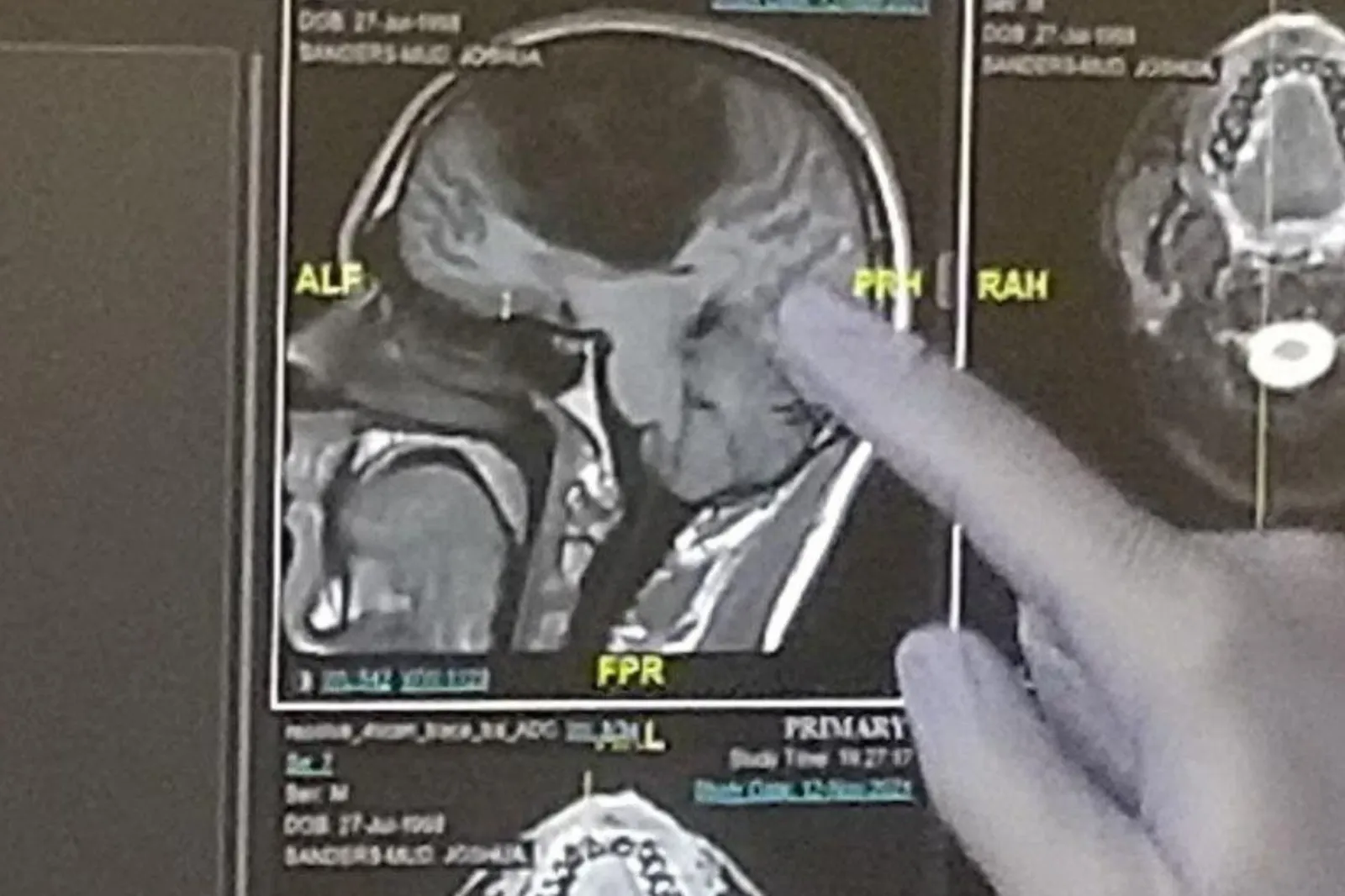
Doctors initially suspected a stroke but discovered he was experiencing repeated seizures caused by an enormous brain tumor measuring approximately 8 x 9 x 10 centimeters.
He was diagnosed with an astrocytomas, which is a type of tumor that grows from astrocytes and are the most common brain tumors in adults. According to the American Association of Neurological Surgeons (AANS), about 15,000 people in the U.S. are diagnosed each year, and men are affected slightly more than women.
Surgeons removed almost the entire right frontal‑parietal lobe to save his life.
...
Dr. Angela Bohnen, a neurosurgeon, told Newsweek: "The right FP region is responsible for the left motor system and spatial attention can adapt and assume the functions of this (left) hemisphere.
"If a tumor grows slowly, the patient’s brain might start to reorganize for recovery even before surgery, which could help explain why some people have recovered normal lives after major surgeries."
Bohnen, who works as chief of surgery at AdventHealth Littleton Hospital in Colorado, explained that secondary epilepsy from scar-tissue and scrambled neuro-message is frequent. Close observation is maintained with anti-seizure medications and follow-up visits to lessen the risk of seizures.
Bohnen explained the way someone recovers after brain surgery depends a lot on their age, how flexible their brain was before the operation, how much of the tumor could be removed, and the rehab they get afterward.
Modern techniques—like doing surgery while the patient is awake and using brain‑mapping tools—help doctors avoid damaging important areas while removing as much of the tumor as possible. It also shows how amazing the brain is at adapting and healing.
Learning to Move Again
The surgery left Josh temporarily unable to use the left side of his body. It took “weeks of rigorous therapy” to regain mobility. While he eventually recovered function, the diagnosis of epilepsy—and the loss of his aviation medical clearance—ended his career as a pilot.
Other than epilepsy, he said, “not much changed” in his daily life after recovery. But in December 2025, he was told cancer had returned and he is currently undergoing chemotherapy.
Despite his recent diagnosis, he continues to post his brain scan every year on Reddit to give other people in similar situations hope.
In December, he shared a photo of his brain scan captioned: "Over a third of my brain was removed," and racked up 77,000 upvotes and 5,000 comments—with many users wondering what happened.
One user said: "As someone who works in neuroscience, this is absolutely interesting."
Josh, who goes by user Mupster556 online, told Newsweek: "The internet is a dark pit for people with brain cancer so it's a chance for people to restore hope and talk with someone who's been through it instead of just seeing the statistics on how likely it is they will be dead in a certain amount of years."
View 0 Comments
Submit Correction
View Editorial & AI Guidelines