
By Mohammed Ibrahim Mohammed
Sudanese American Physicians Association
0
Share
Newsweek is a Trust Project member
See more of our trusted coverage when you search.Prefer Newsweek on Googleto see more of our trusted coverage when you search.
My life began to change forever on April 14, when my mother was injured by artillery bombardment in our home city: El Fasher, Sudan.
After a long night treating patients at Alsaudi Maternity Hospital, I awoke to a terrifying artillery bombardment. I was already living in a warzone, doing everything I could to care for my patients in a city ravaged for months by the Rapid Support Forces (RSF), during one of the deadliest wars in our country’s history. The screams outside revealed that my mother had been struck by RSF shrapnel.
...
Read More on Opinion
I provided my mother with first aid alongside my shocked father before rushing her to the hospital. She was hospitalized for a month—and thankfully, she survived. In the wake of the attack, my parents and four brothers decided to flee El Fasher to increase their chances of survival—leaving me facing an impossible choice.
I couldn’t bring myself to leave with them. How could I, when so many patients—my people—had no way out? This city was not just my workplace; it had been my home for all 28 years of my life. At the last checkpoint under Sudanese Armed Forces (SAF) control in the city we said goodbye. My mother almost wouldn’t leave without me.
By July, the ability to provide health care in El Fasher had nearly collapsed. The hospital was a constant target for RSF shelling and drone strikes. Seventy percent of our medical staff had already fled. We were left with only 11 doctors left to care for an entire city of 260,000 people—half of them children.
We worked endless shifts, our supplies dwindling to almost nothing, trying to hold back the tide of suffering literally with our bare hands, as we had to save personal protective equipment, such as gloves, for surgical operations. To dress standard wounds, we had nothing to use but napkins.
I will never forget the effort of my colleagues during that time to save lives. The strong will, solidarity and professional integrity were stronger than all of the obstacles, siege and war.
Finally, by late October, El Fasher was overrun by the RSF—the ultimate calamity. The city descended into chaos as people ran in every direction. I was among them, fleeing from my hospital toward a nearby university, hoping for safety.
An hour later, we saw people running back toward us, their faces etched with terror. They had tried to leave the city, only to find the RSF waiting, shooting at them. When we saw people gunned down before our eyes, we knew we had to move again. We headed toward El Fasher University’s School of Medicine. That journey was a nightmare; most of the people I was with did not survive.
When I finally reached the medical school—the very place where I had learned to heal—I found it destroyed. Countless dead lay where students once studied.
It took our group six hours to travel from there a single kilometer to the outskirts of the city. In small groups of about 200 people, we began our escape, moving in total silence. When we saw a car light, we would stop and lie flat on the ground. When it was safe again, we would touch each other's shoulders to signal it was time to move.
By morning, our group had disbanded, and as the sun rose, I found myself with a colleague on the road connecting Zamzam to Tawila. There, we encountered hundreds of RSF-affiliated fighters on camels and motorbikes. A desperate chase began. We were tired, hungry, thirsty and utterly desperate. They abducted us, and I spent two harrowing days in captivity, my fate uncertain, until my family managed to secure my release by paying a ransom.
I finally reached the relative safety of Tawila, heartbroken and exhausted. The Sudanese American Physicians Association (SAPA) field team welcomed me, along with four other doctors from El Fasher. Seeing the faces of colleagues who had stood with me in El Fasher earlier during the war was an indescribable relief. Leaving my city and my patients was the most difficult decision of my life.
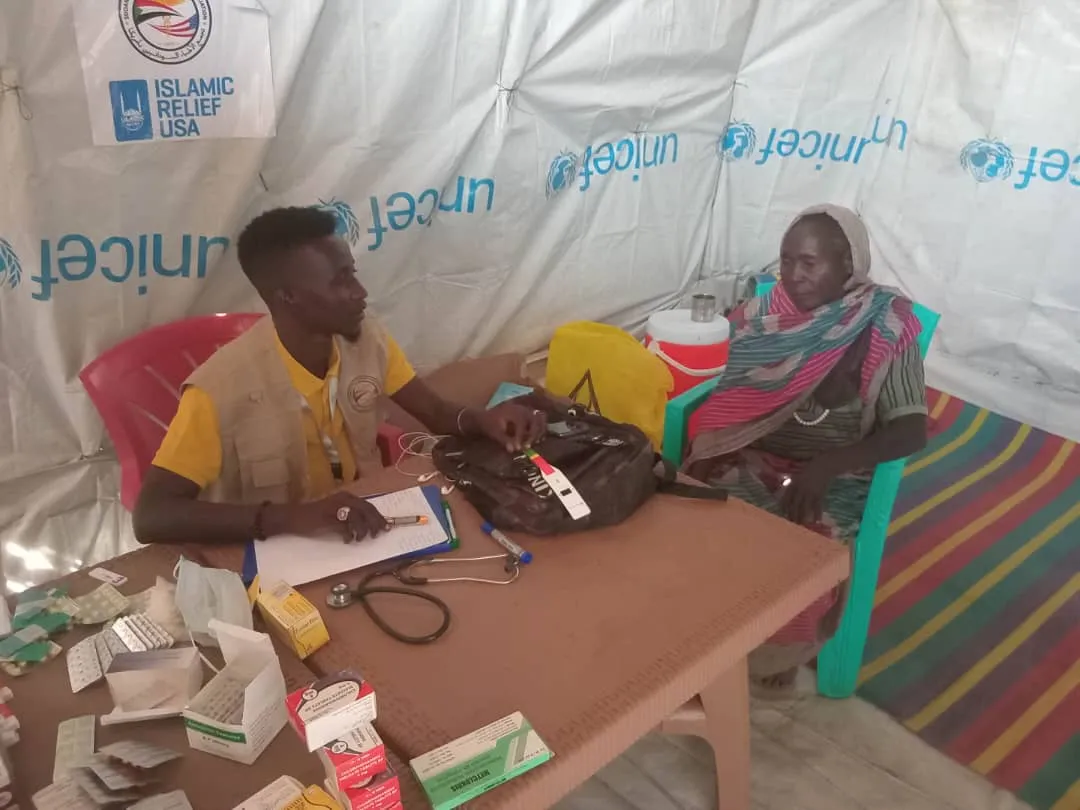
Now, I have joined SAPA's mobile clinics, providing care to newly displaced people from El Fasher, who arrive suffering terribly from hunger, illnesses and injuries. These people desperately need medical care and support—and like all Sudanese people, desperately need their human rights and dignity upheld.
I pray that the devastating conflict and violence will soon come to an end. Until it does, my colleagues and I will keep doing all we can to help the millions impacted. The war took my hospital, but it did not take my purpose.
Dr. Mohammed Ibrahim Mohammed is a general practitioner who worked at Alsaudi Hospital in El Fasher, North Darfur state, Sudan, until October 2025. He is now leading a Sudanese American Physicians Association mobile clinic team in Tawila, North Darfur state.
The views expressed in this article are the writer's own.
View 0 Comments
Submit Correction
View Editorial & AI Guidelines