10
Loading video...

By Alyce Collins
Senior Reporter
0
Share
Newsweek is a Trust Project member
See more of our trusted coverage when you search.Prefer Newsweek on Googleto see more of our trusted coverage when you search.
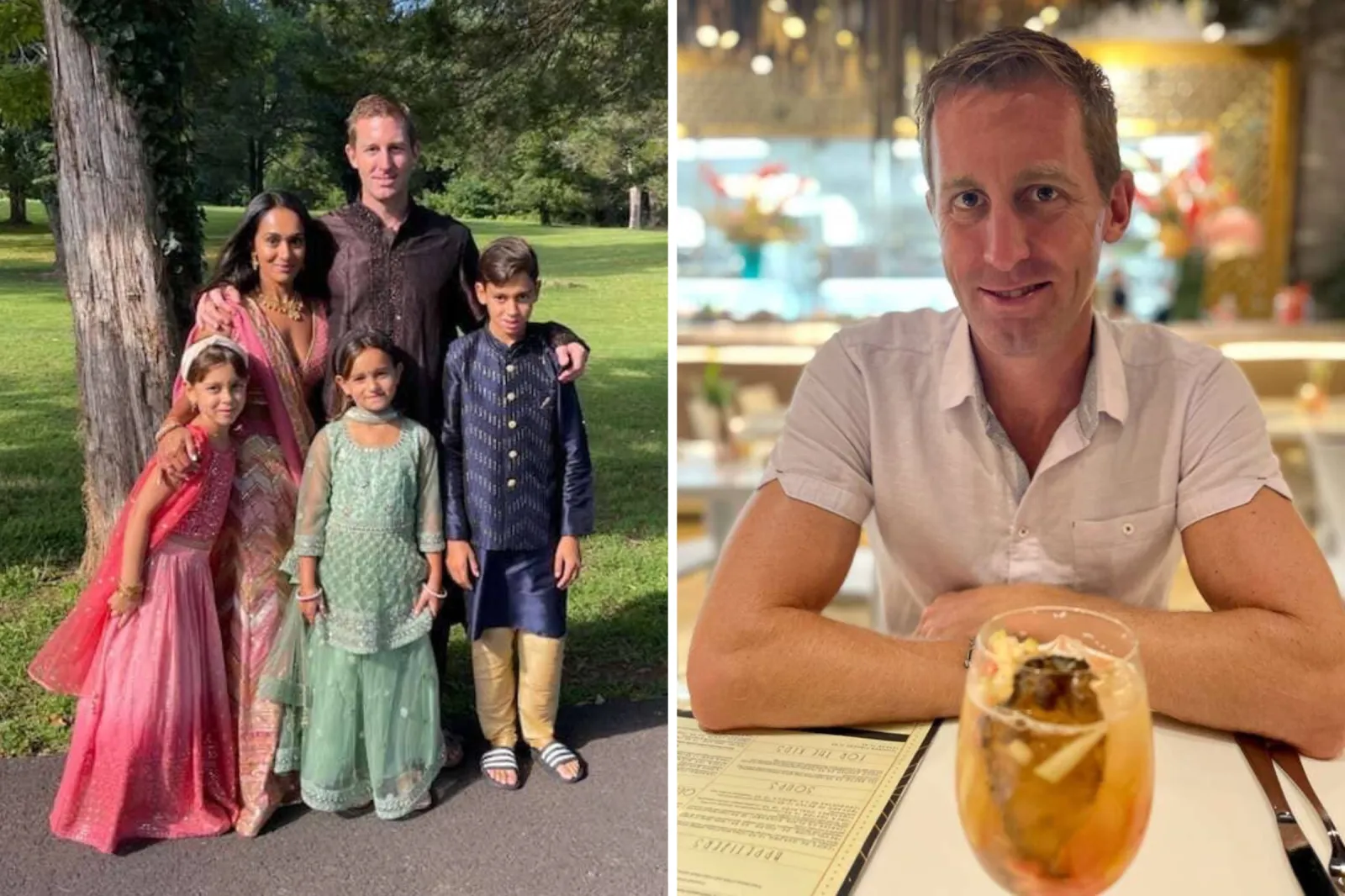
I always say to people that I married the "good on paper guy." Sean was a highly ambitious, talented orthopedic surgeon who was previously a lieutenant colonel in the army. He loved the outdoors, skiing, and more than anything; he loved being a dad to our three children.
He had everything a woman could want in a partner. He was a go-getter who could achieve anything he set his mind to but also humble enough to have a conversation with just about anyone. That is what I really admired about him.
We got married in June 2006 and built the most-beautiful family life together.
Read More on My Turn
...
In 2022, Sean and I had left the army, and we moved from Georgia to Washington State with our children, who were 10, 8, and 7 years old at the time. We were supposed to start our forever, but then our world was turned upside down.
On September 30, 2022, Sean took his own life.
I was in complete shock, as was everyone else around him because Sean was a go-getter. At the time, this felt like giving up. I felt lost, scared and panicked. I didn't know how I was even going to get through the next day without him.
‘It Was About Help Not Feeling Safe’
Throughout our marriage, Sean had undiagnosed depression and anxiety. He wasn't treated for it, but we knew that was what he was living with. Every year, there was some sort of depressive cycle that I supported him through. It always entailed a conversation about seeking professional help.
Indeed, we had that conversation just two weeks before he died. We talked about his childhood, things he had gone through, and what he was feeling at the time.
"You've been through a lot, don't you think that you should talk to somebody about this?" I said to Sean. His response was to laugh and say, "I'm an orthopedic surgeon who was in the army, I think I'm OK."

...
We condition boys and men to believe that their worth is tied to whatever is presented on their résumé. Unfortunately, I think we also condition women to look for that in a man.
Sean was "the good on paper guy" who had everything, but he wasn't taking care of himself. In the end, that hurt our lives more than him not having any of those achievements. In fact, Sean wasn't just a man—he was a man in medicine who was previously in the military. Neither of those fields allow men to be vulnerable and ask for help. There's this underlying expectation that they must be resilient, must push through, must be strong. But, if they're not taken care of, how can they be strong for everyone else?
This conversation about seeking help didn’t just happen in the weeks before he died; we talked about it throughout our marriage. I often gave him various options, but he had responses to each one. I would suggest that he should talk to somebody or sit down with a therapist.
"Well, I can't do that because that'll go on my record," Sean would say.
I told him to talk to a colleague and ask for support or a break.
He responded with: "I can't do that because I won't look as credible or qualified as a surgeon. I can't ask for a break because I have to keep going."
I suggested he speak to a doctor about medication he could take.
"I don't want to do that because I don't want to be on medication and lose sense of myself," was his answer.
We tell men that there are all these options available to them, but they don't feel safe. I thought he was selfish for refusing, but now I understand that it wasn't about him refusing help; it was about help not feeling safe.

...
My perspective on men's mental health, suicide and loss has completely changed.
In the early days after Sean died, I thought he was extremely selfish and that this was a choice. I was very angry and I used words such as "choice," or "gave up."
Now I hold so much compassion for him and anyone who died by suicide. They are struggling and not getting the help they need. There's a lot of blame, guilt, anger, resentment, but, in order to heal, we must learn how to let go of those things.
‘This Is a Lifelong Journey’
I don’t think I could have ever predicted suicide or prevented it.
For a long period of time, I felt an immense amount of guilt because I felt like I should have done more. But I'm at a place now where I understand that I was there for him when he was hurting. At the end of the day, I can't pull somebody out to the help that they need; they have to find that connection on their own.
I ask people to try to understand why asking for help does not feel safe for men. We need to figure out a way to make it feel safe because men's mental health is not just the responsibility of men—it is a societal responsibility.
We must all support men and learn how make them feel safe when reaching out for support. Just because a man is accomplished does not mean they don’t need to talk to someone or to process their trauma.

...
This is a lifelong journey, and nobody can be fully healed from loss.
It has been four years since we lost Sean, but the children and I are getting better every day. That doesn't mean we don't feel it or that we don't have bad days. We have learned how to live with our grief, and how to allow ourselves joy without feeling guilt. The most important thing is that we have learned how each of us grieves differently, but we are making room for grief together.
Reshma Kearney, 46, resides in California with her three children. In addition to being a registered yoga teacher, she works with clients to provide trauma-informed grief support. She has become a vocal advocate for men’s mental health, and regularly uses social media (@reshmakearney on Instagram) to educate others, discuss her family’s experience, and break down stereotypes.
Contact Newsweek editors on this story: Charlotte Nisbet and James Debens
View 0 Comments
Submit Correction
View Editorial & AI Guidelines