
By Joe Edwards
Reporter
0
Share
Newsweek is a Trust Project member
See more of our trusted coverage when you search.Prefer Newsweek on Googleto see more of our trusted coverage when you search.
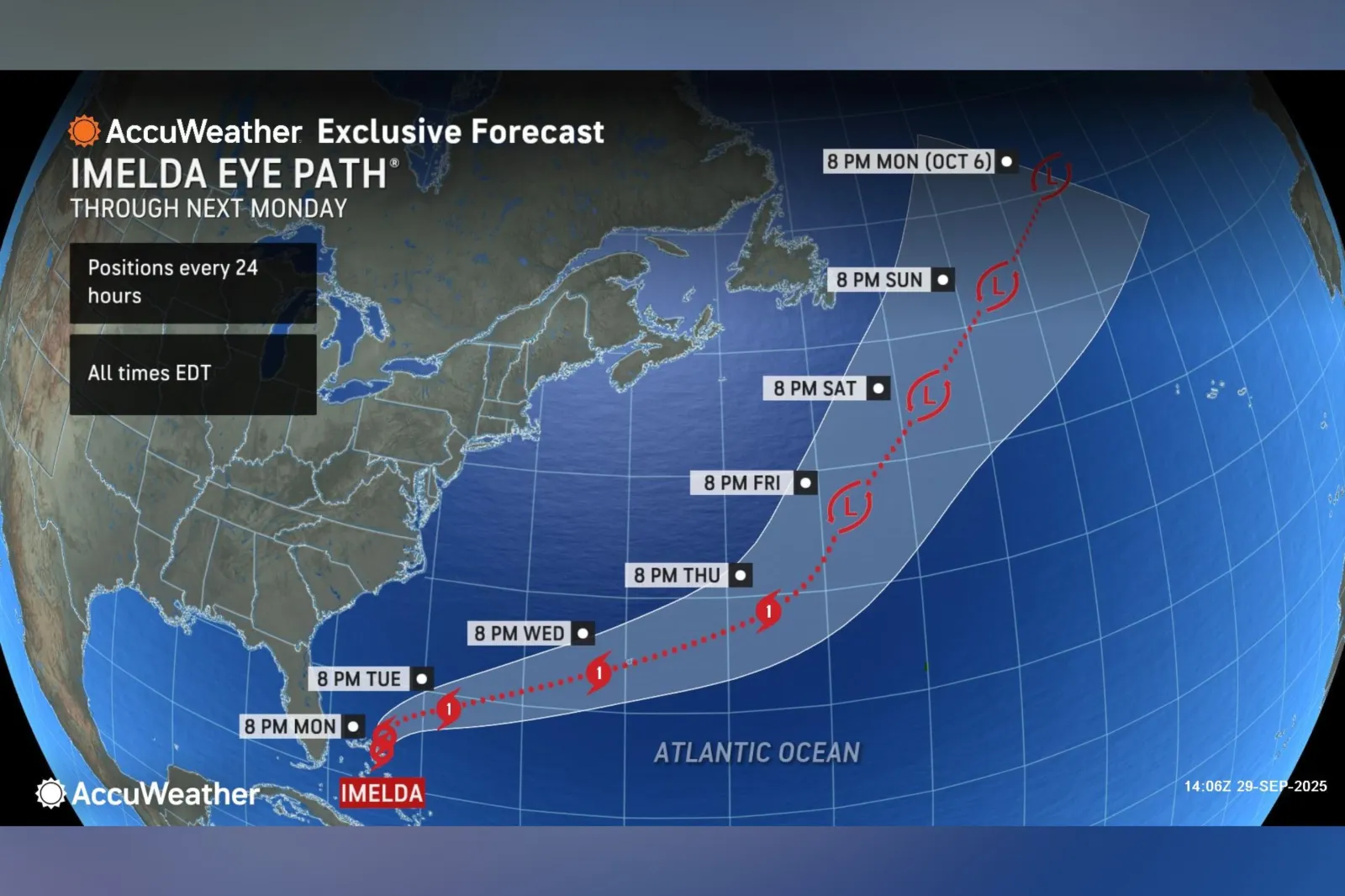
Forecast maps from AccuWeather detail Hurricane Imelda’s expected path and potential impacts the system could bring to parts of the U.S.
Why It Matters
The National Hurricane Center (NHC) has warned that swells generated by Imelda and nearby Hurricane Humberto have been affecting the Bahamas, and are spreading to much of the U.S. East Coast. "These swells are likely to cause life-threatening surf and rip current conditions," it said.
Read More on News
The agency also cautioned that the system could bring flooding rainfall to coastal southeast Carolina.
What To Know
As of an 8 a.m. ET update from the NHC, Imelda was located approximately 180 miles north of Great Abaco Island.
"Imelda is moving toward the northeast near 7 mph," the agency said. "This general motion is expected today, followed by a turn toward the east-northeast at a faster forward speed by tonight."
The NHC reported maximum sustained winds near 75 miles per hour and said it expected Imelda to strengthen further during the next 48 hours.
...
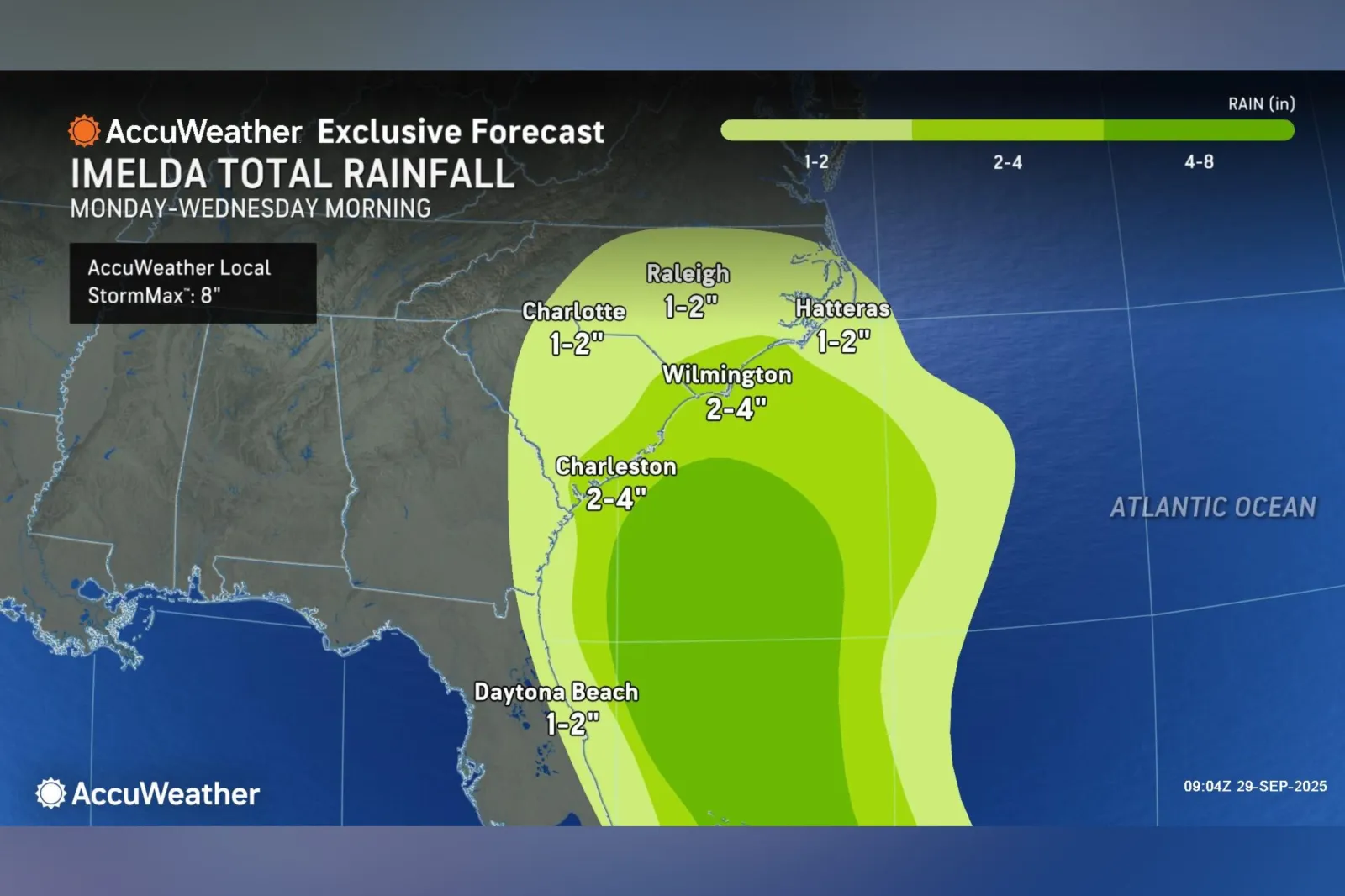
A broad area from far eastern Florida up through coastal North Carolina is expected to receive between one and two inches of rain, according to an AccuWeather media advisory shared with Newsweek on Monday. Heavier amounts of two-to-four inches are possible from far eastern South Carolina into southeastern North Carolina, it said.
...
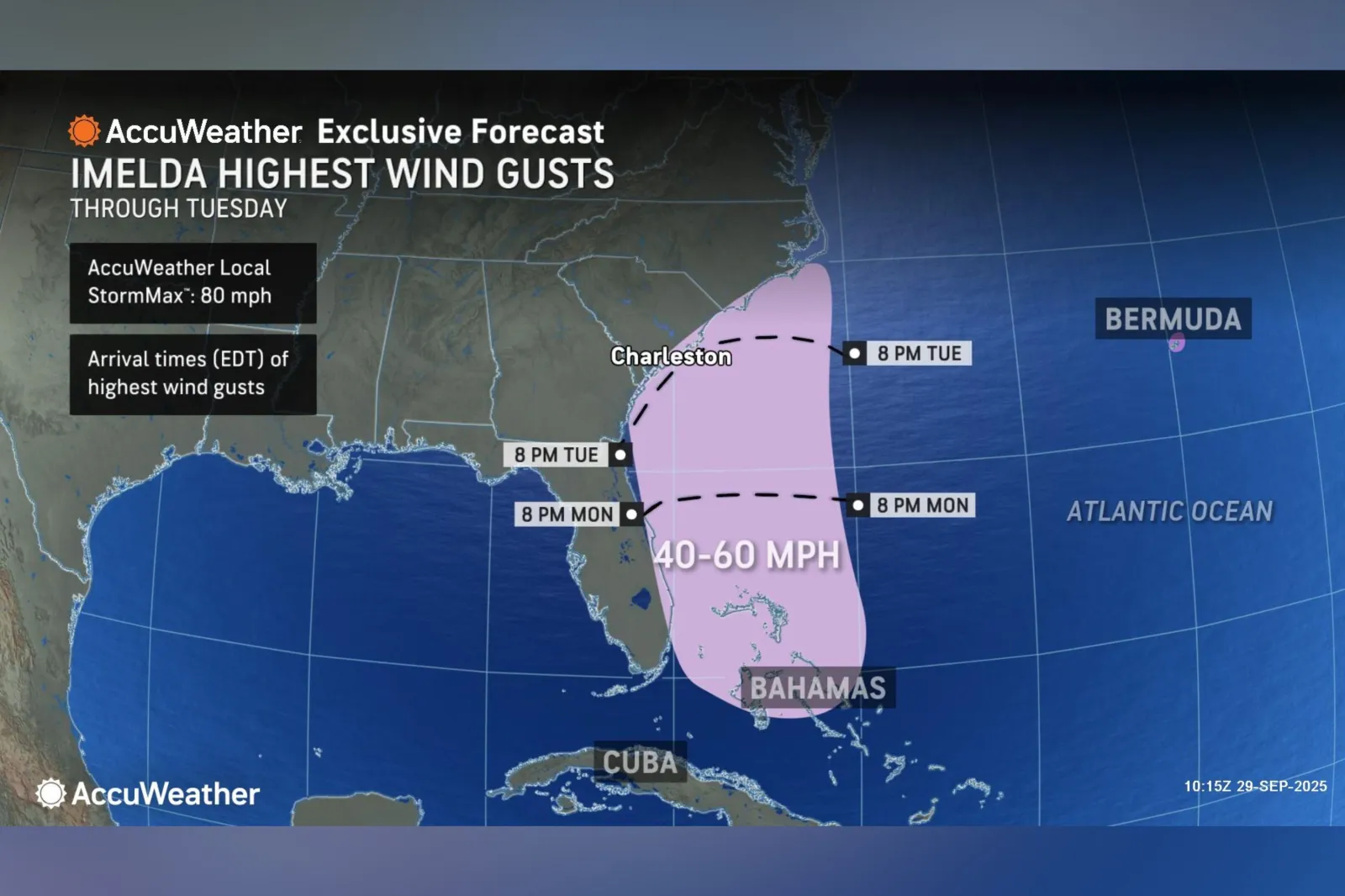
The wind field is expected to expand, producing a narrow corridor of 40—60 mph gusts along the east coast of central Florida and extending from far northeastern Georgia through the North Carolina coastline, according to the outlet, which added that these winds may be strong enough to topple trees and trigger power outages.
...
A storm surge of one-to-three feet is possible from the northeastern Florida coast to southeastern Virginia through Tuesday, with a few coastal waterspouts or tornadoes also possible, AccuWeather said.
Impacts from rain, wind, and storm surge across the Southeast should diminish by Wednesday morning, though coastal flooding may persist along portions of the East Coast into Wednesday, it said.
"The rare Fujiwhara Effect between Humberto and Imelda is expected to help spare the southeast U.S. from widespread flooding rainfall. The influence from the much stronger and larger Humberto will tug at Imelda and help pull the storm away from the U.S. and out to sea," AccuWeather lead hurricane expert Alex DaSilva said in an advisory shared with Newsweek on Monday.
The Fujiwhara Effect is when two storms pivot around one another, if they draw close enough to interact, which can cause them to divert from their projected paths.
"Humberto and Imelda will be less than 700 miles apart at their closest pass this week. It’s quite rare to see the Fujiwhara Effect in the Atlantic basin. The interaction between the two storms should prevent Imelda from making landfall or stalling near the coast, which could have led to days of torrential rainfall and widespread flooding. The impacts could have been catastrophic."
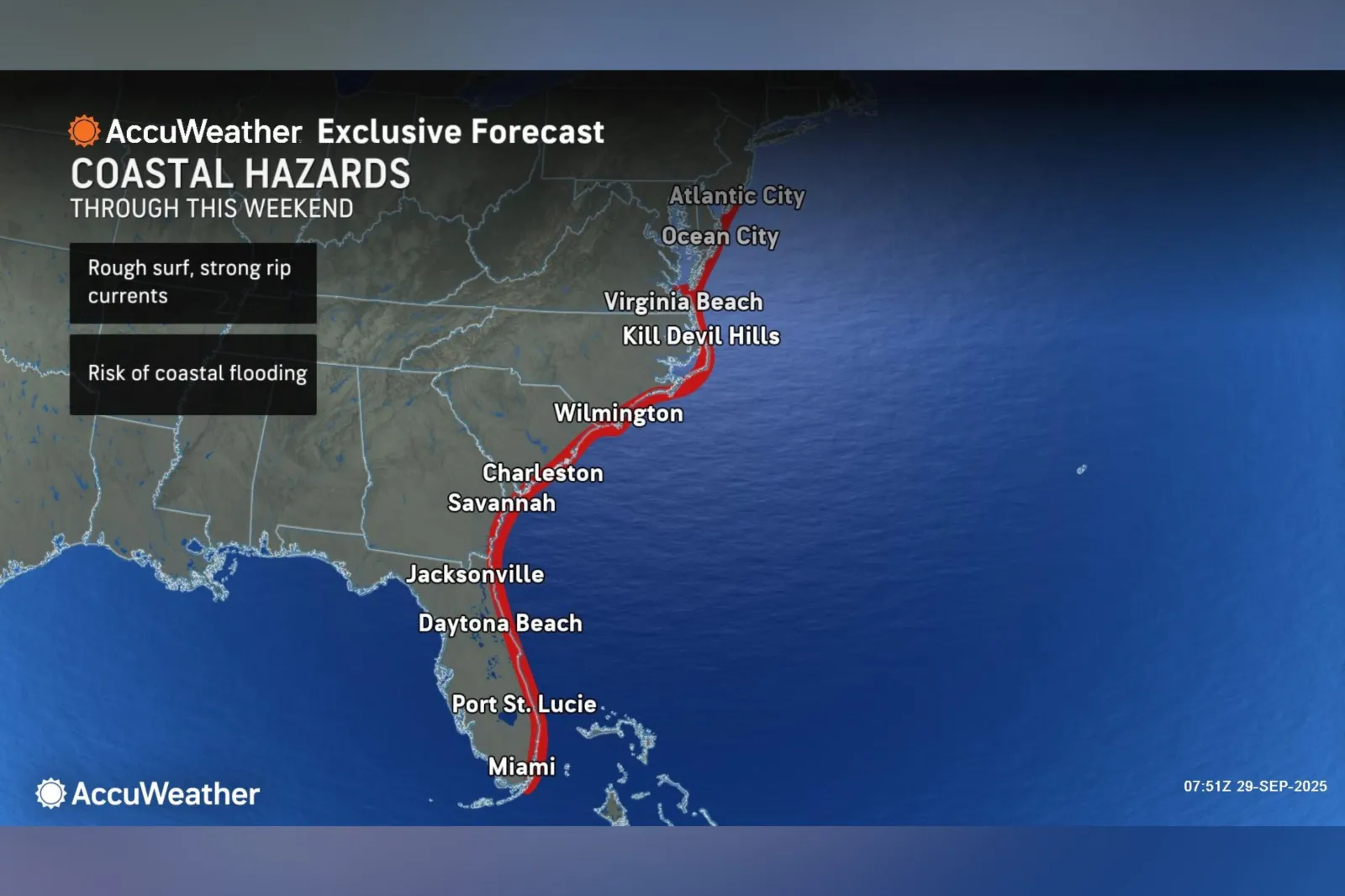
The two systems are generating rough surf and rip currents that could affect beaches from South Florida up to southern New Jersey through the week and into the weekend, AccuWeather said.
...
What People Are Saying
AccuWeather lead hurricane expert Alex DaSilva told Newsweek: "This Fujiwhara effect will save the United States from a direct landfall. I think if Humberto was not there, Imelda would indeed make landfall. There still can be some heavy rain and breezy conditions through Tuesday along the Southeast coast. Life-threatening rip currents will continue along the entire East Coast into this weekend."
What Happens Next
Forecasts are sometimes subject to change, and agencies like the NHC and the National Weather Service issue regular updates on their respective websites.
The Atlantic hurricane season began on June 1 and runs through November 30.
View 0 Comments
Submit Correction
View Editorial & AI Guidelines