
By Aristos Georgiou
Science and Health Reporter
0
Share
Newsweek is a Trust Project member
See more of our trusted coverage when you search.Prefer Newsweek on Googleto see more of our trusted coverage when you search.
NASA has just added a set of spectacular new images to its catalog of deep-sky objects named after the French astronomer Charles Messier (1730-1817).
Messier's main line of work was identifying new comets. However, he was limited by the small telescopes available to him, often coming across faint and blurry comet-like objects that did not move like comets and thus could not be classified as such.
Frustrated with these distractions, he began noting down the mysterious objects in a journal to help him distinguish them from the real comets he was searching for. In total, he cataloged 110 objects—all of which can only be seen from the Northern Hemisphere.
Read More on Science
It is now known that these objects are, in fact, distant galaxies, nebulae and star clusters far beyond the Milky Way, including some of the most magnificent and beautiful sights in the northern sky—such as the Crab Nebula, the Pillars of Creation and the Whirlpool Galaxy.
After the Hubble Space Telescope launched in 1990, astronomers began imaging the objects on Messier's list. To date, Hubble has imaged 93 of the 110 items on the list, when the 12 newly released pictures are taken into account.
Imaging some of the larger objects , such as the Andromeda Galaxy, in their entirety required Hubble to take thousands of exposures in order to capture them. But you don't need an advanced space observatory to see Messier's "non-comets." Many of the objects are bright enough to be seen through small telescopes, making them popular viewing targets for amateur astronomers.
The 12 new images can be seen below, while NASA's full Hubble Messier Catalog can be viewed here.
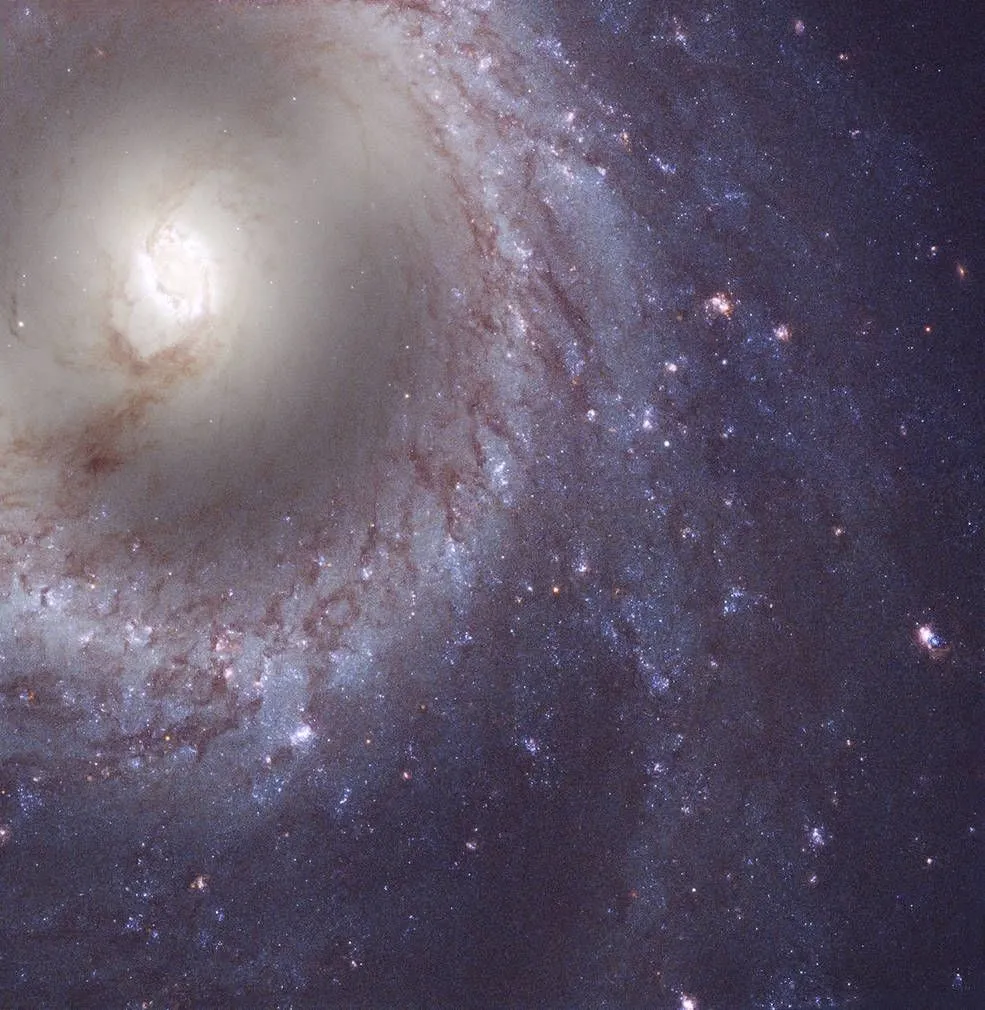
...

...

...

...

...

...

...

...

...

...

...

...
View 0 Comments
Submit Correction
View Editorial & AI Guidelines